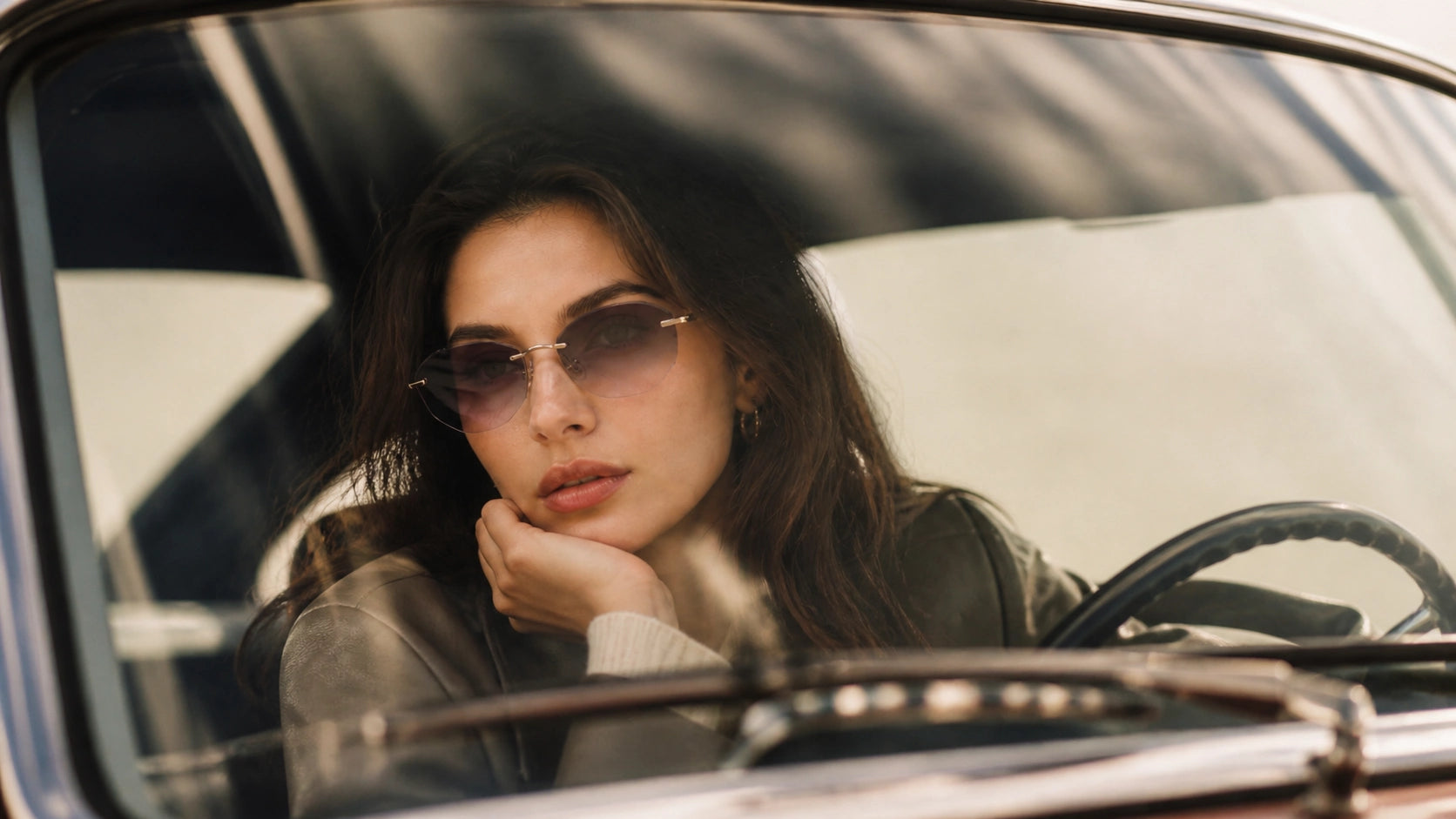

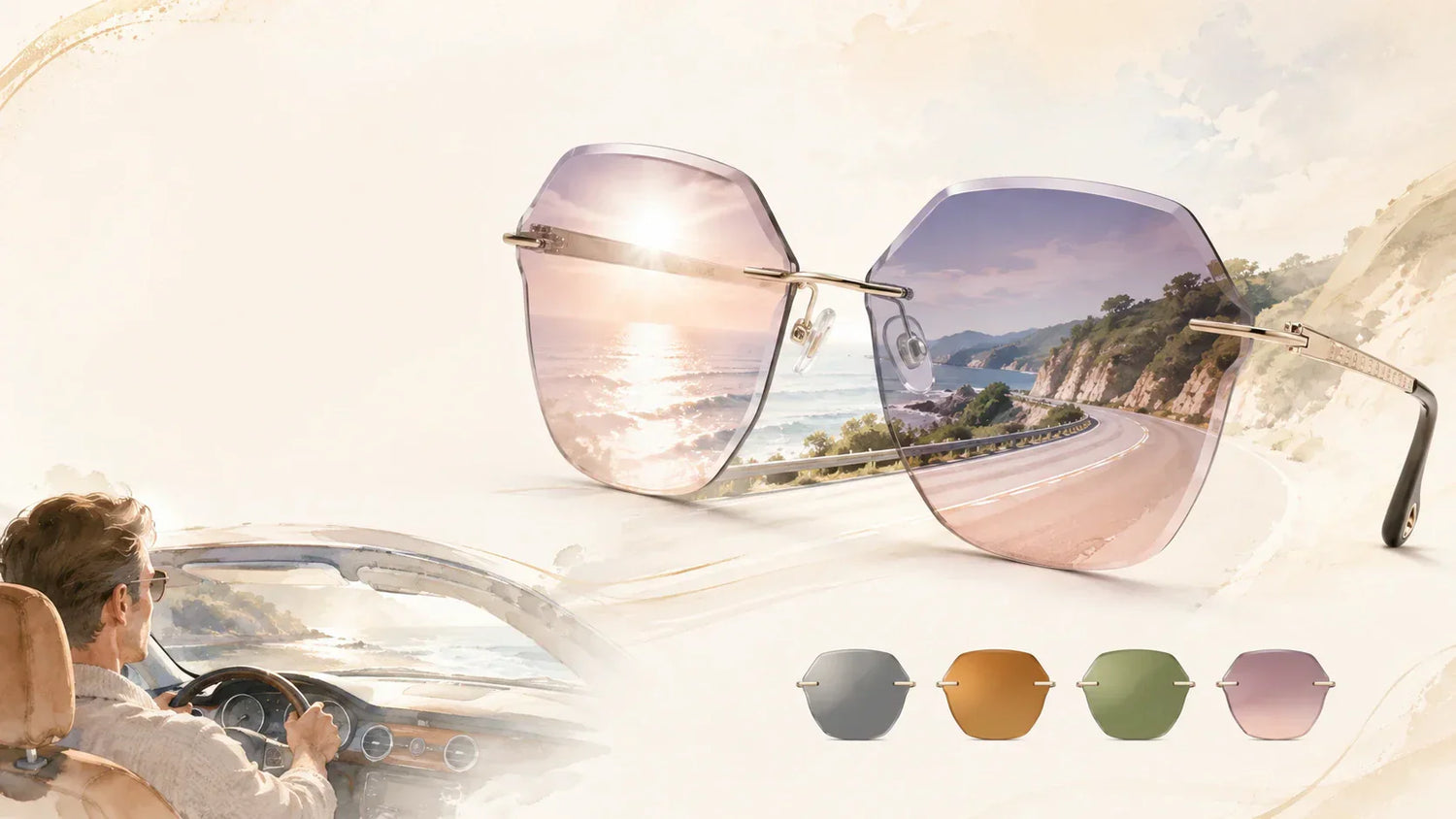
Quick answer: the best sunglasses for driving are not simply the darkest pair you own. A good daytime driving pair should combine UV400 protection, glare control, CAT 2 or CAT 3 daytime lens darkness, readable lens color, dashboard and HUD visibility, and a lightweight frame that stays stable without blocking your peripheral view.
This guide explains how to choose driving sunglasses by polarized glare control, UV400 protection, anti-glare comfort, CAT 3 lens darkness, lens color, gradient tint, peripheral vision, HUD and dashboard visibility, and long-drive frame fit. It also explains what to avoid, especially Category 4 lenses and dark sunglasses for night driving.
If you are choosing sunglasses beyond driving, use the BAPORSSA sunglasses buying guide to compare face shape, UV400 protection, lens color, frame weight, and lifestyle before you pick your final pair.

Quick answer: what sunglasses are best for driving?
The best sunglasses for driving usually combine UV400 protection, polarized or glare-reducing lenses, a grey, brown, green, or soft gradient lens, and a lightweight frame that does not slide down your nose. They should reduce harsh daylight without making traffic lights, dashboard details, road contrast, lane markings, or HUD information harder to read.
| Driving need | What to look for | Why it matters |
|---|---|---|
| UV protection | UV400 sunglasses | Helps protect the eyes during long daylight exposure. |
| Road glare | Polarized or glare-reducing lenses | Helps reduce reflected glare from roads, water, snow, and car hoods. |
| Lens darkness | Category 2 or Category 3 lenses for daytime driving | Controls bright sun without pushing the view into an unsafe dark zone. |
| Dashboard visibility | Lens tint that is not too dark below the center line | Helps keep speedometer, GPS, and interior details easier to read. |
| HUD and screens | Test polarized lenses in your own car | Some polarized lenses can darken or distort certain digital displays. |
| Lens color | Grey, brown, green, or gradient tints | Controls brightness while keeping the road easy to read. |
| Long-drive comfort | Lightweight frame, stable bridge, adjustable nose pads | Reduces pressure and helps the frame stay in place. |
| Peripheral vision | Rimless or low-bulk frame design | Helps keep mirrors, side movement, and lane-change checks less obstructed. |
For driving-focused shopping, start with glare control, dashboard readability, and stable fit rather than darkness alone.
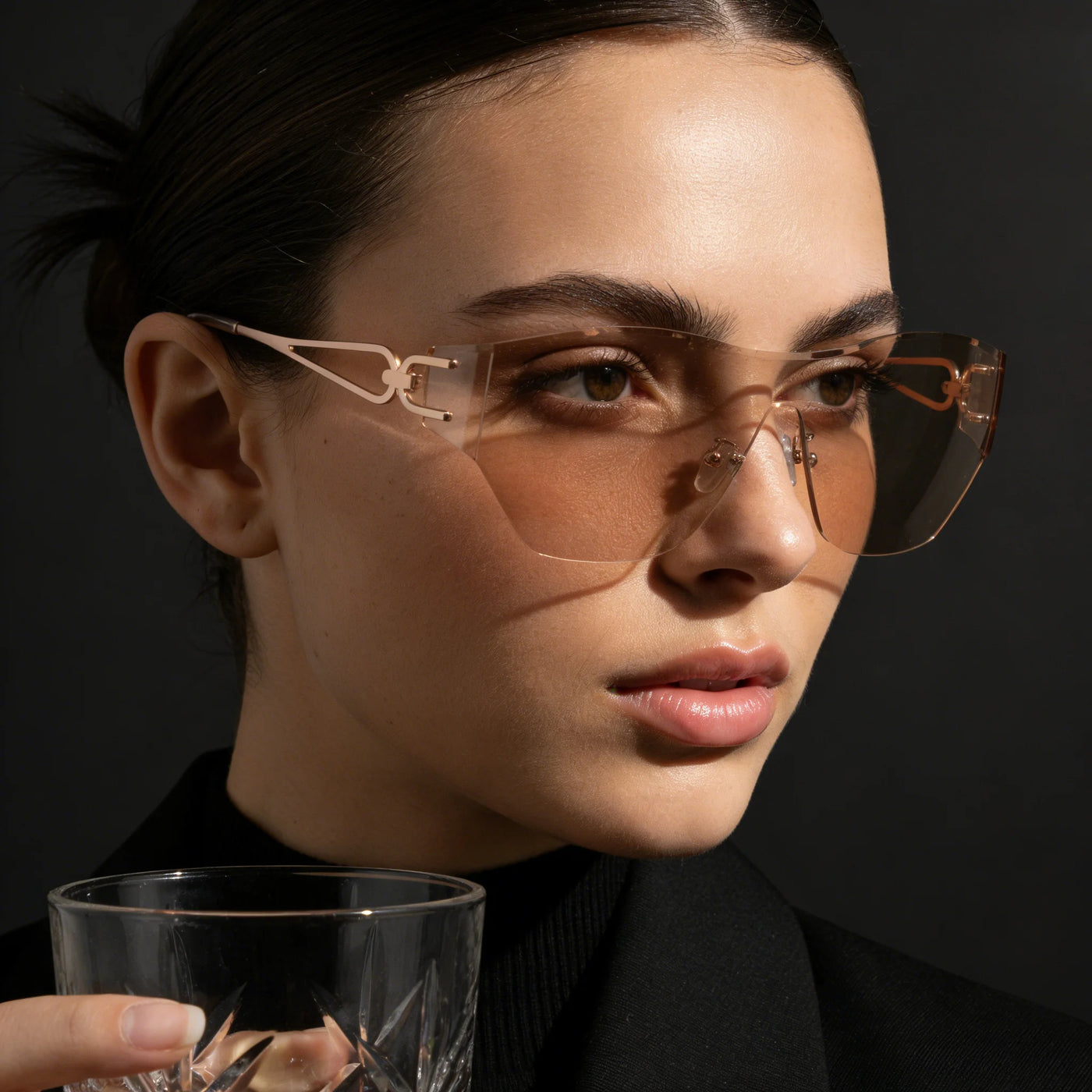
The driving visibility checklist
Driving sunglasses should help visual information reach you quickly and cleanly. Before choosing a pair, check these visibility points:
| Visibility issue | Common problem | Better driving choice |
|---|---|---|
| Peripheral checks | Thick frames can feel visually bulky when checking mirrors or changing lanes. | Choose rimless, semi-rimless, or thinner frame edges when you want a more open field of view. |
| Dashboard contrast | Very dark solid tints can make the dashboard, GPS, and speedometer harder to read. | Try gradient lenses or a medium tint that keeps lower-view details visible. |
| Road glare | Wet pavement, water, snow, concrete, and car hoods can create white reflective glare. | Use polarized lenses when the product page confirms polarization, or choose glare-reducing lens colors and tints. |
| Low sun | Sunrise, sunset, and low-angle light can overwhelm the windshield. | Use a stable frame with enough lens coverage and a tint that does not make shadows too dark. |
| HUD and digital screens | Some polarized lenses can make certain screens look dark, rainbow-like, or harder to read at specific angles. | Test the lenses in your own car before relying on them for every route. |

Why driving sunglasses are different from regular sunglasses
Driving creates a different light problem than walking outside. The sun may be high, low, reflected from the road, bounced from a dashboard, or flashing between buildings and trees. A pair that feels fine for a short walk can feel too dark, too heavy, or too distracting after an hour of driving.
Good driving sunglasses should help with four things at once:
- Brightness control: the lens should soften harsh sun without making the road feel dim.
- Glare control: reflected light from road surfaces and car hoods should feel calmer.
- Visual clarity: traffic lights, lane markings, signs, mirrors, dashboard information, and HUD details should remain easy to read.
- Fit stability: the frame should not slide, pinch, or need constant adjustment.
If you are choosing sunglasses mainly for driving, do not shop by darkness alone. Shop by lens function, lens color, lens category, and frame comfort.
Polarized sunglasses for driving: when they help
Polarized sunglasses are often useful for daytime driving because they help reduce reflected glare. This is especially noticeable when sunlight bounces from wet pavement, bright roads, water, snow, or the hood of a car.
For many drivers, polarized lenses make bright roads feel calmer. They can reduce the sharp, reflective glare that makes the eyes tighten during long drives. That is why searches like best sunglasses for driving polarized, are polarized sunglasses good for driving, and best anti glare sunglasses for driving belong in this guide.
There is one important caveat: some polarized lenses can make certain digital screens, dashboards, or head-up displays look darker at specific angles. That does not mean polarized lenses are bad for driving. It means you should test them in your actual car before relying on them for every route.
Polarized sunglasses, HUDs, and digital dashboards
If your car uses a head-up display, digital dashboard, large center screen, or certain LCD instruments, polarization can become a practical issue. Polarized lenses filter reflected light, but some screens also use polarized light. At certain angles, the display can look darker, uneven, or harder to read.
If HUD visibility is your top priority, compare polarized and non-polarized lenses inside your own car before choosing. A polarized pair can still be excellent for road glare, but a non-polarized or softer gradient lens may be easier for drivers who rely heavily on digital displays.
For more testing details, read our guides on how to tell if sunglasses are polarized and polarized sunglasses and screens.
Polarized vs non-polarized sunglasses for driving
Polarized and non-polarized sunglasses can both reduce brightness, but they do not solve the same problem.
| Lens type | Best for | Driving note |
|---|---|---|
| Polarized sunglasses | Road glare, reflected light, water glare, bright pavement | Often better for harsh daylight driving, but test with your dashboard and HUD. |
| Non-polarized sunglasses | General brightness control and screen visibility | Can be useful if polarized lenses interfere with a specific display. |
If your biggest issue is sun glare while driving, polarized lenses are usually the better starting point. If your biggest issue is reading a screen or HUD, check compatibility first.

Anti-glare sunglasses for driving: what actually reduces road glare
Many shoppers search for anti-glare sunglasses for driving because the real problem is not just sunlight. It is glare from flat, reflective surfaces. Road glare can come from wet pavement, light-colored concrete, a car hood, snow, water, or the low sun hitting the windshield.
For daytime driving, anti-glare performance usually comes from a combination of:
- Polarized filtering to calm reflected light when the lens is confirmed polarized.
- Appropriate tint depth to reduce brightness without making the view too dark.
- Useful lens color to preserve road contrast.
- Clean lens quality so the view does not feel wavy or tiring.
- Stable fit so the lens stays in the right visual position.
This is where a driving pair becomes different from a style-only pair. The right sunglasses should make the road feel cleaner, not just darker. For reflected-light situations outside the car, see our polarized sunglasses guide.
UV400 protection: the non-negotiable baseline
UV400 protection is the baseline for daylight sunglasses. Polarization controls glare; UV400 protection addresses ultraviolet exposure. They are not the same thing.
A good driving pair should not make you choose between them. The strongest everyday setup is simple: UV400 protection for sun exposure, glare control for reflected light, and a lens color that keeps the road readable.
For a deeper explanation, read our guide to UV400 vs polarized sunglasses.
Are CAT 3 sunglasses good for driving?
CAT 3 sunglasses can be a good choice for bright daytime driving when the lens still keeps road signs, dashboards, traffic lights, and shaded areas readable. Category 3 lenses are designed for strong sunlight, so they can work well for sunny commutes, open roads, beach roads, and travel driving.
The key is not category alone. A CAT 3 pair should still have UV400 protection, useful lens color, enough clarity, and a frame that does not block side vision. If a lens feels too dark in shadows, tunnels, rain, or late-day light, choose a lighter option for that condition.
For the full lens-category breakdown, read what CAT 3 means on sunglasses.
Category 4 sunglasses are not for driving
Category 4 lenses are extremely dark and should not be used for normal road driving. They are made for very intense light environments, not for reading dashboards, traffic lights, tunnel transitions, or shaded road detail.
If a pair is marked as Category 4 or not suitable for driving, do not treat it as a safer driving lens just because it feels darker. For driving, choose a lens that reduces brightness while preserving fast visual information.
Best lens colors for driving
The best lens color for driving depends on the light condition. The goal is not to make the world look dramatic. The goal is to keep the road, traffic lights, dashboard, and surrounding movement easy to read.

| Lens color | Driving feel | Best use |
|---|---|---|
| Grey | Neutral brightness reduction | Bright sun, everyday driving, color-neutral vision. |
| Brown / amber | Warmer contrast | Road detail, variable daylight, a slightly richer view. |
| Green | Balanced brightness and contrast | Daily driving when you want a calm but not overly warm tint. |
| Gradient | Darker above, lighter below | Bright sky plus dashboard visibility. |
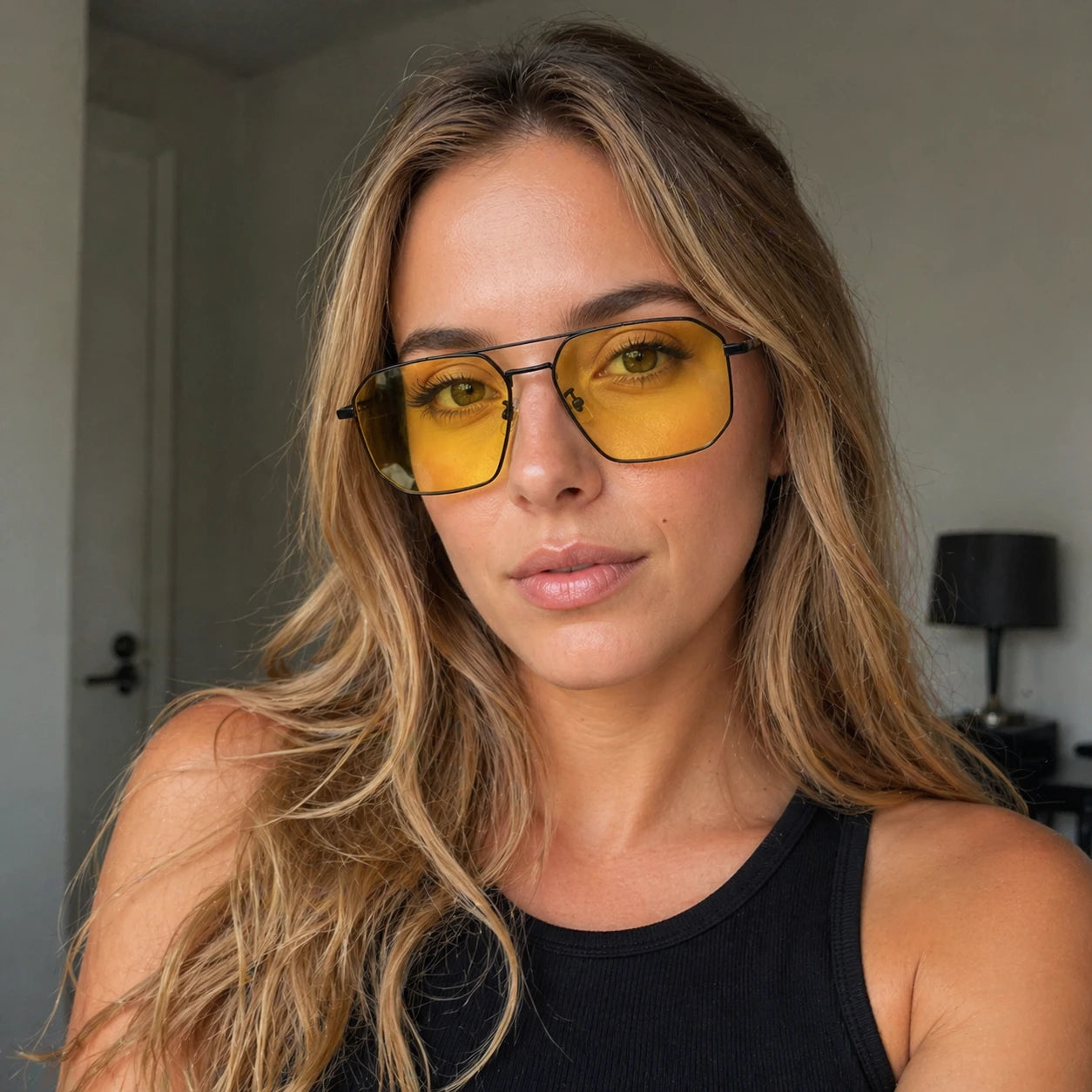
| Yellow | Brighter-looking view | Use carefully. Do not treat yellow lenses as a universal night-driving solution. |
For a full color breakdown, see our sunglass lens color guide.
Lens color also changes how outdoor haze and contrast feel through the windshield. If you are comparing bronze, gray, green, or gradient lenses for clearer daylight, read the lens color and outdoor blue light guide.
Grey vs brown lenses for driving
Grey lenses are usually the cleaner choice if you want neutral color. They reduce brightness without strongly changing how the road and surroundings look.
Brown or amber lenses can make contrast feel stronger. Some drivers like them because road texture, shadows, and changes in the environment feel easier to notice. The tradeoff is that the view becomes warmer and less color-neutral.
- Choose grey if you want neutral, clean, everyday driving vision.
- Choose brown or amber if you want more contrast and warmth.
- Choose gradient if you want bright-sky control with a softer lower lens area.
Are gradient lenses good for driving?
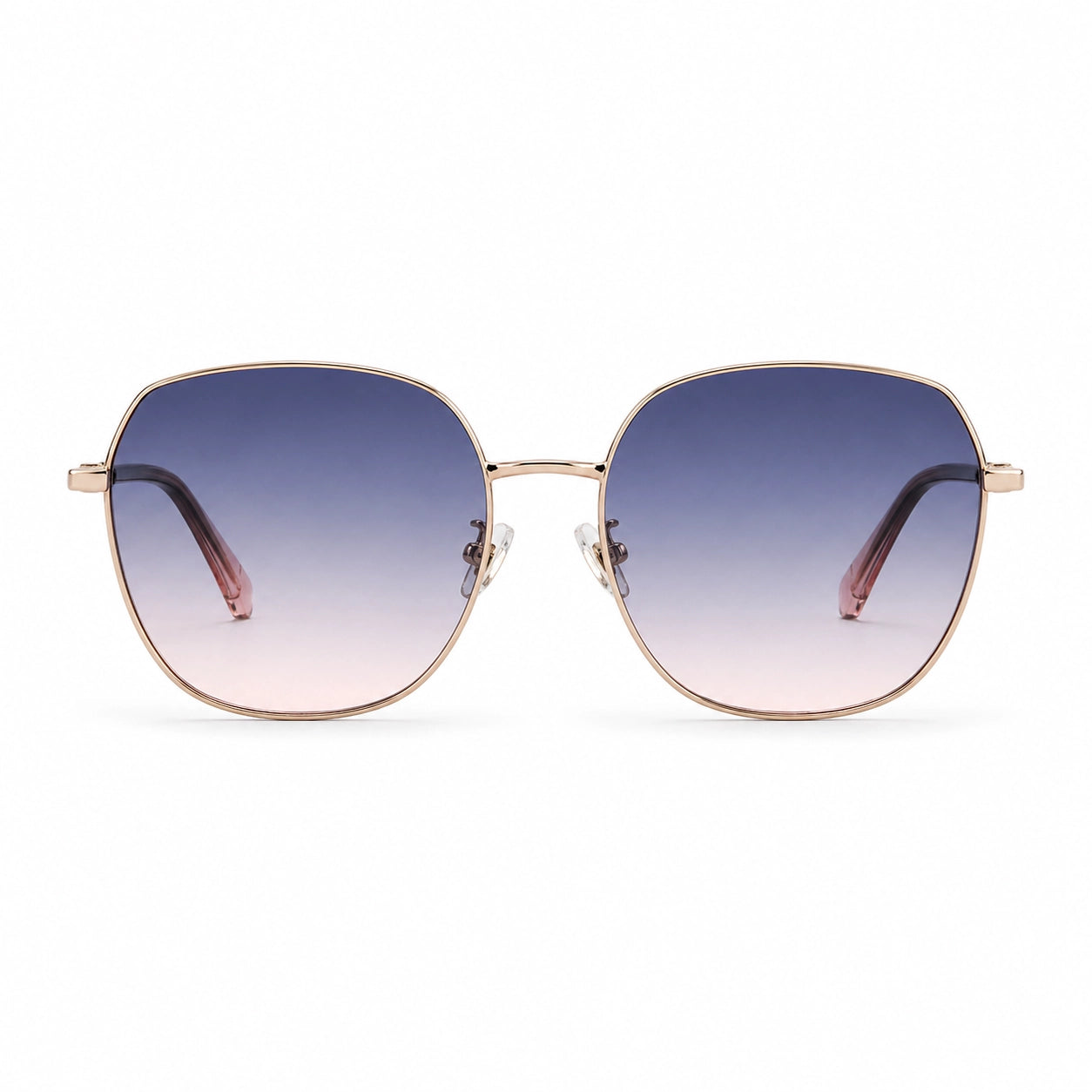
Gradient lenses can be useful for daytime driving because the darker upper area helps with sky brightness while the lighter lower area can keep dashboard and interior details easier to see.

This is also why gradient lenses fit BAPORSSA's design language well. They reduce visual heaviness on the face while keeping the lens useful in bright daily settings. For users who do not want their sunglasses to look too dark or blocky, gradient lenses can feel easier and cleaner.
Best sunglasses for dawn, dusk, and low sun driving
Dawn and dusk driving are difficult because the sun sits low and hits the windshield at a shallow angle. The best sunglasses for dawn and dusk should reduce the top-line brightness without making shadows, side streets, pedestrians, or dashboard details too dark.
A medium tint, a useful gradient lens, or a clear polarized daytime lens can help depending on your car and route. Avoid very dark lenses when the road moves in and out of shade, and remove sunglasses when light drops too far.
Best sunglasses for driving in different light conditions
Different routes create different light problems. Use the table below as a practical shortcut.
| Driving condition | Best lens direction | What to avoid |
|---|---|---|
| Bright midday sun | Grey, green, brown, CAT 3, or polarized lenses if the product is confirmed polarized. | Very small lenses that leave too much side light uncovered. |
| Dawn and dusk | Medium tint, gradient lens, or a lens that controls low sun without killing shadow detail. | Overly dark lenses that make shaded roads harder to read. |
| Low sun / sunset | Medium-to-dark upper lens area, useful coverage, stable fit. | Overly dark lenses that make shadows and side streets harder to read. |
| Wet roads | Polarized or glare-reducing lenses to calm reflected road glare. | Fashion-only tints with poor clarity. |
| Cloudy but bright days | Brown, amber, green, or rose-gray contrast-friendly tints. | Flat dark grey lenses if they make the scene feel too dull. |
| Dashboard-heavy city driving | Gradient lenses or moderate tints that keep the lower view readable. | Too-dark solid tints that force you to lift the glasses. |
| HUD-heavy driving | Test polarized and non-polarized options in your own car. | Assuming all polarized lenses behave the same with every display. |
| Night driving | Use clear vision correction if needed; ask an eye-care professional for glare issues. | Dark sunglasses or fashion tints at night. |
If your driving day continues into trail walks, lake roads, scenic overlooks, or outdoor travel, the same glare and fit decisions still matter outside the car. Our best hiking sunglasses for women guide compares UV400 protection, glare control, lightweight fit, and photo-ready gradient lenses for bright outdoor movement.
What sunglasses should you avoid while driving?
For driving, avoid sunglasses that solve one problem while creating another.
- Avoid lenses that are too dark for the condition. Very dark lenses can reduce visibility, especially in shade, tunnels, rain, or late-day light.
- Avoid Category 4 sunglasses for driving. If a lens is marked Category 4 or not suitable for driving, choose a lighter driving option.
- Avoid using dark sunglasses at night. Night driving requires visibility first.
- Avoid poor UV protection. A dark tint without proper UV protection is not enough.
- Avoid frames that slide down. Constant adjustment is distracting.
- Avoid heavy frames for long drives. Nose pressure and temple pressure build over time.
- Avoid large visual bulk. A heavy frame can make the view feel more closed and the face look more covered.
If sliding is a problem for you, read our guide on how to stop sunglasses from sliding down.
What about night driving glasses?
Night driving is a separate issue. Do not use dark sunglasses for night driving. If headlights, glare, or halos bother you at night, the safer direction is usually clear prescription lenses when needed, clean lenses, a clean windshield, and anti-reflective clear lenses if recommended by an eye-care professional.

Yellow lenses are often marketed for night driving, but they should not be treated as a universal fix. If you struggle with night glare, blur, halos, or astigmatism symptoms, it is better to address the vision issue directly instead of using dark or fashion sunglasses at night.
For this reason, BAPORSSA driving recommendations focus on daytime driving, bright roads, sun glare, travel, commute, and long-drive comfort.
Frame fit: why lightweight sunglasses matter behind the wheel
Lens performance matters, but fit decides whether you will actually keep the sunglasses on. A driving pair should sit securely without pinching the bridge, pressing the temples, or sliding when you turn your head.

Look for:
- Lightweight construction to reduce nose pressure.
- Adjustable nose pads to help the lens sit correctly.
- Stable temples that do not squeeze behind the ears.
- A frame shape that fits your face width without shifting.
- Low visual bulk so mirror checks and side movement feel less obstructed.
If you are not sure which shape works for you, start with our sunglasses for your face shape guide.
Peripheral vision: why rimless and low-bulk frames help
Driving sunglasses should not make lane changes, mirror checks, or side movement feel visually blocked. Thick frame edges can feel stylish in a fashion context, but behind the wheel they may create more visual bulk than necessary.
Rimless, semi-rimless, and low-bulk frame designs can help keep the lens area open. This is especially useful for drivers who want sunglasses for peripheral vision, long commutes, and city driving where side movement matters.
Rimless driving sunglasses: cleaner field of view, less visual bulk
Rimless sunglasses can work especially well for driving because they remove unnecessary frame weight around the lens. Less frame means less visual bulk, a cleaner face, and a more open field of view.
That does not mean every rimless pair is automatically better. Rimless construction must be stable. Lens material, bridge design, screw placement, temple tension, and nose-pad comfort all matter. For more background, see our guides to sunglass lens materials and lightweight frame materials.
Rimless also connects naturally to style. It keeps the face open instead of hiding it behind a heavy frame. For current styling direction, read our rimless sunglasses guide.
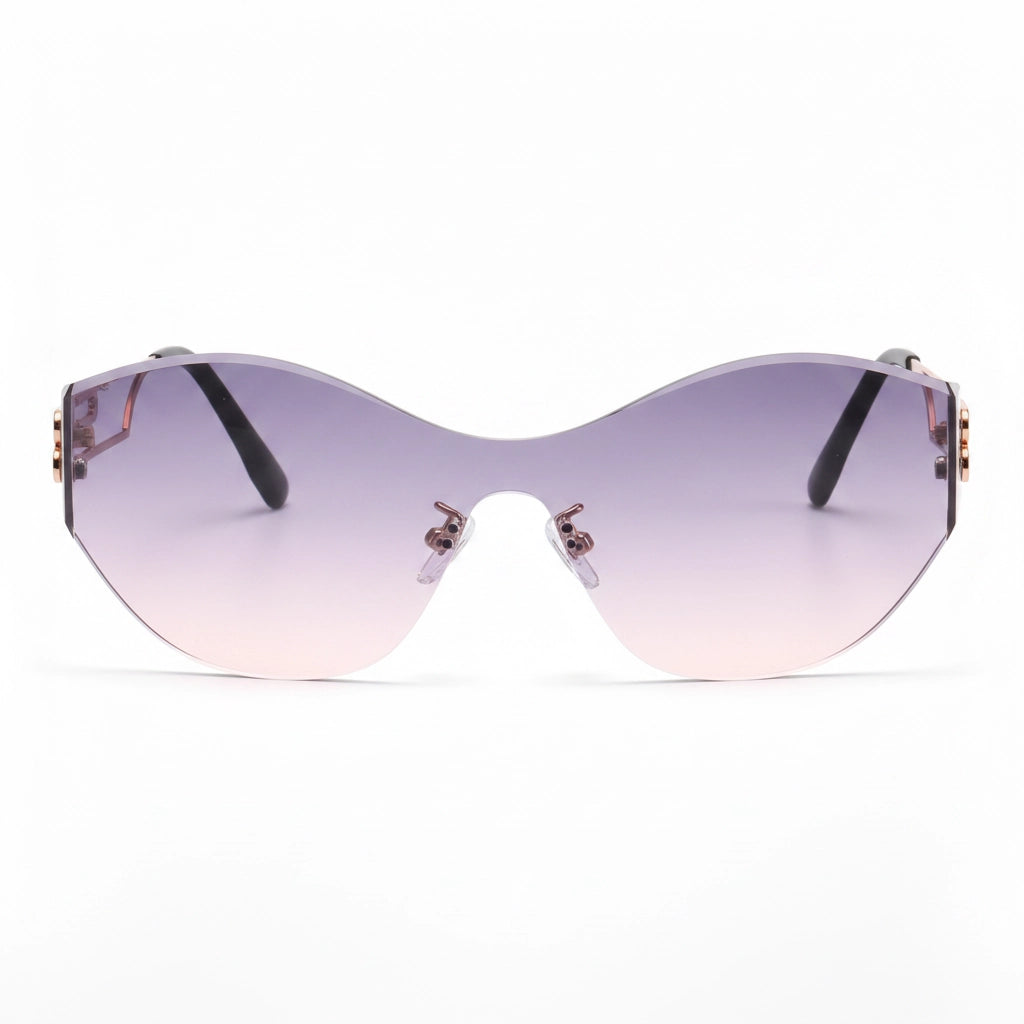
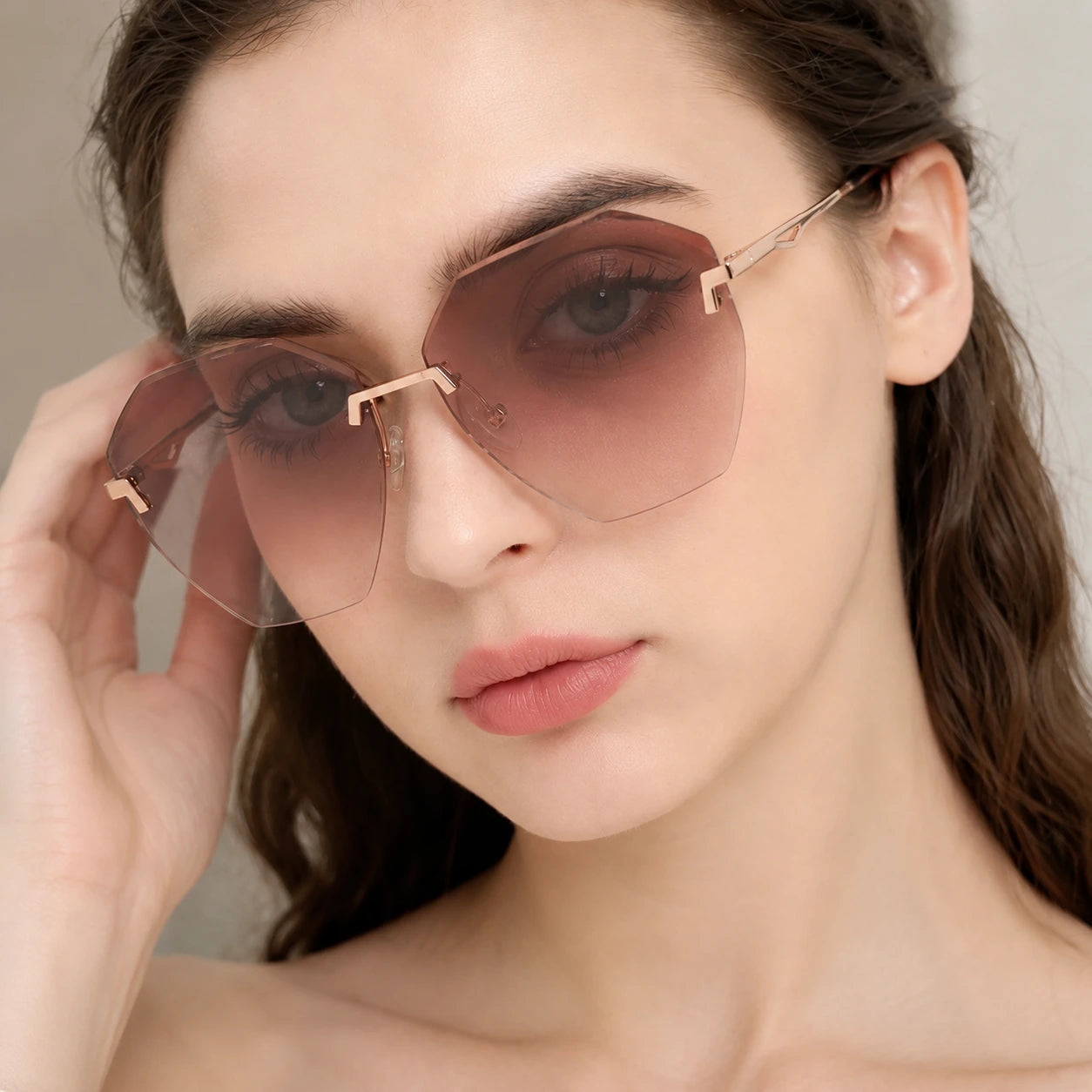
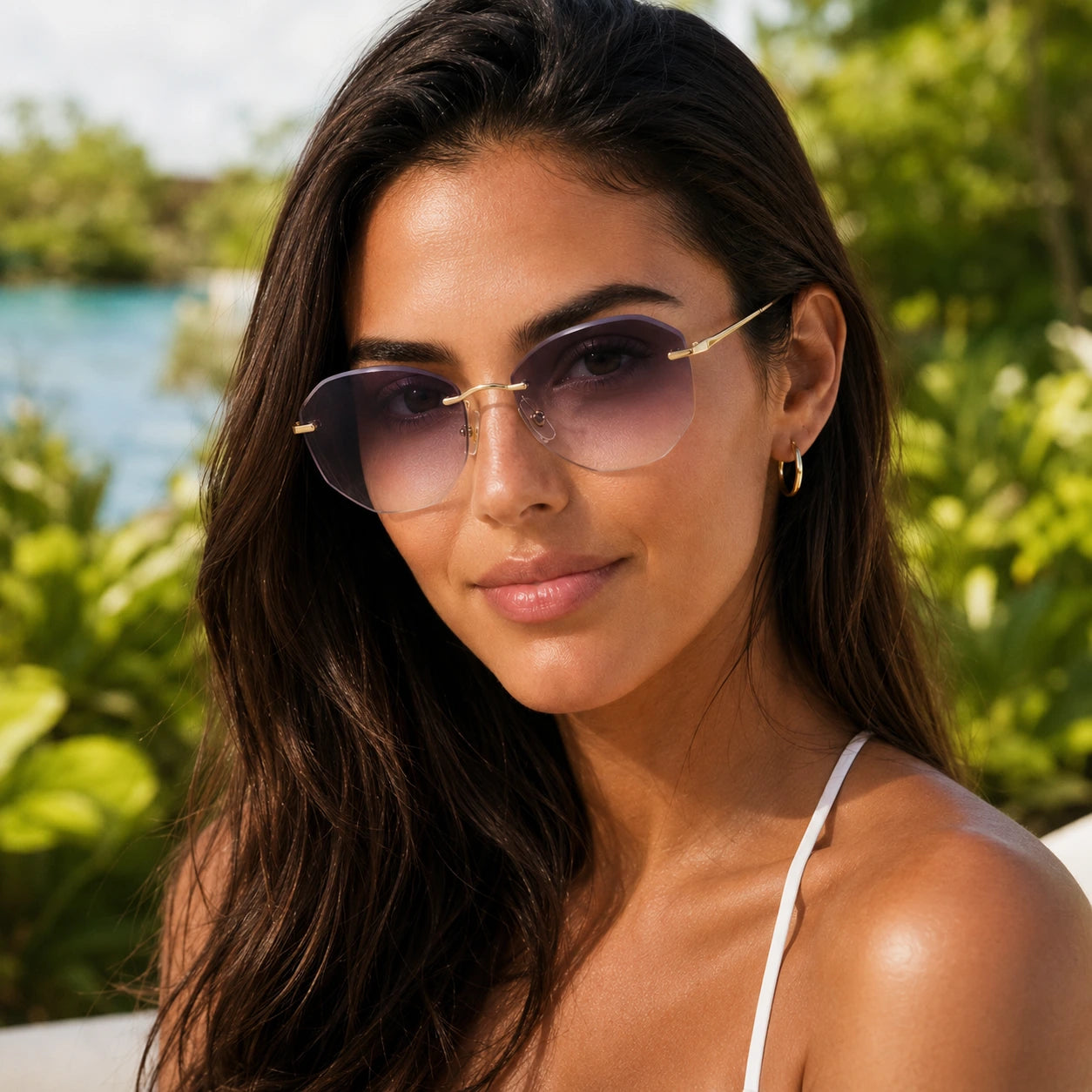
Which BAPORSSA sunglasses are best for driving?
For BAPORSSA, the best driving choice depends on how you drive and what kind of light you face most often. Check each product page for exact lens specifications, including whether a specific colorway is polarized.

| BAPORSSA option | Best for | Why it works for driving |
|---|---|---|
| Shift | Bright sun, travel routes, and stronger glare control | A strong first route when you want a driving-focused lens direction with a more technical feel. |
| Luma | Daily commute, dashboard visibility, and stable fit | Useful when you want a cleaner driving pair with adjustable nose-pad comfort and a lighter visual result. |
| Flow | Wide-view driving, open roads, and stronger coverage | A good option when you want more lens coverage with less frame bulk around the face. |
| Vanguard | Bright-day driving and stronger lens presence | A good starting point when you want more coverage for sunny roads and travel. |
| Glow | Soft daylight and gradient-lens style | A relaxed option for users who want the face to stay open and the lens to feel softer. |
| Backbone | Daily commute and clean everyday wear | A lighter, cleaner option when comfort and low visual bulk matter most. |
Start with Shift, Luma, or Flow if your priority is driving function. Choose Vanguard when you want stronger coverage, Glow when you prefer a softer daylight look, and Backbone when you want a clean everyday rimless pair.
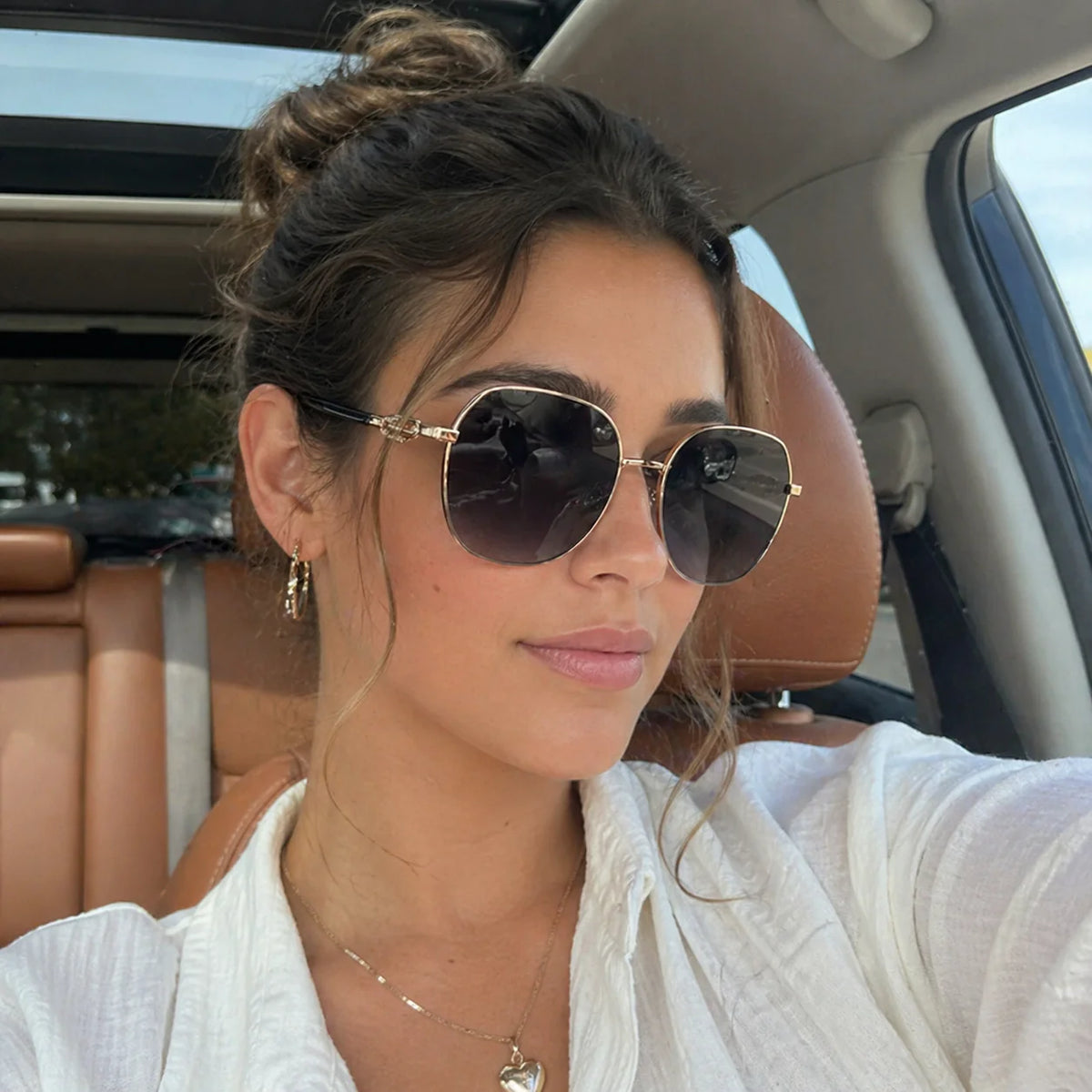
Final recommendation
The best sunglasses for driving are not just dark sunglasses. They should combine UV400 protection, glare control, the right lens color, readable dashboard visibility, enough peripheral openness, and a frame that stays comfortable behind the wheel.
For most daytime drivers, the safest buying formula is:
UV400 protection + glare control + CAT 2 or CAT 3 daytime lens darkness + grey, brown, green, or gradient lenses + lightweight stable frame fit.
That formula keeps the road calmer without making the view feel closed, heavy, or over-dark.
FAQ
Are polarized sunglasses good for driving?
Yes, polarized sunglasses can be good for daytime driving because they help reduce reflected glare from roads, water, snow, and car surfaces. Test them with your dashboard or HUD because some displays can look darker through polarized lenses at certain angles.
Are polarized sunglasses better for driving?
They are often better when glare is the main problem. If your main concern is screen or HUD visibility, compare polarized and non-polarized lenses in your own car before deciding.
Should driving sunglasses be polarized?
For bright daytime driving and road glare, polarized lenses are usually a strong choice. They are not required for every driver, but they are useful when reflected light causes discomfort.
What color sunglasses are best for driving?
Grey, brown, green, and gradient lenses are usually the most useful choices for daytime driving. Grey keeps colors neutral, brown adds contrast, green balances brightness and contrast, and gradient lenses can help with bright sky while keeping the lower view softer.
Are grey or brown lenses better for driving?
Grey is better if you want a neutral view. Brown is better if you want warmer contrast and more road detail. Neither is always best for everyone; the right choice depends on your light conditions and visual preference.
Are gradient sunglasses good for driving?
Gradient sunglasses can be good for daytime driving because the upper lens can soften bright sky while the lower lens remains lighter for dashboard visibility.
Are CAT 3 sunglasses good for driving?
CAT 3 sunglasses can be good for bright daytime driving when they keep the road, dashboard, traffic lights, and shaded areas readable. They should not feel too dark for tunnels, rain, late-day light, or fast-changing conditions.
Are Category 4 sunglasses safe for driving?
No. Category 4 sunglasses are too dark for normal driving and should not be used behind the wheel. Choose a lighter daytime lens category for road use.
Why do polarized sunglasses make my dashboard or HUD harder to read?
Some dashboards, HUDs, and LCD screens use polarized light. When viewed through polarized sunglasses at certain angles, they can look darker or uneven. Test polarized lenses in your own car before relying on them.
What are the best sunglasses for dawn and dusk driving?
For dawn and dusk, choose a lens that reduces low sun without making shadows too dark. Medium tints, gradient lenses, and stable frames often work better than very dark solid lenses.
Can you wear sunglasses while driving?
Yes, sunglasses can be worn while driving in daylight when they do not make the view too dark and do not block important visual information. Choose UV protection, suitable tint, and a stable fit.
Can you wear sunglasses while driving at night?
Dark sunglasses should not be used for night driving. Night driving requires as much useful visibility as possible. If glare is a night problem, consider clear prescription or anti-reflective lenses when appropriate.
Are polarized sunglasses good for night driving?
No. Polarized sunglasses are mainly useful for daytime glare. For night driving, avoid dark sunglasses and address glare with proper vision correction, clear lenses, and windshield cleanliness.
Do polarized sunglasses help with road glare?
Yes, polarized sunglasses can help reduce reflected road glare, especially from wet pavement, bright concrete, water, snow, and car hoods.
Are UV400 sunglasses good for driving?
UV400 sunglasses are a good baseline for daylight driving because they help protect against ultraviolet exposure. UV400 does not automatically mean polarized, so check both UV protection and glare control.
What sunglasses should you avoid while driving?
Avoid lenses that are too dark for the condition, Category 4 sunglasses, dark sunglasses at night, poor UV protection, heavy frames that press on the nose, loose frames that slide while driving, and frame shapes that block too much side visibility.
Are rimless sunglasses good for driving?
Rimless sunglasses can be good for driving when the construction is stable and the lens has suitable UV protection, tint, and glare control. The advantage is lower visual bulk around the lens and a more open field of view.
What are the best sunglasses for driving in the sun?
For bright daytime sun, choose UV400 sunglasses with enough lens coverage, a readable grey, brown, green, or gradient tint, and glare control. If the product page confirms polarization, polarized lenses can be especially useful for road glare.