
How to tell if sunglasses are polarized: online test image, phone screen and lens test
To tell if sunglasses are polarized, do not judge by how dark the lens is. Hold one lens over a bright phone or laptop screen and rotate it: if the screen turns much darker at one angle, the lens is polarized. A second polarized lens, glare on water or a polarized test card can confirm the result.

Quick answer: five ways to test polarized sunglasses
| Test | What to do | Likely polarized result |
|---|---|---|
| Phone or laptop screen | Hold one lens over a bright screen and rotate it 60–90 degrees. | The screen turns much darker at one angle. |
| Two-lens 90° test | Overlap the pair with one you know is polarized, then rotate one pair. | The overlap turns nearly black at about 90 degrees. |
| Water, road or glass glare | Look at a bright reflection with and without the sunglasses. | The reflection looks softer, flatter and less blinding. |
| Polarized test card | Look at a test card through the lens and rotate the lens. | A hidden image or pattern appears or changes strongly. |
| Product specifications | Check the product page or packaging. | The lens is explicitly listed as polarized. |
Rather skip the test? 13 of our 25 frames are polarized in every colour, and our lenses are UV400 unless the product page says otherwise. Contour, Arc, Lyra, Flow and Perla are polarized in some colours only; each product page says which.


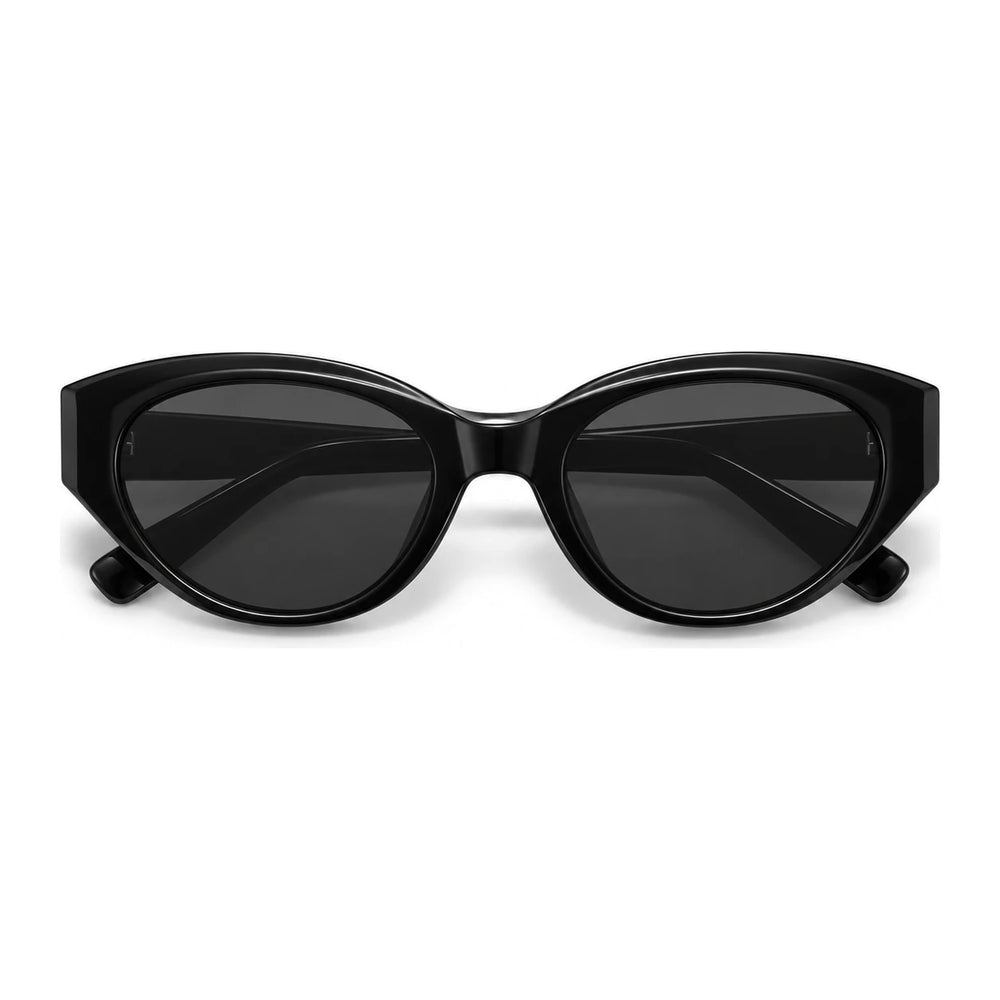


1. Phone screen test
Many LCD screens give off polarized light, so a phone, tablet, laptop or GPS display makes a quick polarized tester.
- Turn the screen brightness up and open a mostly white page.
- Hold one sunglass lens in front of the screen.
- Rotate the sunglasses slowly from horizontal to vertical.
Likely polarized: the display turns dramatically darker at one angle and brightens again as you keep rotating.
Inconclusive: the screen changes only slightly, shifts colour or does not change. Screen type, screen protectors and viewing angle affect the result, so repeat the test on another device or use the two-lens test.

The same effect can make phones, dashboards and head-up displays harder to read once you own the pair; our polarized sunglasses and screen visibility guide explains the fix.
2. Two-lens 90-degree test
This is the clearest at-home method if you already own one pair that is definitely polarized.
- Hold the known polarized pair in front of the pair you want to test.
- Look through the overlapping lens area.
- Rotate one pair about 90 degrees.
If both lenses are polarized, the overlap turns very dark: each lens filters light in one direction, so crossing the filters blocks much more light. If the overlap barely changes, the test pair is probably not polarized.

3. Real-world glare test
Polarized lenses are designed for reflected glare, so a bright outdoor reflection tells you more than looking through a dark lens indoors. Good test surfaces are water, wet pavement, car windscreens, glass shopfronts and snow.
Look at the reflection without the sunglasses, then through the lenses, tilting them slightly. A polarized lens makes harsh surface glare look calmer; on water, it may also let you see details beneath the surface.

4. Online test images and polarized test cards
A polarized test image online is a convenient first check: open it full-screen on your phone at full brightness and rotate the lens over it. It works much like the phone screen test, so the screen, brightness and viewing angle all change the result, and it is not a laboratory certification.
A physical polarized test card is more consistent. It carries an image or pattern that changes when you look through a polarized lens, so rotate the lens slowly and watch for a strong contrast change. Neither method confirms UV400 protection, optical clarity, coatings or tint category.
Polarized vs UV400 vs dark tint
| Feature | What it does | What it does not prove |
|---|---|---|
| Polarized | Reduces reflected glare from flat, bright surfaces. | It does not prove UV400 protection. |
| UV400 | Blocks ultraviolet light up to 400 nanometres. | It does not mean the lens is polarized. |
| Dark tint | Reduces visible brightness. | It proves neither polarization nor UV400. |
| Gradient tint | Darker at the top, lighter at the bottom. | Polarized only when that is listed separately. |
| Photochromic | Changes tint with the light. | It is not automatically polarized. |


Not sure you need polarized lenses at all? Read polarized vs non-polarized sunglasses, UV400 vs polarized or photochromic vs polarized.

Collection
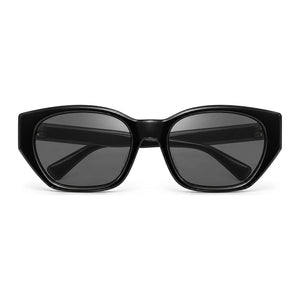
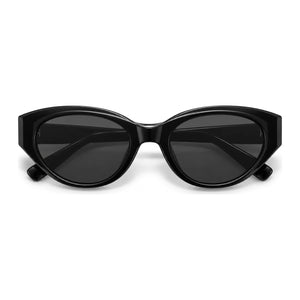
Polarized Sunglasses for Women
18 styles
Polarized lenses cut reflected glare from water, roads and glass. Some frames come in both polarized and non-polarized colours; the colour picker on each...
FAQ
Is the phone screen test reliable?
It is useful but not perfect: screen type, screen protectors and viewing angle can weaken the effect. Confirm an unclear result with the two-lens test or a real glare test.
Does a dark lens mean the sunglasses are polarized?
No. Tint reduces visible brightness and polarization reduces reflected glare, so a very dark lens can still be non-polarized.
Are polarized sunglasses always UV400?
No. Polarization and UV400 are separate features, so check the specifications for both.
Should I replace sunglasses that fail the polarized test?
Only if reflected glare from roads, water, snow or glass is a problem you need to solve. If you mainly need less brightness, polarization may not be essential.


