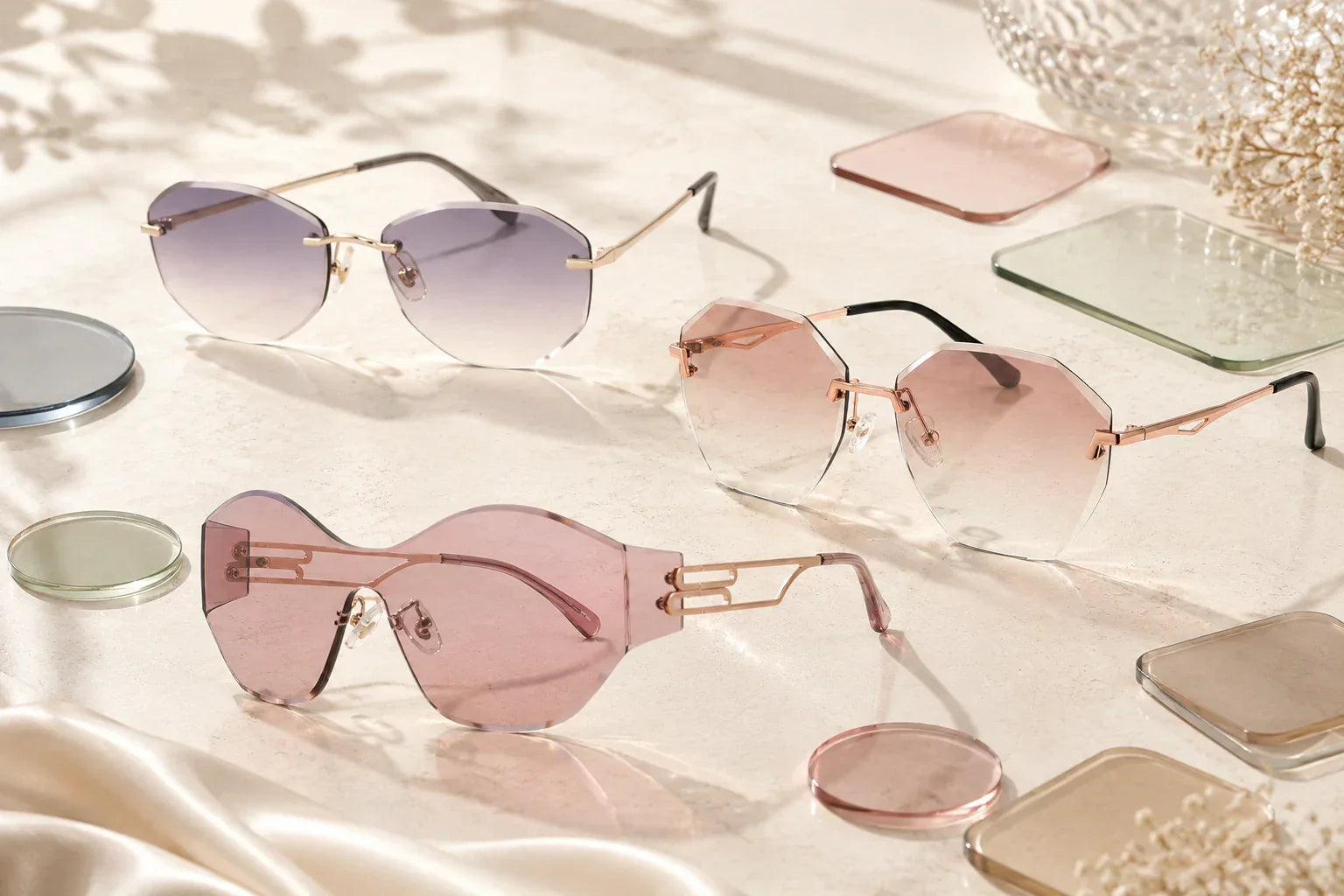


There is no single best sunglass lens material for every pair. Glass is known for optical clarity and surface hardness but is heavier and more brittle. Polycarbonate is light and impact-focused. Nylon, also called polyamide in some specifications, can work well for lightweight fashion and rimless construction. TAC is commonly used in polarized sunglass lens structures.
Choose by the result you need: weight, clarity, impact behavior, scratch resistance, glare control, tint, lens-edge appearance and frame construction. Material alone does not confirm UV400 protection, polarization or coating quality.

Quick Lens Material Comparison
| Material | Main strengths | Main tradeoffs | Common use |
|---|---|---|---|
| Glass | Crisp optics and strong surface hardness | Heavier and more brittle | Full-frame premium eyewear |
| Polycarbonate | Low weight and strong impact behavior | Scratch performance depends heavily on coating | Sport and active-use eyewear |
| Nylon / polyamide | Light, flexible and suitable for shaped or exposed lens edges | Quality varies by formulation, coating and finishing | Fashion, gradient and rimless sunglasses |
| TAC | Lightweight layered construction often used with polarization | The material name alone does not prove premium quality or UV400 | Everyday polarized sunglasses |
| Acrylic and other basic plastics | Low cost and easy color styling | Clarity, durability and edge finish vary widely | Entry-level fashion lenses |
Glass Lenses
Glass lenses can provide crisp optics and good resistance to fine surface scratching. Their main disadvantages are weight and brittleness. These tradeoffs matter more in oversized or rimless sunglasses because more lens material sits at the front of the face.
Glass can be a reasonable choice when optical feel and surface hardness matter more than low weight. It is less attractive when the main goal is long-wear comfort, a large lens shape or minimal frame support.
Polycarbonate Lenses
Polycarbonate is a specific type of plastic known for low weight and impact resistance. It is common in sport, safety and active-use eyewear.
Polycarbonate is not naturally as resistant to surface scratching as glass, so hard-coating quality matters. A good product specification should be evaluated as a complete system: lens material, UV protection, tint, polarization, coating and frame fit.
Nylon and Polyamide Lenses
Nylon and polyamide are closely related terms in eyewear specifications. These lenses can combine low weight, flexibility and a clean exposed edge, which can make them suitable for rimless, gradient and fashion sunglasses.
Nylon is not automatically superior to every other material. The final result depends on formulation, optical finishing, coatings, drilling or mounting quality and the overall frame design.
What Is TAC Lens Material?
TAC usually refers to triacetate cellulose. It is often used in layered polarized sunglass lenses, where a polarizing film is placed within the lens structure.
TAC does not automatically mean UV400, polarized or premium. Check each claim separately. A TAC lens can be appropriate when lightweight glare control and price are important, but construction and coating quality still determine the final experience.
Glass vs Polycarbonate vs Nylon
| Question | Glass | Polycarbonate | Nylon / polyamide |
|---|---|---|---|
| Weight | Usually heavier | Light | Light |
| Impact behavior | More brittle | Strong impact-focused choice | Flexible, but not always specified for impact-first use |
| Scratch behavior | Strong surface hardness | Depends on hard coating | Depends on coating and finish |
| Rimless suitability | Weight and brittleness can be limiting | Possible, often sport-oriented | Often suitable for refined exposed-edge designs |
| Typical strength | Optical crispness | Impact-focused practicality | Weight, flexibility and design freedom |
Polycarbonate vs Plastic: Are They the Same?
Polycarbonate is a plastic, but “plastic lens” is a broad category. It can refer to polycarbonate, nylon, TAC, acrylic, CR-39 or another polymer.
When a product says only “plastic lens,” look for a more exact material specification. The specific material helps explain expected weight and use, but it should still be considered alongside UV400, polarization, tint and coating.
Nylon vs Polycarbonate
Choose polycarbonate when impact behavior is the primary concern. Consider nylon when low weight, shaped fashion lenses, gradient tint or a cleaner rimless edge matter more.
Neither material automatically guarantees better clarity or UV protection. Manufacturing quality and coatings can be as important as the base material.
TAC vs Polycarbonate
TAC is often associated with layered polarized sunglass lenses. Polycarbonate is more often associated with impact-focused eyewear. They solve different priorities rather than forming a simple better-or-worse ranking.
| Priority | Material direction to investigate |
|---|---|
| Impact-focused sport use | Polycarbonate |
| Lightweight polarized daily use | TAC or another confirmed polarized construction |
| Lightweight rimless fashion use | Nylon / polyamide |
| Surface hardness and traditional optical feel | Glass |
Why Material Matters More in Rimless Sunglasses
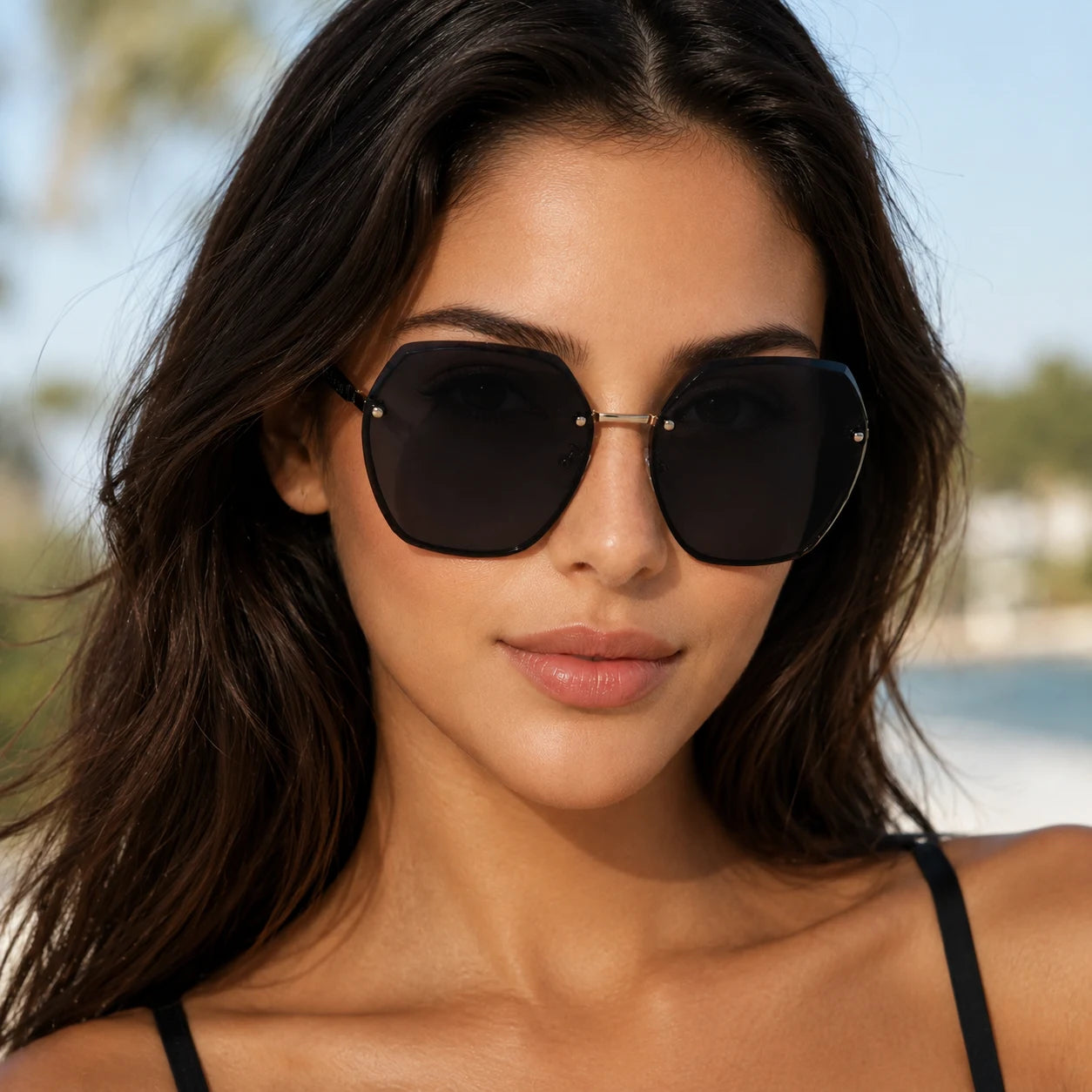
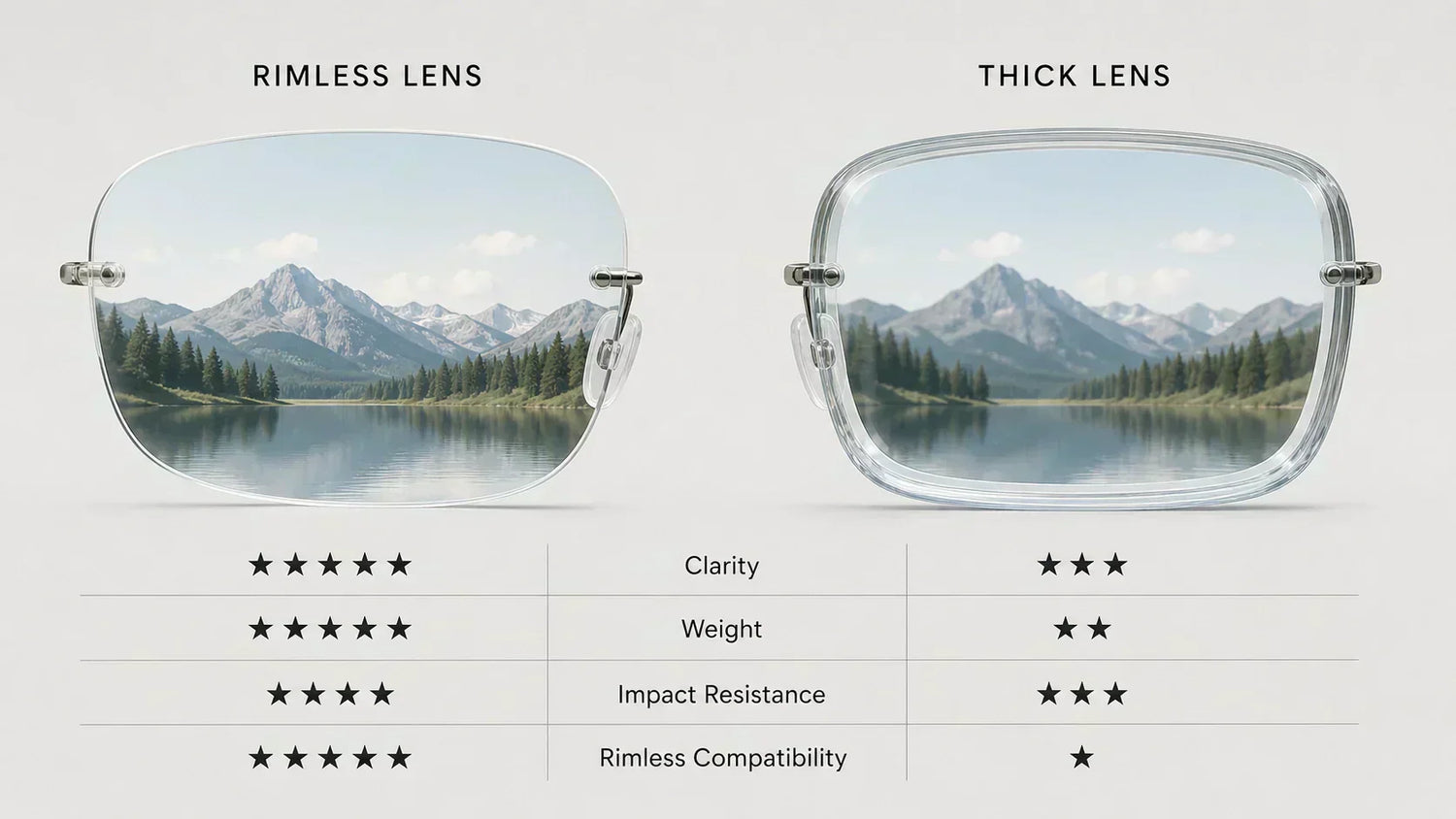
In full-frame sunglasses, the frame supports and hides much of the lens edge. In rimless sunglasses, the lens edge and mounting points are visible parts of the design.
The lens needs to hold its shape, support the hardware and avoid creating excessive front weight. This is why lightweight materials with clean finishing are often preferred for rimless construction.

Material Is Only One Part of Lens Quality
- UV protection: confirm UV400 or 100% UVA/UVB protection.
- Polarization: confirm separately when road, water or snow glare matters.
- Tint category or VLT: match visible darkness to the light conditions.
- Coating: hard coating, anti-reflective treatment and surface finishing affect daily use.
- Optical consistency: the lens should not create distracting distortion.
- Frame fit: good material cannot compensate for a frame that slips, pinches or feels front-heavy.
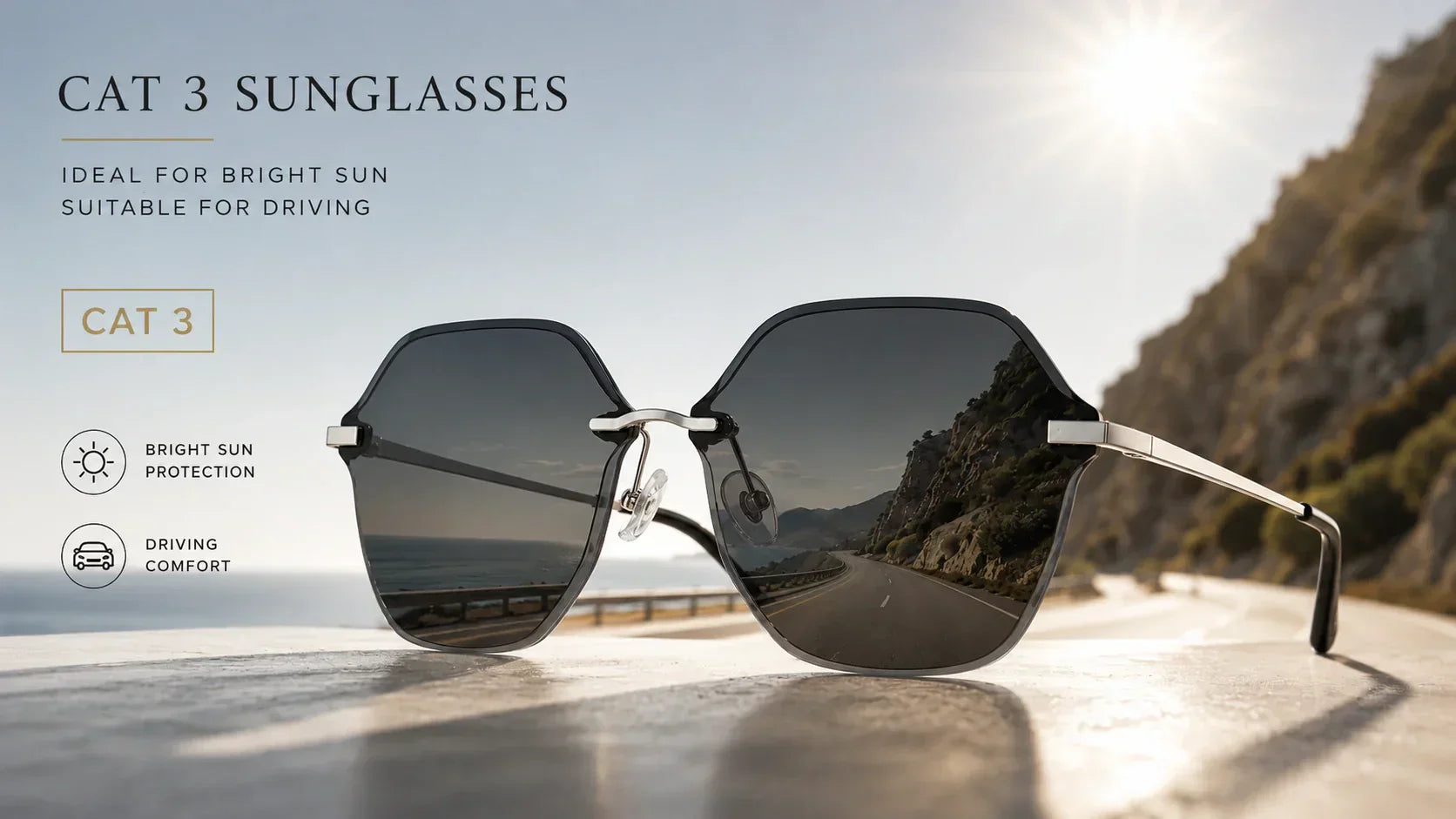
For UV and glare functions, read UV400 vs polarized sunglasses. For visible darkness, use the Category 3 guide.
Choose the Next Route
| Your priority | Best next step |
|---|---|
| Low visual weight and exposed lens design | Compare Signature Rimless sunglasses |
| Reflected glare for driving or travel | Compare Driving & Travel sunglasses |
| Lens tint and face visibility | Compare Rimless Gradient sunglasses |
FAQ
What is the best sunglass lens material?
There is no universal best. Choose glass for surface hardness, polycarbonate for impact-focused use, nylon for lightweight rimless design, or TAC when evaluating layered polarized construction.
Are nylon lenses better than glass?
Nylon is generally lighter and more flexible. Glass can provide strong surface hardness and crisp optics. The better option depends on frame design and use.
Are polycarbonate lenses plastic?
Yes. Polycarbonate is one specific type of plastic lens material.
What is TAC?
TAC usually means triacetate cellulose, a material commonly used in layered polarized sunglass lenses.
Which material is suitable for rimless sunglasses?
Lightweight materials such as nylon or polyamide are often considered for rimless designs, but mounting quality, edge finishing and coating also matter.
Does lens material prove UV protection?
No. Confirm UV400 or 100% UVA/UVB protection separately from the material name.