Sunglasses for Big Heads and Wide Faces (Women): 6 Picks, Measured
Sunglasses for big heads and wide faces stop pinching at two numbers: a front of 144 mm or more, where our wide fit begins, and temples of 145 mm or longer, so the arms reach behind the ears without pulling. Lens size alone does not decide it; the whole frame width does.
Start with Arc ($99, 147 mm, 145 mm temples), a rimless frame with deep lenses. Halo ($129) is an oversized thin-metal square and Volt ($159) a 24 g titanium cat-eye, both 145 mm with 147 mm temples. For the most room, Shift ($159) measures 154 mm.


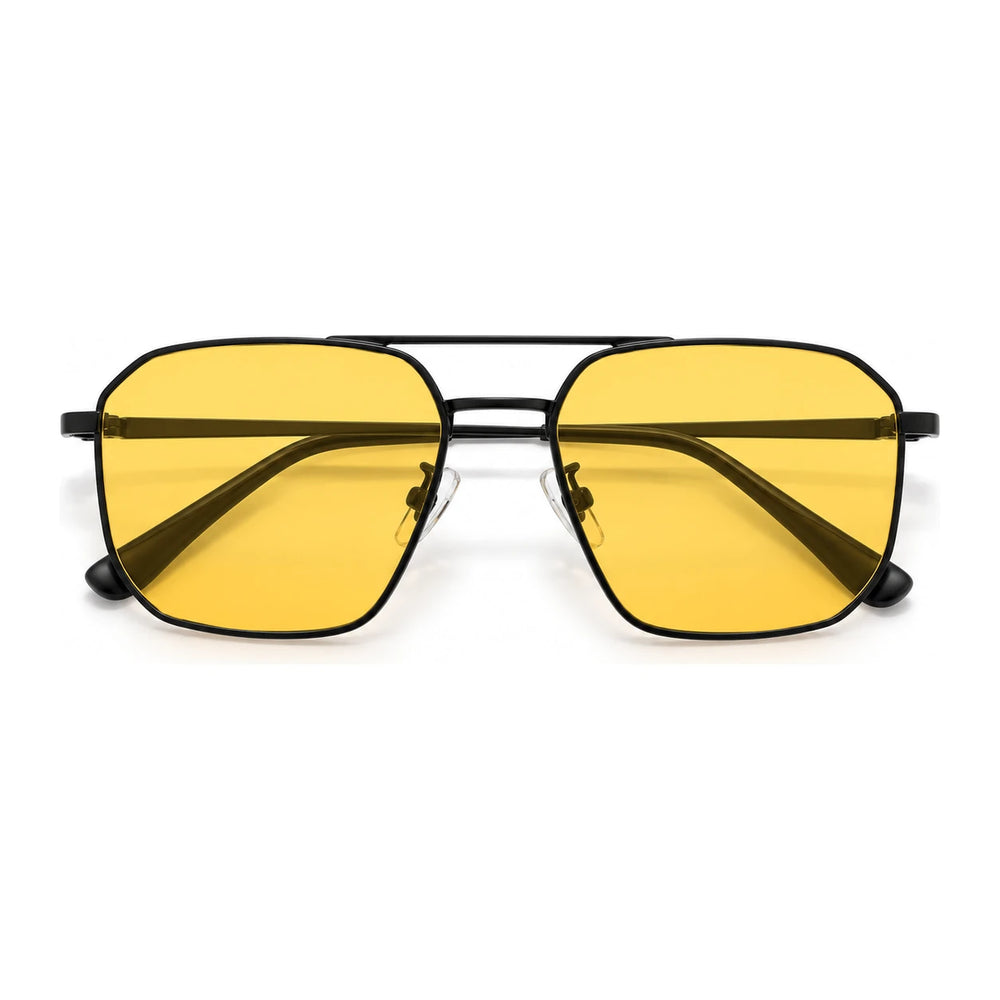


$159.00
The rule for a big head, in two numbers
Many sunglasses are built around an average frame width. On a wider head the temples have to bend outward to reach the ears, and that bend turns into side pressure: the frame stays on, but it stays on by force. Two measurements remove it.
- Front: 144 mm or more. This is the whole frame, measured straight across from one outer edge to the other. Our fit labels are petite up to 132 mm, regular 133–143 mm and wide from 144 mm. All six picks here are wide, from 145 to 154 mm.
- Temples: 145 mm or more. Temple length decides whether the tips curve behind the ears or press against them. A head that is long from front to back needs it as much as a wide one. All six picks have 145 or 147 mm temples.
A lighter frame helps once those two are right: weight that rests on the nose and ears is easier to carry over a long day. Five of the six picks weigh 30 g or less.

Six sunglasses for big heads and wide faces, measured
Numbers come from each frame's size chart. Every pick has nylon UV400 lenses and adjustable nose pads, which matters when a wide face also has a low bridge.
| Frame | Shape | Front + fit | Temples | Lens (W × H) | Weight | Polarized |
|---|---|---|---|---|---|---|
| Arc | Rimless, cut-edge lenses, chain-link temples | 147 mm, wide | 145 mm | 63 × 58 mm | 30 g | Noir Carbon, Honey Amber (not Orchid Veil) |
| Halo | Oversized square, thin metal | 145 mm, wide | 147 mm | 65 × 52 mm | 27.5 g | No |
| Volt | Titanium cat-eye, flat top | 145 mm, wide | 147 mm | 65 × 40 mm | 24 g | Every colour (3) |
| Shift | Titanium aviator, photochromic | 154 mm, wide | 145 mm | 66 × 48 mm | 20 g | No |
| Lyra | Acetate cat-eye | 145 mm, wide | 147 mm | 65 × 43 mm | 34 g | Noir Carbon only |
| Flow | One-piece rimless shield | 145 mm, wide | 147 mm | 65 × 50 mm | 30 g | Noir Carbon only |
Arc, Halo, Volt and Lyra carry a darker Category 3 tint for bright sun; Flow and Shift a Category 2 tint for everyday light, and Shift's lenses are photochromic, so they darken in sun.


Which shapes suit a wide face?
A big head is mostly a pressure problem; a wide face is also a visual one. A frame narrower than the face makes the face look wider beside it, and a thick border adds bulk. The shapes that work give horizontal room with little visual weight.
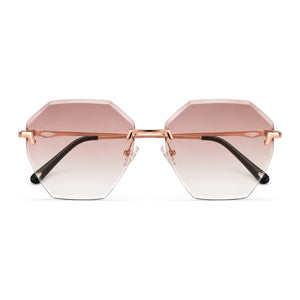
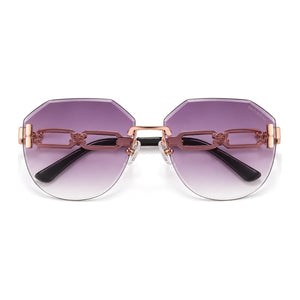
- Rimless, for the lightest look: Arc spans 147 mm with no frame around the lens, so a wide face stays open. Its 58 mm deep lenses shade more of the eye area than most.
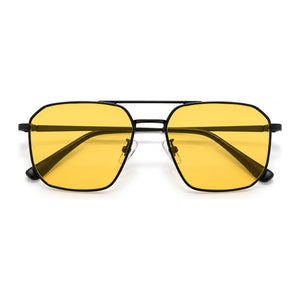
- A lifted cat-eye, for structure: Volt keeps a flat brow line in thin titanium; Lyra is the classic acetate version, fuller and heavier at 34 g.
- An aviator, for the widest front: Shift is 154 mm across and the lightest pick at 20 g, with a 22 mm bridge.
- An oversized square, for a straight line: Halo gives a wide face a clear top edge without heavy acetate.
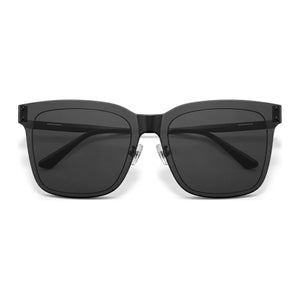
- A shield, for coverage: Flow is one rimless 65 × 50 mm lens across a 145 mm front.
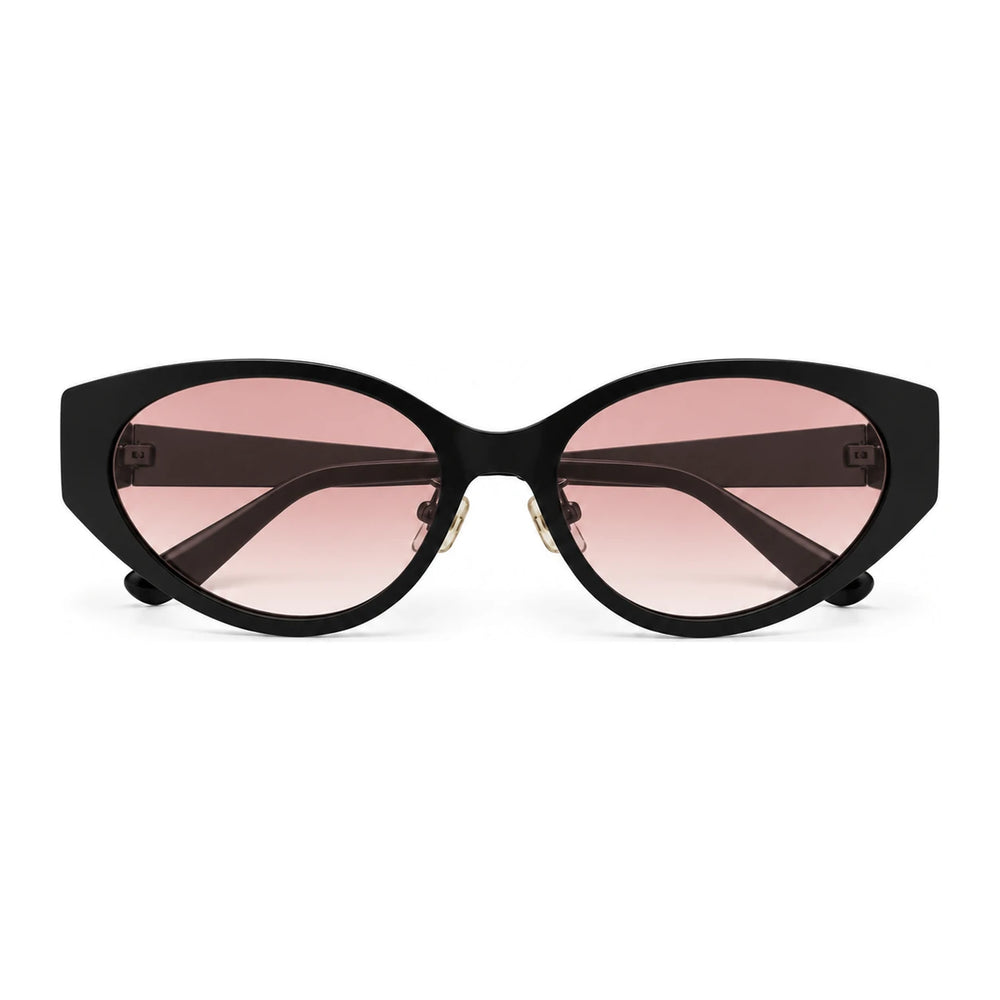


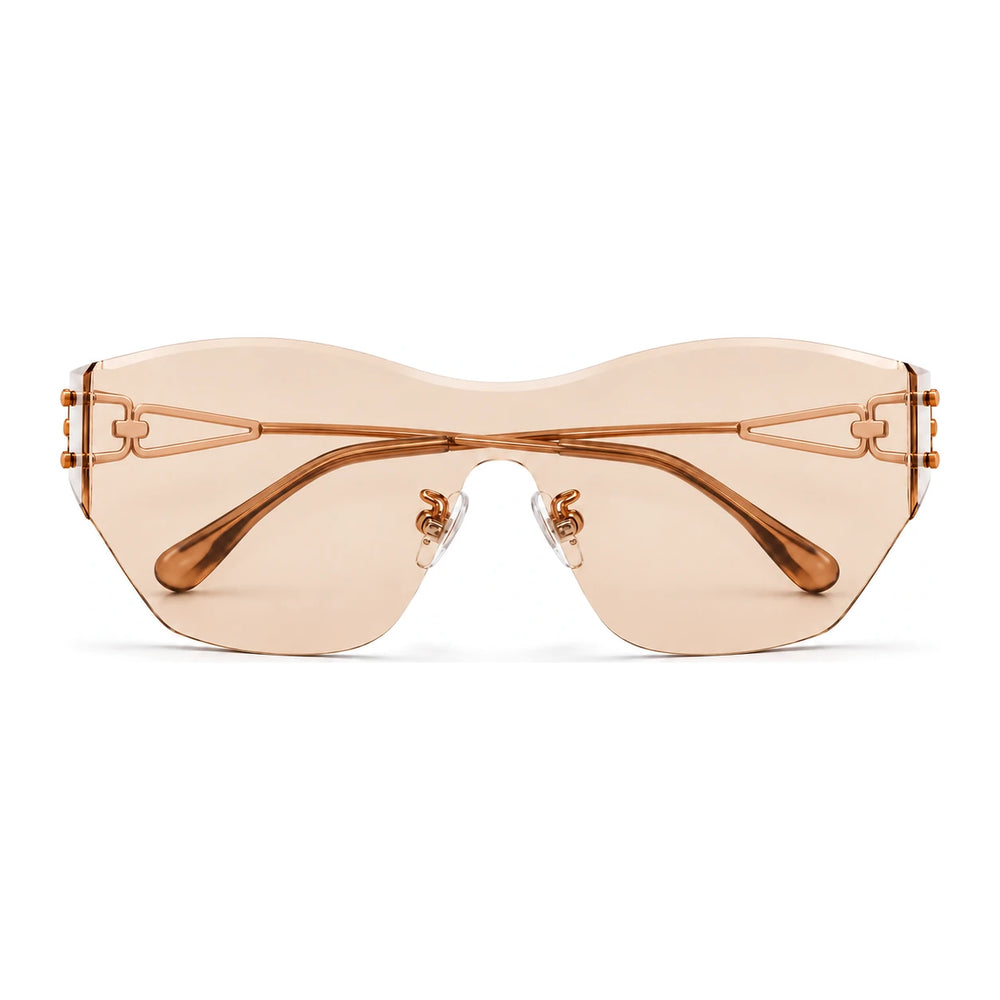


$99.00
What to avoid with a big head
| Avoid | Why | Choose instead |
|---|---|---|
| Big lenses on a narrow front | Oversized lenses do not stop pinching if the front is under 144 mm. | Check the front width first, then the lens. |
| Temples under 145 mm on a long head | The tips press on the back of the ears. | Temples of 145–147 mm. |
| Heavy, thick frames | More weight on the nose and ears, and more bulk on a wide face. | Titanium or thin metal at 30 g or less. |
| Small round or narrow rectangle lenses | They make a wide face look wider. | A cat-eye, square, aviator or shield at 145 mm or more. |
How to check your size at home
Find a pair you already own that fits, or one that pinches, and look inside the temple. Most frames print three numbers, such as 63□21 145: lens width, bridge and temple length, in millimetres. Lens width × 2 plus the bridge gives an approximate front width: Arc is 63 × 2 + 21 = 147 mm.
If your pinching pair adds up to 143 mm or less, move to 144 mm or more; every pick here is 145 mm or wider. If the front was fine but the ears hurt, look for longer temples. Then wear a new pair for 10–15 minutes before you judge it:
- Temples: they rest without clamping or leaving red marks.
- Behind the ears: the tips sit naturally, with no soreness.
- Bridge: the frame stays put; one that slides often starts to press as it moves.
- Cheeks: the lenses clear them when you smile.
How we measure explains each number on our size charts.
Big head or something else?
Width is one part of fit. If this guide does not quite describe you, one of these will.
- Wide face but a short head, and long temples feel loose: Muse ($129, 148 mm, 136 mm temples), a rimless lifted cat-eye, or Aurelia ($129, 148 mm, 142 mm temples), a slim metal square; both are polarized in every colour.
- Broad nose bridge: Glow ($159, 145 mm) has a 25 mm bridge, the widest we make, with photochromic lenses polarized in every colour.
- Wide face and a low bridge, so frames slide or touch the cheeks: the low bridge fit guide.
- Long face rather than a wide one: the oblong face guide.
- Full cheeks and a soft jaw: the round face guide.
- Frames at 145 mm look too big: you may be regular fit (133–143 mm); start with Backbone ($99, 140 mm). Smaller still, see the small-face guide or all petite sunglasses.
- One side sits higher or presses harder: the crooked sunglasses guide.
FAQ
What size sunglasses do I need for a big head?
A front of 144 mm or more and temples of 145 mm or longer. All six picks qualify: Halo, Volt, Lyra and Flow are 145 mm with 147 mm temples, Arc is 147 mm with 145 mm temples, and Shift is 154 mm with 145 mm temples. Fit is about measurements, not gender, so the same numbers apply to anyone with a large head.
What are the widest BAPORSSA sunglasses?
For everyday wear, Shift at 154 mm, then Muse and Aurelia at 148 mm and Arc at 147 mm. Sprint, our curved one-piece shield, measures 155 mm but has shorter 130 mm temples. Every wide frame is in the wide fit collection.
Which of these are polarized?
Volt is polarized in every colour. Arc is polarized in Noir Carbon and Honey Amber, not Orchid Veil; Lyra and Flow only in Noir Carbon. Halo and Shift are not polarized. All six are UV400.
How long does delivery take, and can I return them?
US orders usually arrive in about 10 days; our published estimate is 8–16 business days, including 1–3 days to prepare your order. You can return a pair within 30 days; for a fit or style return, you pay the return postage. Every frame has a 1-year warranty.
Final recommendation
If sunglasses always feel tight, check the front (144 mm or more) and the temples (145 mm or more) before the lens size. Start with Arc ($99) for a rimless 147 mm front, Volt ($159) for the lightest polarized pick at 24 g, or Shift ($159) if you need the most width.

Collection
10 styles
Large and XL frames, 144 mm or more across the front. Every frame here is labelled wide, with more room at the temples and...