


Quick answer: Sunglasses usually sit crooked for one of two reasons: the frame is bent, or the frame is straight but your ears, nose bridge, nose pads, cheeks, or temples support it unevenly. Start with the flat table test. If the frame sits flat on a table but tilts on your face, the issue is usually fit—not a defective frame.
This guide helps you diagnose why one lens sits higher, one side drops, or your sunglasses look tilted after a few minutes. Do the checks below before bending the frame. If the frame is cracked, warped, loose at the hinge, or loose around rimless hardware, do not force it—use an optician or replace the frame.
First: Is the Frame Bent or Is It a Fit Problem?
Before you adjust anything, separate a frame problem from a fit problem. A frame can be perfectly straight in your hand but still look crooked on your face because ears, nose bridge height, cheek contact, and temple pressure are not always symmetrical.
| What you notice | Most likely cause | What to do first |
|---|---|---|
| The frame wobbles on a table | Bent frame, hinge, or temple alignment issue | Do not force it. Use an optician for major adjustment. |
| The frame is flat on a table but crooked on your face | Uneven ears, bridge balance, cheek height, or nose-pad pressure | Use the mirror test and check nose pads. |
| The sunglasses start level, then tilt | Sliding, weak bridge grip, or side pressure | Check frame weight, bridge fit, and temple pressure. |
| One side feels tighter | Narrow frame width or uneven temple pressure | Compare frame width and side pressure. |
| One nose pad leaves a deeper mark | Uneven nose-pad angle or pressure | Read the nose pads guide. |
7 Reasons Your Sunglasses Sit Crooked
Use these checks in order. They tell you whether you need a small adjustment, better bridge support, a roomier frame, or a lighter structure.
1. The Frame or Hinge Is Bent
Open both temples fully and place the sunglasses upside down on a flat table. Check whether both temple tips touch evenly. Then turn the frame upright and check whether the front sits level.
If the sunglasses wobble on the table, the frame or temple alignment may be off. If they sit flat on the table but look crooked on your face, the issue is more likely fit-related.

2. One Ear Sits Higher or Farther Back
One ear often sits slightly higher, lower, or farther back than the other. Most people only notice it when they wear a straight object across the face.
Look straight into a mirror. If the same side always drops, lift the lower side gently with one finger. If the frame immediately looks level, the sunglasses may need tiny temple balance changes—not aggressive bending.

3. One Nose Pad Presses Harder Than the Other
Nose pads control height, balance, and grip. If one pad sits closer to the nose than the other, the frame can tilt even when both temples are straight.
- If one lens sits lower, the nose pad on that side may be carrying too much pressure.
- If one pad leaves a deeper mark, the pads may not be balanced.
- If the whole frame slides before tilting, the bridge fit may be too low, too wide, or too heavy.
For bridge height and cheek contact, use the low bridge fit guide. For nose-pad grip, red marks, and pad comfort, use the silicone nose pads guide.

4. The Bridge Fit Is Unstable
If the bridge is too wide, too low, or not supported evenly, the frame can slowly rotate as you move. This is especially common when sunglasses start level but begin to tilt after walking, talking, or looking down.
When bridge instability is the cause, the solution is usually better bridge grip, adjustable nose pads, or lighter frame weight—not simply bending the temples.
5. The Frame Is Too Narrow for Your Face
Sometimes sunglasses look crooked because the frame is too narrow or too rigid for your head width. If one temple presses harder, that side can lift, rotate, or drift out of place.
- One temple digs into the side of your head.
- The frame feels tighter on one side.
- The sunglasses look level at first, then rotate after a few minutes.
- You feel pressure behind one ear.
- The frame leaves marks at the temples.
If this is your issue, do not only adjust the nose pads. Check frame width first. Read the wide face and anti-pinch guide, then compare roomier options in Wide Fit / Anti-Pinch.
6. Temple Pressure Is Uneven
Even when frame width is technically correct, one temple may push harder than the other. This can happen because of head shape, ear position, hinge angle, or small temple-arm imbalance.
If one side always feels tighter, the frame may need professional temple adjustment. If several frames feel tight in the same area, choose a roomier or lighter structure instead of repeatedly forcing narrow frames.
7. Sliding Happens Before the Tilt
If the sunglasses start level and then tilt, the first problem may be sliding. A weak bridge grip, heavy frame, or uneven temple pressure can make the frame rotate as you move.
When sliding comes first, solve the sliding problem before you try to straighten the frame. Read how to stop sunglasses from sliding down if the frame moves before it tilts.
What You Can Safely Check at Home
Simple diagnosis is fine. Heavy adjustment is not. The goal is to understand the problem before you decide whether you need a small professional adjustment or a different frame style.
| Safe check | What it tells you | Good next step |
|---|---|---|
| Flat table test | Whether the frame itself looks uneven. | If it wobbles, avoid forcing the frame. |
| Mirror test from straight ahead | Whether one lens sits higher on your face. | Compare ear height and bridge balance. |
| Nose-pad mark check | Whether one pad carries more pressure. | Check adjustable nose pads or pad angle. |
| Temple pressure check | Whether one side is pushing harder. | Check frame width and side pressure. |
| Slide-then-tilt check | Whether bridge grip is the first problem. | Use the sliding-down guide before bending the temples. |
What Not to Force
Do not twist lenses, force hinges, heat coated lenses, bend rimless hardware aggressively, or repeatedly flex the same spot. If the frame is cracked, expensive, loose, or badly warped, take it to an optician.
This is especially important for rimless sunglasses. They can feel lighter and cleaner on the face, but the lens, bridge, screws, and temple hardware should not be forced.
When Replacement Makes Sense
Do not replace sunglasses just because they look crooked once. Replace them only when the frame is straight but the fit still keeps failing in the same way: sliding, rotating, pinching, or sitting unevenly.
For crooked-fit problems, the better replacement route is not always the stiffest frame. A lighter frame, adjustable nose pads, and enough temple room can be easier to fine-tune than a heavy, rigid, narrow frame.
| If your current sunglasses... | Choose this structure instead | Why it helps |
|---|---|---|
| Look tilted because one ear sits higher | Lightweight frame with adjustable support | Less weight makes small left-right differences less obvious. |
| Slide first, then tilt | Adjustable nose pads and better bridge grip | The frame has more control points before it starts rotating. |
| Press harder on one side | Roomier frame width and softer temple balance | Less side pressure means less twisting on the face. |
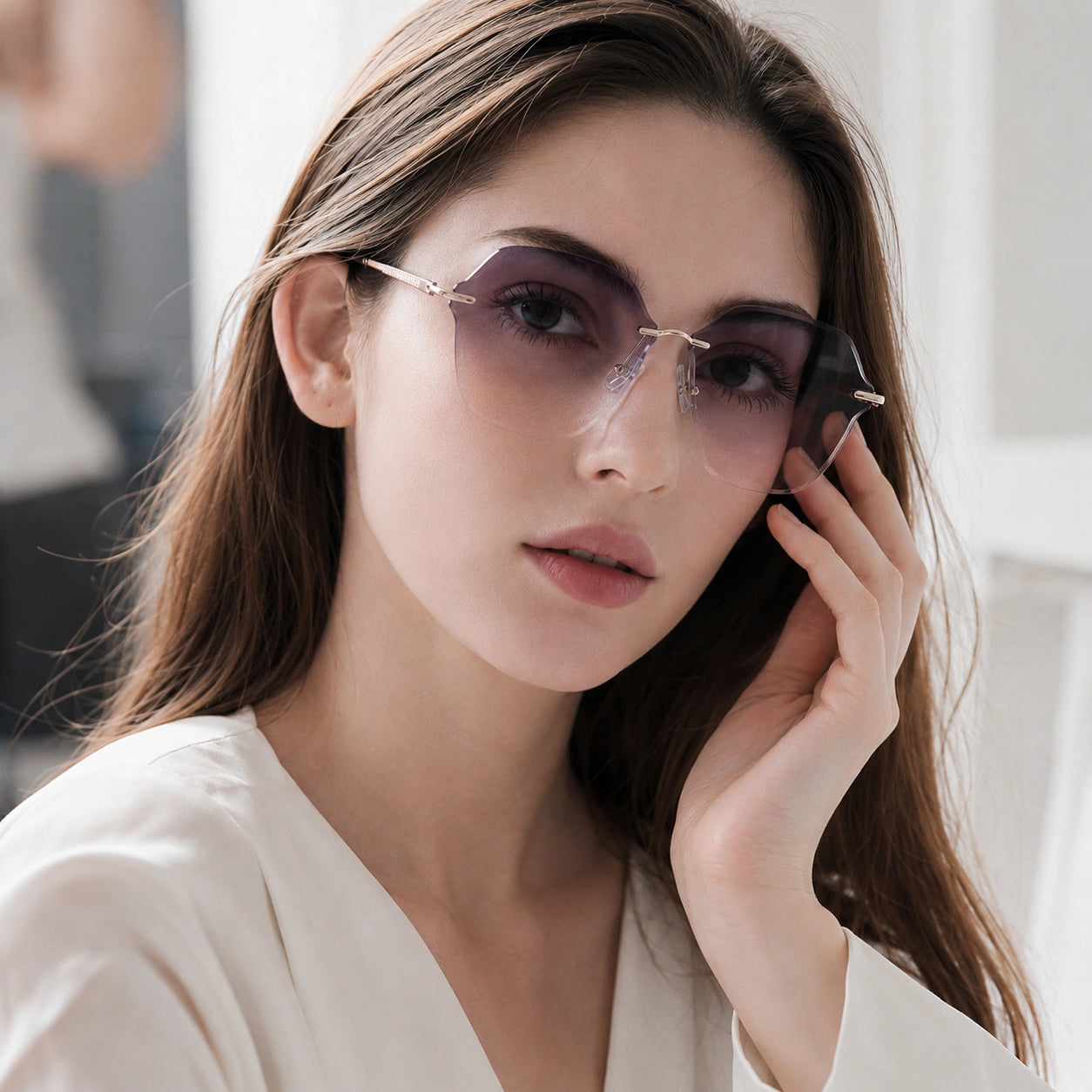
| Feel visually heavy even when adjusted | Rimless or low-bulk front design | Less frame bulk makes small asymmetry less noticeable. |
BAPORSSA Fit Route for Crooked Sunglasses
The goal is not to promise that one frame fixes every uneven face. The goal is to choose a structure that is easier to balance: lighter weight, adjustable support points, and enough room at the temples.
| Fit problem | Best structure to look for | BAPORSSA route |
|---|---|---|
| Uneven ears or small left-right height difference | Lightweight rimless frame with adjustable support | Backbone |
| Bridge balance, nose-pad marks, or pressure-sensitive fit | Adjustable nose pads and softer bridge control | Luma |
| Sliding, daily movement, or frame weight fatigue | Clean lightweight fit for all-day wear | Air |
| Side pressure, tight temples, or wider face width | Roomier width and anti-pinch balance | Wide Fit / Anti-Pinch |


Where to Go Next
| Your main issue | Read next | Best shopping route |
|---|---|---|
| You are not sure which frame shape fits your face | Complete sunglasses face shape guide | Rimless Gradient Sunglasses |
| The frame slides before it looks crooked | How to stop sunglasses from sliding down | Lightweight rimless options |
| Your bridge sits low or the frame touches your cheeks | Low bridge fit sunglasses guide | Adjustable nose-pad styles |
| One nose pad leaves a deeper mark | Silicone nose pads guide | Luma |
| The sides feel tight or uneven | Wide face and anti-pinch guide | Wide Fit / Anti-Pinch |
FAQ
Why are my sunglasses crooked on my face?
Your sunglasses may look crooked because one ear sits higher, one nose pad presses differently, one temple arm is out of balance, the bridge fit is unstable, the frame is too narrow, or the frame itself is bent.
How do I know if my sunglasses are bent?
Place them on a flat table with both temples open. If the frame wobbles, the frame or temple alignment may be off. If it sits flat but looks crooked on your face, the issue is more likely fit-related.
Can uneven ears make glasses sit crooked?
Yes. Uneven ears are a common reason glasses or sunglasses sit higher on one side. A small temple balance adjustment can help, but forcing the frame is not recommended.
Can nose pads make sunglasses crooked?
Yes. If one nose pad presses harder or sits at a different angle, the frame can tilt. Adjustable nose pads can help fine-tune bridge balance.
Why do my sunglasses become crooked after a few minutes?
If they start level and then tilt, the cause is often sliding, side pressure, or an unstable bridge. Check nose-pad grip, frame width, temple pressure, and overall frame weight.
Should I fix crooked sunglasses at home?
You can do simple checks at home, such as the table test and mirror test. Avoid forcing hinges, twisting lenses, heating lenses, or bending rimless hardware aggressively. Use an optician for significant adjustments.
What sunglasses are better for uneven ears?
Lightweight frames, adjustable-nose-pad frames, and frames with enough temple room are usually easier to balance than heavy, rigid, narrow frames.
Are rimless sunglasses good for crooked fit?
Rimless sunglasses can help visually because they reduce frame bulk, but they still need the right width, bridge support, and careful handling. Do not force rimless lens hardware.
Final recommendation: If your sunglasses sit crooked once, diagnose first. If the frame sits flat on a table but keeps tilting on your face, choose a lighter, easier-to-balance structure with adjustable support points rather than forcing a heavy or narrow frame to work.