
Sunglass lens colours: grey vs brown, rose, green and gradient
Quick answer: Choose grey lenses for bright sun and true colour, brown for warmer contrast on the road, rose or pink for a softer look, and green as a balanced middle ground. Gradient lenses, darker at the top and lighter below, are the easiest everyday choice for city wear, screens and dashboards. Colour changes how light feels, not how well you are protected, so check UV400 and polarization separately.
Sunglass lens colour chart
| Lens colour | Best for | Look and feel | Our frames in this tint |
|---|---|---|---|
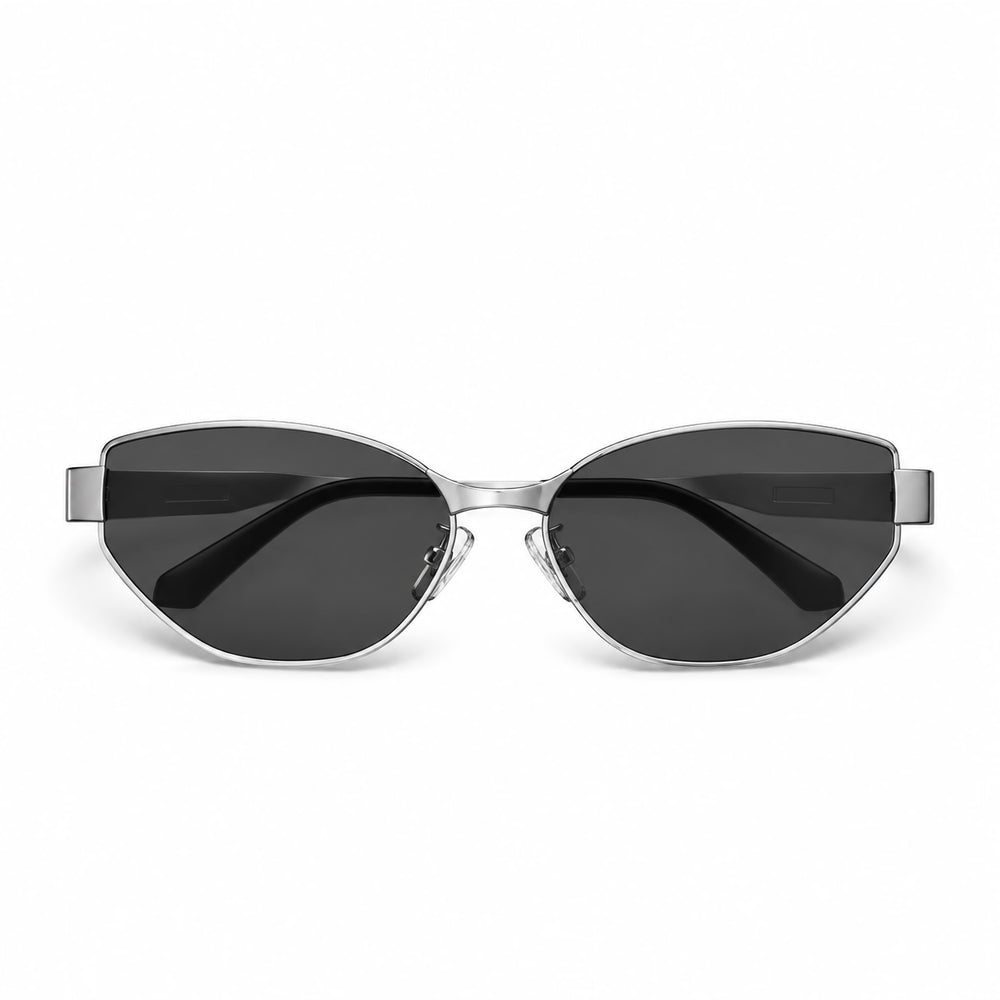
| Grey / black | Bright sun, driving, true colour | Clean, neutral, crisp | Onyx in Graphite Mist, Backbone in Crystal Grey |
| Brown / bronze | Driving, travel, mixed light | Warmer view, stronger contrast | Luma in Cognac Fade, Vanguard in Bronze Amber |
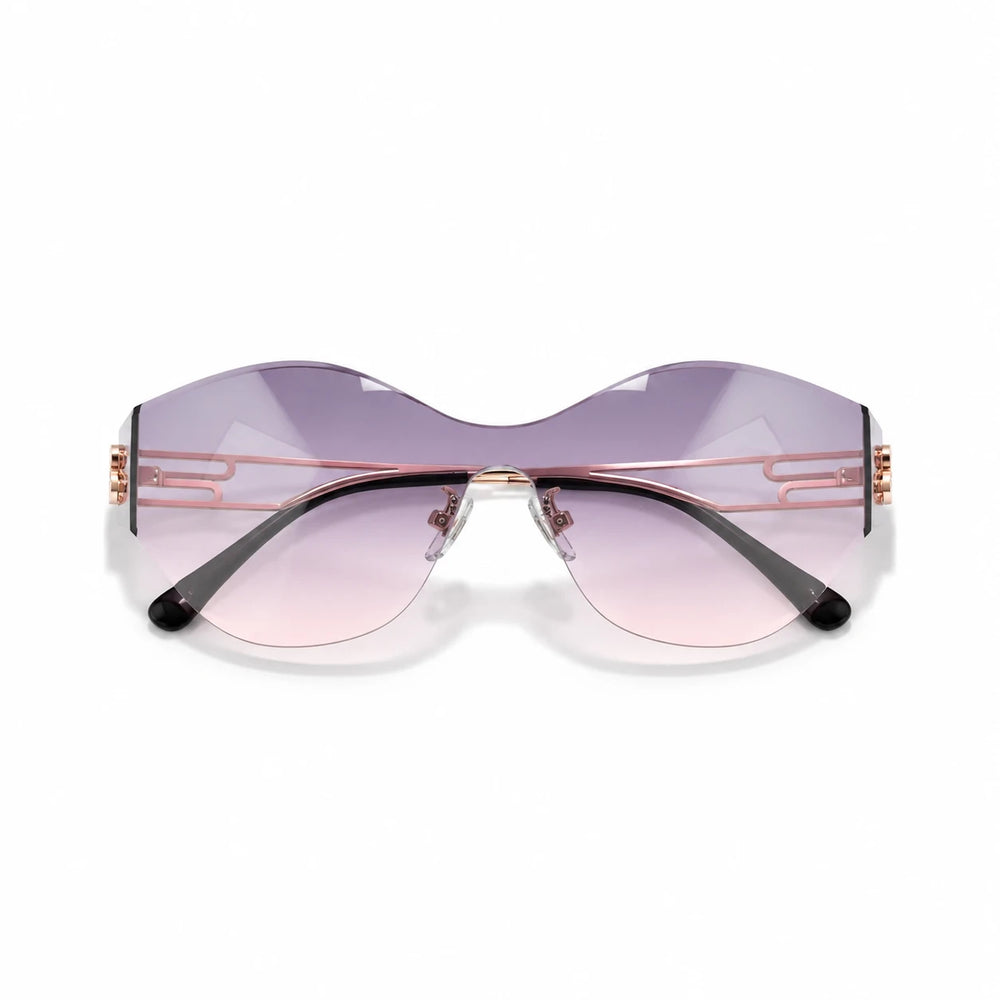
| Rose / pink | Soft light, cloudy days, a lighter face look | Softer, brighter, less harsh | Backbone in Luminous Rose, Vanguard in Rose Quartz |
| Green | General outdoor wear | Balanced, classic, slightly vintage | Comparison only, not a main BAPORSSA tint |
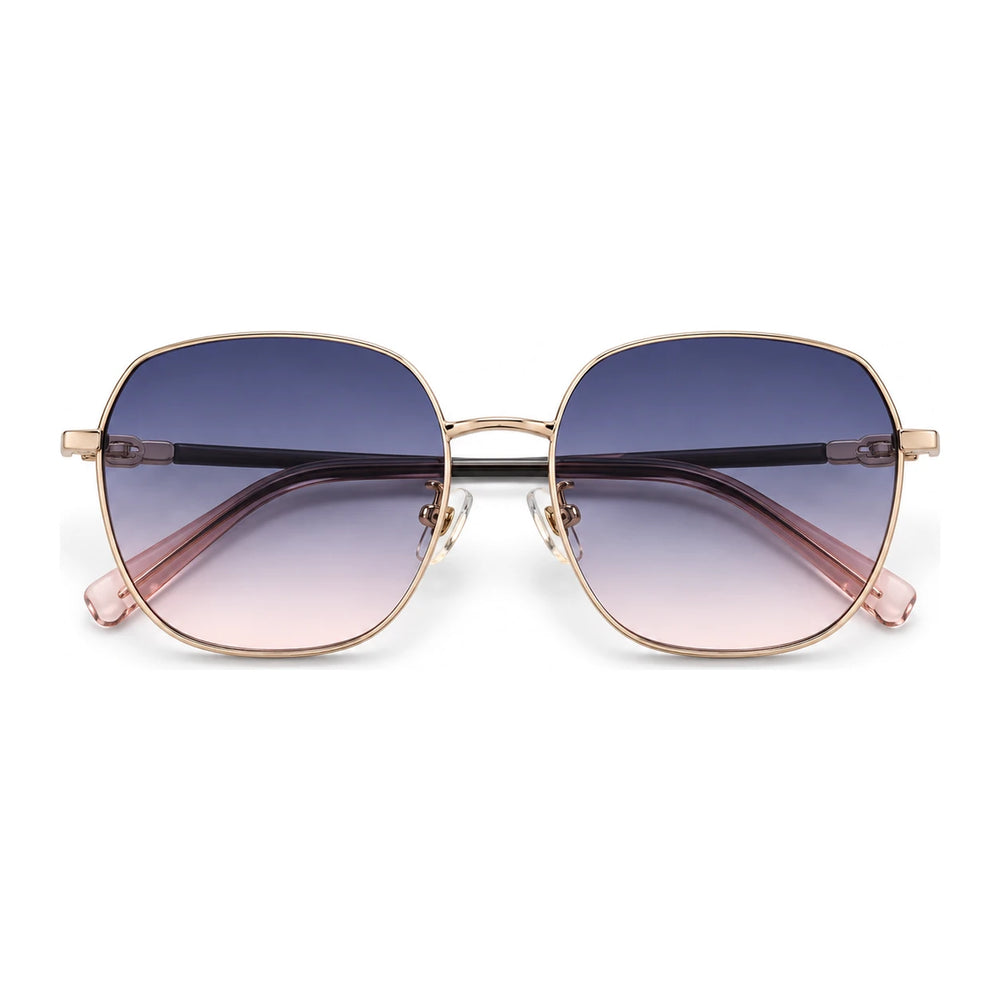
| Gradient | City wear, driving, phone checks, makeup | Darker top, lighter lower view | Vanguard in Riviera Dawn, Air in Dusk Blush |

Grey vs brown sunglass lenses
Grey cuts brightness without shifting colours much, so it feels crisp in bright sun, on open roads and at the beach. A "black" lens is usually a very dark grey, so brown vs black works the same way as brown vs grey.

Brown and bronze add warmth. Shadows, road texture and outdoor contrast look more defined, which is why many people like them for driving, travel and changing daylight.
The simple difference: grey keeps colour neutral, brown adds warmth and contrast. For driving both work. Grey feels cleaner in strong sun; brown can feel easier when the light moves between open road, trees, buildings and dashboard reflections.







Green lenses: between grey and brown
Green sits between grey and brown: some contrast, less warmth than brown and a classic, slightly vintage outdoor look. Green vs brown comes down to the same choice as grey vs brown: green keeps colours closer to neutral, brown makes the view warmer and more defined.
Does lens colour affect UV protection or polarization?
No. A dark lens is not automatically safer and a light one is not weaker: UV protection depends on the lens standard, so look for UV400. Polarization is a separate filter that cuts reflected glare from roads, water and glass, and a grey, brown or green lens can have it or not. Darkness is the lens category: Cat 2 for everyday brightness, Cat 3 for bright sun.
BAPORSSA lenses are nylon and UV400 unless the product page says otherwise. Backbone, Luma and Vanguard are polarized in every colour; Contour, Arc, Lyra, Flow and Perla vary by colour; Noir, Edge, Halo, Onyx, Opal, Shift and Facet are not polarized. More in UV400 vs polarized sunglasses.


Rose and pink lenses: softer light and a softer face look
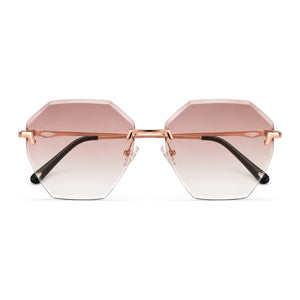
Rose and pink lenses make bright light feel less harsh and keep the face from looking too dark, especially in rimless or gradient frames. They suit cloudy days, soft light and makeup-friendly styling better than very dark solid lenses. If comfort in bright light is the reason you are looking, read our guide to sunglasses for light sensitivity.

What are gradient lenses?
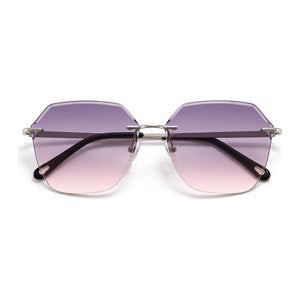
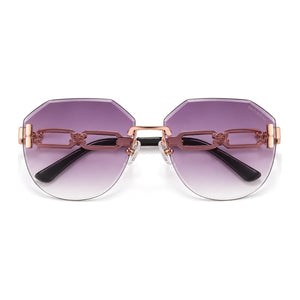
Gradient lenses are darker at the top and lighter toward the bottom. The upper lens handles overhead sun while the lower part stays easier for phones, dashboards, menus and eye contact, which makes them practical for city wear and driving. The fade can be brown, grey or grey-pink: Luma comes in Cognac Fade, Air and Contour in Dusk Blush.
Because they shade the eyes without hiding your expression, gradients pair well with rimless frames and visible eye makeup. On a smaller face, settle the frame first and the tint second; our petite fit guide has the measurements.

For road glare and dashboards, read best sunglasses for driving or best rimless sunglasses for women for the frames. A tint will not fix a frame that pinches, though: if that is your trouble, sunglasses for big heads and wide faces starts from the width of the front.

Collection
Rimless & Gradient Sunglasses for Women
11 styles
Lenses without a rim, held by the bridge and temples. Every style lists its lens width, bridge and weight, and each colour says whether...
FAQ
Are grey or brown sunglass lenses better?
Grey is better for true colour and a clean view in hard sun. Brown is better for warmth and contrast in mixed daylight and changing road light.
What lens colour is best for driving?
Grey, brown and gradient lenses all work: grey stays neutral, brown sharpens contrast, and a gradient keeps the dashboard easy to read.
What sunglass lens colour is best for bright sun?
Grey or green-grey, ideally in a Cat 3 lens, because they reduce brightness while keeping colours close to neutral.
Are rose tinted sunglasses good?
Yes for soft light, cloudy days and a lighter face look. For hard midday sun, most people find grey or brown more comfortable.
Are darker lenses always better for your eyes?
No. Darker lenses can feel more comfortable in bright light, but darkness is not the same as UV protection or glare control.


