


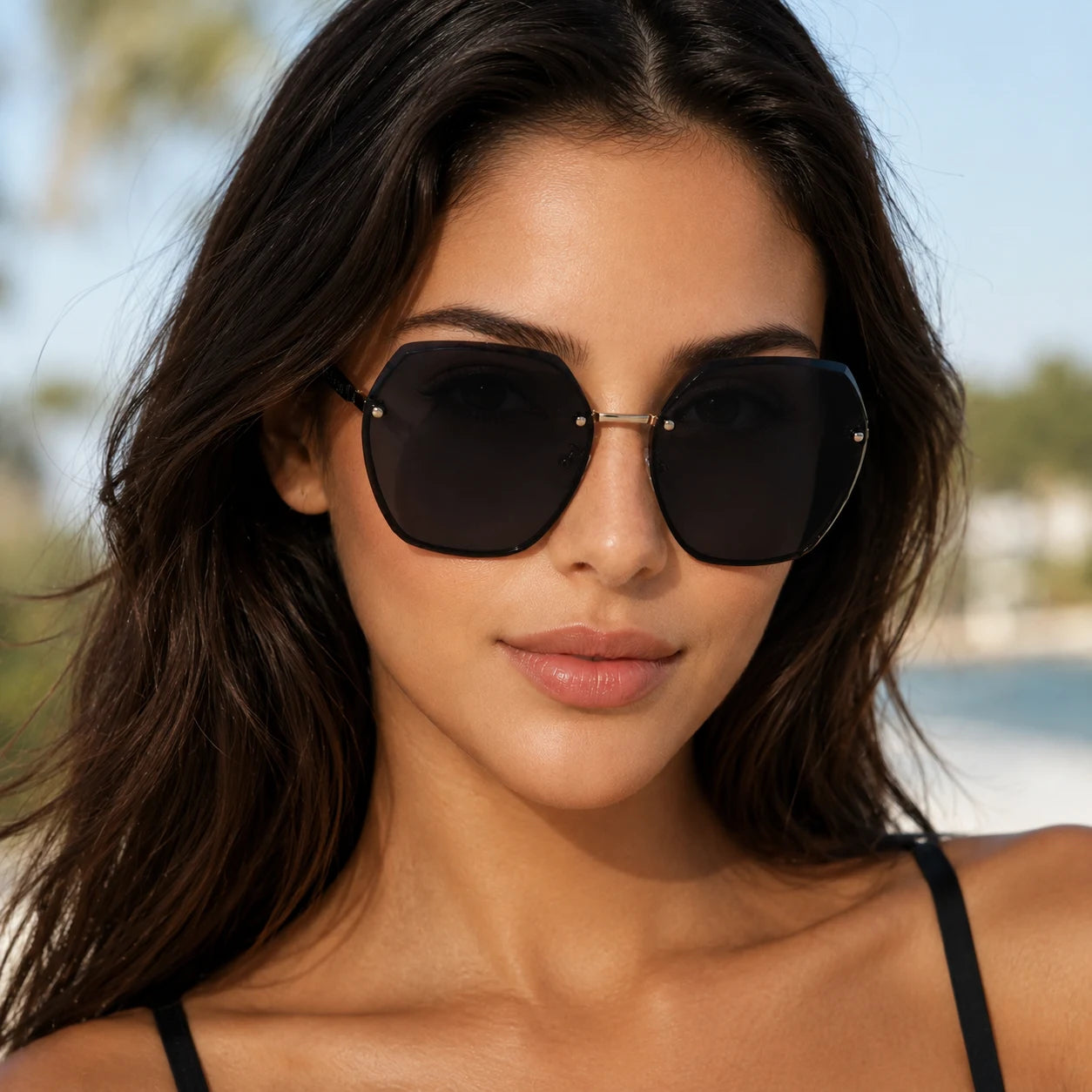
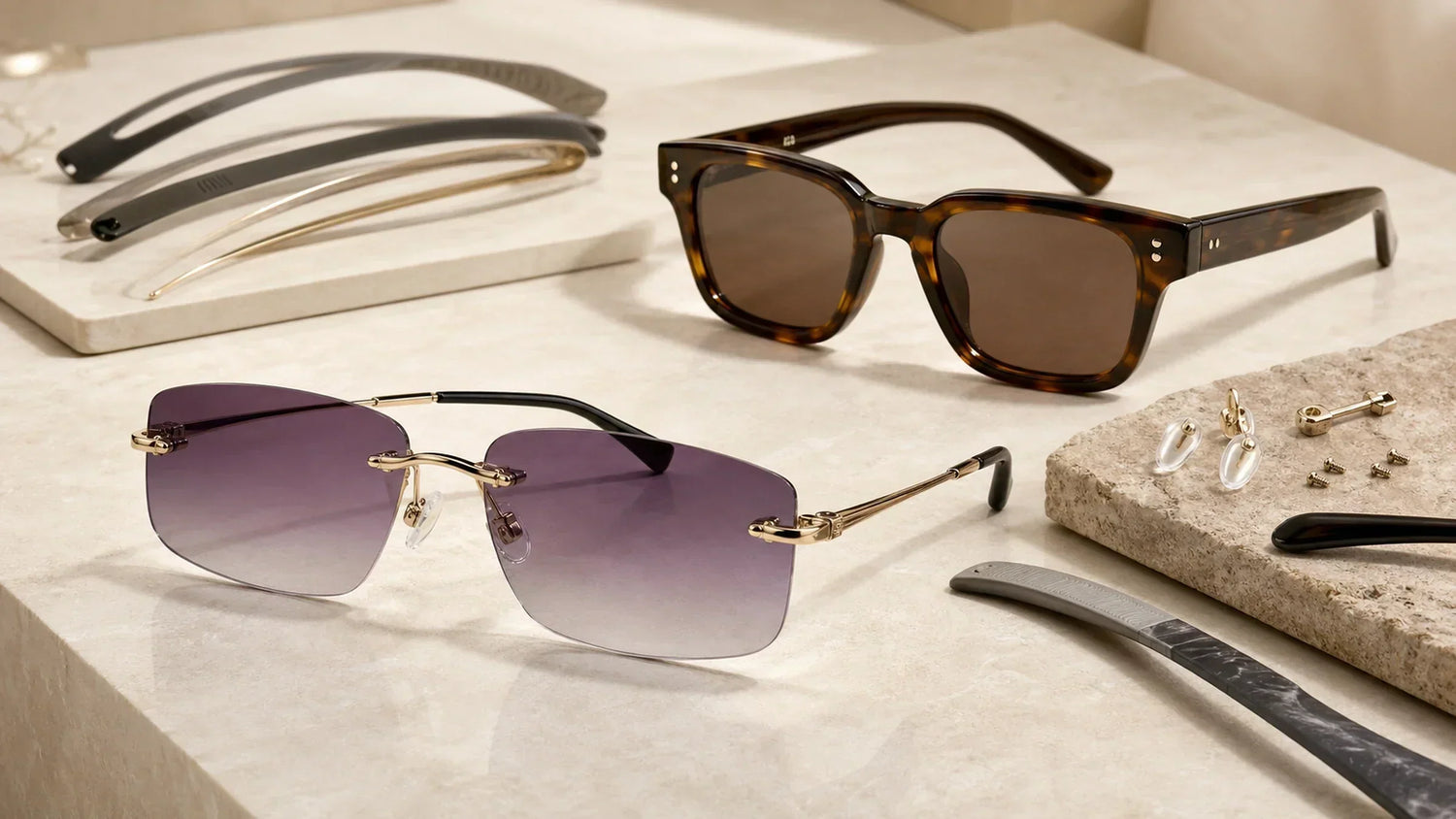
Quick answer: the best sunglasses frame material depends on what you want the frame to do. Choose slim metal or rimless construction for a cleaner face and adjustable bridge control, acetate for bold color and stronger frame presence, plastic or TR90-style frames for lightweight casual wear, and titanium only when the product specification clearly confirms it.
Frame material is not just a style detail. It affects how much pressure you feel on the nose, how stable the temples feel behind the ears, how much frame you see on the face, and how the sunglasses hold up after repeated wear. Shape decides the silhouette; material decides how that silhouette feels.
For lens material, read our sunglass lens materials guide. For face balance, start with our face shape sunglasses guide. For the full purchase route, use the BAPORSSA sunglasses buying guide.

Best Sunglasses Frame Material: Quick Decision Table
| What you want | Best material route | Why it works | Watch for |
|---|---|---|---|
| Cleaner face look | Slim metal or rimless construction | Less border around the eyes and cheeks | Lens-edge finish, screw work, bridge stability |
| Adjustable bridge fit | Metal with adjustable nose pads | Small pad changes can reduce sliding and pressure | Pad quality, arm alignment, temple tension |
| Bold fashion statement | Acetate or thicker plastic | More color, stronger outline, more style presence | Extra weight, cheek contact, less adjustability |
| Sport / travel practicality | TR90-style lightweight construction | Flexibility and lower weight | More casual mood, bulkier temples |
| Premium lightweight metal | Verified titanium spec | Can be light and corrosion-resistant when real | Do not assume every slim metal frame is titanium |
| Less pressure for daily wear | Lightweight frame + stable bridge | Less weight means less force on the nose and ears | Too light can still slide if fit is wrong |
Sunglasses Frame Materials Compared
There is no single material that wins every category. A material only works when it matches the lens size, bridge design, temple tension, hinge quality and the way you actually wear sunglasses.

| Material | Best for | Tradeoff | Best BAPORSSA route |
|---|---|---|---|
| Metal sunglasses frames | Slim lines, adjustable nose pads, refined structure | Finish quality and plating matter | Clean daily and rimless routes |
| Acetate sunglasses frames | Color depth, bold shapes, retro statement | More physical and visual weight | Use when you want frame presence, not a barely-there look |
| Plastic sunglasses frames | Casual style, lower cost, color variety | Can feel less refined if hinges or edges are weak | Judge finish and fit, not just the word “plastic” |
| TR90-style lightweight frames | Travel, sport influence, flexible daily use | Often feels more casual than jewelry-like | Good when function matters more than polish |
| Titanium sunglasses frames | Light metal feel, corrosion resistance, sensitive-skin interest | Must be confirmed by product specs | Only trust explicit product-level material claims |
| Rimless sunglasses | Less frame, cleaner face, open field of view | Construction has less room to hide poor finishing | Best when lens edge, bridge, screws and temples are handled well |
Frame Weight: Why Material Changes Comfort
Frame weight becomes pressure. Pressure becomes sliding, red marks, cheek contact, makeup dents and the feeling that you want to take the sunglasses off even when they look good.

The nose bridge carries a large part of the frame and lens weight. The temples and ears carry the rest. If a frame is heavy, it often needs more temple pressure or stronger nose-pad grip to stay stable. That can feel secure at first and annoying after an hour.
A lightweight frame is not automatically better, but it gives the design more room to feel easy. For daily wear, driving, travel and warm days, less weight usually means less pressure and fewer adjustments.
If sliding is the main issue, material is only one part of the answer. Use our guide on how to stop glasses from sliding down your nose to diagnose bridge fit, nose pads, temple angle and frame width.
Metal Sunglasses Frames: Slim, Refined and Adjustable
Metal is often the best route when you want sunglasses that feel refined without hiding the face. Metal frames can be slim, structured and more adjustable than thick fixed-bridge frames. They also work well with rimless or semi-rimless construction because they can support the lens without adding a heavy border around the eyes.
The important detail is not just the base material. Coating, plating, hinge stability, screw work, nose-pad quality and temple tension all matter. A poor metal frame can discolor, press, loosen or feel rough. A better metal frame feels smooth at skin contact points, balanced on the bridge and stable at the hinge.
| Choose metal when... | Avoid metal when... |
|---|---|
| You want adjustable nose pads. | The product page does not explain the material or finish. |
| You prefer a slimmer, cleaner face outline. | The temples feel sharp, tight or unstable. |
| You want a more polished daily look. | The frame is too narrow and needs pressure to stay on. |
| You are choosing rimless or semi-rimless sunglasses. | The screws, hinges or bridge look poorly finished. |
Acetate Sunglasses Frames: Bold Color and Stronger Frame Presence
Acetate is popular because it gives sunglasses color depth, polish and a stronger fashion identity. It works especially well for tortoise effects, translucent colors, bold cat-eye shapes and retro styling.

The tradeoff is presence. Acetate adds more frame around the face. That can be beautiful when you want a statement frame, but it may feel too heavy if your goal is “less frame, cleaner face.”
If you are comparing acetate with basic plastic, read the acetate sunglasses vs plastic frames guide. It explains polish, wire cores, hinges, thickness, weight and when rimless is the cleaner route.
Plastic and TR90-Style Frames: Lightweight, Practical and Finish-Dependent
Plastic is a broad category. Some plastic sunglasses are stiff, shiny and weak around the hinge. Others are light, comfortable and practical. The material name alone does not tell you enough.
TR90-style lightweight frames are known for flex and low weight. They often suit sport, travel and casual daily use. The tradeoff is mood: they may feel more functional than refined, especially when the temples are thick or the frame shape looks sporty.
| Look for | Why it matters |
|---|---|
| Smooth edge polish | Rough edges can feel cheap and uncomfortable. |
| Stable hinge movement | Weak hinges make any material feel lower quality. |
| Balanced lens seating | Uneven lens fit can create tension or distortion. |
| Bridge shape that fits your nose | Plastic frames often have less bridge adjustability. |
| Temple pressure that is not too tight | Flex should not mean squeeze. |
Titanium Sunglasses Frames: Premium Only When the Spec Is Real
Titanium can be a strong material choice because it can be light, corrosion-resistant and comfortable for people who care about skin contact. But titanium should be treated as a verified product specification, not a vague luxury word.
Not every slim metal frame is titanium. Not every “titanium look” means titanium. If a frame is made with titanium, the product page should say so clearly. If it does not, judge what you can verify: frame weight, hinge quality, bridge fit, coating, nose-pad comfort and how the frame sits on your face.
This is the safer way to shop because it prevents you from paying for a material claim instead of a better wearing experience.
Rimless Sunglasses: Less Frame Means More Visible Construction
Rimless sunglasses look simple, but they are less forgiving than full-frame sunglasses. A full frame can hide rough lens edges, thick lens seating, small alignment issues and bulky connection points. Rimless construction has less to hide behind.
That makes the details more important. Lens edges need to look clean. The bridge needs to feel stable. Screws and connection points should sit neatly. Temples need to hold without squeezing. The result, when done well, is a lighter, cleaner and more open face effect.
For style direction, read the rimless sunglasses trend guide. For choosing lens colors that work well with rimless styles, use the sunglasses lens color guide.
Details That Matter More Than the Material Name
A good material can still feel bad if the construction details are weak. Nose pads, hinges, screws, bridge geometry and temple tension often matter more than the material label.

| Detail | What it controls | What to check |
|---|---|---|
| Nose pads | Bridge height, grip, pressure | Can the frame sit without sliding or pinching? |
| Hinges | Opening smoothness and long-term stability | Do temples move cleanly without looseness? |
| Screws | Lens and temple security | Are connection points neat and flush? |
| Temple tension | Hold behind the ears | Secure, not squeezing. |
| Bridge shape | How the frame balances on the face | No constant downward slide or cheek lift. |
| Lens edge | Rimless polish and visible quality | Clean, smooth, not rough or cloudy. |
How Frame Material Changes the Face Result
Material changes how much structure sunglasses add to your face. Thick acetate and plastic frames draw a stronger outline. Slim metal and rimless frames keep the face more open. Neither direction is always better; they create different results.

| Face result | Material direction | Why it works |
|---|---|---|
| Cleaner face | Rimless or slim metal | Less border around the eyes and cheeks |
| Sharper style | Angular metal or rimless shield | More shape without heavy frame bulk |
| Retro statement | Acetate | More frame color and stronger outline |
| Soft daily wear | Gradient lens with light frame structure | Less visual weight around the eyes |
| Comfort-first fit | Lightweight frame with adjustable nose pads | Easier bridge control and less pressure |
If you are choosing by face shape, pair this material logic with our BAPORSSA face-shape fit guide. Shape decides balance; material decides how heavy that balance feels.
How BAPORSSA Thinks About Frame Materials
BAPORSSA does not treat material as a bragging line. The goal is not to make the frame sound technical. The goal is to make the sunglasses feel lighter, cleaner and easier to wear.
That is why the BAPORSSA route leans into clean rimless construction, slim metal details, adjustable nose-pad comfort where the style supports it, visible lens-edge quality and defined lens material language. The frame should support the lens without taking over the face.
For lens protection and glare control, frame material is only one part of the full pair. Pair this guide with UV400 vs polarized sunglasses. For the testing language behind BAPORSSA lens standards, visit The Vision Lab.
Which BAPORSSA Frame Route Should You Choose?
Choose by the face result first, then by your daily use case.

| BAPORSSA route | Best for | Material / construction logic |
|---|---|---|
| Backbone | Clean everyday rimless look | Less frame, lighter face lines, refined daily styling |
| Vanguard | More coverage for bright days and movement | Shield presence without a heavy full-frame border |
| Glow | Softer lens mood and lighter eye-area result | Gradient-friendly styling that keeps the face open |
| Luma | Adjustable daily comfort | Good route when bridge control and stable nose pads matter |
Start with Backbone if you want the clean BAPORSSA baseline. Choose Vanguard if you want more coverage for driving, travel and sunny days. Choose Glow if you want a softer tint effect around the eyes. Choose Luma if fit control and adjustable comfort are more important than a barely-there rimless look.




Shop lightweight rimless sunglasses
How to Read Material Claims on a Product Page
Good material copy should help you make a better decision. It should not hide behind vague words. Look for specific material names, lens material, frame weight, fit details, nose pads, hinge structure and care instructions.
| Claim | Useful? | Why |
|---|---|---|
| “Premium frame” | Not enough | It does not tell you material, weight or construction. |
| “Metal frame with adjustable nose pads” | Useful | It tells you fit and bridge control. |
| “Titanium look” | Weak | It does not confirm titanium. |
| “Titanium frame” | Useful if product-specific | It is a clear material claim when listed on the product page. |
| “Lightweight” | Useful only with context | Weight should still be balanced with bridge fit and temples. |
| “Rimless construction” | Useful | It tells you the lens edge and connection points matter more. |
Related Guides
| If you are deciding... | Read next |
|---|---|
| Frame material vs lens material | Glass vs polycarbonate vs nylon lens material guide |
| Acetate vs basic plastic | Acetate sunglasses vs plastic frames |
| UV and glare protection | UV400 vs polarized sunglasses |
| Driving comfort | Best sunglasses for driving |
| Sliding fit problems | How to stop glasses from sliding down |
| Choosing by face shape | Sunglasses by face shape |
| Full buying route | Best sunglasses guide for women |
Final Verdict: Choose Material by Face Result and Wear Time
The best sunglasses frame material is not always the most expensive material. It is the one that gives you the right face result and the right wearing experience.
Choose slim metal or rimless construction if you want a cleaner face. Choose acetate if you want bold frame presence. Choose plastic or TR90-style frames if you want light, practical, casual use. Choose titanium only when the product spec confirms it and the rest of the frame is also well made.
For BAPORSSA, the material decision always comes back to one idea: less frame, cleaner face, lighter wear.
FAQ
What are sunglasses frames made of?
Sunglasses frames are commonly made from metal, acetate, plastic, TR90-style lightweight materials and sometimes titanium. The best choice depends on weight, adjustability, durability, comfort and the face result you want.
What is the best material for sunglasses frames?
There is no single best material for everyone. Slim metal works well for a cleaner and more adjustable fit. Acetate works well for bold frame presence. TR90-style materials work well for flexible casual wear. Titanium can be excellent when the product specification confirms it.
Are metal sunglasses better than plastic sunglasses?
Metal sunglasses are often better for slim lines, adjustable nose pads and a refined look. Plastic sunglasses can be lighter or more affordable, but quality depends on the hinge, surface finish, edge work and bridge fit.
Are acetate sunglasses better than plastic?
Acetate often looks richer and more polished than basic plastic, especially for color and tortoise effects. But acetate can also feel heavier, so it is not automatically better for every face or every wearing situation.
Are acetate sunglasses heavy?
Acetate can feel heavier than slim metal or rimless designs because it uses more frame material. That weight can be worth it for bold style, but it may not be ideal if you want a lighter face result.
Are titanium sunglasses worth it?
Titanium sunglasses can be worth it when the product specification clearly confirms titanium and the frame is well made. Do not assume a frame is titanium just because it is slim, metal or expensive.
Are titanium sunglasses hypoallergenic?
Titanium is often chosen by people who care about skin contact, but comfort also depends on coatings, nose pads and fit. Always check the product specification and how the frame touches your skin.
Why do some sunglasses frames turn green?
Green discoloration can happen when metal finishes react with sweat, skin oil, salt, moisture and air. It is usually a material and finish-quality issue, not just a cleaning issue.
Are rimless sunglasses durable?
Rimless sunglasses can be durable when lens edges, bridge hardware, screws and temple structure are handled well. They have less frame to hide construction problems, so details matter more.
What frame material is best for sunglasses that do not slide?
Material helps, but fit matters more. Lightweight frames with adjustable nose pads are often easier to control because they can sit more securely on the bridge without needing excess temple pressure.
What frame material is best for small faces?
Small faces often benefit from slim metal, rimless or lighter frame construction because there is less visual bulk. Lens width, bridge fit and temple length still matter.
Does frame material affect UV protection?
No. UV protection comes from the lenses, not the frame material. Use frame material for comfort and structure, then check the lens for UV400 protection and glare control.
Which BAPORSSA frame route should I start with?
Start with Backbone if you want the clean rimless baseline, Vanguard if you want more coverage, Glow if you want a softer lens mood, and Luma if adjustable comfort matters most.