Quick answer: the best sunglasses for light sensitivity are not always the darkest pair. Start with UV400 protection, a comfortable tint, polarized glare control when reflected glare is the issue, useful coverage, and a lightweight frame that does not add pressure around the nose or temples.

This guide is about everyday visual comfort around bright outdoor light, road glare, window glare, water reflection, and harsh daylight. Sunglasses can support comfort, but they do not diagnose, prevent, or treat migraine, photophobia, eye disease, or medical light sensitivity. If light discomfort is persistent, severe, sudden, or linked with pain or vision changes, follow an eye-care professional’s advice.
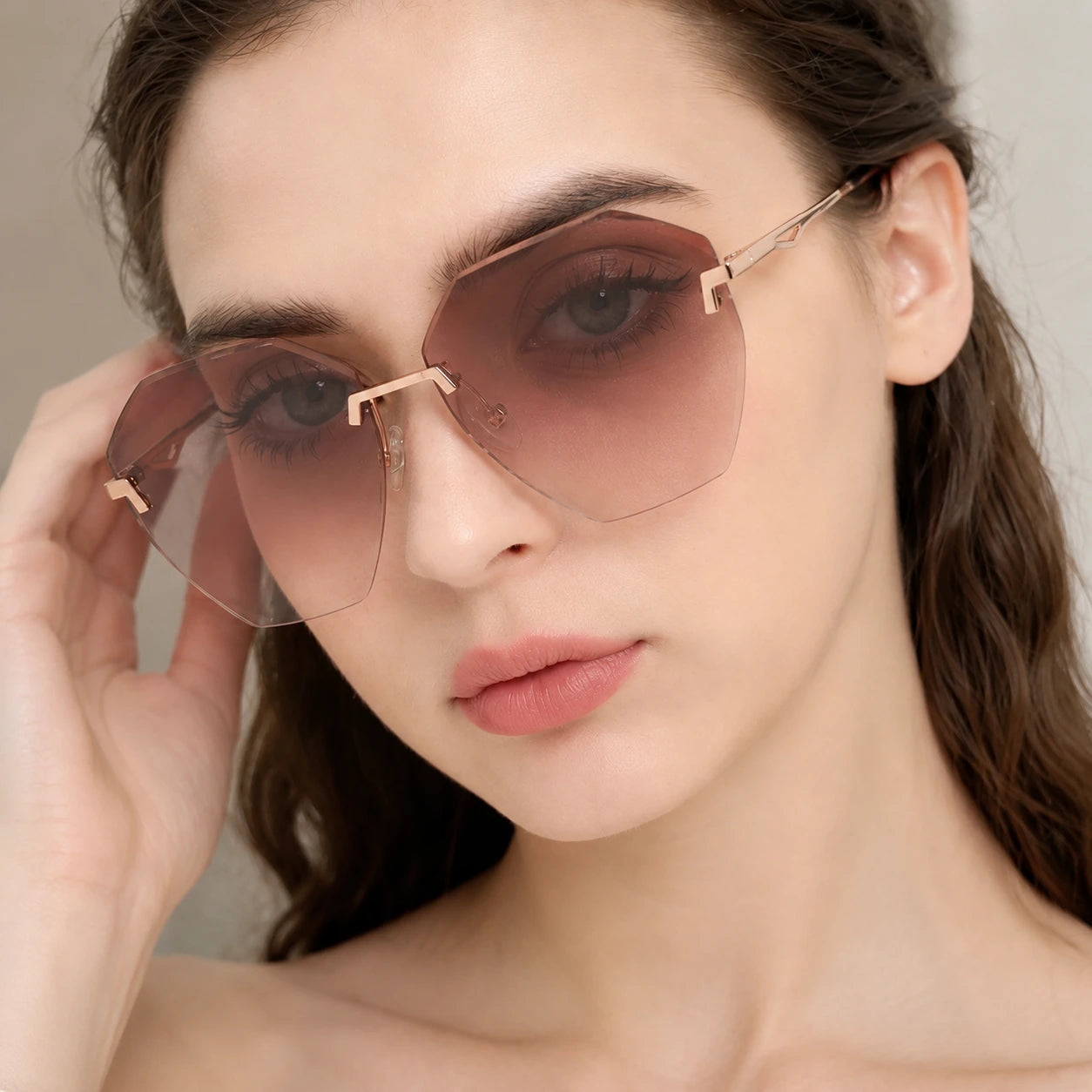
BAPORSSA route: choose UV400 polarized sunglasses with softer rose, brown, smoke, or gradient tints if black lenses feel too harsh. For a cleaner face result, start with lightweight rimless or semi-rimless styles that reduce visual bulk while still softening outdoor brightness.
Shop rimless gradient sunglasses
Light Sensitivity Sunglasses: What to Check First
| Check | Why it matters | Better route |
|---|---|---|
| UV400 | Baseline outdoor protection from UV exposure | Do not rely on darkness alone. |
| Lens tint | Controls how bright and harsh the world feels | Rose, brown, smoke, or gradient depending on the scene. |
| Polarization | Reduces reflected glare from roads, water, glass, and wet pavement | Useful when glare feels sharp or tiring. |
| Coverage | Helps with side light and overhead brightness | Choose enough lens size without making the frame heavy. |
| Weight and pressure | A heavy frame can make long wear feel harder | Lightweight rimless or lighter metal routes. |
| Screen visibility | Polarized lenses can darken some displays at certain angles | Check phone, dashboard, GPS, and laptop screens. |
Why Very Dark Sunglasses Are Not Always Better
A very dark lens reduces visible brightness, but it can also make shadows, screens, indoor transitions, tunnels, or cloudy conditions harder to see. For light-sensitive wearers, the goal is not always maximum darkness. The better goal is a lens that makes light feel calmer while keeping the view usable.
That is why tint color, lens category, glare control, and frame comfort matter. A soft rose, brown, smoke, or gradient lens may feel more wearable than a very dark black lens for daily outdoor movement, cafés, travel, and social settings.
Best Lens Colors for Light Sensitivity

| Lens color | Comfort result | Best use |
|---|---|---|
| Rose / pink | Softens harsh daylight without making the face look too heavy | Variable daylight, softer styling, makeup-friendly wear |
| Brown / tea | Adds warmth and contrast | Driving, city light, outdoor cafés, travel |
| Smoke / gray | Reduces brightness with a more neutral color view | Bright sun and daily outdoor use |
| Green-gray | Balances brightness and contrast with a less harsh look | Daily sun, walking, weekend wear |
| Gradient | Darker above, clearer below | Driving, phone checks, social settings, face visibility |
| Yellow / amber | Can increase perceived contrast in low or overcast light | Specific low-light conditions; not strong noon sun |
For a full color-by-color comparison, read the sunglasses lens color guide.
Are Rose Tinted Sunglasses Good for Light Sensitivity?

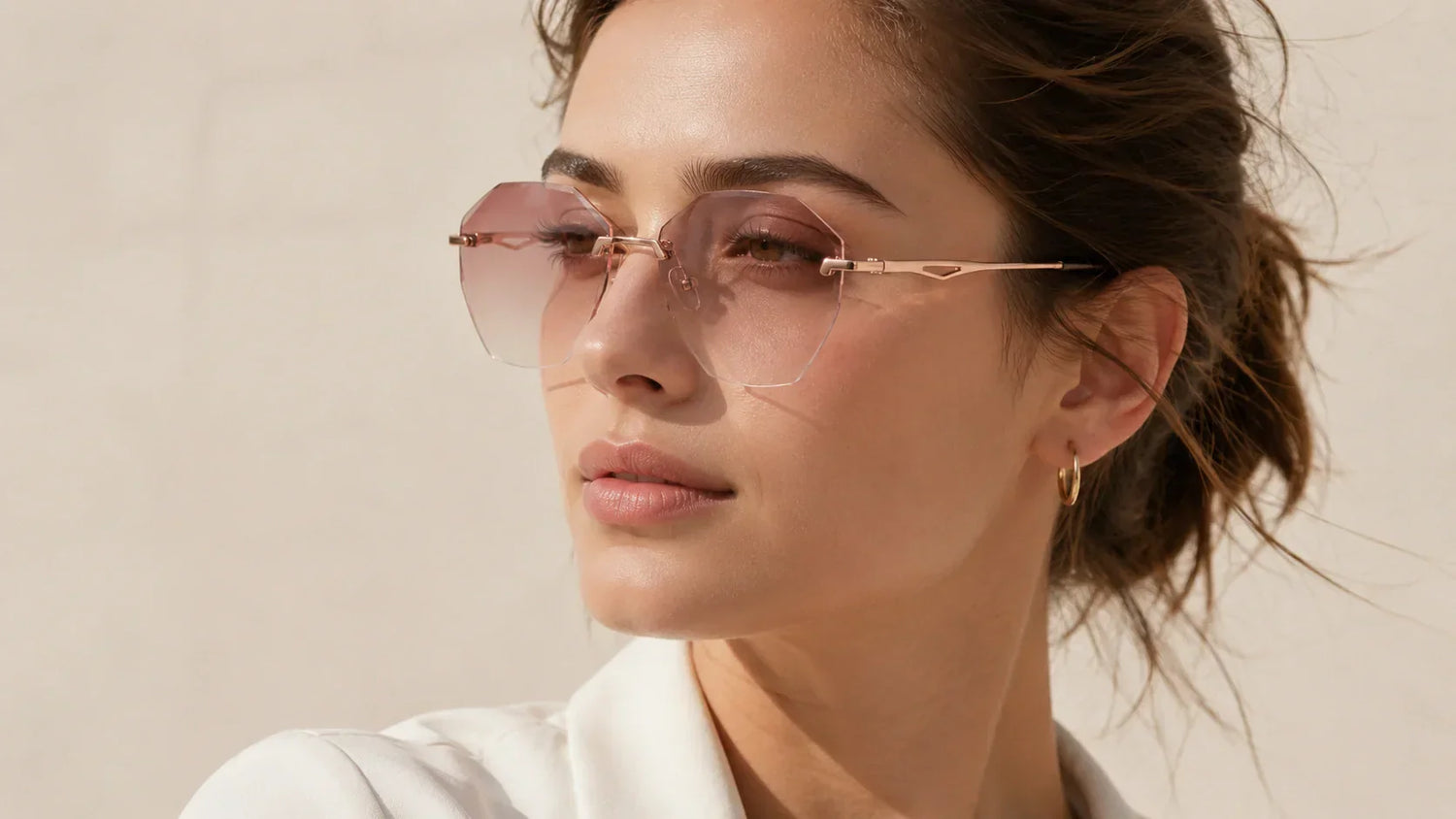
Rose tinted sunglasses can feel softer for some wearers because they reduce the harshness of bright light without making everything extremely dark. They can also keep the eye area more visible, which fits a cleaner rimless styling route.
Rose tint is not the same as a medical lens. It is an everyday comfort and style route. For people who need medical light-filtering lenses, follow professional guidance.
UV400, Polarized and Tint: What Each One Does
| Feature | What it does | What it does not do |
|---|---|---|
| UV400 | Helps protect against ultraviolet light | Does not automatically reduce reflected glare |
| Polarized | Reduces reflected glare from surfaces like roads, water, snow, glass, and wet pavement | Does not automatically mean stronger UV protection unless UV400 is also present |
| Tint darkness | Reduces visible brightness | Does not prove UV protection by itself |
| Lens color | Changes contrast, warmth, neutrality, and face result | Does not work the same for every light condition |
| Gradient tint | Gives stronger shade above and clearer lower view | May not give the same coverage as a full shield route |
For the broader protection framework, read the UV400 vs polarized sunglasses guide.
Polarized Sunglasses for Light Sensitivity
Polarized sunglasses can be useful when reflected glare is the issue: wet roads, water, snow, glass, bright pavement, car hoods, and open outdoor surfaces. If light feels sharp because it bounces off surfaces, polarization can make the view feel calmer.
However, polarized lenses can make some phone screens, GPS displays, dashboard screens, HUD systems, or laptops look darker at certain angles. Before choosing a pair for driving or screen-heavy days, check your most-used displays in daylight.
For screen-specific guidance, read why phone screens can look black with polarized sunglasses.
What About Photophobia, Migraines and FL-41 Lenses?
Some people search for sunglasses because bright light feels uncomfortable, and they may see terms like photophobia, migraine glasses, or FL-41 lenses. Those terms can involve medical context.
BAPORSSA rose, gradient, polarized, and UV400 sunglasses are not medical FL-41 lenses and are not designed to diagnose, prevent, or treat migraines or photophobia. This page only helps shoppers choose everyday sunglasses for outdoor brightness, glare, tint comfort, and lightweight fit.
Can You Wear Sunglasses Indoors for Light Sensitivity?
Some people prefer a softer tint indoors around bright windows, stores, fluorescent-style lighting, or screen-heavy work. A very dark outdoor lens may feel too heavy indoors, so a lighter rose, brown, or gradient tint can be easier for mixed light.
For strong outdoor sun, choose UV400 sunglasses with more coverage and stronger glare control. For indoor transitions, avoid lenses that make the room too dark or make screen use difficult.
Frame Fit Matters When Your Eyes Already Feel Sensitive
When bright light already feels uncomfortable, the frame should not add extra pressure. Heavy sunglasses can press on the nose, temples, or behind the ears. Sliding sunglasses can also become distracting because they require constant adjustment.
- Lightweight frame: easier for long outdoor wear and travel.
- Enough coverage: helps with side light and overhead brightness.
- Stable bridge: reduces slipping and adjustment.
- Low visual bulk: helps the face remain visible instead of hidden behind a dark frame.
- Comfortable temples: avoid hard pressure during long wear.
For fit support, read how to stop glasses from sliding down.
BAPORSSA Light Comfort Routes
Choose by the light problem you actually have. Do not start with the darkest lens by default.
| Need | Best route | Start with |
|---|---|---|
| Softer daylight and a cleaner eye-area look | Rose / gradient route with less visual heaviness | Glow |
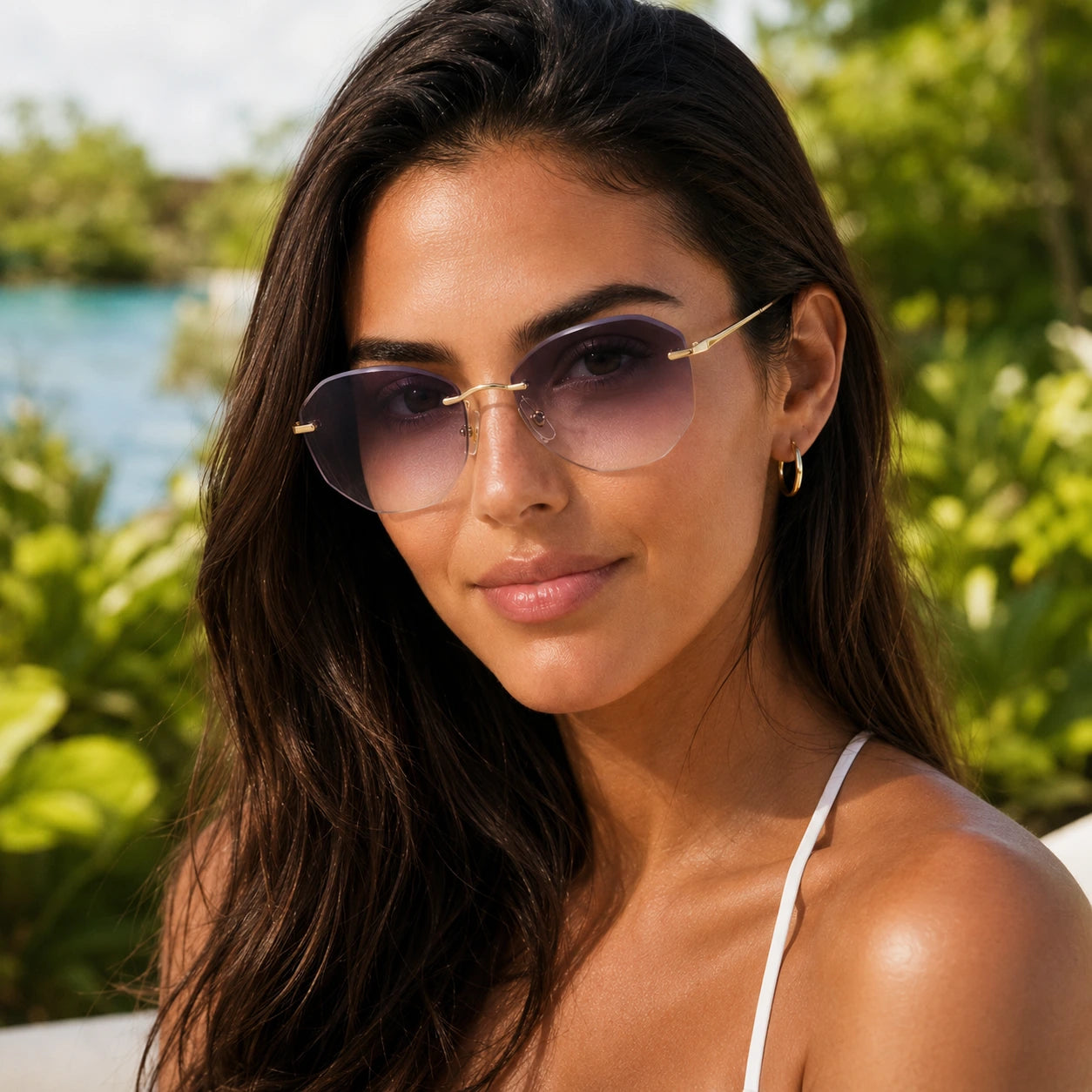
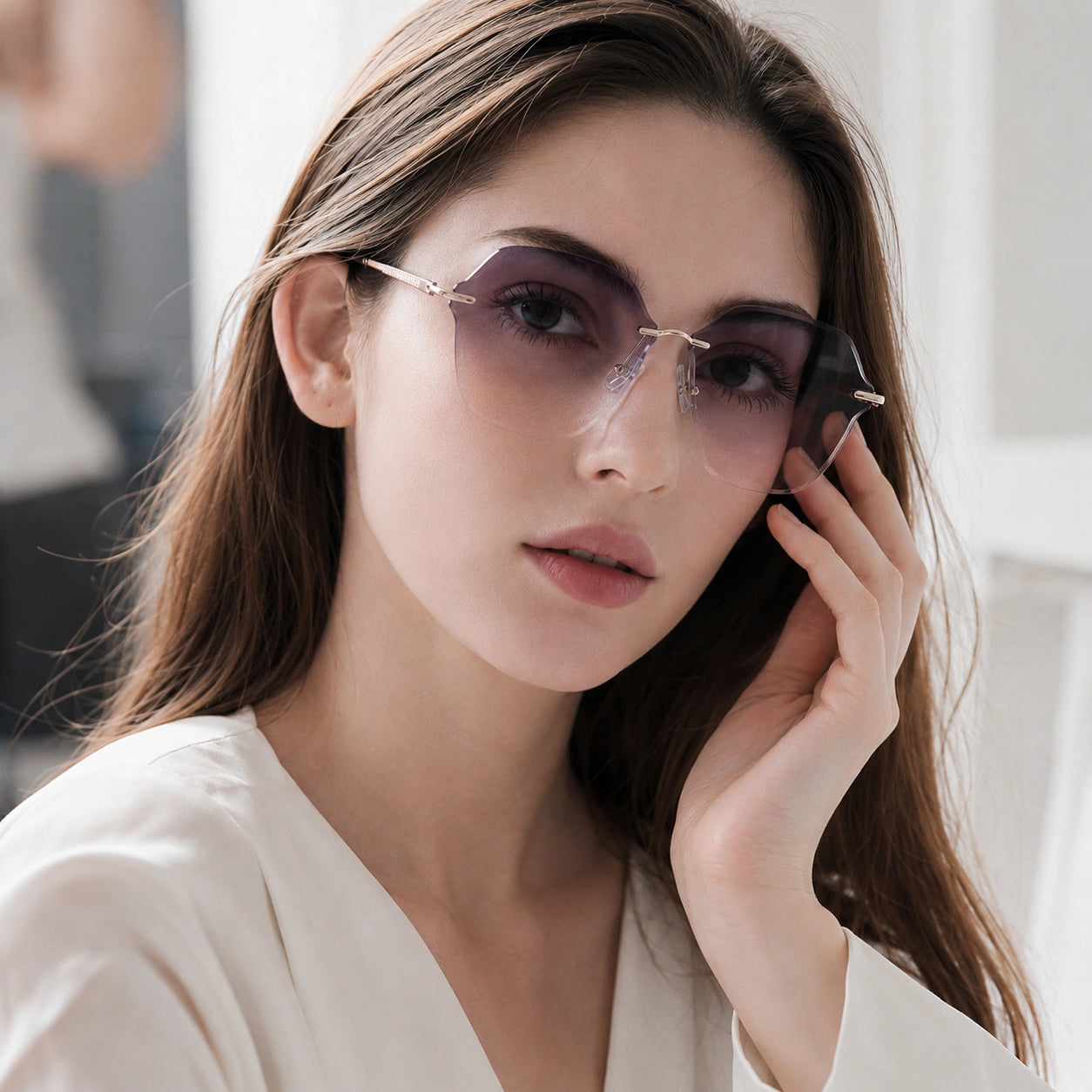
| Clean daily sunglasses that do not hide the face | Lightweight rimless route | Backbone |
| Lightweight daily comfort and easy wear | Soft daily rimless route | Air |
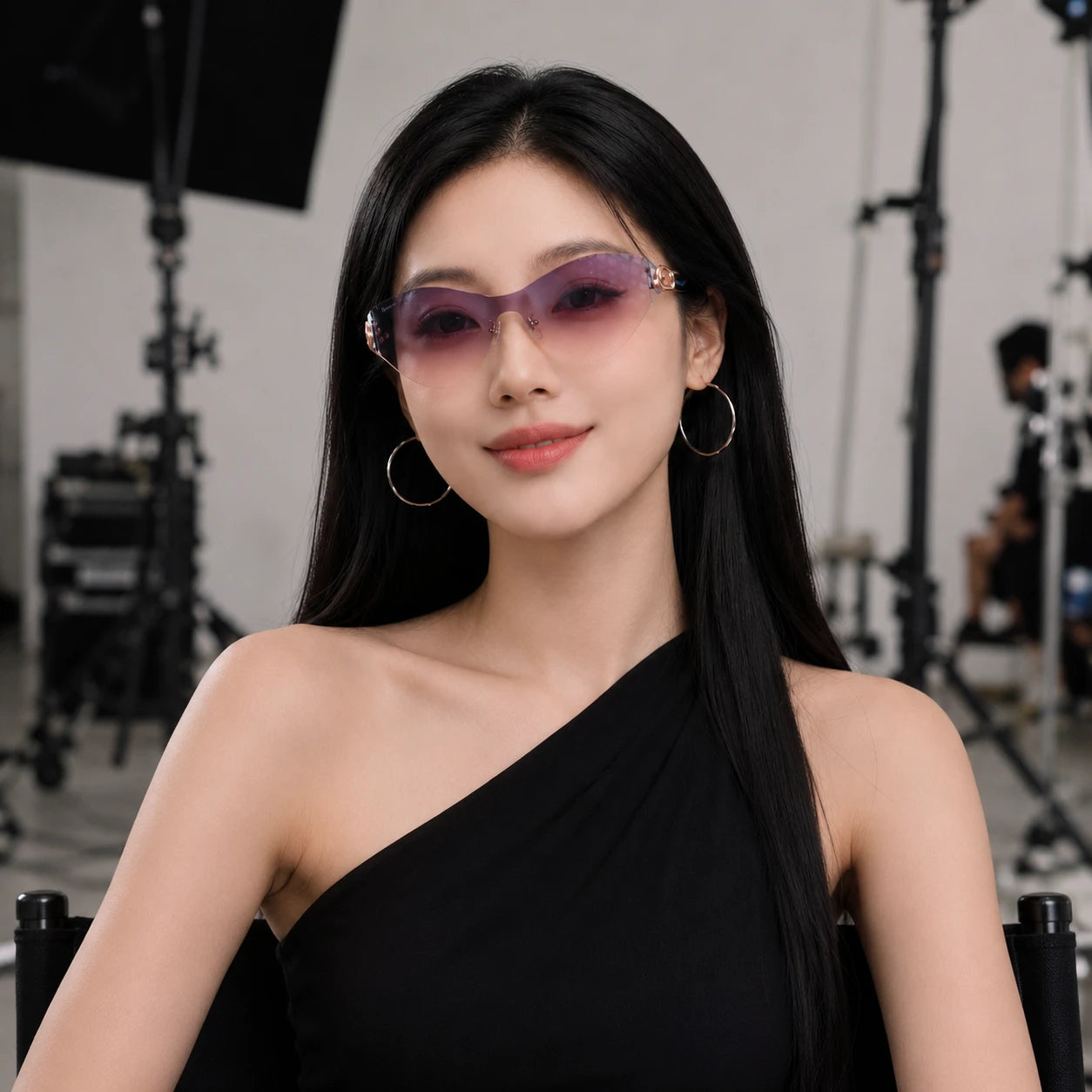
| Bright outdoor glare, travel, or stronger coverage | Coverage route for stronger daylight conditions | Vanguard |
When to Choose a Stronger Coverage Route
If your main issue is open-sky brightness, water glare, long drives, beach reflection, or harsh travel light, a larger lens shape or shield direction may feel more protective than a delicate daily frame.
For driving and outdoor reflection, compare the Driving & Travel collection. For a softer face-visible route, compare rimless gradient sunglasses.
What to Avoid
- Do not assume the darkest lens is best. Too much darkness can reduce usability in mixed light.
- Do not use sunglasses as medical treatment. Persistent symptoms need professional guidance.
- Do not ignore screen checks. Polarized lenses can affect displays at certain angles.
- Do not choose heavy frames for long wear. Pressure can make the experience less comfortable.
- Do not confuse tint with UV protection. Look for UV400 language.
Related Guides
- UV400 vs polarized sunglasses guide
- Sunglasses lens color guide
- Phone screen black with polarized sunglasses
- Best sunglasses for driving
- Photochromic vs polarized sunglasses guide
- Rimless gradient sunglasses guide
- How to stop glasses from sliding down
FAQ
What sunglasses are best for light sensitivity?
For everyday visual comfort, choose UV400 sunglasses with a comfortable tint, polarized glare control when reflected glare is the issue, enough coverage, and a lightweight frame. The darkest pair is not always the best pair.
What lens color is best for light-sensitive eyes?
There is no single best color for everyone. Rose and brown lenses can feel softer in variable daylight, smoke or gray lenses reduce brightness more neutrally, and gradient lenses can help when you want shade above with a clearer lower view.
Are rose tinted sunglasses good for light sensitivity?
Rose tinted sunglasses can feel softer for some wearers because they reduce the harshness of bright light without making everything extremely dark. They are an everyday comfort and style route, not a medical treatment.
Are polarized sunglasses good for light sensitivity?
Polarized sunglasses can help when reflected glare is the main problem, such as road glare, water reflection, snow glare, wet pavement, or bright glass. They may affect some screens at certain angles, so check displays before driving or working.
Do sunglasses help migraines?
Sunglasses may support visual comfort for some light-sensitive users, but they do not diagnose, prevent, or treat migraines. Persistent or severe symptoms should be discussed with a medical professional.
What are FL-41 lenses?
FL-41 lenses are specialized tinted lenses often discussed in relation to migraine-related light sensitivity. BAPORSSA sunglasses are not medical FL-41 lenses; they are everyday UV400 sunglasses designed for outdoor light comfort and glare control.
Can I wear sunglasses indoors for light sensitivity?
Some people prefer lighter tints indoors around bright windows, stores, or screen-heavy work. Very dark outdoor lenses can feel too heavy indoors, so a softer rose, brown, or gradient tint may be easier in mixed lighting.
Are gradient sunglasses good for light sensitivity?
Gradient sunglasses can be useful when you want more shade from overhead light and a clearer lower view for phones, dashboards, or face visibility. They are a comfort and style route, not a medical lens.
Should I choose Cat 2 or Cat 3 lenses for light sensitivity?
Cat 2 can feel easier for mixed daylight and social settings. Cat 3 is stronger for bright outdoor conditions. Choose based on where you wear the sunglasses most, and avoid very dark lenses in low light.
Do light sensitivity sunglasses need UV400?
Yes. UV400 is the outdoor protection baseline. Tint color and polarization affect comfort and glare, but UV400 addresses ultraviolet protection.
Final Recommendation
For light sensitivity, start with comfort, not maximum darkness. Choose UV400 sunglasses with a tint that feels wearable, polarization when glare is the issue, enough coverage for side light, and a lightweight frame that does not add pressure.
Start with Glow for softer daylight and a cleaner eye-area result, Backbone for a clean daily rimless route, Air for lightweight everyday wear, or Vanguard when bright outdoor glare needs more coverage.