

Quick answer: buy acetate sunglasses if you want a richer, more polished frame with stronger style presence. Choose basic plastic frames if you want a simple, casual, lower-cost option. Choose a lighter rimless or slim-frame route if thick frames usually feel heavy, cover too much of your face, or leave pressure around the nose and temples.
The better buying question is not only “Is acetate better than plastic?” It is: which frame material actually solves the problem you have before buying sunglasses? Some shoppers want a premium-looking frame. Some want the lightest face feel. Some want less nose pressure. Some want a clean-face look that does not hide makeup or facial features.
This guide compares acetate sunglasses vs plastic frames by frame quality, weight, polish, hinge feel, comfort, and daily wear. It also shows where BAPORSSA’s lighter rimless route fits if your real goal is less frame and a cleaner face look.
Quick Answer: Which Should You Buy?
| Your buying priority | Better starting point | Why |
|---|---|---|
| Premium frame look | Acetate sunglasses | Acetate often gives richer color depth, better polish, and stronger frame presence. |
| Low-cost casual use | Basic plastic frames | Plastic can be practical and lightweight when the fit and hinge quality are good. |
| Lightweight daily comfort | Rimless or slim-frame sunglasses | Less front-frame bulk can reduce visual weight and feel easier through long wear. |
| Clean face / makeup-friendly look | Rimless gradients | A reduced frame keeps more of the face visible while still softening bright light. |
| Strong style definition | Acetate-style cat-eye or statement frames | A visible frame line can add lift, shape, and facial structure. |
Already choosing a pair? Skip to the BAPORSSA buying route to compare frame presence, lighter wear, and cleaner-face options.

Acetate Sunglasses vs Plastic Frames: Main Difference
Acetate is a type of plastic, but in eyewear it usually means cellulose acetate sheets that are cut, shaped, and polished into frames. Many basic plastic sunglasses are injection-molded, meaning the frame is formed directly in a mold.
That difference often changes how the sunglasses look and feel. Acetate can feel denser, smoother, and more premium. Basic plastic can feel lighter and simpler, but lower-quality versions may show rough seams, weak hinges, or less refined edges.
| Feature | Acetate sunglasses | Basic plastic frames | Buying meaning |
|---|---|---|---|
| Look | Richer, deeper, more polished | Simpler, often more casual | Acetate usually feels more premium in hand and in product close-ups. |
| Weight | Can feel denser or heavier | Can feel lighter, depending on quality | Material alone does not decide comfort; frame shape matters. |
| Edges | Usually polished after shaping | May show mold lines or rougher seams | Check the side and temple edges before buying. |
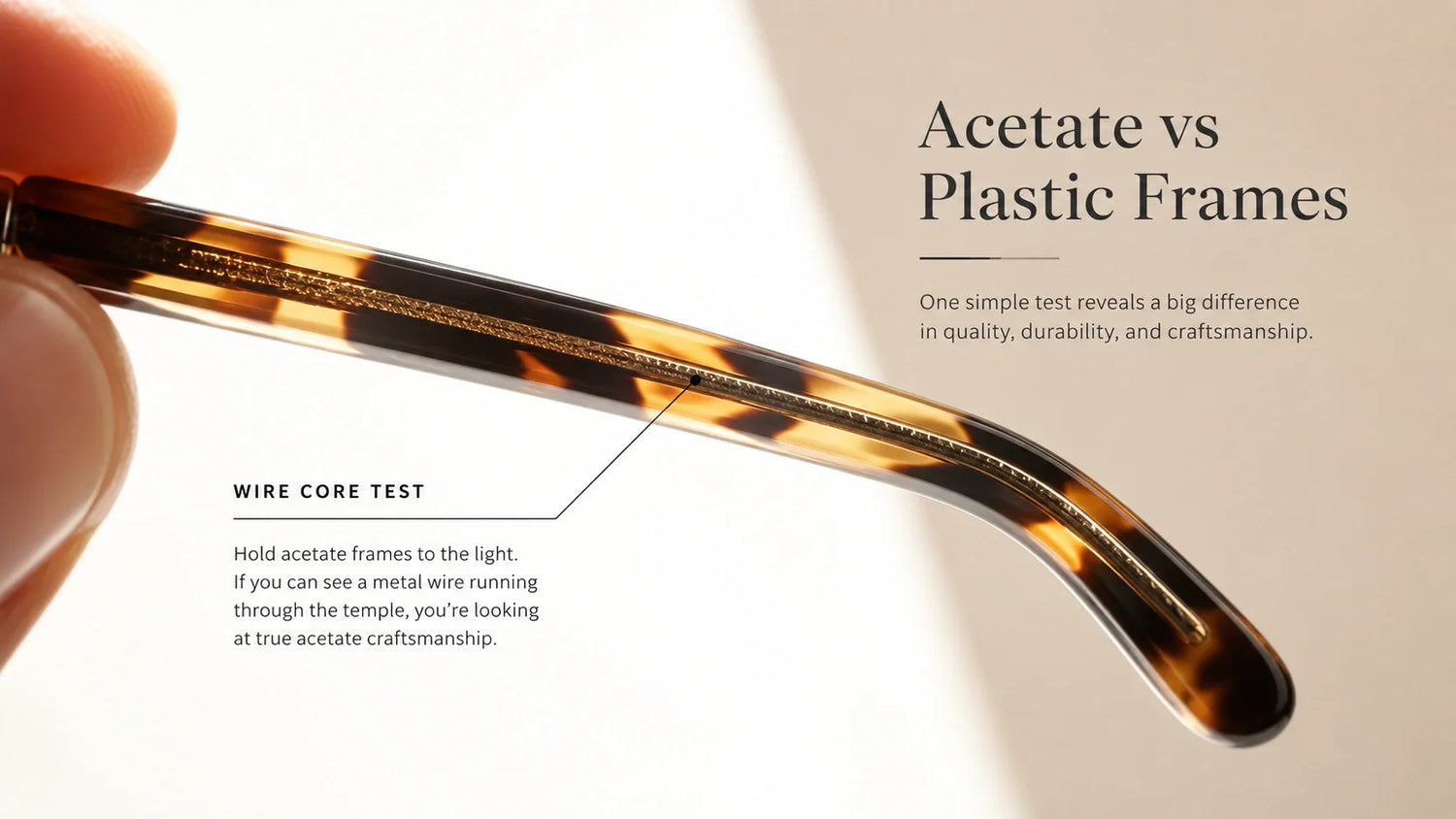
| Temples | May include a wire core for adjustment | Often less adjustable | Wire-core temples can improve controlled fitting. |
| Best use | Style presence, color depth, classic shapes | Casual utility, sport use, lower-cost frames | Choose by your face feel and style goal. |
Are Acetate Sunglasses Better Than Plastic?
Acetate sunglasses can be better than basic plastic frames if you care about polish, color depth, hinge feel, and a more substantial frame. They often look more premium because the material can be cut, shaped, tumbled, and polished rather than simply molded.
But acetate is not automatically the better buy. A thick acetate frame can feel heavy on the nose. A poorly finished acetate frame can still have weak hinges or uncomfortable pressure. And for shoppers who want a barely-there face look, a bold acetate frame may simply be too much frame.
Buying rule: choose acetate when you want the frame to be part of the look. Choose a lighter route when you want the sunglasses to sit with the face, not dominate it.
When Acetate Sunglasses Are Worth It
Acetate sunglasses are worth it when you want stronger styling and a more crafted frame feel. This is especially true for cat-eye, tortoise, black, white, chunky, or statement sunglasses where the frame shape is part of the fashion result.
- You want a premium-looking frame. Acetate usually photographs and wears with more visual depth than basic molded plastic.
- You like visible shape. Cat-eye, rectangular, and statement frames often look stronger in acetate-style construction.
- You care about polish. Better acetate frames often have smoother edges and a more finished hand feel.
- You want adjustability. Many acetate temples include wire cores that allow more controlled fitting.

When Plastic Frames May Be Enough
Plastic sunglasses can still make sense when you want a simple, casual, lighter-cost pair. Not every buyer needs a premium frame. For beach bags, travel backups, sport-style frames, or trend pieces you do not plan to wear every day, plastic may be enough.
The risk is not plastic itself. The risk is poor construction. Before buying plastic sunglasses, check the hinge feel, temple alignment, edge finish, lens fit, and whether the frame twists too easily.
- Good plastic frames can feel light, practical, and easy for casual use.
- Weak plastic frames may show rough mold lines, unstable hinges, uneven temples, or cheap surface coating.
- Very light plastic is not always better if it slides, pinches, or feels unstable.
Frame Quality Checklist Before You Buy
Whether you choose acetate or plastic, use these checks before buying sunglasses online.
| Quality check | What to look for | Why it matters |
|---|---|---|
| Hinge feel | Temples should open smoothly without wobble | Weak hinges make even beautiful frames feel cheap. |
| Edge polish | Temple and frame edges should look smooth, not sharp | Rough edges can feel uncomfortable during long wear. |
| Wire core | Visible metal core inside some acetate temples | It may support better shape and adjustment. |
| Lens seating | Lenses should sit cleanly without gaps or uneven pressure | Poor lens fit can affect durability and appearance. |
| Frame weight | Check product weight and bridge design | Heavy front frames can add nose pressure. |

Weight, Nose Pressure, and Daily Comfort
Many shoppers focus on material first, but comfort often comes from weight distribution. A beautiful acetate frame can feel wrong if the front is too heavy, the bridge does not match your nose, or the temples squeeze the sides of your head.
Plastic frames can feel lighter, but they can still slide or pinch if the geometry is wrong. If you often notice nose marks, cheek contact, or temple pressure, frame width and bridge fit may matter more than the material label.
If your issue is side pressure, compare the Wide Fit / Anti-Pinch collection. If your issue is sliding or nose marks, read the silicone nose pads guide.

If You Want a Lighter Face Look: Rimless Alternatives
Some shoppers search for acetate sunglasses because they want quality. But quality does not always have to mean a thicker frame. If heavy acetate or full plastic frames make your face feel covered, rimless sunglasses may be a better buying route.
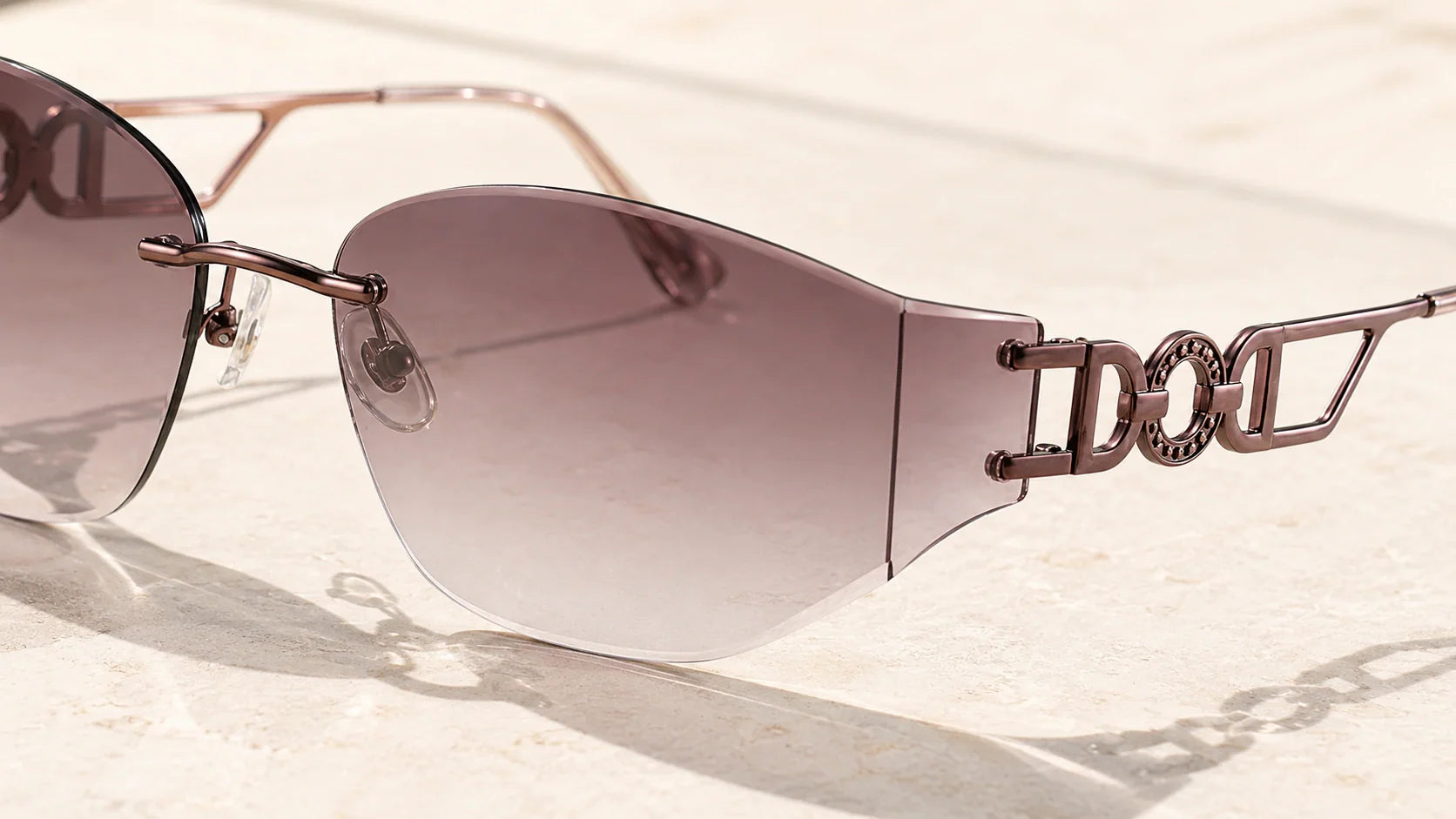
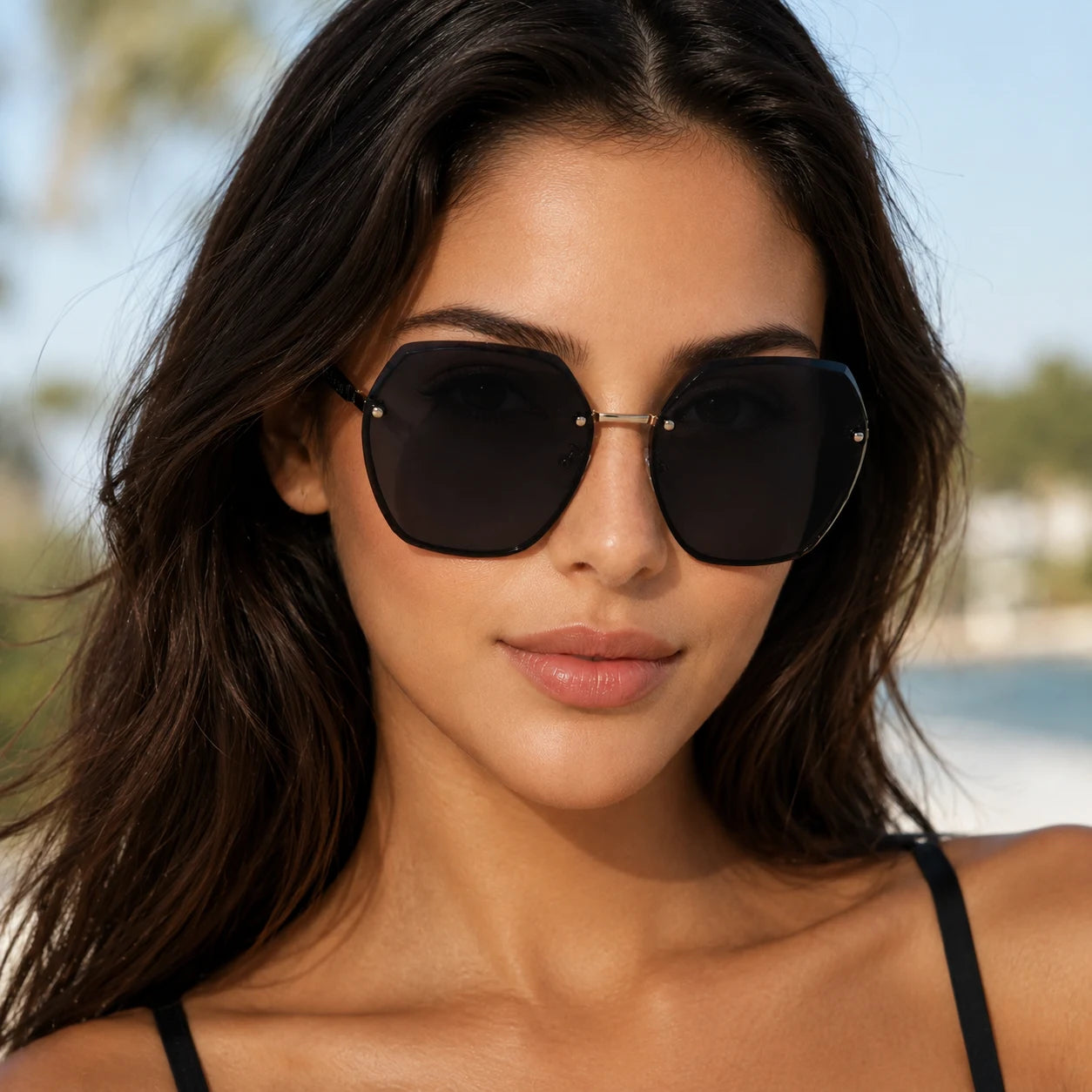
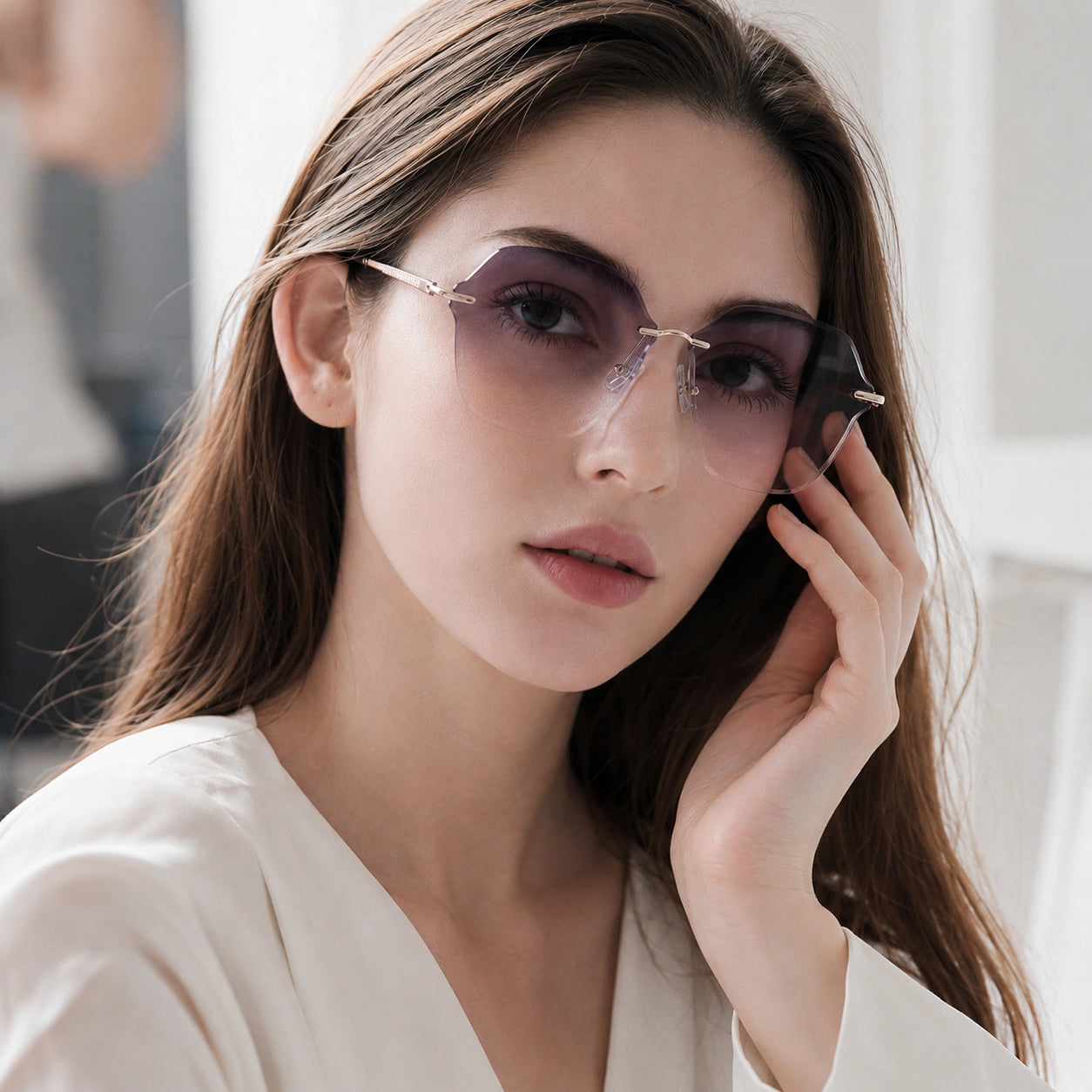
Rimless sunglasses reduce the visible frame around the lens. That can make the face look cleaner, keep makeup more visible, and feel visually lighter in daily wear. This is where BAPORSSA’s design direction is different: less frame, cleaner face, easier wear.
For a deeper style comparison, read the rimless sunglasses guide. For durability questions, read Are Rimless Sunglasses Durable?.

BAPORSSA Buying Route: Frame Presence or Cleaner Face?
If this comparison helped you narrow the problem, choose by the result you want on your face: stronger frame definition, lighter daily comfort, cleaner facial lines, or wider anti-pinch coverage. Check each product page for the exact material, lens, tint, and size details before buying.
| If you want... | Start with... | Why |
|---|---|---|
| Lightweight daily comfort | Luma | A cleaner everyday route when frame feel and easy wear matter most. |
| Cleaner face / less frame | Air | A lighter visual route when you want sunglasses that do not cover the face too much. |
| A proven rimless starting point | Backbone | A strong choice for BAPORSSA’s clean-face, less-frame direction. |
| Lift without a thick full frame | Muse | A softer lifted route when you want cat-eye energy without heavy acetate. |
| More room at the sides | Wide Fit / Anti-Pinch | Better route if regular frames press at the temples or feel narrow. |
If you want to move from material comparison into actual starting points, begin with lightweight daily wear, cleaner-face rimless styling, and a proven BAPORSSA everyday route.


Which Frame Material Should You Choose?
Choose acetate sunglasses if you want richness, polish, color depth, and stronger frame presence. Choose plastic frames if you want a simple casual pair and the construction still looks stable. Choose rimless or slim-frame sunglasses if your main buying concern is lighter wear, less visual bulk, and a cleaner face look.
- Want more definition? Try a cat-eye or statement route.
- Want less heaviness? Try rimless gradient sunglasses.
- Want less side pressure? Try wide-fit or anti-pinch styles.
- Not sure what flatters your face? Start with the complete sunglasses face shape guide.
Related Buying and Craft Guides
- Sunglasses Frame Materials Guide
- Rimless Sunglasses Guide
- Are Rimless Sunglasses Durable?
- Silicone Nose Pads for Glasses
- Best Sunglasses for Big Heads & Wide Faces
FAQ
Are acetate sunglasses better than plastic?
Acetate sunglasses can be better when you want a more polished, substantial, and premium-looking frame. Plastic frames may be enough for casual use if the hinges, edges, and fit are good.
Are acetate sunglasses worth it?
They are worth it if you value frame presence, color depth, smooth polish, and a more crafted feel. They may not be worth it if your top priority is the lightest face feel or a barely-there frame.
What is the difference between acetate and plastic sunglasses?
Acetate frames are usually cut and polished from cellulose acetate sheets. Many basic plastic frames are injection-molded. Acetate often looks richer, while plastic can be simpler and lighter depending on quality.
Are acetate sunglasses heavy?
They can be heavier than basic plastic or rimless designs, especially when the frame is thick. Always check product weight, bridge fit, and temple pressure before buying.
Are plastic sunglasses low quality?
Not always. Plastic sunglasses can be practical and lightweight. Low-quality plastic usually shows weak hinges, rough edges, poor lens fit, or unstable frame alignment.
How can I tell if sunglasses are acetate?
Look for polished edges, richer color depth, and, on many translucent acetate frames, a visible wire core inside the temple arm.
What is the best sunglasses frame material?
There is no single best material for every buyer. Acetate is strong for premium frame presence. Plastic is practical for casual use. Rimless or slim metal is often better for lighter, cleaner daily wear.
Should I buy acetate or rimless sunglasses?
Choose acetate if you want the frame to define the look. Choose rimless sunglasses if you want less visual bulk, a cleaner face line, and lighter daily wear.
Final Takeaway
Acetate vs plastic is a buying decision about more than material. It is about how the sunglasses look, how they feel after hours of wear, how much pressure they create, and whether the frame works with your face.
If you want a richer, stronger frame, acetate-style sunglasses may make sense. If you want lighter wear and a cleaner face look, BAPORSSA’s rimless and lightweight routes are the stronger place to start.
Shop Rimless Gradients for a cleaner face look, or compare Wide Fit / Anti-Pinch sunglasses if regular frames feel tight at the sides.