

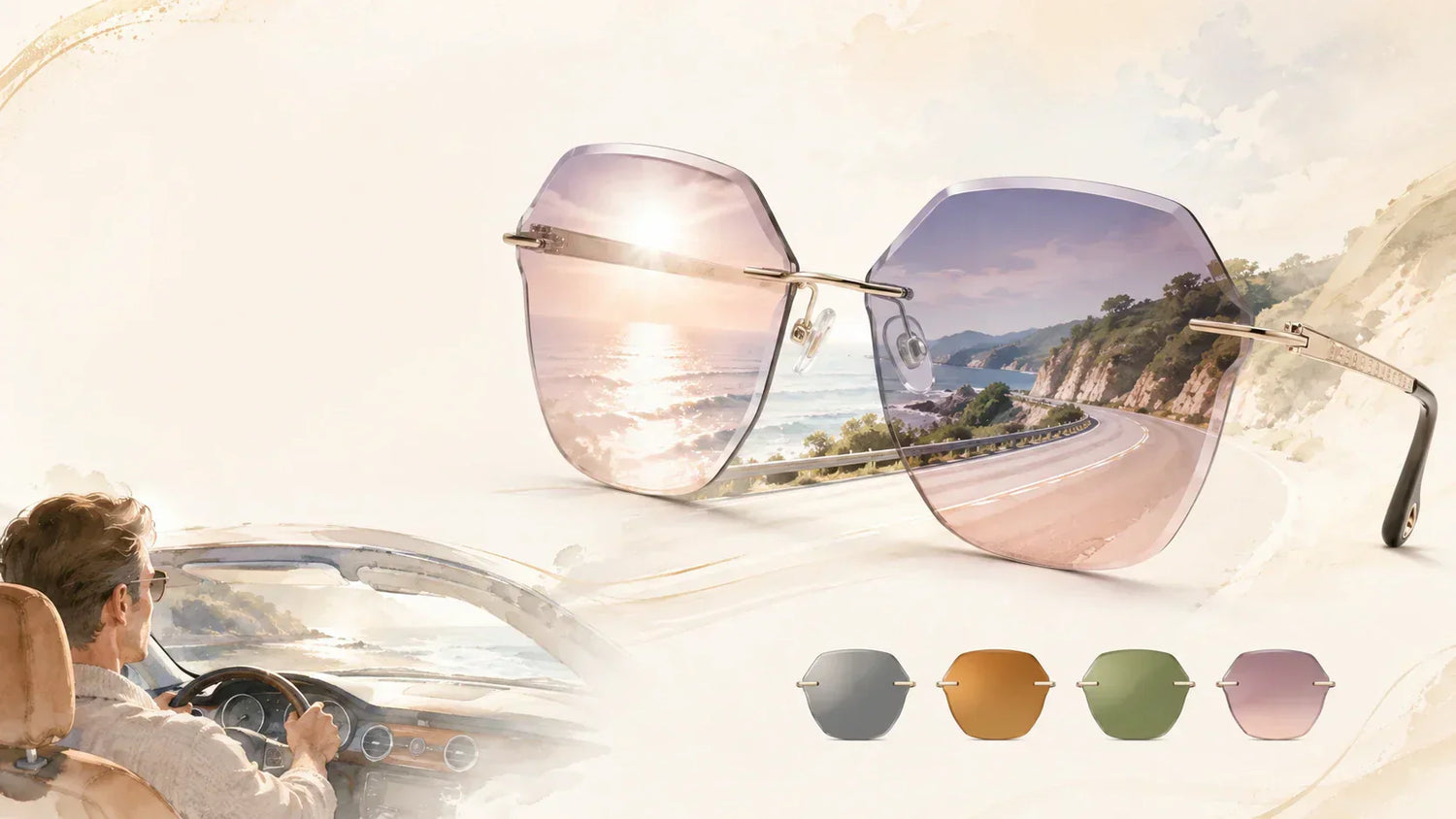
Quick answer: the best sunglasses for driving should reduce bright daylight and road glare without making the road, traffic lights, mirrors, dashboard, GPS, or head-up display harder to read. Start with UV400 protection, polarized or glare-reducing lenses, CAT 2 or CAT 3 daytime lens darkness, a readable grey, brown, green, or gradient lens color, and a lightweight frame that stays stable behind the wheel.
This guide is for daytime driving, bright roads, sun glare, long commutes, beach roads, open highways, and travel driving. It explains polarized sunglasses for driving, anti-glare lens choices, CAT 3 driving use, best lens colors, dashboard and HUD visibility, and which BAPORSSA route to start with.
BAPORSSA route: choose Shift for a more driving-focused glare route, Luma for stable daily fit and dashboard readability, or Flow for wider lens coverage and open-road light. For a softer daily look, compare Glow, Backbone, and Vanguard.
Shop driving-friendly sunglasses

What are the best sunglasses for driving?
The best sunglasses for driving are not just the darkest sunglasses. They should solve the real driving problem: harsh daylight, reflected road glare, changing shadows, dashboard readability, side visibility, and long-wear comfort.
| Driving need | Best lens or frame direction | Why it matters |
|---|---|---|
| Bright sun | UV400 lenses with CAT 2 or CAT 3 daytime tint | Reduces brightness while keeping the road readable |
| Road glare | Polarized or glare-reducing lenses | Helps calm reflected light from roads, water, snow, and car hoods |
| Dashboard and GPS visibility | Moderate tint or gradient lenses | Keeps lower-view information easier to read |
| HUD or digital display use | Test polarized lenses in your own car | Some displays can look darker through polarized lenses at certain angles |
| Long drives | Lightweight frames and stable nose pads | Reduces sliding, pressure, and repeated adjustment |
| Lane changes and mirror checks | Rimless, semi-rimless, or low-bulk frames | Keeps peripheral view less visually blocked |
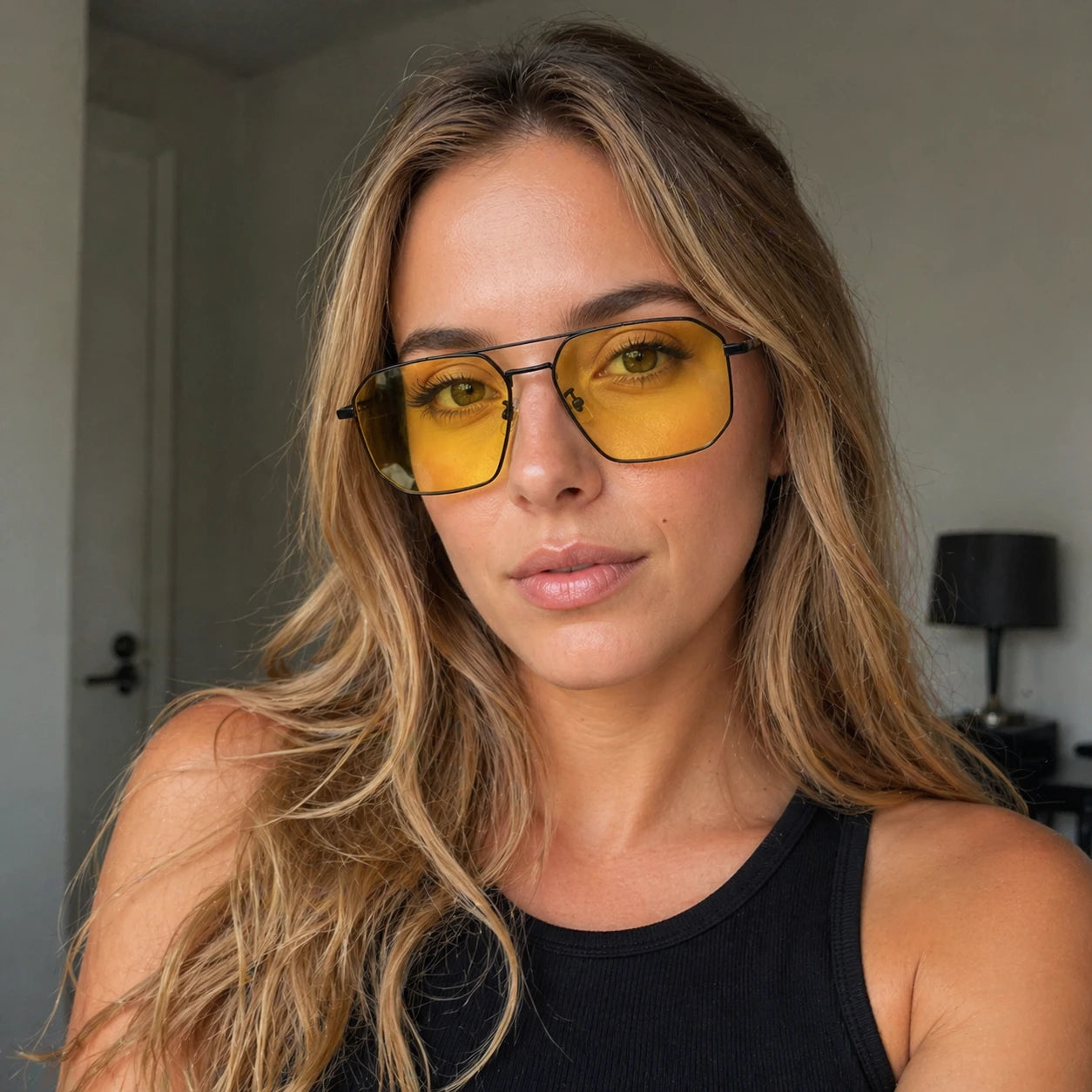

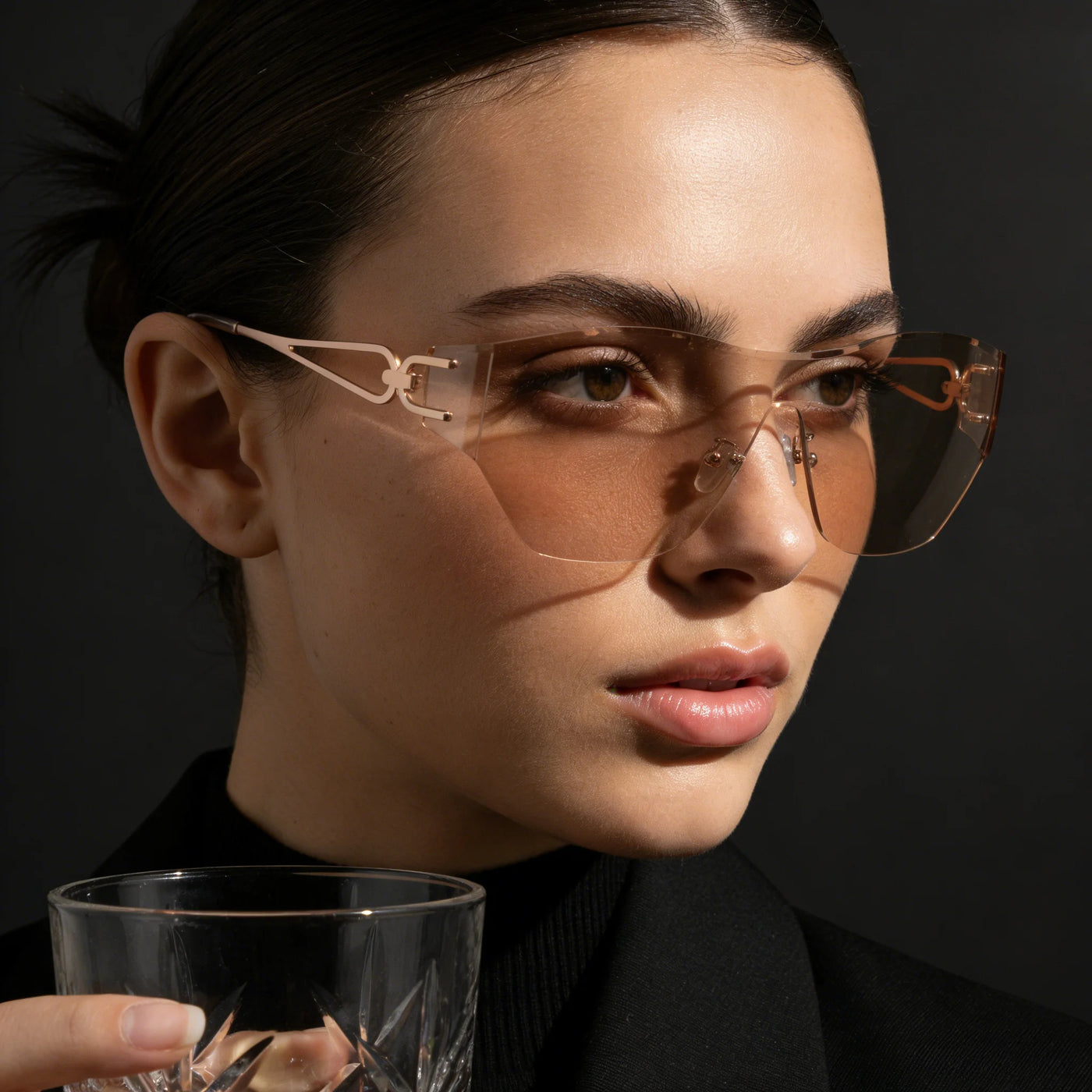
Best BAPORSSA sunglasses for driving
Use this as the product shortcut before going deeper into lens science. Check each product page for exact lens specifications and whether your chosen colorway is polarized.
| Driving situation | Start with | Why |
|---|---|---|
| Bright sun and reflected road glare | Shift | A stronger driving-focused route for glare-heavy daylight |
| Daily commute and dashboard readability | Luma | A lighter, stable fit route with adjustable nose-pad comfort |
| Open roads, travel, and wider coverage | Flow | More lens coverage with less frame bulk around the face |
| Bright-day travel and stronger lens presence | Vanguard | Good when you want more coverage for sunny roads |
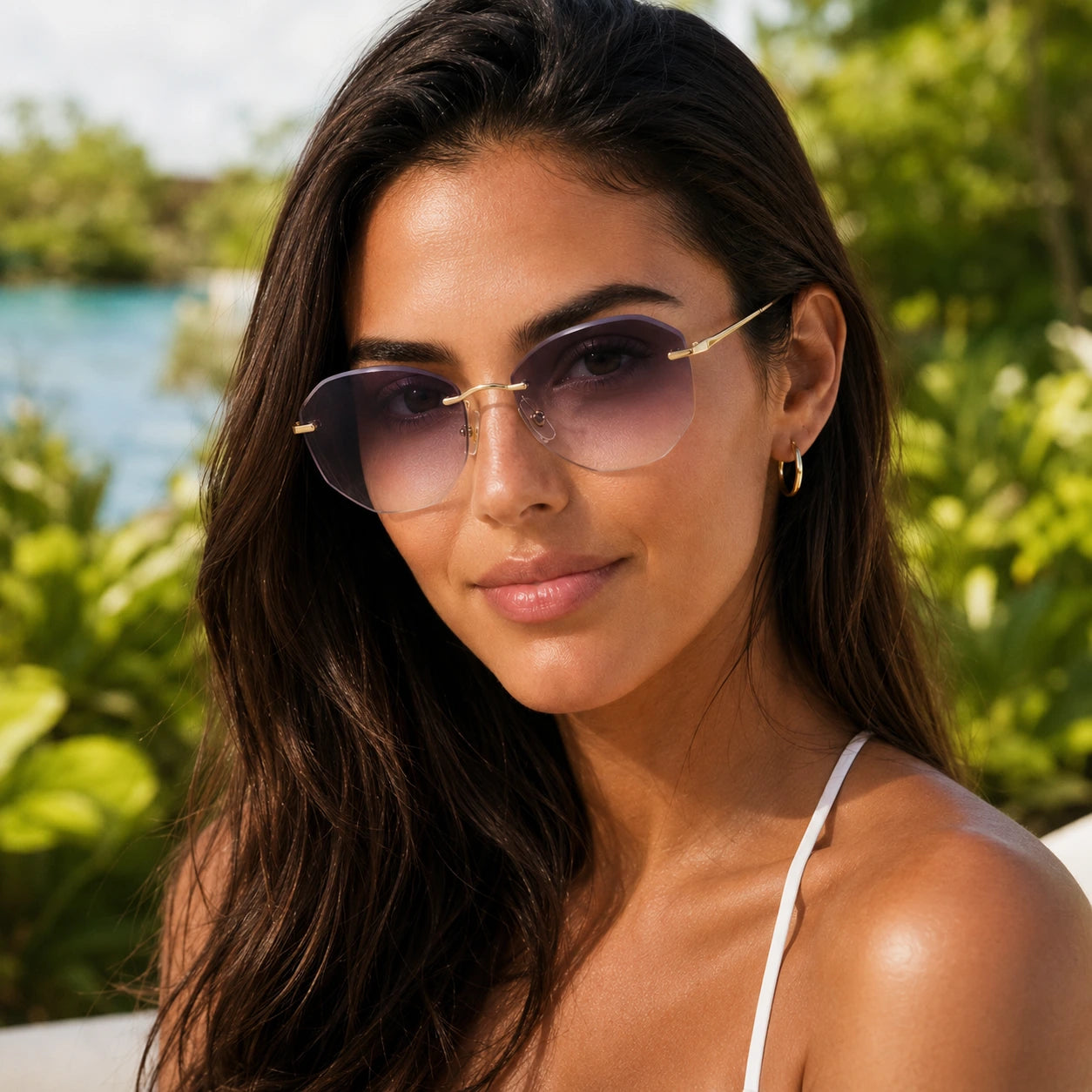
| Soft daylight, makeup-friendly styling, and cleaner face look | Glow | A softer tint route when you do not want the lens to look too harsh |
| Clean everyday driving and low visual bulk | Backbone | A lightweight rimless route for daily wear beyond the car |

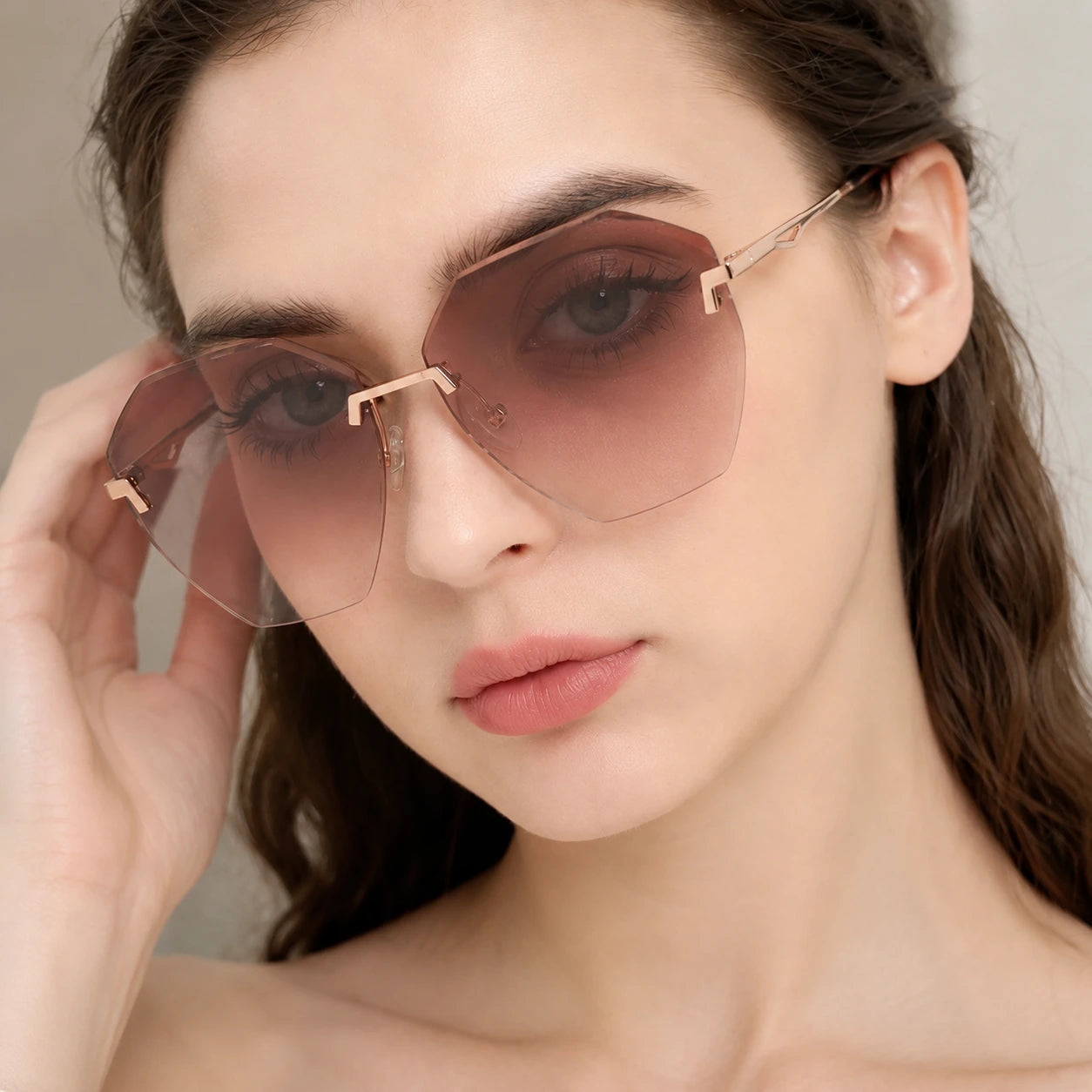
Polarized sunglasses for driving: when they help
Polarized sunglasses can be very useful for daytime driving because they help reduce reflected glare. This is most noticeable when sunlight bounces from wet roads, bright concrete, snow, water, windshields, or the hood of a car.
If you search for anti-glare sunglasses for driving, polarized sunglasses for driving, or best sunglasses for sun glare while driving, polarization is usually one of the first features to check. It can make bright roads feel calmer and less visually sharp.
The caveat is screen compatibility. Some polarized lenses can make a dashboard, GPS, LCD screen, or head-up display look darker at certain angles. That does not make polarized sunglasses bad for driving; it means you should test them in your own car.
For a deeper comparison, read polarized vs non-polarized sunglasses and polarized sunglasses and screen visibility.
Anti-glare sunglasses for driving: what actually matters?
Driving glare is usually reflected light, not just brightness. The worst glare often comes from wet pavement, white concrete, low sun, road signs, car hoods, water, snow, and windshields.
The best anti-glare sunglasses for driving usually combine:
- Polarized filtering when the product page confirms the lens is polarized.
- UV400 protection as the daylight baseline.
- Useful lens darkness such as CAT 2 or CAT 3 for daytime driving.
- Readable lens color such as grey, brown, green, or gradient.
- Stable frame fit so the lens stays in the right visual position.
The goal is not to make the view darker. The goal is to make the road feel cleaner and easier to read.
Are CAT 3 sunglasses good for driving?
CAT 3 sunglasses can be good for bright daytime driving when they still keep traffic lights, road signs, shaded areas, mirrors, GPS, and dashboard details readable. Category 3 lenses are designed for strong sunlight, so they can work well for sunny highways, open roads, beach roads, and travel driving.
They are not automatically right for every condition. If the road moves between sun and shade, rain, tunnels, or late-day light, a lens that feels too dark can become uncomfortable. Choose a lens category by the light you actually drive in.
For the full category explanation, read what CAT 3 means on sunglasses.
Category 4 sunglasses are not for driving
Category 4 sunglasses are too dark for normal road driving. They are made for very intense light environments, not for traffic lights, tunnels, shaded roads, dashboards, and quick visual decisions.
If a pair is marked Category 4 or not suitable for driving, do not use it behind the wheel. For driving, choose sunglasses that reduce brightness while preserving useful visual information.
Best lens color for driving
The best sunglass lens color for driving depends on your route and light condition. Lens color should support road readability, not just match your outfit.

| Lens color | Driving feel | Best use |
|---|---|---|
| Grey | Neutral brightness reduction | Bright sun, everyday driving, and color-neutral vision |
| Brown / amber | Warmer contrast | Road texture, variable daylight, and a richer view |
| Green | Balanced brightness and contrast | Daily driving when you want a calm but not overly warm tint |
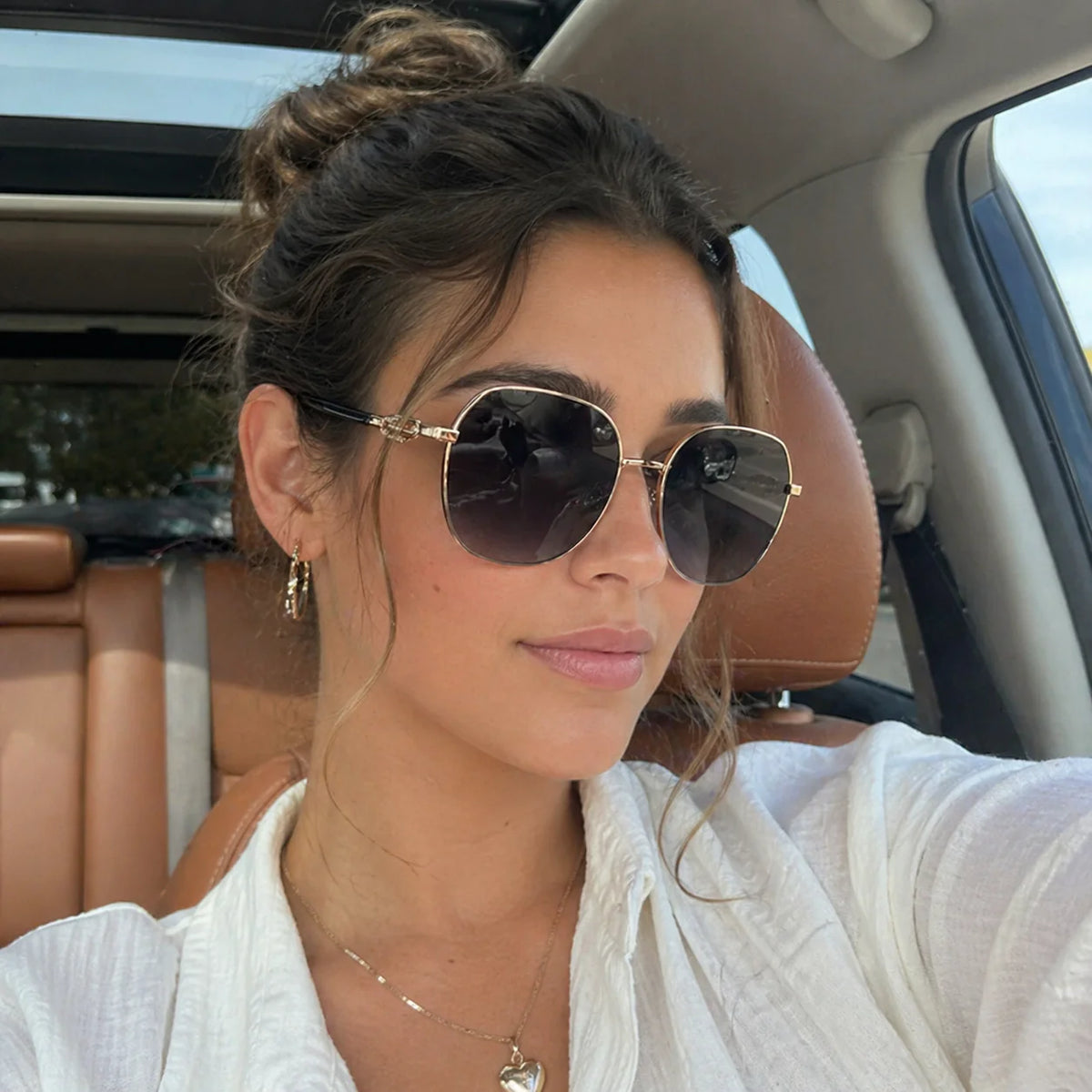
| Gradient | Darker above, lighter below | Bright sky plus dashboard visibility |
| Yellow | Brighter-looking view | Use carefully; do not treat it as a universal night-driving solution |
For a full tint breakdown, read the sunglasses lens color guide.
Grey vs brown lenses for driving
Grey lenses are usually better if you want neutral color and a clean everyday view. Brown or amber lenses are usually better if you want warmer contrast and more road detail.
- Choose grey for neutral, color-stable driving vision.
- Choose brown or amber for warmer contrast and road texture.
- Choose green for a balanced daylight feel.
- Choose gradient if dashboard readability and a softer lower lens area matter.
Are gradient sunglasses good for driving?
Gradient sunglasses can be useful for daytime driving because the darker upper area helps soften bright sky while the lighter lower area can keep dashboard, GPS, and interior details easier to read.

Gradient lenses also support the BAPORSSA clean-face look because they feel less visually heavy than flat dark lenses. They can be a good route if you want driving comfort without making the eye area look too blocked.
HUD, GPS, and dashboard visibility
If your car has a head-up display, digital dashboard, large center screen, or LCD instruments, check your sunglasses with those screens before relying on them for every route. Some polarized lenses can make displays look darker or uneven at certain angles.
If HUD visibility is your priority, compare a polarized pair with a non-polarized or gradient pair inside your own car. The best choice is the one that reduces road glare while keeping the information you need easy to read.
Best sunglasses for driving in different light conditions
| Driving condition | Best lens direction | What to avoid |
|---|---|---|
| Bright midday sun | Grey, brown, green, CAT 3, or polarized lenses if confirmed polarized | Very small lenses that leave too much side light uncovered |
| Sun glare while driving | Polarized or glare-reducing lenses with useful coverage | Fashion-only tints with poor clarity |
| Dawn, dusk, or low sun | Medium tint, gradient lens, or enough upper-lens coverage | Very dark lenses that make shadows too hard to read |
| Wet roads | Polarized lenses when dashboard compatibility works for your car | Too-light lenses that do not calm reflected glare |
| Dashboard-heavy city driving | Gradient or moderate tint | Too-dark solid tints that force you to lift the sunglasses |
| Night driving | Clear vision correction if needed; consult an eye-care professional for persistent glare | Dark sunglasses or fashion tints at night |
What sunglasses should you avoid while driving?
- Avoid Category 4 sunglasses. They are too dark for normal driving.
- Avoid dark sunglasses at night. Night driving needs maximum useful visibility.
- Avoid lenses that feel too dark for shade or tunnels.
- Avoid poor UV protection. Dark tint alone is not enough.
- Avoid loose frames that slide. Constant adjustment is distracting.
- Avoid heavy frames for long drives. Nose and temple pressure build over time.
- Avoid frame shapes that block too much side vision.
If sliding is the issue, read how to stop sunglasses from sliding down.
Frame fit: why lightweight driving sunglasses matter
Lens performance matters, but fit decides whether you keep the sunglasses on. A good driving pair should stay stable without pinching the bridge, pressing the temples, sliding when you turn your head, or blocking side movement.

- Lightweight construction helps reduce nose pressure.
- Adjustable nose pads help the lens sit correctly.
- Stable temples help prevent sliding and squeezing.
- Low visual bulk helps mirror checks and side movement feel cleaner.
- Enough lens coverage helps reduce side light on bright roads.
If you are not sure which frame shape fits you, start with the sunglasses for your face shape guide.
Are rimless sunglasses good for driving?
Rimless sunglasses can be good for driving when the frame is stable and the lens has suitable UV protection, tint, and glare control. Their main advantage is lower visual bulk around the lens, which can help the face and field of view feel more open.
Rimless design does not replace lens quality. Lens material, bridge stability, nose pads, temple comfort, and exact lens specifications still matter. For more detail, read the rimless sunglasses guide and the sunglass lens material guide.
Related driving and lens guides
| If you care about | Read this |
|---|---|
| UV400 vs polarization | UV400 vs polarized sunglasses |
| Polarized pros and drawbacks | Polarized vs non-polarized sunglasses |
| Phone, dashboard, and screen issues | Polarized sunglasses and screens |
| Lens darkness | CAT 3 sunglasses explained |
| Lens tint choice | Sunglasses lens color guide |
| Fit and sliding | How to stop sunglasses from sliding down |
FAQ
What are the best sunglasses for driving?
The best sunglasses for driving combine UV400 protection, glare control, suitable CAT 2 or CAT 3 daytime lens darkness, readable lens color, stable fit, and enough side visibility. They should reduce bright sun without making the road, dashboard, mirrors, or traffic lights harder to read.
Are polarized sunglasses good for driving?
Yes. Polarized sunglasses can be good for daytime driving because they help reduce reflected glare from wet roads, bright pavement, snow, water, and car hoods. Test them with your dashboard or HUD before relying on them for every route.
Are polarized sunglasses better for driving?
They are often better when road glare is the main problem. If your main concern is HUD or screen visibility, compare polarized and non-polarized options in your own car.
What color sunglasses are best for driving?
Grey, brown, green, and gradient lenses are usually useful for daytime driving. Grey is neutral, brown adds contrast, green balances brightness and contrast, and gradient lenses can help with bright sky while keeping the dashboard easier to read.
Are CAT 3 sunglasses good for driving?
CAT 3 sunglasses can be good for bright daytime driving if they keep the road, traffic lights, dashboard, and shaded areas readable. They are not ideal for every condition, especially tunnels, rain, low light, or night driving.
Are Category 4 sunglasses safe for driving?
No. Category 4 sunglasses are too dark for normal road driving and should not be used behind the wheel.
What are anti-glare sunglasses for driving?
Anti-glare sunglasses for driving are sunglasses that help reduce reflected light from roads, water, snow, windshields, and car hoods. Polarized lenses are commonly used for this when the product page confirms the lens is polarized.
Why do polarized sunglasses make my dashboard or HUD harder to read?
Some dashboards, HUDs, and LCD screens use polarized light. Polarized sunglasses can make those displays look darker or uneven at certain angles.
Are gradient sunglasses good for driving?
Gradient sunglasses can be good for daytime driving because the upper lens softens bright sky while the lower lens remains lighter for dashboard and interior visibility.
Can you drive with UV400 sunglasses?
Yes, UV400 sunglasses can be used for daytime driving if the lens darkness, color, and visibility are suitable. UV400 protection does not automatically mean polarized, so check both UV protection and glare control.
Can you wear sunglasses while driving at night?
Dark sunglasses should not be worn for night driving. If night glare is a problem, use clear vision correction when needed and consult an eye-care professional for persistent glare, blur, or halos.
What sunglasses should you avoid while driving?
Avoid Category 4 sunglasses, dark sunglasses at night, lenses that are too dark for shade or tunnels, poor UV protection, loose frames that slide, heavy frames that press on the nose, and frame designs that block too much side vision.
Are rimless sunglasses good for driving?
Rimless sunglasses can be good for driving when the lens has suitable UV protection, tint, and glare control, and the frame is stable. Their advantage is lower visual bulk around the lens.
Final recommendation
The best sunglasses for driving are not simply dark sunglasses. They should make bright roads calmer while keeping important details readable.
Use this formula:
UV400 protection + glare control + CAT 2 or CAT 3 daytime lens darkness + readable grey, brown, green, or gradient tint + lightweight stable frame fit.
Start with Shift for glare-heavy daylight, Luma for daily commute fit and readability, or Flow for wider coverage and open-road light.