Quick answer: Category 3 sunglasses, often called Cat 3 sunglasses, have darker visible-light lenses for bright outdoor conditions. Category 3 does not automatically mean UV400, and it is not the same as polarized. For most shoppers, the best route is UV400 protection first, then choose tint darkness, polarization, lens color and frame coverage based on how you wear them.
If you are searching for cat 3 sunglasses or category 3 sunglasses, you are usually trying to answer one practical question: should you choose a darker bright-sun lens, a polarized glare-control lens, or a softer everyday lens? This guide separates those decisions so you can choose without relying on lens darkness alone.


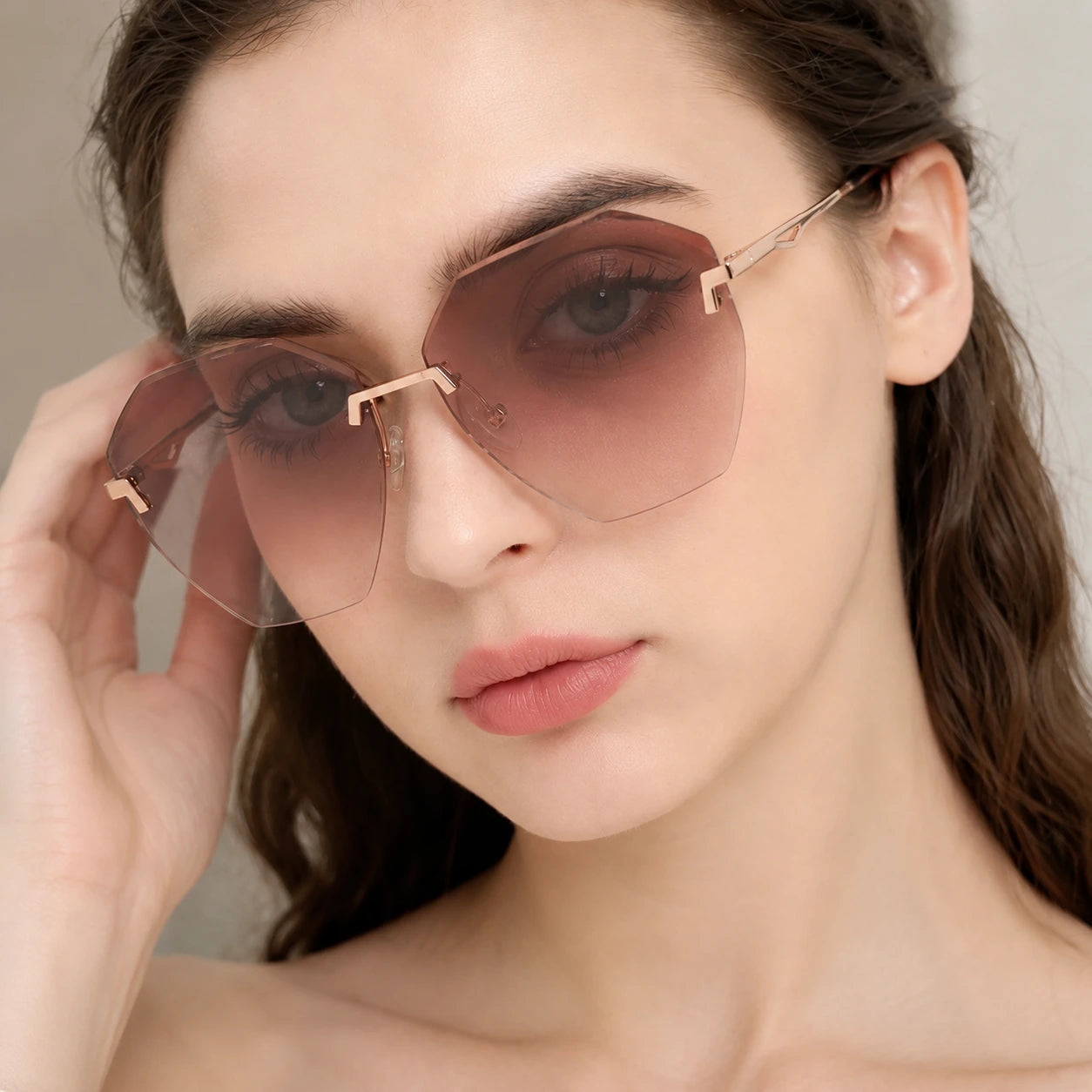

What Does Category 3 Mean in Sunglasses?
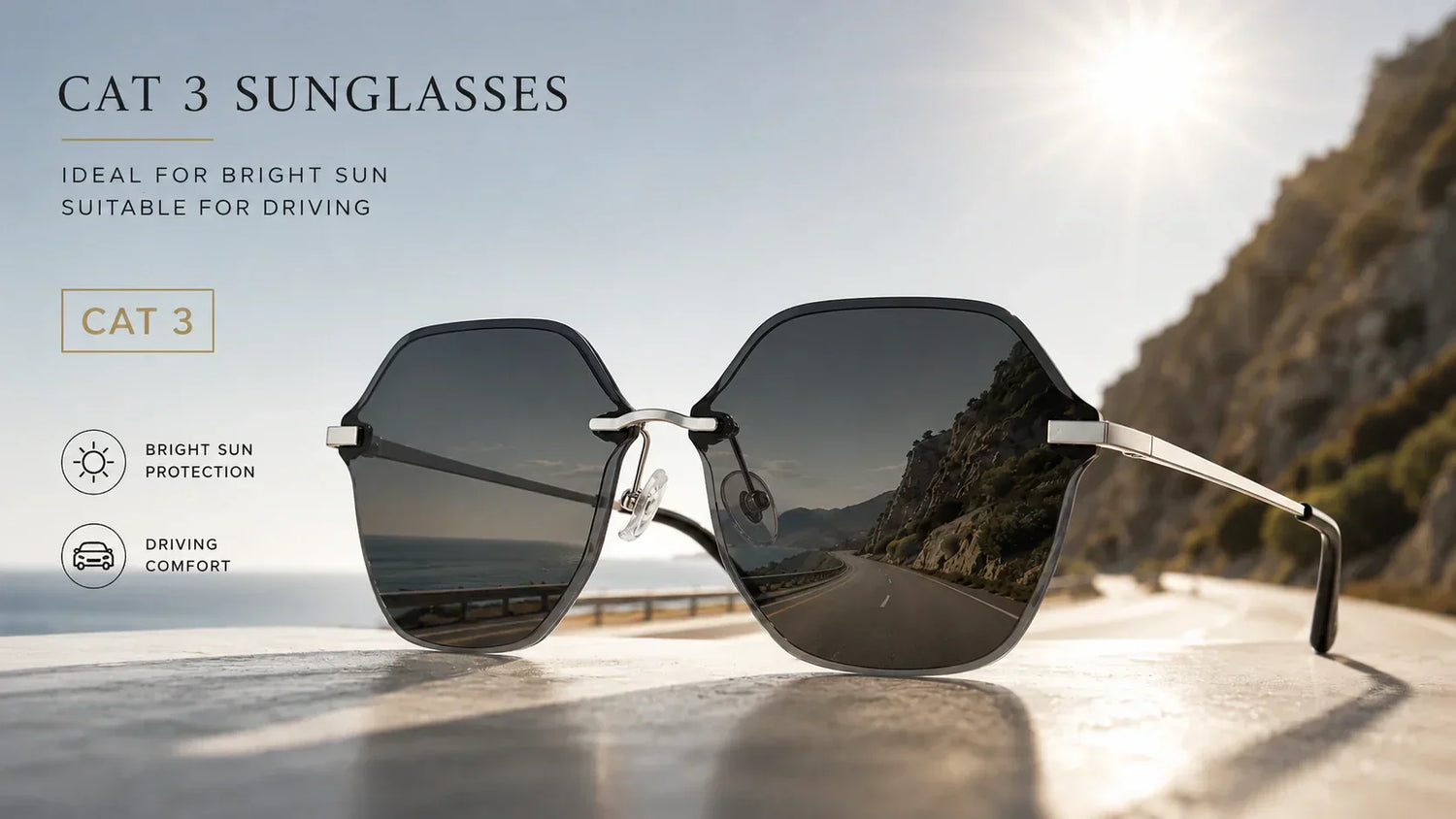
Category 3 is a sunglasses lens filter category. It describes how dark the lens is for visible light. A Category 3 lens is usually designed for bright daylight and typically sits around the 8–18% visible light transmission range, often shortened to VLT.
That means Category 3 tells you about brightness reduction. It does not, by itself, tell you whether the lens is UV400, polarized, scratch-resistant, nylon, glass, or premium. It is one useful buying signal, not the whole product decision.
| Term | Simple meaning | What it does not prove |
|---|---|---|
| Category 3 / Cat 3 | Darker bright-sun visible-light lens | Does not automatically prove UV400 or polarization |
| VLT | How much visible light passes through the lens | Does not describe UV protection by itself |
| UV400 | UV protection claim up to 400nm | Does not tell you how dark the lens feels |
| Polarized | Reflected-glare reduction from roads, water or glass | Does not equal lens darkness |
Cat 2 vs Cat 3 Sunglasses
Cat 2 and Cat 3 lenses can both be useful, but they suit different brightness levels. Cat 2 usually feels lighter and easier in mixed daylight. Cat 3 usually feels more comfortable in bright sun, open roads, beach light and travel glare.

| Lens category | Approx. use | Best for | Driving note |
|---|---|---|---|
| Cat 1 | Light tint | Low glare, cloudy conditions, style tint | Not enough for strong sun |
| Cat 2 | Medium tint | Moderate daylight, city shade, softer daily wear | Can feel easier in changing light |
| Cat 3 | Dark bright-sun lens | Bright sun, beach, open roads, travel, strong daylight | Common daytime direction where local rules allow |
| Cat 4 | Very dark lens | Extreme glare, snow fields, high-altitude conditions | Generally not suitable for driving |
Category 3 vs UV400 Sunglasses
Category 3 and UV400 are not the same thing. Category 3 tells you how dark the lens is for visible light. UV400 tells you that the lens is designed to block ultraviolet rays up to 400nm.

| Feature | What it means | Why shoppers confuse it | Buying check |
|---|---|---|---|
| Category 3 | Visible-light darkness category | The lens looks darker | Still check UV400 separately |
| UV400 | UVA/UVB protection up to 400nm | People assume dark = protective | Look for UV400 or 99–100% UVA/UVB language |
| Dark lens | Reduces visible brightness | Feels comfortable in sun | Darkness alone is not enough |
For a full breakdown, read the UV400 vs polarized sunglasses guide.
Category 3 vs Polarized Sunglasses
Category 3 lenses feel darker in bright light. Polarized lenses are designed to reduce reflected glare from surfaces such as roads, water, wet pavement, snow and glass. A sunglass lens can be Category 3 and polarized, but one label does not guarantee the other.
| Your problem | Look for | Why |
|---|---|---|
| Strong overall brightness | Category 3-style tint + UV400 | Helps the light feel calmer outdoors |
| Road, beach or water glare | Polarized + UV400 | Helps reduce reflected glare |
| Dashboard, GPS, phone or HUD readability | Screen visibility check | Polarized lenses can affect some displays |
| Face-visible daily style | Gradient or softer tint route | Darker lenses may feel visually heavy |
For more context, read polarized vs non-polarized sunglasses and how to tell if sunglasses are polarized.
Are Category 3 Sunglasses Good for Driving?
Category 3 sunglasses can work well for daytime driving when they are not too dark for shaded roads, dashboards, mirrors, traffic lights, phones or HUD visibility. They are not for night driving, and Cat 4 lenses are generally not suitable for driving.
- Choose Cat 3-style darkness when bright sun is the main issue.
- Choose polarized glare control when wet roads, water or windshield glare bother you.
- Check displays first if your car uses a HUD, digital dashboard or phone navigation.
- Check fit because sliding frames can be more distracting than lens color.
When Category 3 Sunglasses May Feel Too Dark
A darker lens is not always better. Category 3 sunglasses can feel too dark in tunnels, shaded streets, cloudy city light, indoor-outdoor transitions or late afternoon light. If your daily use includes changing conditions, a gradient, photochromic or lighter daily route may be more comfortable than the darkest lens you can find.
| Situation | Category 3 route? | Better check |
|---|---|---|
| Open beach sun | Often useful | Add polarization if water glare is the issue |
| Bright daytime driving | Often useful | Check dashboard and shaded-road visibility |
| Cloudy city days | May feel too dark | Consider gradient or softer tint |
| Night driving | No | Do not use dark sunglasses for night driving |
| Snow field or high mountain glare | May not be enough | Sport-specific eyewear may be needed |
Best Lens Colors for Category 3 Sunglasses
Category 3 tells you darkness, not lens color. Gray, brown, green-gray, rose and gradient lenses can all feel different even when the lens category is similar.

| Lens color | Best for | Face result |
|---|---|---|
| Gray / smoke | Neutral bright sun | Clean and balanced |
| Brown / bronze | Warm contrast and daily outdoor light | Softer warmth |
| Green-gray | Balanced outdoor contrast | Less harsh than black |
| Rose / pink | Softer light and style mood | Warmer, more face-friendly |
| Gradient | Mixed light, face visibility, daily wear | Keeps the eye area lighter |
For deeper tint selection, use the sunglass lens color guide.
Best Category 3 Sunglasses by Use Case
The strongest buying route is not “darkest lens first.” It is use case first: bright sun, reflected glare, daily wear, face visibility or changing light.
| Use case | What to choose | BAPORSSA route |
|---|---|---|
| Bright outdoor sun and travel | More coverage + UV400 + bright-sun comfort | Vanguard |
| Road, wet pavement or water glare | Polarized glare-control route | Flow |
| Daily city brightness | Clean rimless daily route | Backbone |
| Softer face visibility | Gradient lens route | Glow |
BAPORSSA Bright-Light Lens Routes
For BAPORSSA, use Category 3 as a brightness clue, then choose by lens function and fit. The product route should solve the real light problem rather than simply chasing the darkest lens.
| Start here | Choose it if... | Why it fits this guide |
|---|---|---|
| Vanguard | You want a stronger bright-sun and travel route | More presence and coverage for strong outdoor light |
| Flow | You deal with road, beach or water glare | Polarized glare-control direction for reflected light |
| Backbone | You want a clean rimless daily route | Less frame, cleaner face look, easier everyday style |
| Glow | You want softer light and better face visibility | Gradient/photochromic-style route for changing daylight |
Browse the Driving & Travel sunglasses collection for road and outdoor light, or compare Rimless Gradients for a softer face-visible route.
Related Lens & Light Guides
| If you want to understand... | Read this next |
|---|---|
| UV400 vs glare control | UV400 vs polarized sunglasses |
| Driving, dashboard and road glare | Best sunglasses for driving |
| Gray, brown, rose, green and gradient tints | Sunglass lens color guide |
| Whether polarization is worth it | Polarized vs non-polarized sunglasses |
| How to test polarization | How to tell if sunglasses are polarized |
| Lens materials and clarity | Glass vs polycarbonate vs nylon lenses |
| BAPORSSA lens standards | The Vision Lab |
FAQ
What does Category 3 mean in sunglasses?
Category 3 means the sunglasses have darker visible-light lenses for bright outdoor conditions. Cat 3 usually refers to lenses around 8–18% visible light transmission.
What does Cat 3 mean on sunglasses?
Cat 3 is the short form of Category 3. It describes lens darkness for visible light, not UV protection, polarization or lens material.
Are Category 3 sunglasses good for driving?
They can be useful for daytime driving where local rules allow, but they must not make dashboards, road signs, shaded areas, phones or HUDs hard to see. Do not use dark sunglasses for night driving.
Is Category 3 the same as UV400?
No. Category 3 describes visible lens darkness. UV400 describes ultraviolet protection. A dark lens should still clearly state UV400 or 99–100% UVA/UVB protection.
Does Category 3 mean polarized?
No. Category 3 does not automatically mean polarized. Polarization is a separate feature that helps reduce reflected glare from roads, water and glass.
What is the difference between Cat 2 and Cat 3 sunglasses?
Cat 2 lenses are lighter and often easier in mixed daylight. Cat 3 lenses are darker and usually better for bright outdoor sun, beach light, open roads and travel.
Are Category 3 sunglasses too dark?
They can feel too dark in shade, tunnels, cloudy city light or indoor-outdoor transitions. If your light conditions change often, consider gradient or photochromic-style routes.
Are Category 3 sunglasses good for the beach?
Yes, Category 3-style lenses can work well for beach brightness. If water glare is the problem, polarized lenses are often more important than darkness alone.
Can you wear Category 3 sunglasses every day?
You can wear them for bright daytime outdoor use, but they may feel too dark for cloudy days or indoor transitions. Daily comfort depends on lens tint, frame weight and fit.
Should I choose Category 3 or polarized sunglasses?
Choose Category 3-style darkness if overall brightness is the issue. Choose polarized sunglasses if reflected glare from roads, water or glass is the issue. Many shoppers benefit from both, plus UV400 protection.
Final Recommendation
Category 3 sunglasses are useful when bright sunlight is the problem. But do not choose by darkness alone. Check UV400 for protection, polarization for reflected glare, lens color for visual comfort and frame fit for long-wear stability.
For BAPORSSA, start with Vanguard for bright-sun coverage, Flow for road or water glare, Backbone for a clean rimless daily route, or Glow for softer light and face visibility.