
Quick answer: sunglasses can support daily sun care by giving the eye area physical shade, reducing bright-light squinting, and helping your face feel more comfortable outdoors. The safest starting point is not the darkest lens. It is a pair that clearly lists UV400 protection, fits well enough to wear often, and gives enough coverage for the way you spend time in sunlight.

This guide replaces the old “anti-aging” angle with a cleaner BAPORSSA approach: UV400 first, less squinting when light feels harsh, better eye-area coverage, and lighter sunglasses you will actually wear. It is a sun-care and style guide, not medical advice. For skin conditions, eye disease, surgery recovery, or medical sun sensitivity, follow a qualified professional’s guidance.
For the full lens-protection framework, read our UV400 vs polarized sunglasses guide. For lens darkness and visible light transmission, read Cat 3 sunglasses and VLT explained.
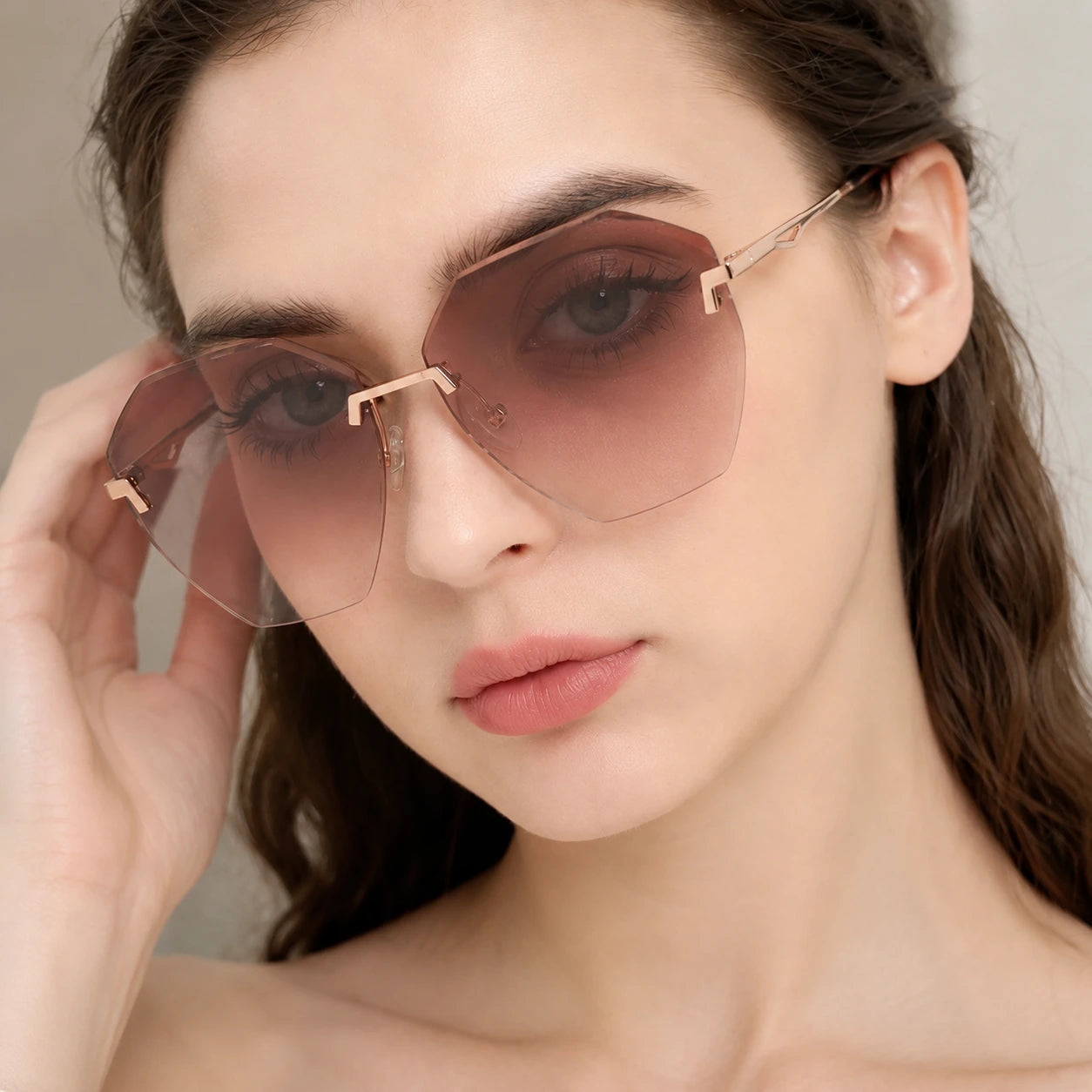
Why sunglasses matter for daily sun care
Sunscreen, hats, shade, and clothing all play different roles outdoors. Sunglasses are useful because they cover a difficult area: the eyes, eyelids, brow line, and the skin around the outer corners of the eyes. This area is often exposed to direct sunlight, reflected glare, and repeated squinting.

A good pair of sunglasses can help in four practical ways:
- UV400 lens protection: helps address ultraviolet light when properly specified by the product.
- Visible-light comfort: makes bright daylight feel calmer.
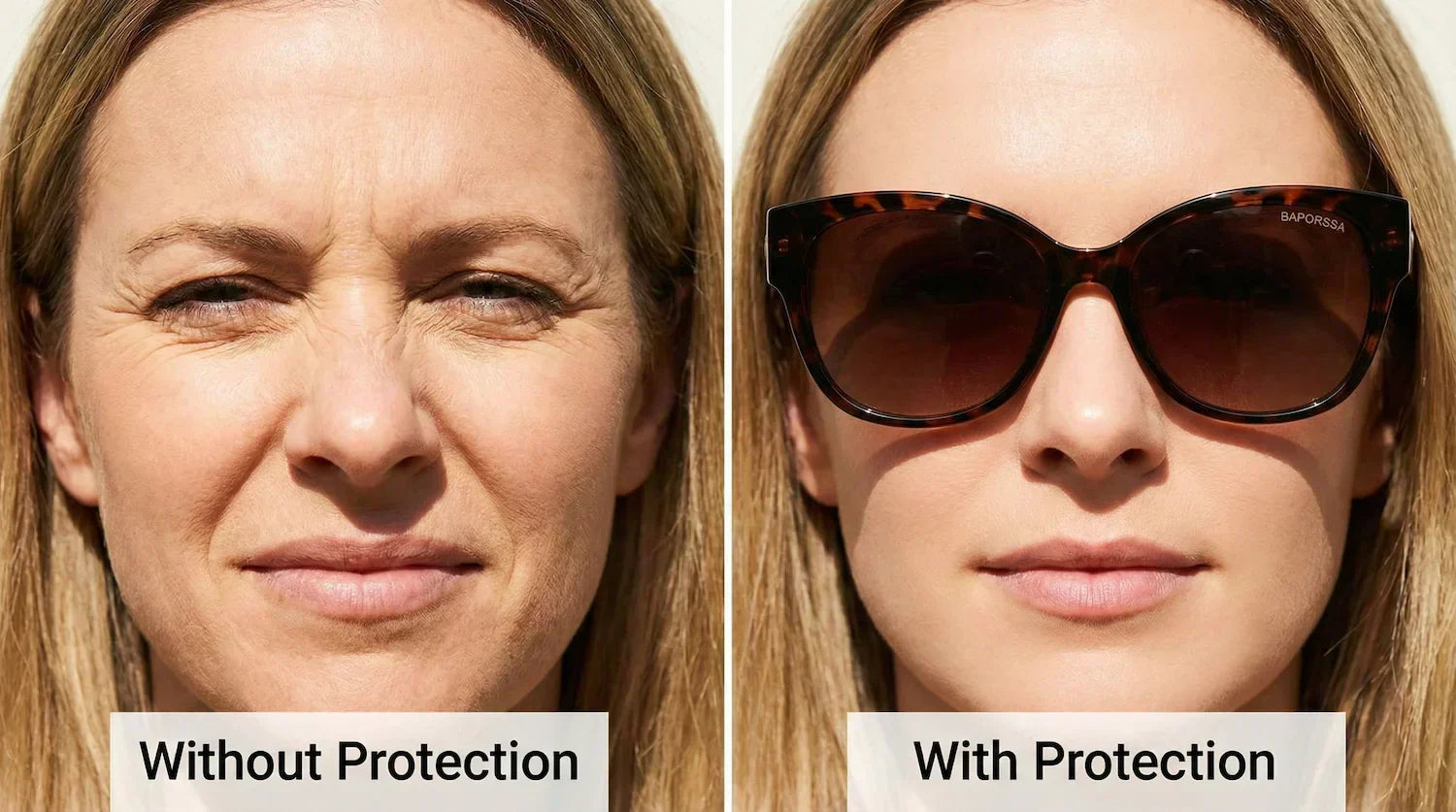
- Less squinting: helps reduce the need to narrow the eyes in harsh light.
- Eye-area coverage: gives physical shade around the eye area, depending on lens size, frame shape, and fit.
The key is consistency. Sunglasses only help when they are comfortable enough to wear. Heavy frames that slide, pinch, or hide the face often get left in a bag.
UV400 is the baseline, not lens darkness
UV400 describes ultraviolet protection up to 400 nm when the lens is properly made and specified. Lens darkness is a different feature. A dark lens can feel comfortable in bright sun, but darkness alone does not prove UV protection.
| Feature | What it helps with | What it does not prove |
|---|---|---|
| UV400 | Ultraviolet protection up to 400 nm when properly specified | Does not tell you how dark the lens looks |
| Dark tint | Visible brightness reduction | Does not prove UV400 or polarization |
| Polarized | Reflected glare from roads, water, glass, and wet pavement | Does not automatically prove UV400 |
| Gradient tint | Softer light control and easier daily styling | Does not prove UV400 unless listed |
For BAPORSSA, the better order is simple: check UV400 first, then choose lens darkness, glare control, and frame style around your real outdoor habits.

Why bright light makes people squint
Squinting is a normal reaction to bright light. It narrows the opening around the eyes so less light enters. In real life, this happens during driving, beach walks, outdoor lunches, bright pavement, water glare, snow glare, and glass-heavy city streets.
Sunglasses can make bright conditions feel more relaxed because the lens reduces visible brightness and, in polarized styles, reflected glare. The goal is not to make a medical promise. The goal is practical comfort: less harsh light, fewer moments of forced squinting, and a more relaxed face in strong sun.
If glare is the main problem, continue with are polarized sunglasses always better? If you want to check whether a pair is actually polarized, use our polarized sunglasses test guide.
Eye-area coverage: what sunglasses can and cannot cover
Coverage depends on the lens shape, lens height, frame width, and how close the frame sits to the face. Larger lenses usually cover more of the eye area from the front. Shield and wrap-friendly shapes may reduce more side light. Rimless designs can provide coverage without adding a thick border around the face.
| Coverage detail | What to check | Why it matters |
|---|---|---|
| Lens height | Does the lens cover from brow area toward upper cheek? | More vertical shade around the eye area |
| Frame width | Does the frame extend enough toward the temples? | Helps with side light and bright peripheral glare |
| Bridge fit | Does the frame sit high enough without sliding? | Better position and less repeated adjustment |
| Lens darkness | Is the tint comfortable for your light condition? | Too light may not calm bright sun; too dark may reduce readability |
| Frame weight | Can you wear it for hours? | A lighter pair is more likely to become a daily habit |
Sunglasses are not a replacement for sunscreen, hats, shade, or professional skin care. They are one practical part of a broader outdoor routine.
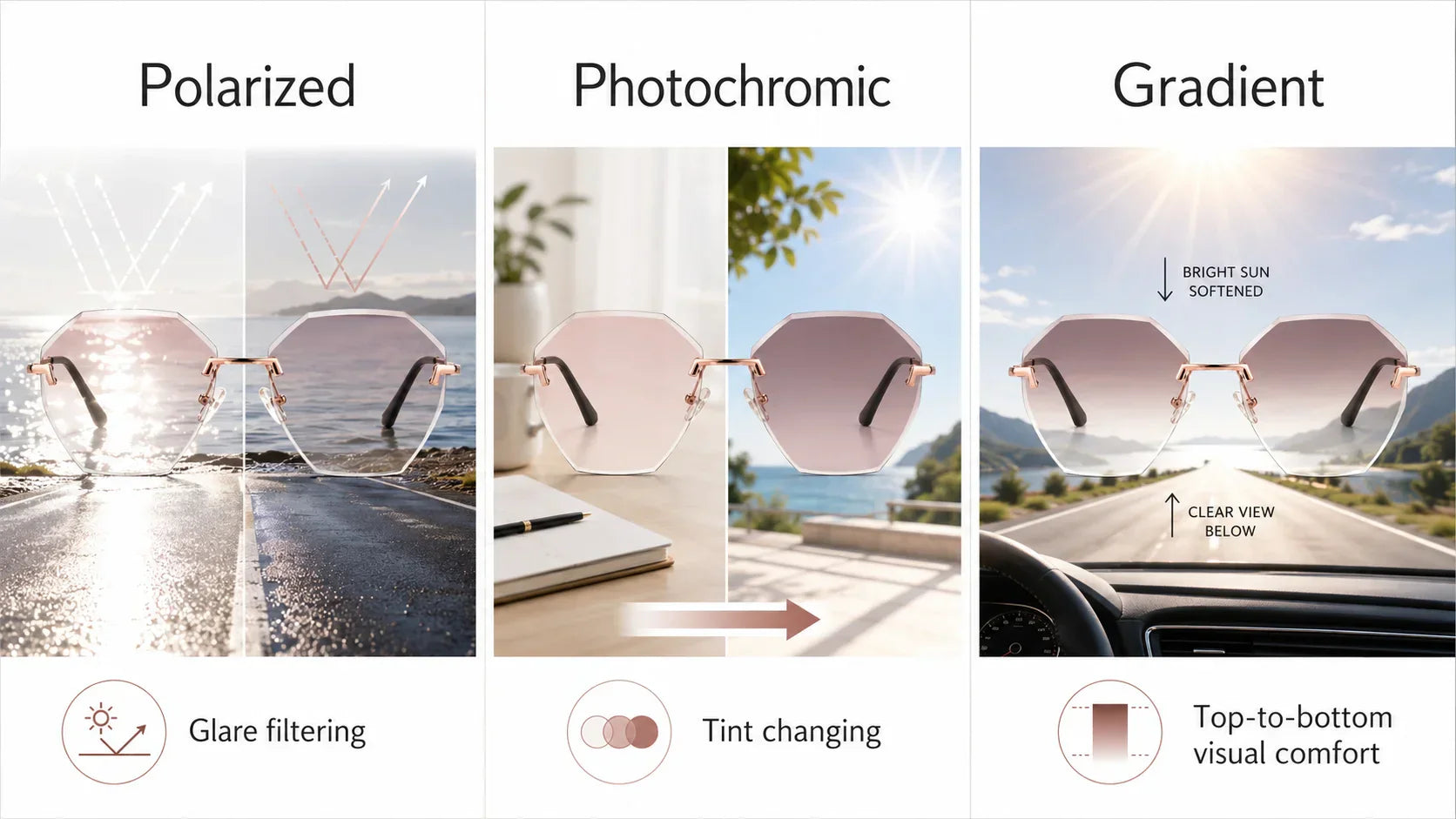
Polarized lenses vs UV400 for glare and comfort
UV400 and polarized lenses solve different problems. UV400 is about ultraviolet protection. Polarization is about reflected glare. Many shoppers confuse the two because both relate to outdoor comfort.
Choose polarized sunglasses when glare is the main issue: driving, water, wet pavement, snow, glass, or bright reflective surfaces. Choose non-polarized UV400 or gradient lenses when screen readability, daily styling, or a lighter face result matters more.
For driving, dashboard visibility, HUDs, and lens color, read our best sunglasses for driving guide. For phone and display problems, read why polarized sunglasses can make screens look dark.
Why lightweight sunglasses are easier to wear every day
The best sun-care pair is the one you actually keep on. Weight, pressure, nose marks, and slipping decide whether sunglasses become a daily habit or a short photo accessory.
Lightweight sunglasses are useful because they put less pressure on the nose and temples. Rimless and frameless designs also keep the face more open, which matters if you want coverage without a heavy outline across your features.
If frames often slide, use our sunglasses sliding down guide. If bridge pressure or nose marks are the issue, read silicone nose pads for glasses.
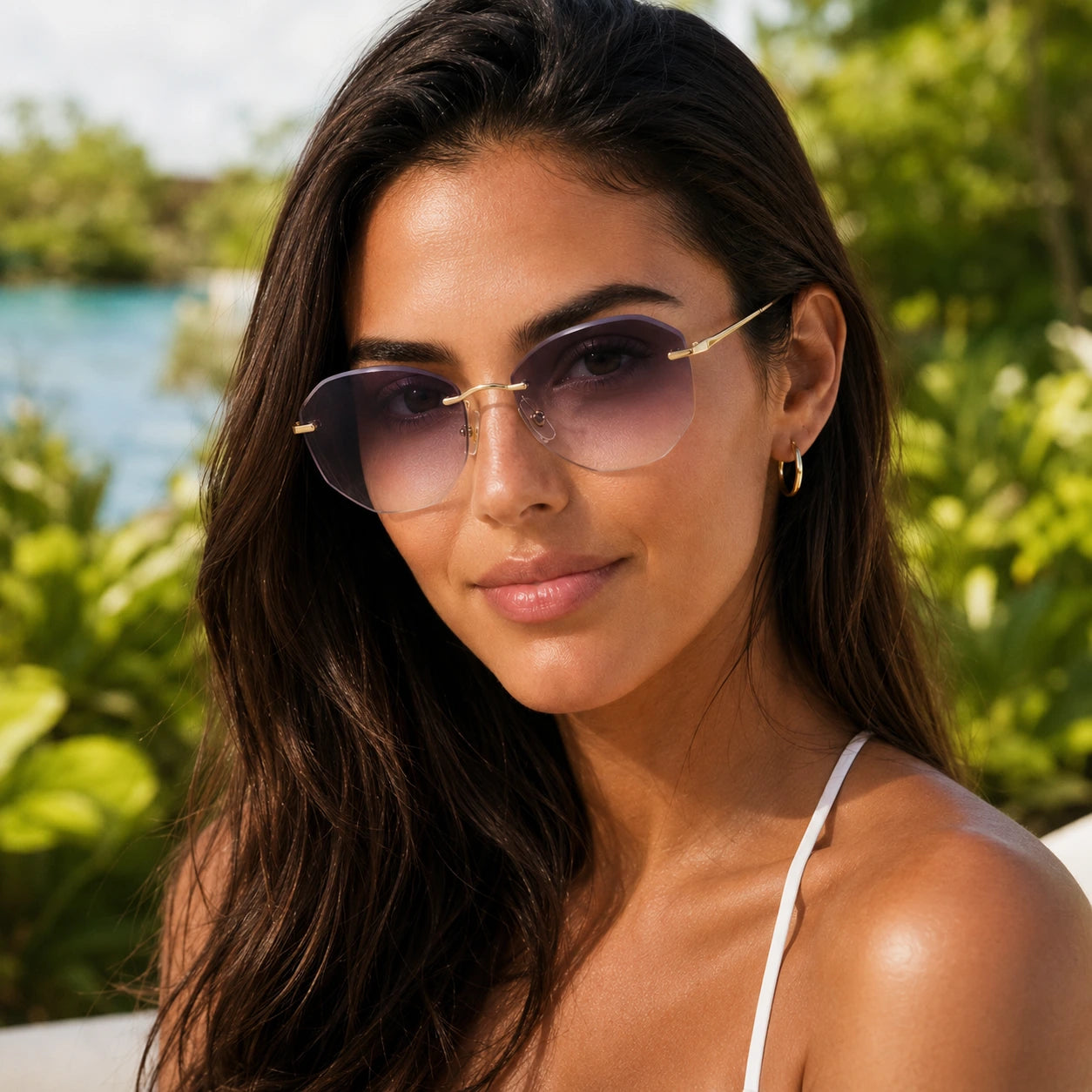
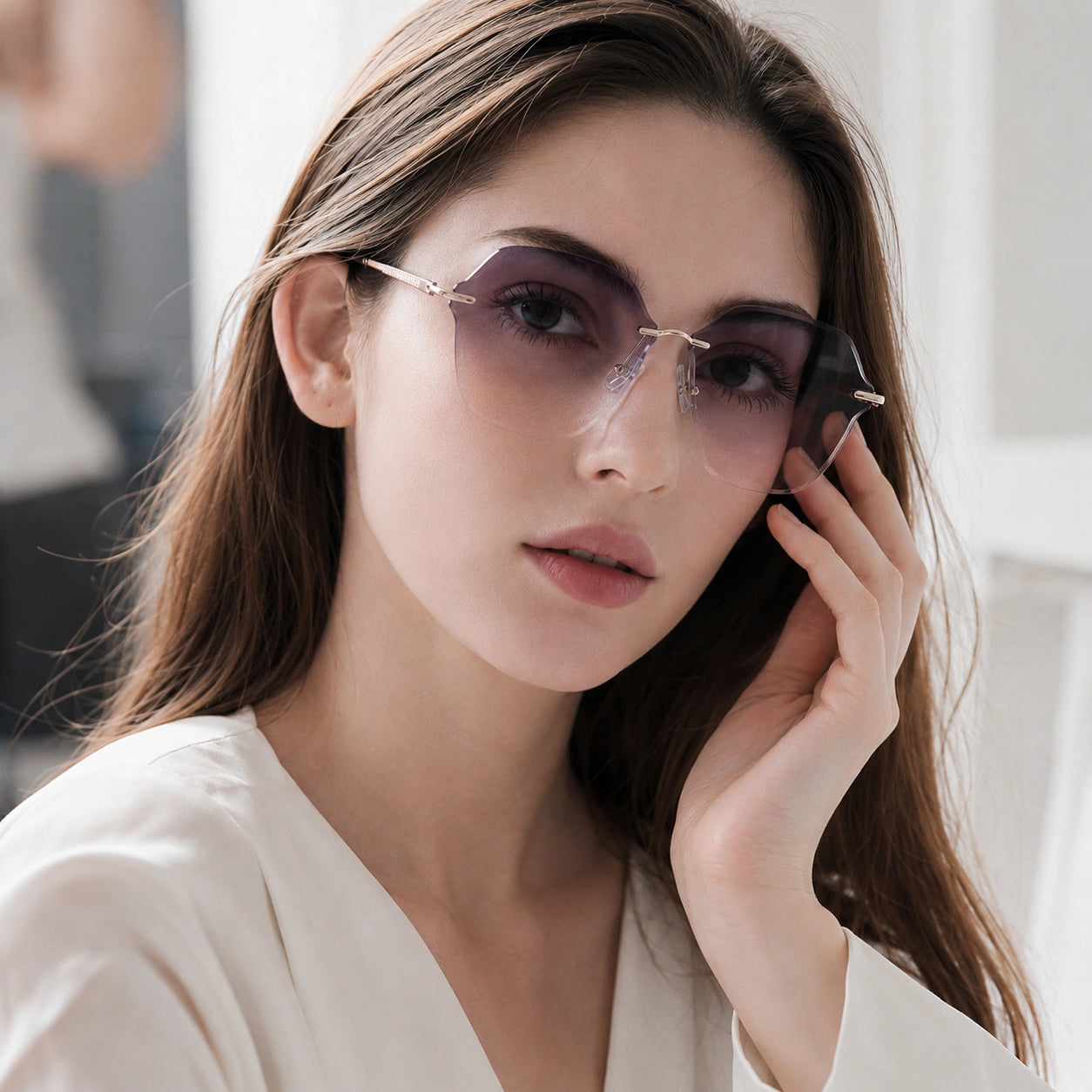
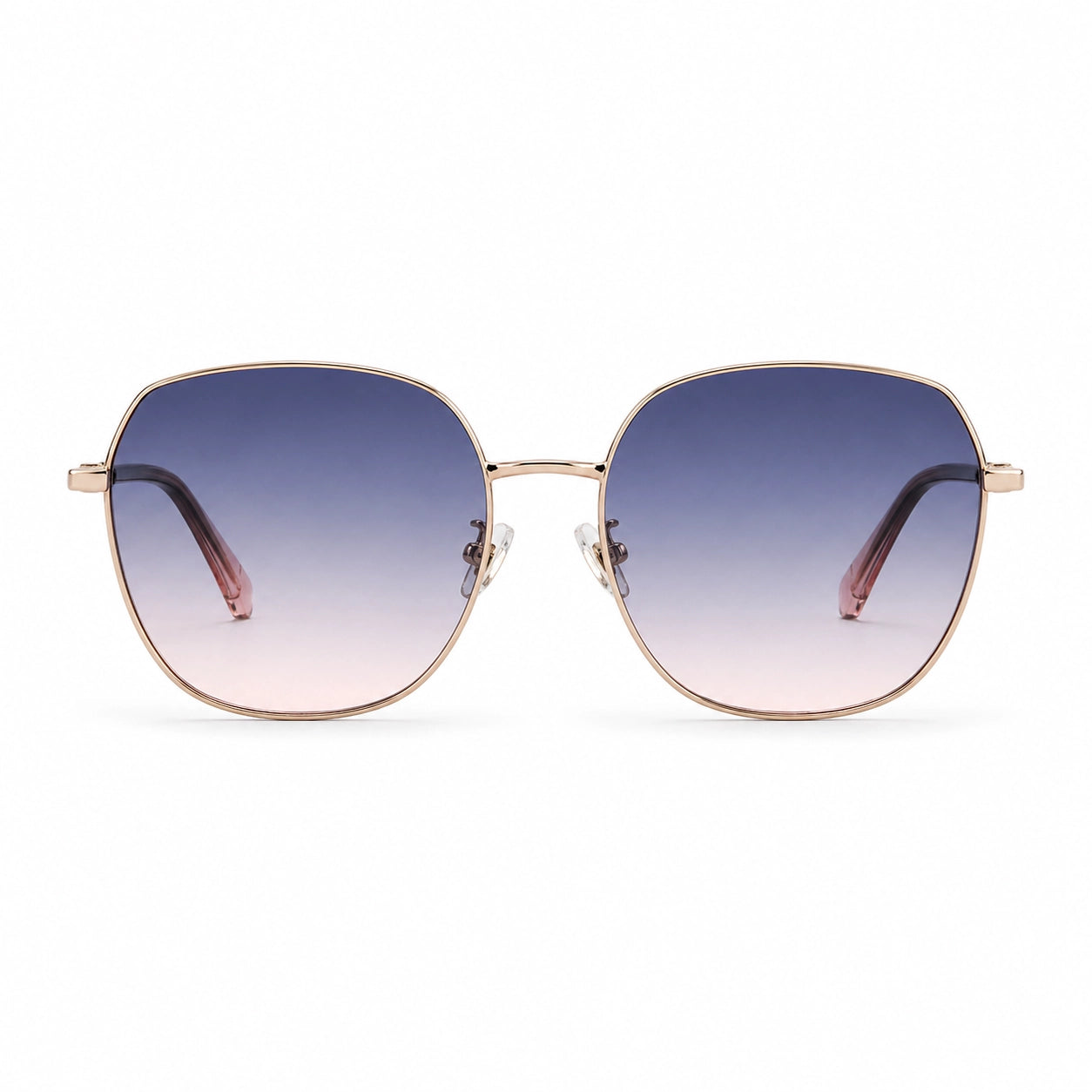
BAPORSSA sun-care route
BAPORSSA’s point of view is not to make sunglasses heavier, darker, or more clinical than necessary. The goal is cleaner light, lighter wear, and a face that still looks refined.
| Need | Best BAPORSSA route | Why |
|---|---|---|
| More eye-area coverage | Vanguard | Rimless shield direction with stronger daylight presence |
| Wide bright-day glare coverage | Flow | Frameless shield route for open outdoor light and reflected glare |
| Changing daylight | Glow | Photochromic rimless route for variable light conditions |
| Clean daily rimless look | Backbone | Light rimless route that keeps the face open |
| Lightest daily feel | Air | Minimal rimless direction for everyday wear |
| Glare plus adjustable fit | Luma | Polarized gradient route with adjustable silicone nose pads |
Check each product page for exact lens specifications, because UV protection, polarization, photochromic behavior, tint depth, and colorway details can vary by model or variant.

What to avoid
- Do not judge protection by lens darkness alone. Check UV400 or product specifications.
- Do not choose a pair that is too heavy to wear. A protective lens is less useful if the frame sits in your bag.
- Do not assume polarized is always better. It can affect phones, dashboards, and HUDs.
- Do not rely on sunglasses alone. Use them with sunscreen, hats, shade, and common-sense sun habits.
- Do not keep scratched or peeling lenses for important outdoor use. Clarity matters when you are driving or walking in bright light.
Related guides
| If you care about | Read this |
|---|---|
| UV400 vs glare control | UV400 vs polarized sunglasses |
| Lens darkness | Cat 3 sunglasses and VLT explained |
| Driving glare | Best sunglasses for driving |
| Photochromic vs polarized | Photochromic vs polarized sunglasses |
| Polarized lens testing | How to tell if sunglasses are polarized |
| Rimless style | Rimless sunglasses guide |
FAQ
Are sunglasses useful for sun care?
Yes. Sunglasses can support daily sun care by adding eye-area shade, reducing visible brightness, and helping reduce squinting in harsh light. They should be used with sunscreen, hats, shade, and other sun-care habits.
Do sunglasses prevent crow’s feet?
No sunglasses should be treated as a guaranteed wrinkle-prevention tool. They can reduce bright-light squinting and provide coverage around the eye area, which makes them a useful daily sun-care accessory.
Is UV400 more important than dark lenses?
UV400 and lens darkness are different. UV400 describes ultraviolet protection up to 400 nm when properly specified. Dark tint reduces visible brightness. A lens can be dark without clearly proving UV400 protection.
Are oversized sunglasses better for sun care?
Oversized sunglasses can provide more front coverage, but only if they fit well. If they slide, pinch, or sit too far from the face, the coverage benefit may be reduced. Fit matters as much as size.
Are polarized sunglasses better for squinting?
Polarized sunglasses can help when squinting comes from reflected glare, such as roads, water, snow, glass, or wet pavement. They are not always best for screen-heavy use.
What BAPORSSA sunglasses should I choose for daily sun care?
Choose Vanguard or Flow if coverage is the main priority, Glow if you move through changing daylight, Backbone or Air if you want a lighter rimless daily look, and Luma if glare control plus adjustable fit matters.
Final takeaway
Sunglasses are not a miracle skin-care product. They are a practical daily sun-care accessory. Choose UV400, enough coverage, comfortable lens darkness, and a frame light enough to wear often.
For BAPORSSA, the best result is simple: less frame, cleaner light, and a lighter way to stay comfortable in bright outdoor conditions.