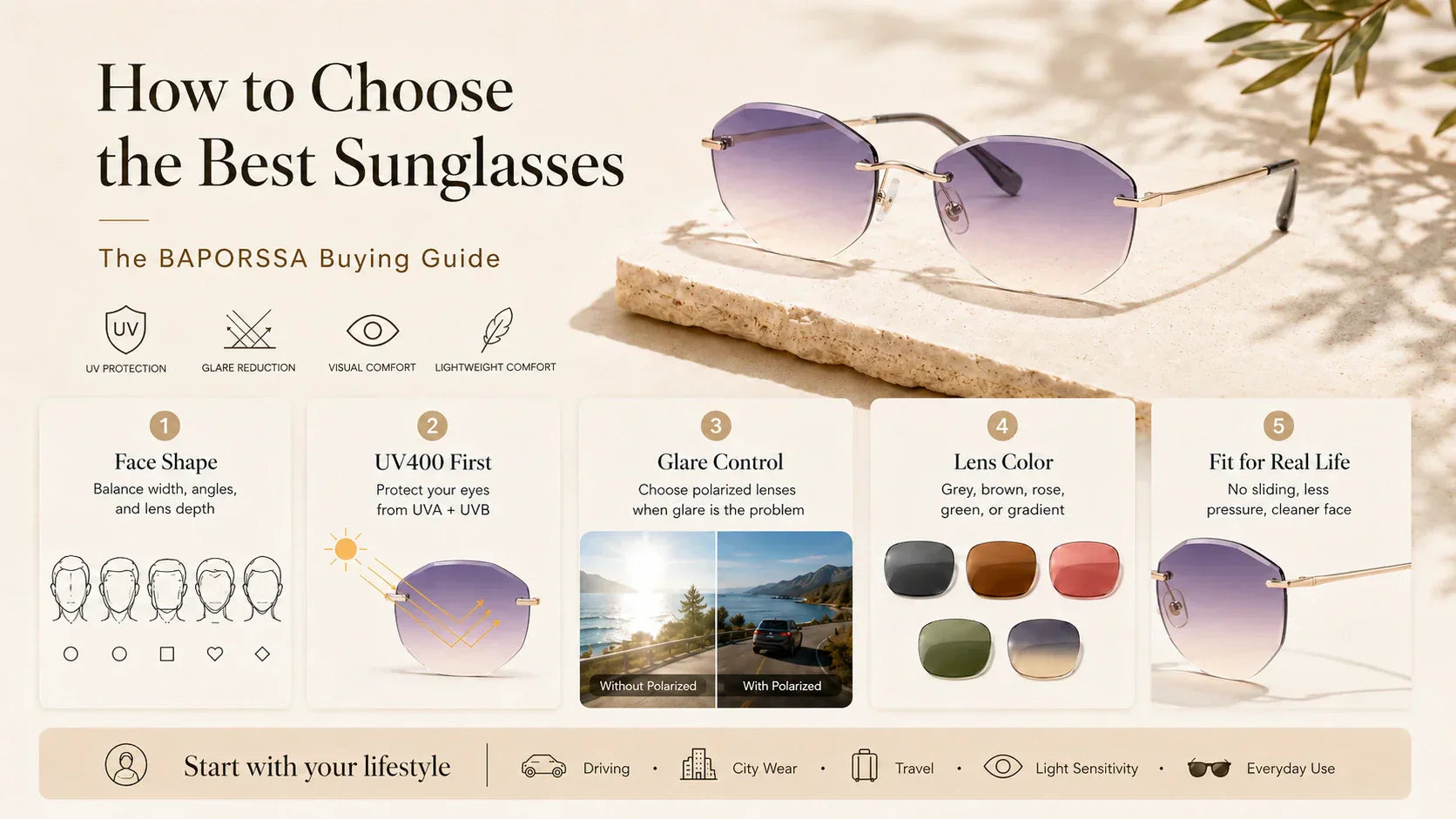
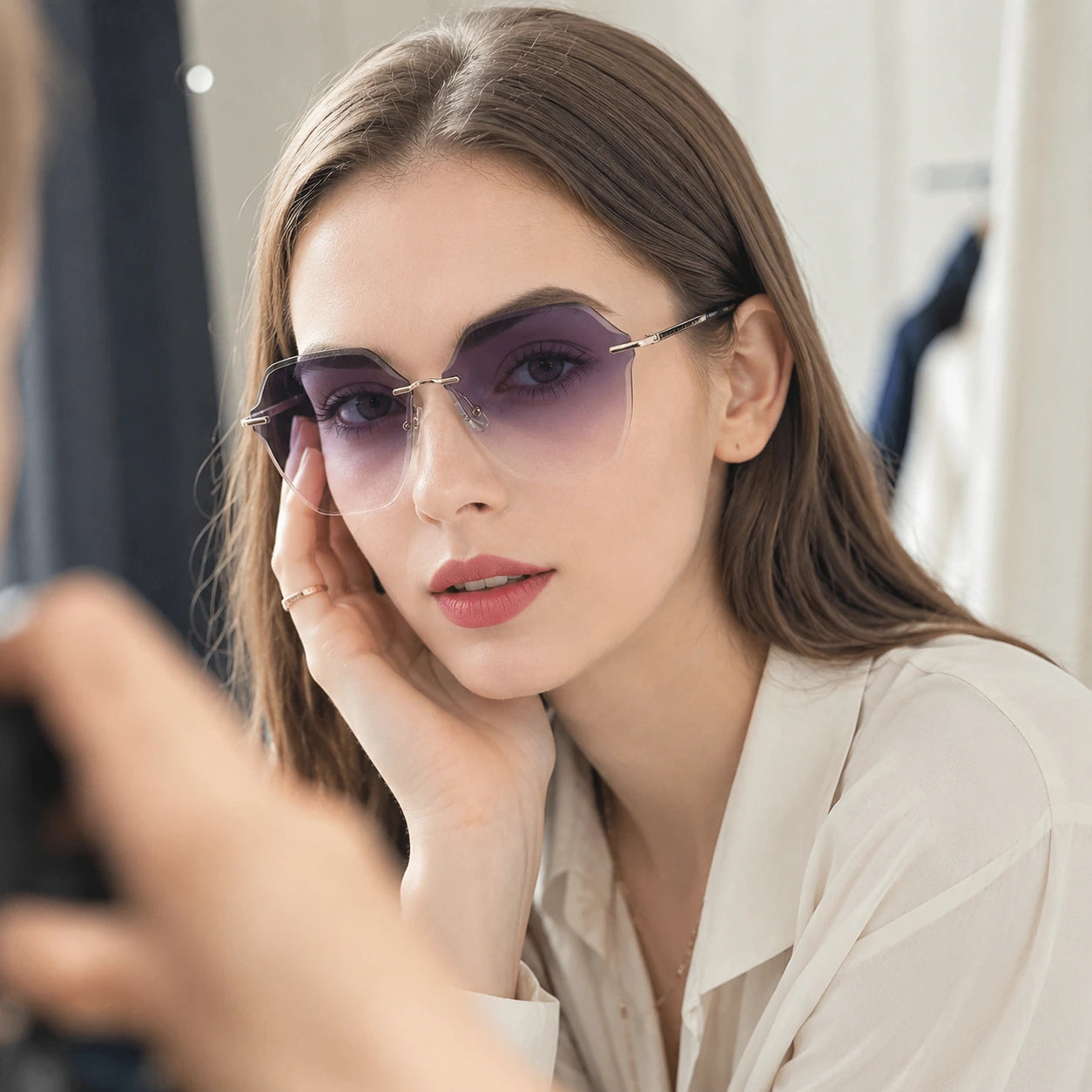

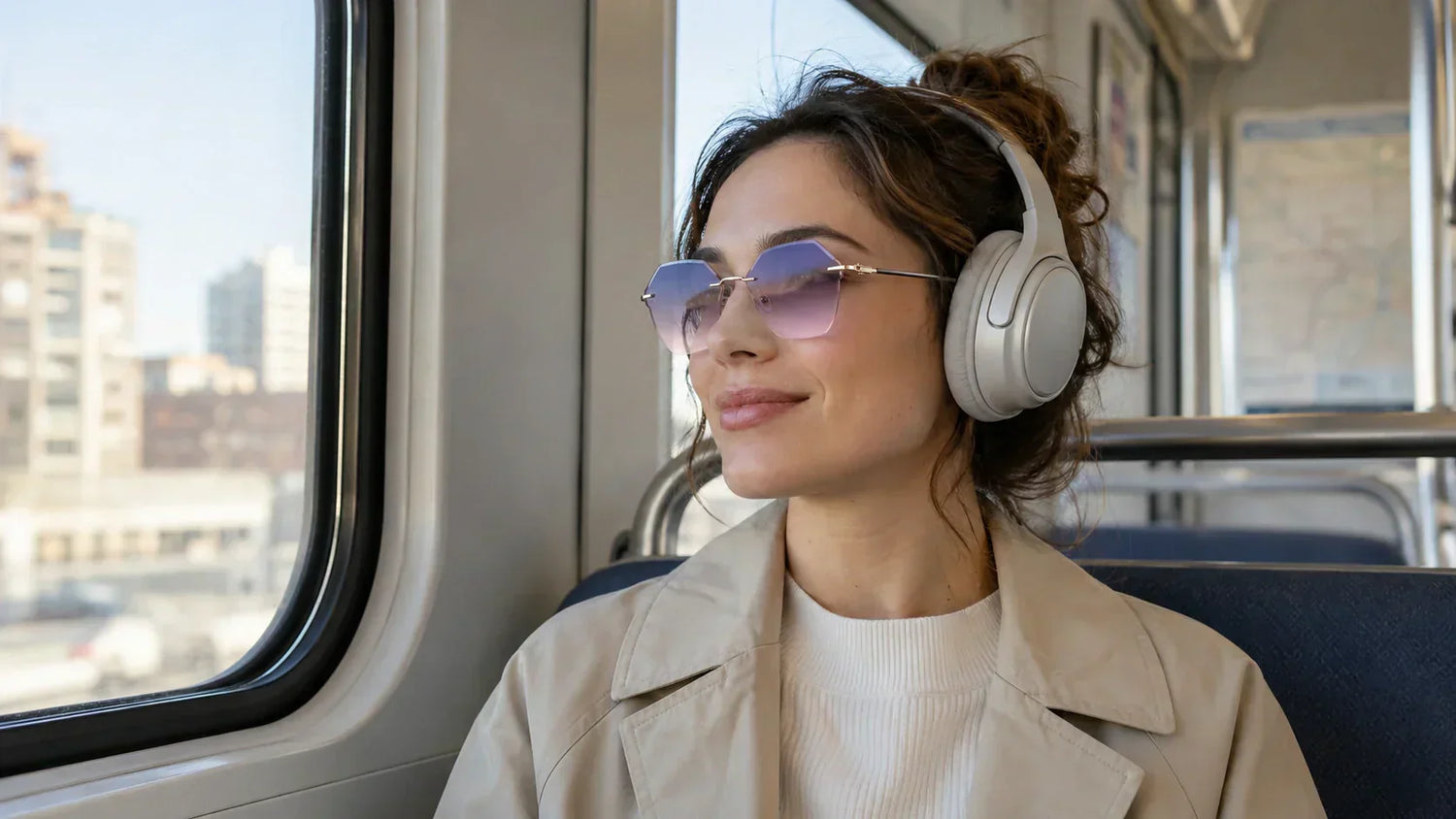
Quick answer: sunglasses hurt with headphones when the headphone cushion presses the sunglass temple arm into the side of your head. The pain usually shows up behind the ears, at the temples, or where the headset clamp pushes a thick frame into one small pressure point.
If you are searching for over ear headphones glasses, over ear headphones and glasses, glasses hurt behind ears, or sunglasses hurt behind ears, the same fit problem is usually happening: two layers of pressure are stacking together — the headphone clamp and the sunglass temple.
The fix is not to force the headset tighter. The better solution is a lighter pair of sunglasses with thinner temples, less side bulk, a stable bridge fit, and enough comfort for long wear.
This guide is for commuters, travelers, gamers, students, remote workers, and anyone searching for sunglasses with headphones, sunglasses vs headphones, gaming headset vs sunglasses, or sunglasses that do not hurt behind the ears.
- If headphones press sunglasses into your head: choose thinner temple arms.
- If sunglasses hurt behind your ears: look for lighter frame weight and less side pressure.
- If your gaming headset breaks the frame seal: avoid thick temples and bulky hinge blocks.
- If noise-cancelling headphones feel worse with sunglasses: reduce the material between your head and the cushion.
- If the frame slides when headphones move: consider adjustable nose pads or a more stable bridge fit.
Best BAPORSSA starting point: choose Air for the lightest rimless daily feel, Backbone for a clean lightweight rimless look, or Luma for adjustable nose-pad control and spring-hinge comfort.

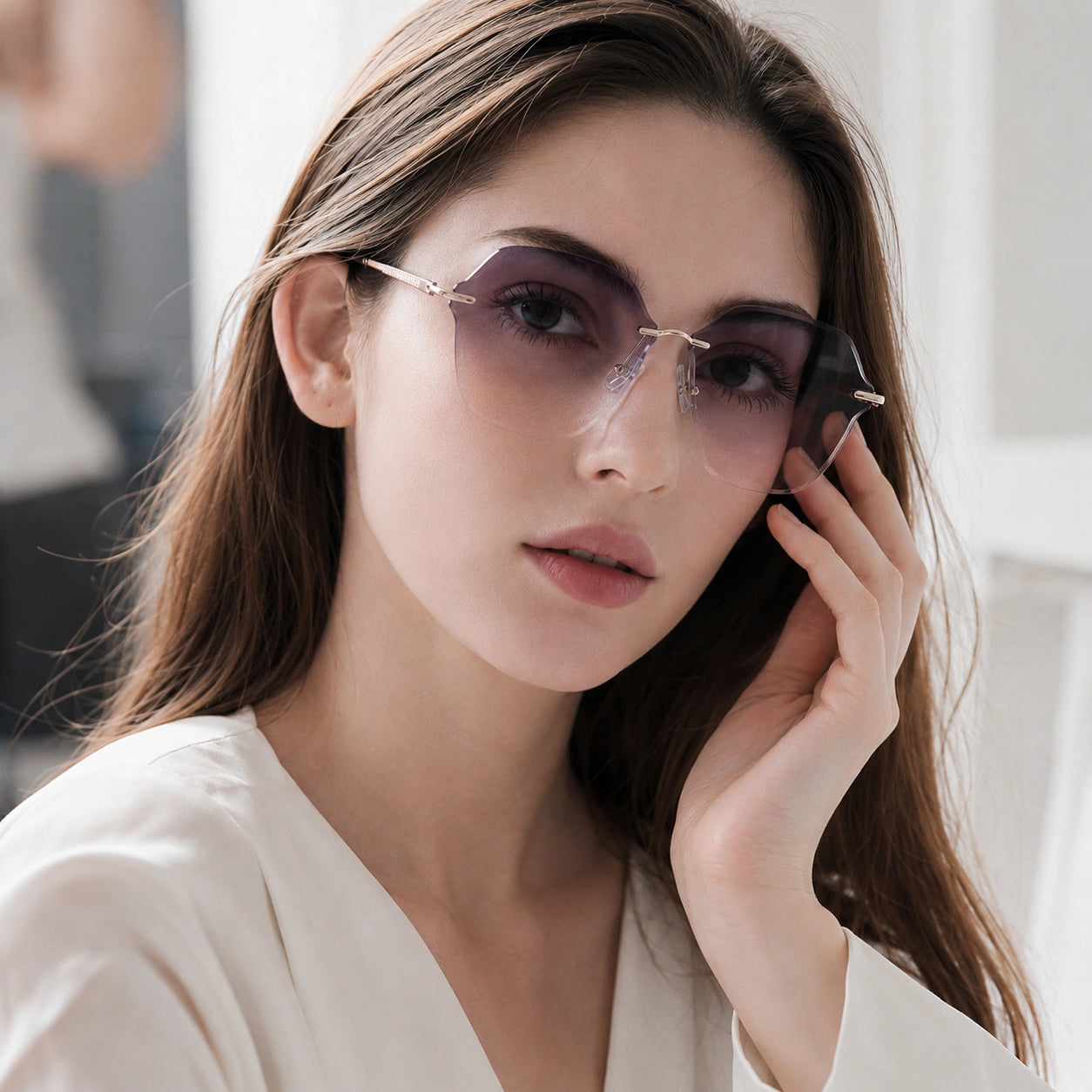



Sunglasses with headphones: the quick answer
The best sunglasses to wear with headphones are usually lightweight frames with thin, low-bulk temples. The side arm should sit as flat as possible under the headphone cushion, instead of creating a hard ridge between your head and the ear cup.
| Problem | Why it happens | Better choice | BAPORSSA route |
|---|---|---|---|
| Sunglasses hurt with headphones | Headphone cushion presses thick temples into the head | Thin temple sunglasses | Air |
| Sunglasses hurt behind ears | Temple tip, headset clamp, and ear area stack pressure | Lightweight, lower-pressure frame | Backbone |
| Gaming headset feels painful with sunglasses | Tight headset clamp compresses the frame arm | Low-bulk temples and less side hardware | Air |
| Noise-cancelling headphones lose seal | Thick frame arm lifts the ear cushion | Flatter temple profile | Backbone |
| Frame slides down with headphones | Headset movement shifts the sunglass bridge | Stable bridge or adjustable nose pads | Luma |
Why Do Sunglasses Hurt Behind Your Ears with Headphones?
Sunglasses usually hurt behind the ears with headphones because two pressure systems stack together: the headphone clamp and the sunglass temple. When the headphone cushion pushes the temple arm into the skin, pressure builds around the temple, ear, and side of the head.

This is why even comfortable sunglasses can start to feel painful after 20 to 40 minutes with over-ear headphones, noise-cancelling headphones, or a gaming headset. The problem is not always the headphone alone. It can also come from thick temples, a frame that is too narrow, heavy front weight, or temple tips that press behind the ears.
1. Thick temples create a pressure point
The temple is the sunglass arm that runs along the side of your head. Thick acetate, chunky side hardware, and wide hinge blocks can feel fine on their own. Under headphones, they become a compressed layer. That is why the discomfort often appears after 20 to 40 minutes.
2. Rigid arms do not adapt to your head shape
Some frames look strong but feel unforgiving. If the temple arm does not sit flat, the headphone pad has to compress around it. The result can be temple pain, uneven pressure, shifting lenses, and a weaker headphone seal.
3. Headphones can break the frame position
Headphones can push sunglasses forward, tilt the lenses, or lift the nose pads. Once the frame moves, the nose bridge and ear area both carry more stress. This is why stable fit matters as much as thin temples.
Over-Ear Headphones, Noise-Cancelling Headphones and Gaming Headsets
| Headphone type | Why it can hurt with sunglasses | Better sunglasses direction |
|---|---|---|
| Over-ear headphones | The ear cushion presses the temples against the side of the head | Thin temples, lighter frame, lower side bulk |
| Noise-cancelling headphones | A tighter seal can increase pressure on the sunglass temples | Rimless or lightweight frames with smoother temple contact |
| Gaming headset | Long sessions make small pressure points feel worse over time | Lightweight sunglasses with less temple thickness |
| On-ear headphones | The pad may sit directly on the ear and temple area | Test carefully; thin temples help but fit varies |
| Earbuds | Less side pressure from the headphone body | Usually easier with sunglasses, but temple fit still matters |
Gaming headset vs sunglasses: why pressure gets worse
Gaming headsets are usually larger and tighter than everyday headphones. They are built for long sessions and stronger ear-cup contact. That makes frame choice more important.
Searches like gaming headset vs sunglasses and sunglasses vs gaming headset usually come from the same problem: the headset clamp is pushing the sunglass arm into the side of the head.

| Gaming issue | What to change | Why |
|---|---|---|
| Pain after one match | Use thinner temple sunglasses | Less material sits under the headset cushion |
| Uneven headset seal | Avoid bulky hinge blocks | The cushion can sit more evenly around the ear |
| Sunglasses slide during play | Improve bridge stability | The headset is moving the frame out of position |
| Headache or temple pressure | Reduce frame weight and side clamp | Less stacked pressure on the temple area |
Expert note: if your gaming headset already feels tight without sunglasses, do not force a thick frame under the cushion. Choose a lower-bulk pair first or reduce the headset clamp if your headset allows it.
Noise-cancelling headphones and sunglasses

Noise-cancelling headphones are more sensitive to fit than basic headphones. A thick sunglass arm can lift part of the cushion away from your head. That can make the seal feel uneven and make noise cancellation less consistent.
This does not mean you cannot wear sunglasses with ANC headphones. It means the temple profile matters. A slimmer, flatter temple usually interferes less with the ear-cup seal.
- Use sunglasses with low-bulk temples. Less material breaks the cushion seal.
- Put sunglasses on first. Then place the headphones over the temples.
- Adjust the ear cup slightly. A small forward or backward shift can reduce pressure.
- Avoid thick decorative side hardware. It creates hard points under the cushion.
How to wear sunglasses with over-ear headphones
Step 1: Put the sunglasses on first
Place the sunglasses where they naturally sit on your nose and ears. Then place the headphones over them. This keeps the frame aligned instead of letting the headset drag it downward.
Step 2: Adjust the ear cup around the temple
The cushion should sit evenly around the sunglass temple, not clamp it into one sharp point. If the seal feels broken, move the ear cup slightly forward or backward before increasing headband tension.
Step 3: Use the 30-second comfort check
Put on your sunglasses and headphones, then wait 30 seconds. Notice whether pressure appears behind the ears, whether the ear-cup seal feels uneven, and whether the frame slides down the nose. If any of these happen quickly, the temples are probably too bulky for that headset.
Step 4: Reset during long sessions
Small pressure points build over time. If you are gaming, editing, studying, flying, or commuting, take short fit breaks. A quick reset can prevent the discomfort that usually appears after an hour.
What sunglasses are best to wear with headphones?
The best sunglasses for headphones are not always the softest-looking pair. They are usually the pair with less side bulk and less downward weight.
| Comfort factor | Better choice | Why it matters |
|---|---|---|
| Temple profile | Thin metal or low-bulk temples | Reduces the layer between your head and headphones |
| Frame weight | Lightweight sunglasses | Lowers pressure on the nose and behind the ears |
| Bridge fit | Stable or adjustable nose pads | Helps the frame stay in place when headphones move |
| Visual bulk | Rimless or cleaner frame design | Keeps the face line lighter and less crowded |
| Long wear | Lower side pressure | Better for people who wear sunglasses for hours, not minutes |
Should You Change the Headphones or the Sunglasses?
| Problem | Try first | Better sunglasses route |
|---|---|---|
| Pain behind ears after 20–30 minutes | Reposition the headset and check temple tips | Backbone or Air |
| Headset seal breaks because of thick temples | Try thinner temple sunglasses | Rimless / thin-temple route |
| Temple pressure near the side of the head | Check if the frame is too narrow | Luma or the wide-face guide |
| Gaming headset feels fine until sunglasses are added | Reduce temple thickness and frame weight | Backbone, Air, or Onyx |
| Frame slides when the headphones move | Check bridge stability and nose-pad grip | Luma or the sliding sunglasses guide |
For a broader comfort route, read the sunglasses too tight and temple pressure guide. If your frame slides under headphones, read how to stop glasses from sliding down.
Best BAPORSSA sunglasses for headphones, gaming headsets, and commuting
BAPORSSA’s comfort direction is simple: less frame, cleaner face, lighter wear. The goal is not to make sunglasses feel technical or bulky. The goal is to remove the parts that make daily accessories harder to wear.
For headphone comfort, start with sunglasses that reduce side bulk and unnecessary frame weight. Backbone and Air are better first routes if your main issue is temple pressure under over-ear headphones. Luma works when you also need polarized daily comfort and a more stable bridge. Onyx is a lighter style route if you want a cat-eye look without a heavy frame feel.
| Product | Best for | Why it fits headphones |
|---|---|---|
| Backbone | Clean lightweight rimless look | Open rimless front and soft gradient feel reduce visual and physical bulk. |
| Air | Lightest daily feel | Weightless rimless architecture keeps frame bulk low for commutes and headset use. |
| Luma | Sliding frames or bridge control | Adjustable silicone nose pads and spring-hinge comfort help keep the frame stable. |
| Onyx | Lightweight cat-eye style | A lighter style route when you want more shape without a heavy frame feel. |
If your biggest issue is temple pressure, start with Air for the lightest daily feel. If you want a cleaner rimless look, start with Backbone. If headphones make the frame slide or tilt, choose Luma for adjustable nose-pad control.
Caps, hats, and beanies: avoid stacking pressure
With baseball caps
Keep the cap brim slightly above the frame. If the brim presses the sunglasses downward, the nose pads take more weight and the temples angle into the ears. Lower-bulk frames usually work better than tall, heavy top bars.
With beanies
Wear the beanie first, then place the sunglasses temples over a flatter section of fabric. Avoid thick seams near the ear. A seam plus a sunglass arm plus a headphone cushion creates an unnecessary pressure stack.

What not to buy if you wear headphones
- Very thick acetate temples: they create a hard ridge under ear cushions.
- Bulky hinge blocks: they can dig into the side of the head.
- Heavy full-frame sunglasses: they add nose pressure and side pressure over time.
- Frames that already pinch without headphones: a headset will usually make them worse.
- Loose frames that slide down: headset movement can make them tilt or drop faster.
For more fit help, use the face shape sunglasses guide or the silicone nose pads guide.
Related Fit & Buying Guides
| If your issue is... | Read this next |
|---|---|
| Sunglasses slide when you move | How to stop sunglasses from sliding down |
| Side pressure or temple pinch | Best sunglasses for wide faces and big heads |
| Temple pressure and tight frames | Sunglasses too tight guide |
| You want less frame on the face | Minimalist sunglasses that don’t cover your face |
| You want rimless comfort by face shape | Best rimless sunglasses for your face shape |
| Nose pads and bridge control | Silicone nose pads guide |
FAQ
Can you wear sunglasses with headphones?
Yes. The most comfortable setup is usually lightweight sunglasses with thin, low-bulk temples that sit flatter under the headphone cushion.
Why do sunglasses hurt with headphones?
Sunglasses hurt with headphones when the headphone cushion presses thick temple arms into the area behind your ears or against your temples. A slimmer temple profile reduces that pressure point.
Why do sunglasses hurt behind my ears with headphones?
The headphone clamp can press the sunglass temple tip and arm into the skin behind the ears. If the frame is heavy, narrow, thick, or rigid, that pressure can build faster during long commutes or gaming sessions.
Can you wear over-ear headphones with sunglasses?
Yes, but over-ear headphones usually work better with sunglasses that have thinner temples, lower side bulk, and a stable bridge fit. Thick temples can create pressure points and may break the headphone cushion seal.
Why do sunglasses hurt with a gaming headset?
Gaming headsets usually clamp harder than casual headphones. That pressure can push sunglass temples into the side of the head during long sessions.
What sunglasses are best with gaming headsets?
Look for lightweight sunglasses with thin temples, low side hardware, and stable bridge fit. Air, Backbone, Luma, and Onyx are direct BAPORSSA starting points for this use case.
Do sunglasses break the noise-cancelling seal?
They can. Thick sunglass arms may lift the headphone cushion away from the head, which can reduce passive isolation and make noise cancellation feel less even. Slimmer temples usually interfere less.
How do I stop sunglasses from hurting behind my ears?
Reduce the pressure stack. Choose lighter sunglasses, avoid thick temple arms, adjust the headphone cup position, and take short fit breaks during long sessions.
Are rimless sunglasses better with headphones?
Rimless sunglasses can be better when they reduce frame bulk and side pressure. The temple profile still matters, but less frame usually means less visual and physical interference.
Are thin temple sunglasses better with headphones?
Usually, yes. Thin temple sunglasses give the headphone cushion less material to compress, which can reduce temple pressure and improve the ear-cup seal.
Should I put headphones or sunglasses on first?
Put sunglasses on first, then place the headphones over them. This helps keep the frame in its natural position and reduces dragging or tilting.
What should I avoid if I wear sunglasses with headphones every day?
Avoid thick acetate temples, bulky hinge blocks, heavy full-frame sunglasses, and frames that already pinch before headphones are added.
Final recommendation
Sunglasses can hurt with headphones, but they should not have to. Pain usually means the frame is too bulky for your headphones, the temples are too rigid, or the fit is being pushed out of position.
For most commuters and gamers, the best fix is a slimmer, lighter frame with less side pressure. Start with Air for the lightest daily feel, Backbone for a clean lightweight rimless look, Luma for adjustable nose-pad control, or Onyx for a lightweight cat-eye route.