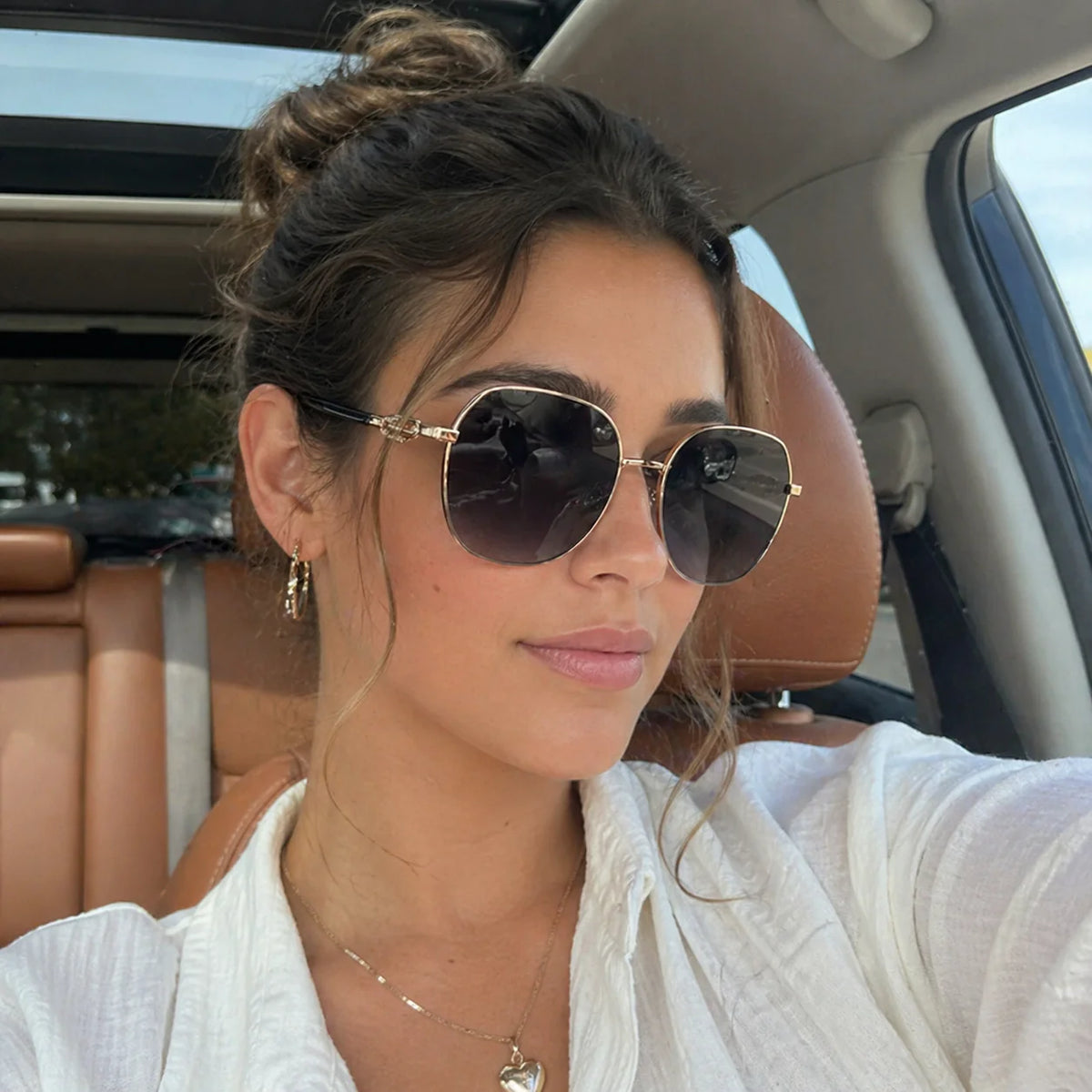
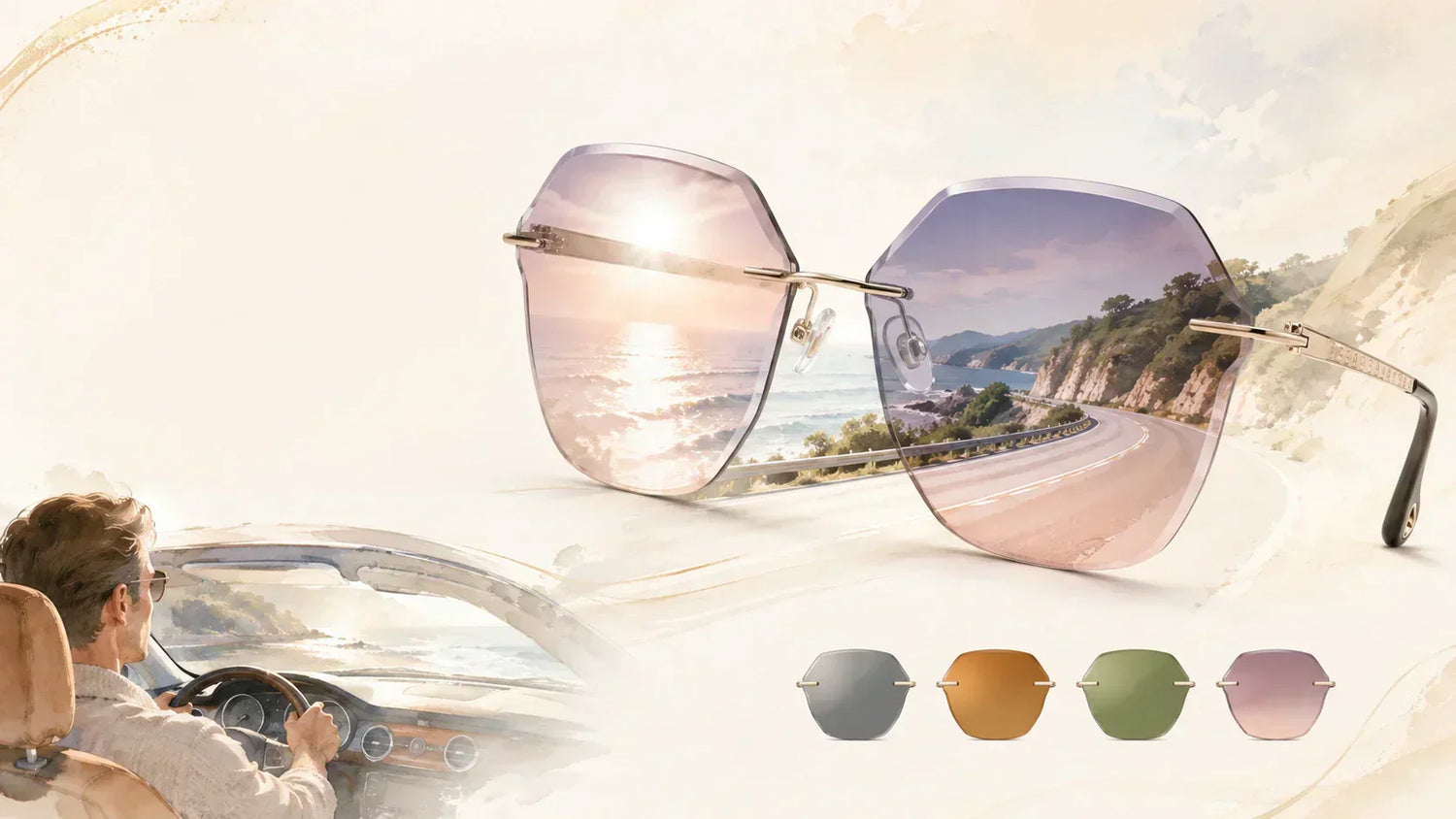
Quick answer: The best sunglasses for daytime driving should combine UV400 protection, polarized glare control, a comfortable lens color, clear dashboard visibility, and a lightweight frame that does not slip or press during long wear. For BAPORSSA, start with Flow or Vanguard for stronger road glare and bright-day coverage, Backbone for a cleaner daily driving look, and Glow for a softer gradient route when harsh dark lenses feel too heavy.

This guide is for daytime driving. Do not use dark sunglasses for night driving or low-visibility road conditions. Driving sunglasses should help reduce harsh brightness and reflected glare while keeping the road, mirrors, traffic lights, dashboard, and navigation screens readable.
Best Sunglasses for Driving: Quick Picks
| Driving need | Start with | Why it works | Check before buying |
|---|---|---|---|
| Strong road glare, water glare, wet pavement | Flow | Polarized rimless shield route with wider coverage for open roads, coastal drives, travel light, and reflected glare. | Check phone, dashboard, GPS, and screen visibility in your own car. |
| Daytime driving and travel coverage | Vanguard | Lightweight shield direction for bright-day driving, outdoor travel, and stronger coverage without a heavy full-frame outline. | Best if you want more presence than a minimal daily pair. |
| Clean daily driving style | Backbone | Rimless clean-face route for city driving, daily wear, and shoppers who want less visual bulk outside the car. | Check whether the tint darkness matches your regular driving light. |
| Softer daylight and gradient comfort | Glow | Soft gradient route when a very dark lens feels too harsh on the face or around the eye area. | Not the strongest shield-coverage route for heavy glare. |
If glare is your main driving problem, start with Flow or Vanguard. If you want a cleaner daily driving look, compare Backbone and Glow.
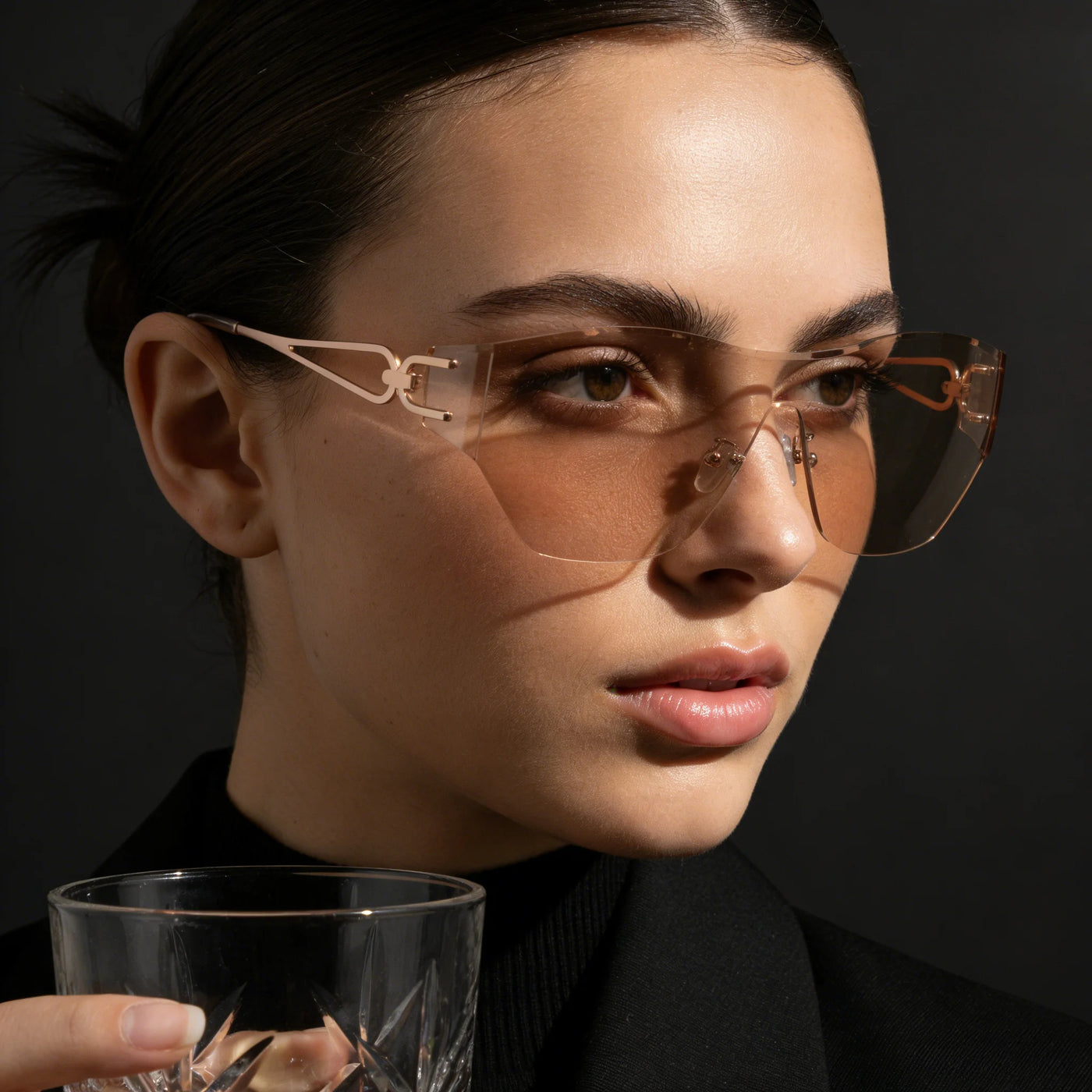

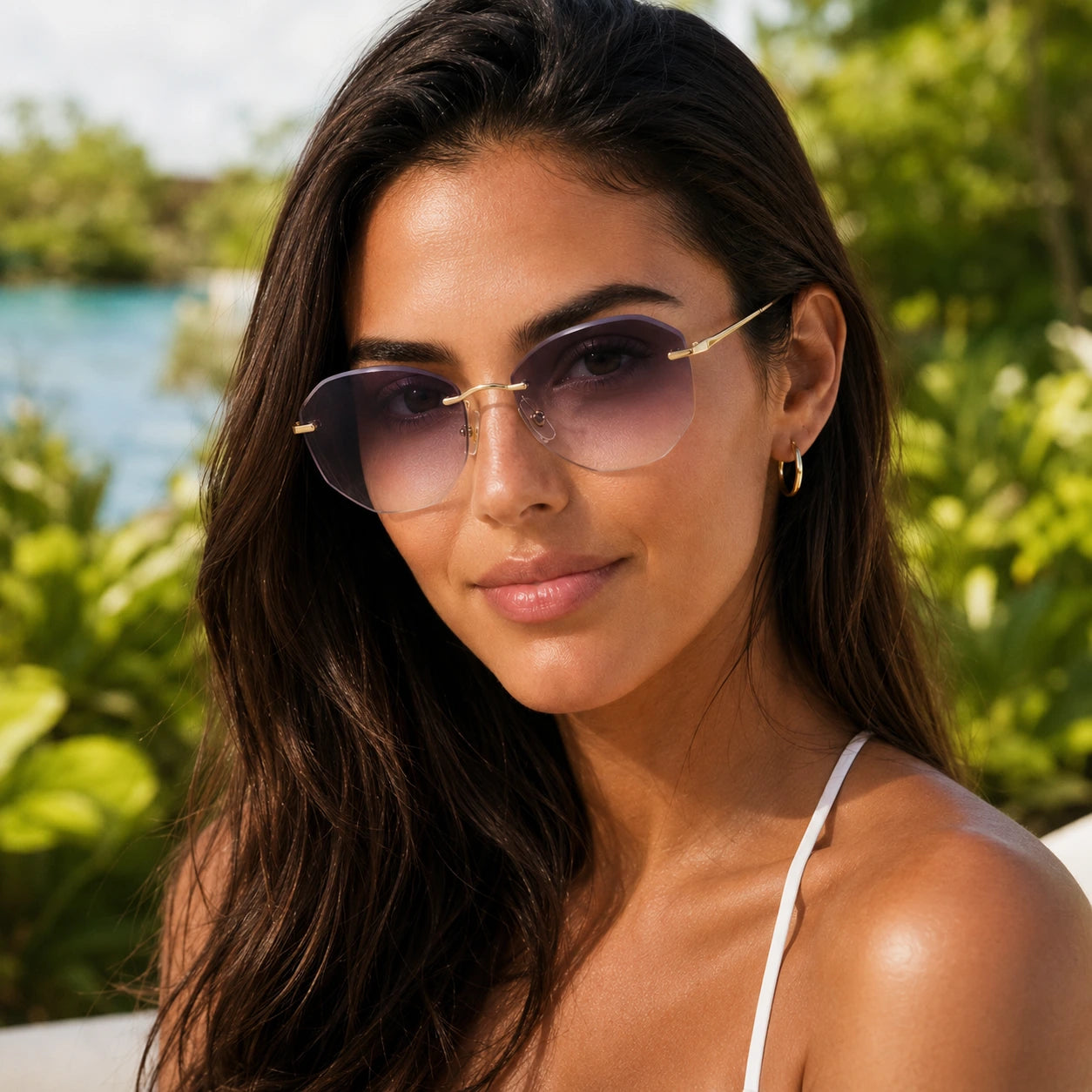
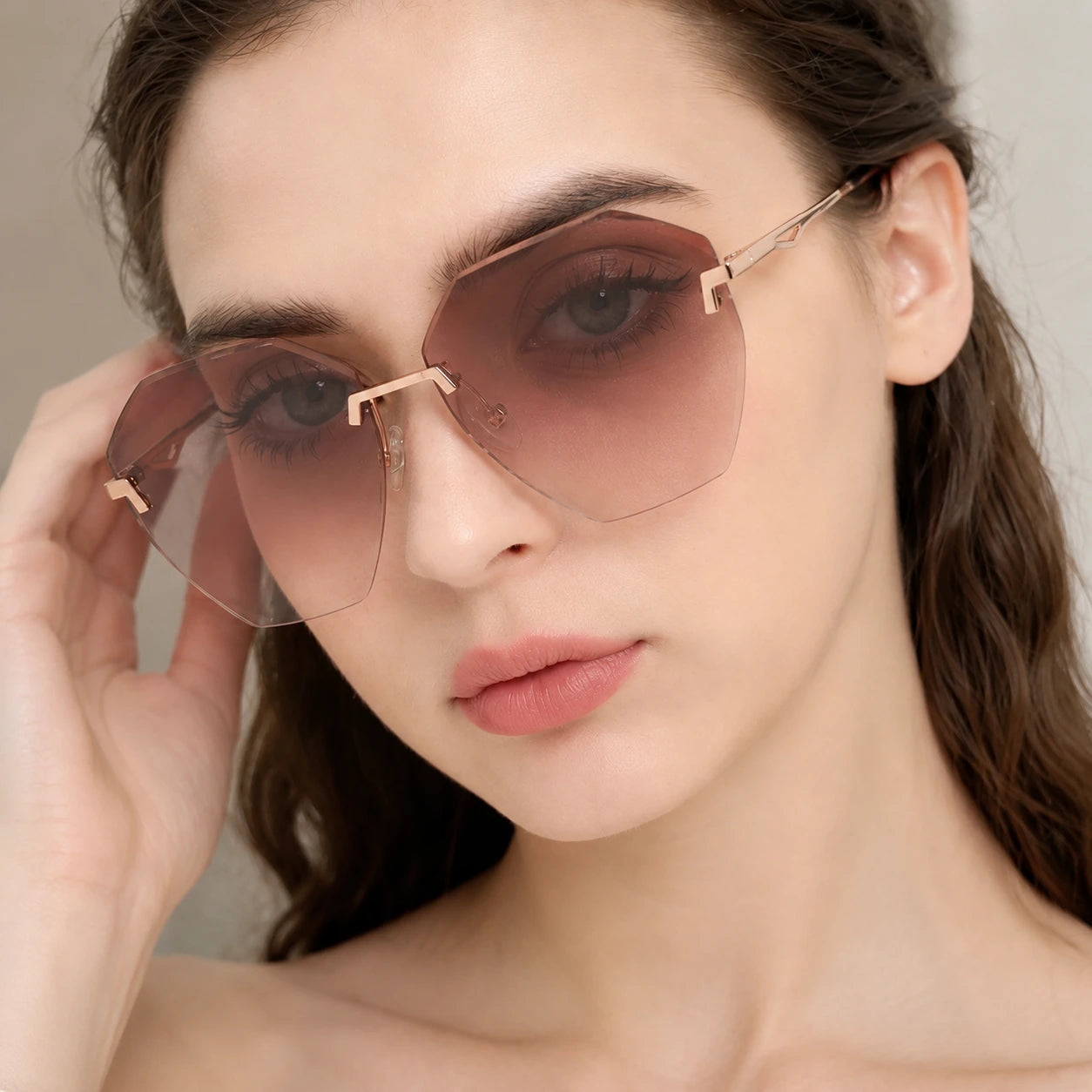
Driving Sunglasses Checklist
| Check | What to look for | Why it matters while driving |
|---|---|---|
| UV400 | Clear UV protection language | Protection baseline for daytime sun. |
| Polarization | Glare reduction from road, water, wet pavement, glass, and car hoods | Helps reduce reflected glare that can feel sharper than ordinary brightness. |
| Lens color | Gray, smoke, brown, green-gray, or soft gradient | Affects contrast, brightness, color perception, and comfort. |
| Screen visibility | Phone, GPS, center display, dashboard, and HUD check | Some polarized lenses can darken or distort screens at certain angles. |
| Fit stability | No sliding, cheek touch, or temple pressure | Reduces adjustment during long drives. |
| Coverage | Enough lens width and height for side and overhead light | Useful in open-road, coastal, and bright afternoon conditions. |
Are Polarized Sunglasses Good for Driving?

Polarized sunglasses can be very useful for daytime driving because they help reduce reflected glare from roads, wet pavement, glass, car hoods, water, and bright open surfaces. They are especially helpful when glare makes your eyes feel tired or when the road surface reflects strong sunlight.
However, polarized lenses can also make some phone screens, car displays, GPS screens, or HUD systems look darker at certain angles. Before using any polarized pair for driving, check your dashboard, mirrors, phone, and navigation screen in daylight.
For the screen-specific issue, read why phone screens can look black through polarized sunglasses.
UV400 vs Polarized for Driving

For driving, UV400 and polarization are not the same thing. UV400 is the protection baseline. Polarization is the glare-control feature. A dark lens without UV400 is not automatically better for driving.
| Feature | What it does | Driving meaning |
|---|---|---|
| UV400 | Addresses ultraviolet protection | Baseline for daytime sunglasses. |
| Polarized lens | Reduces reflected glare | Helpful for roads, wet pavement, water, glass, and bright cars. |
| Dark tint | Reduces visible brightness | Useful in bright sun, but not proof of UV protection. |
| Gradient tint | Darker upper shade with a lighter lower view | Useful when you want sun control plus dashboard and face visibility. |
For the full technical comparison, read the UV400 vs polarized sunglasses guide.
Best Lens Color for Driving
Lens color affects how quickly you read the road. For driving, the best lens color is usually the one that reduces brightness without making signals, shadows, screens, or road texture harder to understand.

| Lens color | Best for driving when... | Face / vision result |
|---|---|---|
| Gray / smoke | You want neutral color perception and clean bright-day comfort. | Cooler, cleaner, and less color shift. |
| Brown / tea / bronze | You want warmer contrast and a softer daylight feel. | Warmer and more contrast-friendly. |
| Green-gray | You want balanced brightness and natural contrast. | Less harsh than black, less warm than brown. |
| Rose / gradient | You want softer light and more face visibility. | Good daily route, not always the strongest glare-control choice. |
| Very dark lenses | Only for very bright daytime conditions. | Avoid in low light, tunnels, night driving, or unclear visibility. |
For a full tint breakdown, read the sunglasses lens color guide.
Before Driving: Check Your Dashboard, Phone and HUD

Before choosing any polarized sunglasses for driving, sit in your car during daylight and check your dashboard, center display, phone navigation, mirrors, and any HUD system. Rotate your head slightly. If the screen becomes too dark or rainbow-like at certain angles, that pair may not be your best driving pair.
This does not mean polarized sunglasses are bad for driving. It means screen behavior should be part of the buying decision, especially if your car relies heavily on digital displays.
Frame Fit for Long Drives
Driving sunglasses are not only about lenses. A pair that slides, pinches, hits the cheeks, or feels heavy can become distracting during a long drive.
| Fit issue | Why it matters when driving | Better route |
|---|---|---|
| Sliding down | Makes you keep adjusting the frame. | Stable bridge or adjustable nose pads. |
| Cheek touch | Moves the frame when you smile, speak, or check mirrors. | Better bridge height and lens clearance. |
| Temple pressure | Creates fatigue during long drives. | Lightweight, wider, or more flexible frame route. |
| Heavy frame | Creates nose pressure over time. | Rimless or light metal route. |
| Too narrow lens | Lets more side light enter. | Shield or wider lens route. |
For more fit troubleshooting, read how to stop sunglasses from sliding down and the wide fit / anti-pinch guide.
What Not to Wear While Driving
- Do not wear very dark sunglasses at night. Driving sunglasses should support clear daytime visibility.
- Do not choose darkness instead of UV400. Dark tint does not prove UV protection.
- Do not ignore dashboard visibility. Polarized lenses can affect some screens at certain angles.
- Do not wear frames that slide or pinch. A driving pair should not require constant adjustment.
- Do not choose fashion-only lenses for harsh road glare. If glare is the problem, choose real glare-control features.
- Do not use Category 4-style very dark lenses for driving. They can be too dark for road use.
BAPORSSA Driving Routes
| Product | Best role | Best for | Style result |
|---|---|---|---|
| Flow | Strongest road-glare route | Open roads, water glare, wet pavement, travel driving, bright outdoor light. | Wide rimless shield coverage without a heavy full-frame outline. |
| Vanguard | Bright-day coverage route | Daytime driving, travel, stronger sunlight, and shoppers who want more coverage. | Light shield direction with an open-face feel. |
| Backbone | Clean daily driving route | City driving, daily wear, less visual bulk, and a refined look outside the car. | Rimless clean-face styling. |
| Glow | Softer daylight / gradient route | Daily daylight comfort, softer eye-area look, and less harsh lens presence. | Gradient, makeup-friendly, softer face result. |
For a stronger glare-control route, choose Flow or Vanguard. For a softer daily lens route, choose Backbone or Glow.
Related Guides
| If you care about... | Read this |
|---|---|
| UV protection vs glare control | UV400 vs polarized sunglasses |
| Gray, brown, rose, or gradient lenses | Sunglasses lens color guide |
| Phone or dashboard screen issues | Phone screen black with polarized sunglasses |
| Frame sliding during driving | How to stop sunglasses from sliding down |
| Wide face or temple pressure | Big heads and wide faces guide |
| Lens standards and testing | BAPORSSA lens technology |
FAQ
Are polarized sunglasses good for driving?
Polarized sunglasses can be good for daytime driving because they help reduce reflected glare from roads, wet pavement, glass, car hoods, and water. Check dashboard, phone, GPS, and HUD visibility before using any polarized pair while driving.
What lens color is best for driving sunglasses?
Gray or smoke lenses are good for neutral color perception. Brown or tea lenses can add warmth and contrast. Gradient lenses can feel softer for daily driving, but very dark lenses should be avoided in low light or night driving.
Are gray or brown lenses better for driving?
Gray lenses keep color perception more neutral and feel clean in bright sun. Brown lenses can add warmth and contrast. The better choice depends on whether you prefer a cooler neutral view or a warmer contrast-rich view.
Do polarized sunglasses make car screens hard to see?
They can. Some polarized lenses make phone screens, GPS displays, dashboards, or HUD systems look darker at certain angles. Test screen visibility in daylight before using a pair for driving.
Are UV400 sunglasses good for driving?
UV400 is an important baseline for daytime sunglasses because it addresses ultraviolet protection. For driving glare, UV400 should be paired with comfortable tint and, when needed, polarized glare control.
Can I wear sunglasses while driving at night?
Do not wear dark sunglasses for night driving. Driving sunglasses should support clear visibility, and very dark lenses are for bright daytime conditions, not low light.
Are gradient sunglasses good for driving?
Gradient sunglasses can be useful for daily daytime driving because the upper lens area reduces overhead brightness while the lower area may feel easier for dashboard checks. They are not always the strongest option for heavy reflected glare.
What should I avoid in driving sunglasses?
Avoid very dark lenses for low light, unverified dark lenses without UV protection, frames that slide or pinch, and polarized lenses that make your dashboard or navigation screen hard to read.
Final Recommendation
Start with Flow for stronger road glare, Vanguard for bright-day coverage, Backbone for a clean daily driving look, or Glow for softer daylight comfort. For all polarized driving sunglasses, check your dashboard, phone, GPS, and HUD visibility before relying on them for long drives.