


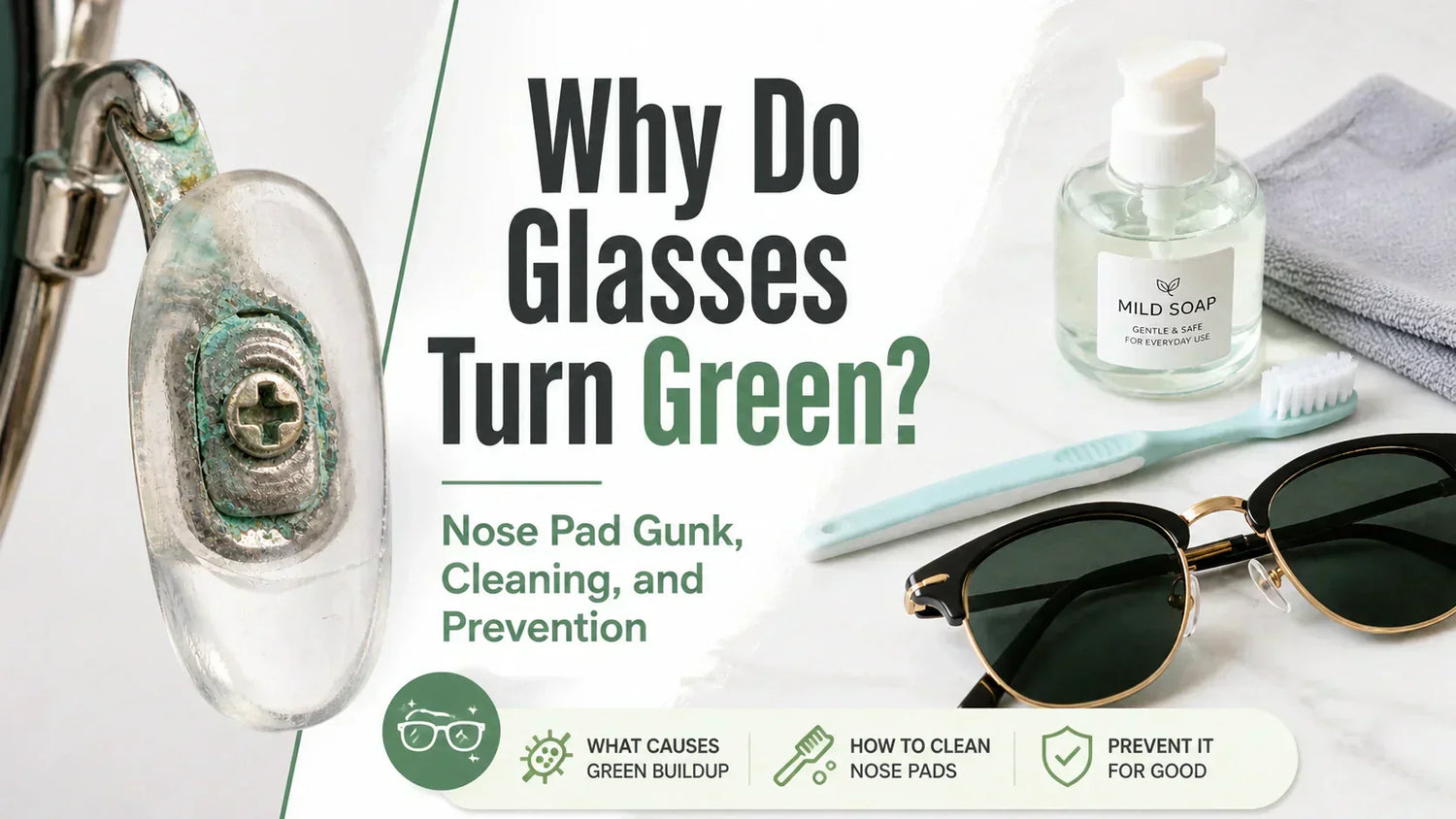
Green stuff on glasses nose pads is usually not mold. It is commonly a mixture of sweat, skin oil, sunscreen, makeup, moisture, old nose-pad residue and a reaction around exposed or aging metal hardware.
If the residue cleans off and stays away, regular maintenance may be enough. If it returns within days, appears around screws or metal arms, transfers to your skin, or the hardware looks rough, the nose pads or frame may need replacement.

What Is the Green Stuff?
| Where it appears | Likely cause | Best first step |
|---|---|---|
| On the clear nose pad | Sweat, oil, sunscreen, makeup or aging pad material | Clean the pad and replace it if it stays cloudy, sticky or cracked. |
| Around a screw or pad arm | Trapped moisture, residue or exposed metal | Clean gently and dry completely. |
| On the bridge or frame finish | Worn finish or material reaction | Monitor how quickly it returns after cleaning. |
| On your skin after wearing | Residue transferring from the contact point | Stop wearing until the frame is cleaned and reassessed. |
Why Glasses Turn Green
The bridge and nose-pad area stays warm, damp and close to the skin. Small gaps around screws and pad arms can hold moisture after daily wear or cleaning.
- Sweat adds salt and moisture.
- Skin oil makes dirt stick to pads and hardware.
- Sunscreen and makeup collect around contact points.
- Humidity keeps small hardware gaps damp.
- Worn plating or finish can expose metal underneath.
- Old nose pads can become cloudy, sticky or difficult to clean.
Is Green Residue Dangerous?
For most people, it is mainly a hygiene and skin-contact problem rather than an emergency. It should still be removed instead of remaining against the nose for hours each day.
Stop wearing the frame temporarily if the contact area becomes red, sore, itchy or cracked. Persistent or significant skin symptoms should be assessed by an appropriate professional rather than treated by changing cleaning products repeatedly.
How to Clean Green Stuff Safely
Use the mildest method first. The goal is to remove residue without scratching the lenses, loosening screws or damaging more of the frame finish.
- Rinse with lukewarm water. This removes loose dust before rubbing.
- Use a small drop of mild dish soap. Clean the pads, bridge and hardware gently with clean fingers.
- Use a soft brush only around gaps. A very soft toothbrush or cotton swab can help around screws and pad arms. Keep pressure light.
- Rinse thoroughly. Remove all soap residue.
- Dry completely. Use a clean microfiber cloth and pay attention to screws, arms and the bridge.
- Inspect the pads. Replace pads that remain yellow, cloudy, sticky, hard, cracked or unpleasant-smelling.

What Not to Use
| Avoid | Why |
|---|---|
| Bleach or harsh household cleaners | They can damage finishes and skin-contact parts. |
| Long vinegar soaks | Acid can affect some coatings, plating or hardware. |
| Baking soda or toothpaste | They can be abrasive. |
| Very hot water | Heat can stress coatings and plastic parts. |
| Dry paper towels or clothing | They can drag grit across lens surfaces. |
| Force around screws | Small frame parts can bend or loosen. |
Why It Comes Back After Cleaning
If green residue returns quickly, cleaning may be removing the symptom rather than the cause. Common reasons include:
- Old pads holding oil and moisture
- Residue trapped around screw mounts
- A worn finish near the pad arm
- Repeated sweat and sunscreen exposure
- Storing the frame damp in a bag, bathroom or hot car
- Excess pressure keeping the bridge area warm and wet
Replace the Pads or the Whole Frame?
| Situation | Recommended action |
|---|---|
| Light residue cleans off and returns slowly | Continue regular cleaning and drying. |
| Pads are cloudy, sticky, yellow, cracked or hard | Replace the nose pads. |
| Residue returns within days around metal hardware | Have the hardware inspected; frame replacement may be more practical. |
| Hardware is pitted, rough or visibly discolored | Do not keep polishing indefinitely; assess replacement. |
| The same contact point repeatedly irritates the skin | Stop wearing the frame and reassess fit and materials. |
What to Look for Next Time
- Replaceable or adjustable nose pads
- Hardware that is easy to inspect and clean
- Lower frame weight and less bridge pressure
- Clearly listed frame and lens materials
- A stable fit that does not press or slide excessively
For material considerations, read the sunglasses frame materials guide. If sliding or bridge pressure is part of the problem, use the sliding glasses fit guide.
When Replacement Is the Better Route
Replace rather than repeatedly clean when the green residue returns quickly, the finish is visibly deteriorating, the hardware is difficult to keep dry, or the contact point repeatedly feels uncomfortable.
When choosing a replacement, compare fit, weight, replaceable contact points and maintenance—not a promise that any frame will remain residue-free forever. For a lighter, lower-visual-bulk route, compare Signature Rimless sunglasses.
FAQ
What is the green stuff on glasses nose pads?
It is usually sweat, oil, sunscreen, dirt, old pad residue and a reaction around metal hardware.
Is it mold?
Usually not. Mold is less common than accumulated residue and metal reaction around damp contact points.
How do I clean it?
Rinse with lukewarm water, use mild dish soap, clean gently, rinse again and dry the hardware completely.
Why does it return so quickly?
Old pads, trapped moisture, worn finish or exposed metal may continue creating the same buildup.
Should I replace the nose pads?
Replace them when they remain cloudy, sticky, yellow, cracked, hard or difficult to clean.
When should I replace the frame?
Consider replacement when residue returns within days, hardware is pitted or rough, the finish is failing, or the same contact point repeatedly irritates the skin.