

Belangrijkste conclusie: HD-zonnebrillen kunnen het overwegen waard zijn, maar alleen als het woord “HD” wordt ondersteund door echte lenskenmerken. Wil je een zonnebril die buiten helderder aanvoelt, kijk dan verder dan het label en controleer op schitteringscontrole, polarizatie, UV400-bescherming, lensmateriaal, tintbalans en comfortabele dekking.
Op zoek naar helderder zicht buiten?
Bekijk BAPORSSA schitteringsreducerende zonnebrillen die zijn gemaakt voor autorijden, reizen en helder daglicht.
Kort antwoord: Helpen HD-zonnebrillen echt?
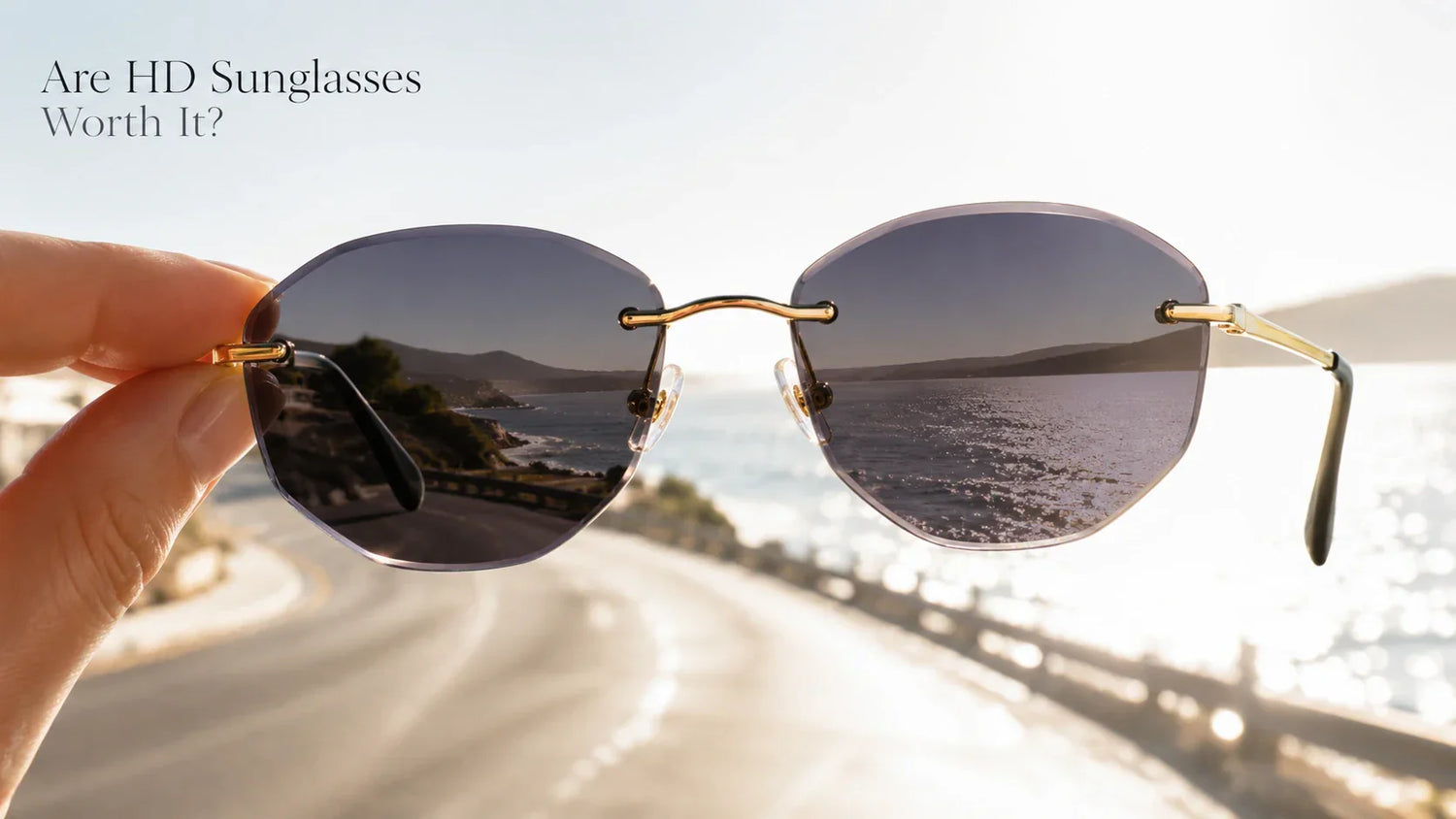
Dat kan, maar “HD” is meestal geen universele standaard voor zonnebrillen. In veel productbeschrijvingen wordt HD gebruikt om een scherper, schoner of hoger contrast te suggereren. Dat vertelt je niet automatisch hoe de lens presteert in echt zonlicht.
De betere vraag bij aankoop is niet “Is het HD?” De betere vraag is: wat maakt het zicht helderder? Voor de meeste kopers komt het antwoord neer op of de lens harde gereflecteerde schittering vermindert, beschermt tegen UV, een geschikte tint heeft en comfortabel genoeg blijft om buiten te dragen.
Voor een diepere uitleg over bescherming versus schitteringscontrole, lees onze UV400 versus gepolariseerde zonnebrillen gids.
Wat “HD” meestal betekent bij zonnebrillen
Bij zonnebrillen verwijst HD vaak naar het visuele resultaat dat een merk wil communiceren: scherpere randen, sterker contrast, minder nevel of een comfortabeler zicht buiten. Dat kan nuttige taal zijn voor kopers, maar het is op zichzelf te vaag.

Een zonnebril kan HD genoemd worden en toch belangrijke vragen onbeantwoord laten:
- Is de lens gepolariseerd?
- Biedt het UV400 of 100% UVA/UVB bescherming?
- Is de tint niet te donker voor dagelijks zicht?
- Werkt de lens goed bij wegen, water, glas of heldere bestrating?
- Is het montuur licht genoeg voor langdurig dragen?
Daarom moet HD worden gezien als een startpunt, niet als de uiteindelijke reden om te kopen.
Als schitteringsvermindering wordt geclaimd, kun je dat ook thuis testen met onze gids over hoe je kunt zien of een zonnebril gepolariseerd is.
De echte helderheidstest: wat moet je in plaats daarvan controleren?
Als je een zonnebril koopt voor een helderder zicht, richt je dan op de lensfuncties die echt invloed hebben op het comfort buiten.

| Wat je wilt | Waar je op moet letten in plaats van “HD” | Waarom het belangrijk is |
|---|---|---|
| Minder schittering van de weg of het water | Gepolariseerde of schitteringsreducerende lens | Helpt gereflecteerd licht van vlakke, heldere oppervlakken te verminderen |
| Zonbescherming | UV400 / UVA & UVB bescherming | UV-bescherming is iets anders dan de donkerte van de lens en polarizatie |
| Helderder contrast | Lenskleur en lensmateriaal | Beïnvloedt hoe natuurlijk, scherp of zacht het zicht aanvoelt |
| Langdurig buiten dragen | Lichtgewicht montuur en stabiele pasvorm | Een heldere lens voelt nog steeds verkeerd aan als het montuur zwaar of onstabiel is |
| Beter dagelijks gebruik | Stem de lens af op je belangrijkste lichtprobleem | Autorijden, vakantie, stadswandelen en fel zonlicht vragen om verschillende keuzes |
Lensmateriaal beïnvloedt ook het gewicht, de randhelderheid en het dagelijks comfort. Vergelijk de belangrijkste opties in onze gids voor zonnebrillenglazen.
Wanneer HD-zonnebrillen de moeite waard zijn om te kopen
HD-zonnebrillen zijn het overwegen waard wanneer de productbeschrijving uitlegt wat het helderdere zicht ondersteunt. Het label wordt betekenisvoller als het wordt gecombineerd met echte functies zoals polarizatie, UV400-bescherming, lenskwaliteit, een gebalanceerde tint en een comfortabel montuur.

Ze zijn het meest nuttig voor kopers die een van deze resultaten willen:
- minder schittering van wegen, water, glas of fel straatwerk
- helderder contrast zonder dat de wereld te donker aanvoelt
- sterker buitencomfort tijdens autorijden, reizen of vakantie in fel licht
- lichter gevoel op het gezicht in plaats van een zwaar, ingesloten montuur
Voor BAPORSSA is de betere aanpak niet alleen het woord HD na te jagen. Begin met het lichtprobleem dat je wilt oplossen en kies dan de lens en het montuur dat daarbij past.
Als het zicht te donker, te warm of te vlak aanvoelt, ligt het probleem mogelijk aan de tint in plaats van aan “HD.” Gebruik onze gids voor zonnebrillenglaskleuren om grijze, bruine, groene en rozetinten te vergelijken.
Kies op Probleem, Niet op Marketingwoord
Dit is de eenvoudigste manier om online helderder aanvoelende zonnebrillen te kopen:
| Jouw belangrijkste probleem | Betere lenskeuze | BAPORSSA richting |
|---|---|---|
| Wegverblinding of fel straatwerk | Gepolariseerde autorijlens | Shift of Sprint |
| Water, vakantie of sterke reflecties | Brede gepolariseerde dekking | Stroom |
| Veranderend zonlicht | Fotochromatisch + gepolariseerd | Verschuiven |
| Heldere kijk zonder zwaar framegevoel | Randloos of lichtgewicht ontwerp | Flow of Sprint |
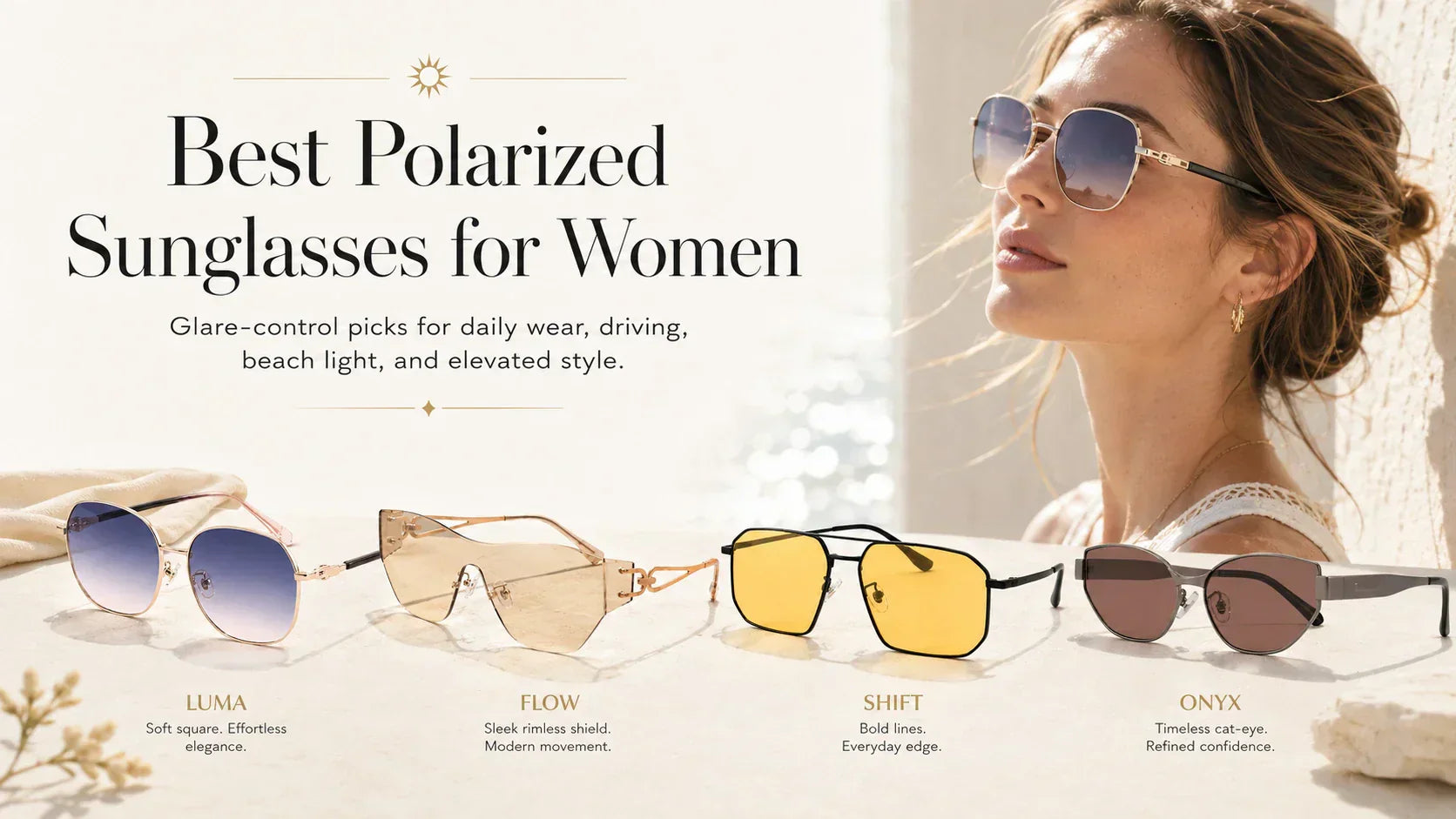
| Daglicht en zachtere styling | Lichtgewicht gradient optie | Luma |
Wat HD niet garandeert
Hier worden veel kopers misleid. HD betekent niet automatisch dat de lens alle functies heeft die je nodig hebt.

- HD betekent niet automatisch gepolariseerd.
- HD betekent niet automatisch UV400.
- HD betekent niet automatisch beter voor autorijden.
- HD betekent niet automatisch beter bij elk scherm.
- HD betekent niet automatisch dat het lensmateriaal van hogere kwaliteit is.
Dat betekent niet dat HD-zonnebrillen slecht zijn. Het betekent dat het woord gecontroleerd moet worden aan de hand van de productdetails. Als een lens beweert helderder te zijn, moet de beschrijving uitleggen waarom.
Beste BAPORSSA-keuzes voor helderder zicht buitenshuis
Als je hier bent omdat je een helderder zicht wilt, begin dan met het probleem dat je het vaakst opvalt.
Flow Brede Randloze Gepolariseerde Schildzonnebril
Het beste voor brede schitteringscontrole. Kies Flow als je grootste probleem gereflecteerd licht is van wegen, water, fel trottoir of vakantieomgevingen. De brede randloze schildvorm biedt dekking zonder het zware, ingesloten uiterlijk van traditionele oversized monturen.
Bekijk Flow Gepolariseerde Schildzonnebril
Shift Fotocromatische Titanium Rijderszonnebril
Het beste voor autorijden en wisselend zonlicht. Kies Shift als je beweegt tussen fel daglicht, woon-werkverkeer en wisselend licht. Het is de functionelere keuze voor kopers die schitteringscontrole willen met een lichtgewicht, rijvriendelijk montuur.
Sprint Gepolariseerde Randloze Zonnebril
Het beste voor fel buitenlicht. Kies Sprint als je sterkere buitenbedekking wilt voor fel licht, gereflecteerde schittering en actieve beweging. Het is de prestatiegerichte keuze binnen het BAPORSSA-assortiment.
Bekijk Sprint Gepolariseerde Zonnebrillen
Op zoek naar één praktische plek om te beginnen?
Ontdek Driving & Travel zonnebrillen voor schitteringscontrole, helderdere dagen en langdurig buitengebruik.
Laatste aankoopregel
Koop geen zonnebril alleen omdat het product HD zegt. Koop ze omdat de lens uitlegt hoe het helpt: schitteringscontrole, UV-bescherming, tintbalans, materiaalkwaliteit, dekking en comfort.
Als je doel helderder zicht buitenshuis is, is de sterkste keuze meestal niet de grootste claim. Het is het paar dat past bij je echte lichtprobleem.
FAQ
Zijn HD-zonnebrillen beter?
Niet automatisch. HD is vaak een marketingterm. Een betere lens legt uit wat het zicht helderder maakt, zoals polarizatie, UV400-bescherming, lensmateriaal, tint en coatingkwaliteit.
Zijn HD-zonnebrillen hetzelfde als gepolariseerde zonnebrillen?
Nee. HD beschrijft een geclaimd visueel effect. Gepolariseerd beschrijft een lensfunctie die helpt bepaalde gereflecteerde schittering te verminderen.
Moet ik HD- of gepolariseerde zonnebrillen kopen?
Als schittering je grootste probleem is, geef dan prioriteit aan gepolariseerde zonnebrillen met UV400-bescherming boven alleen het woord HD.
Beschermen HD-zonnebrillen je ogen?
Alleen als ze de juiste UV-bescherming bieden. Zoek naar UV400 of UVA/UVB-bescherming in de productdetails.
Wat maakt een zonnebril helderder van uiterlijk?
Glarecontrole, lensmateriaal, tintbalans, optische kwaliteit, UV-bescherming en pasvorm zijn allemaal belangrijk. Een lens die helder aanvoelt, draait niet alleen om donkerte.