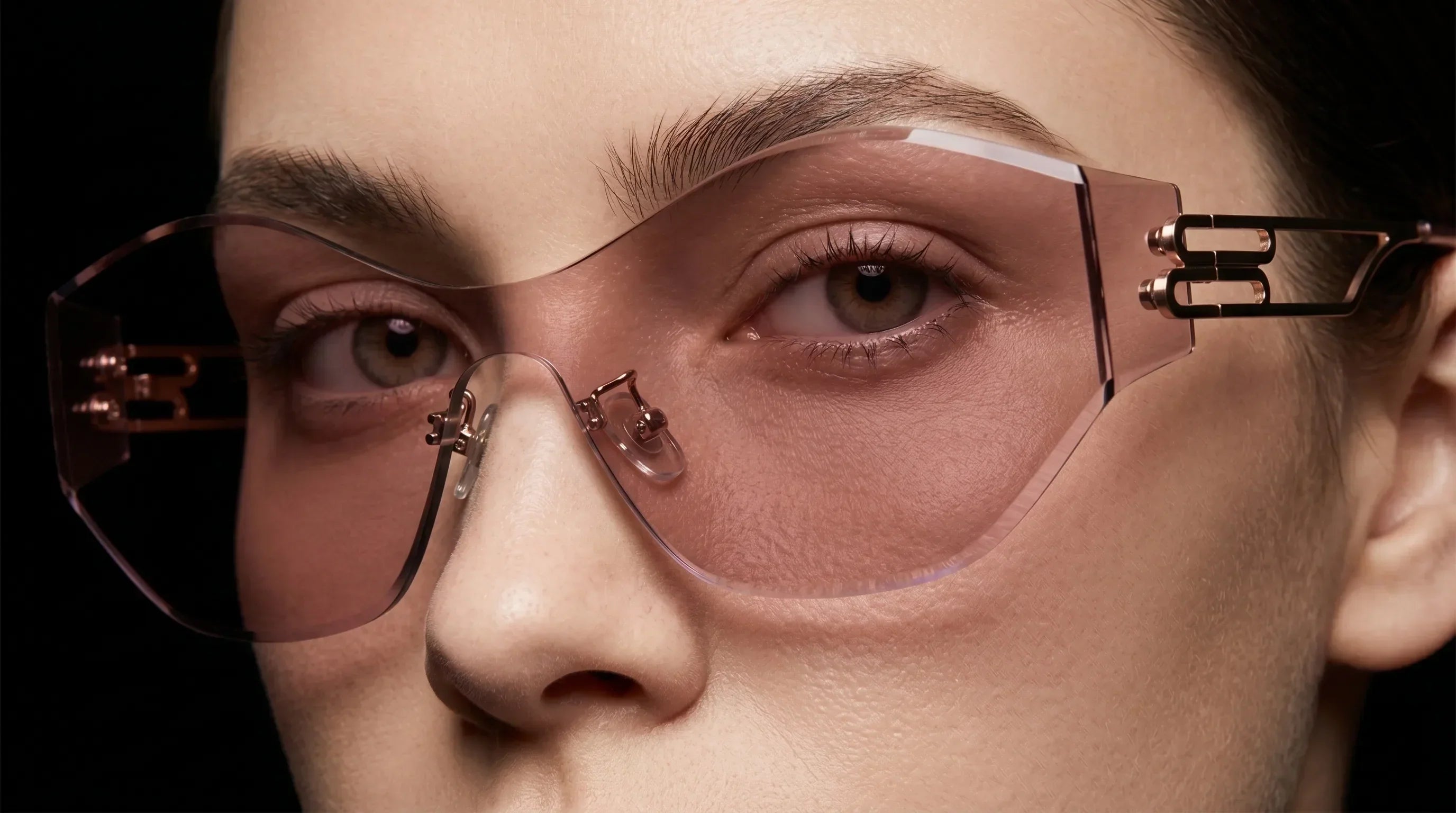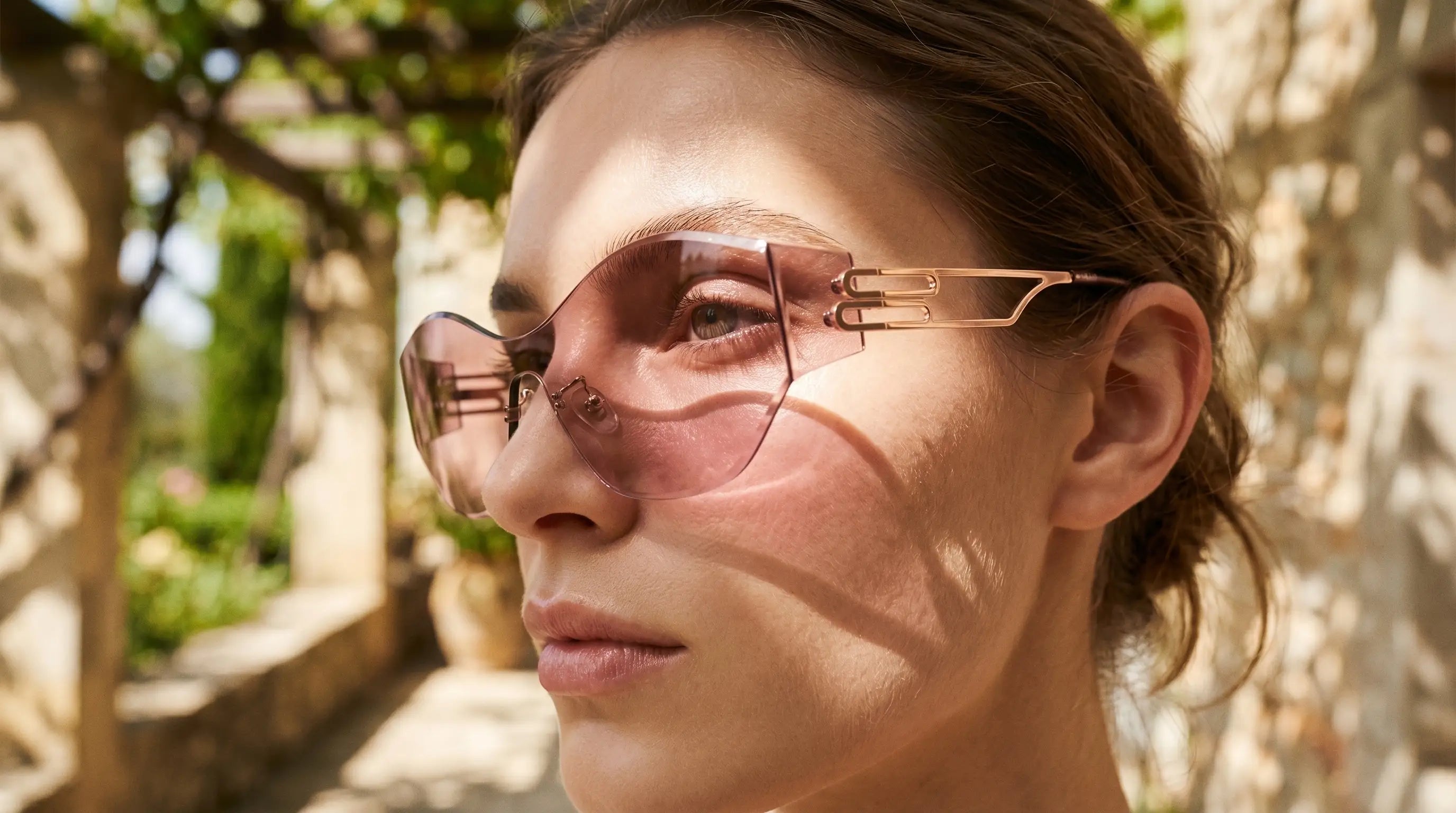
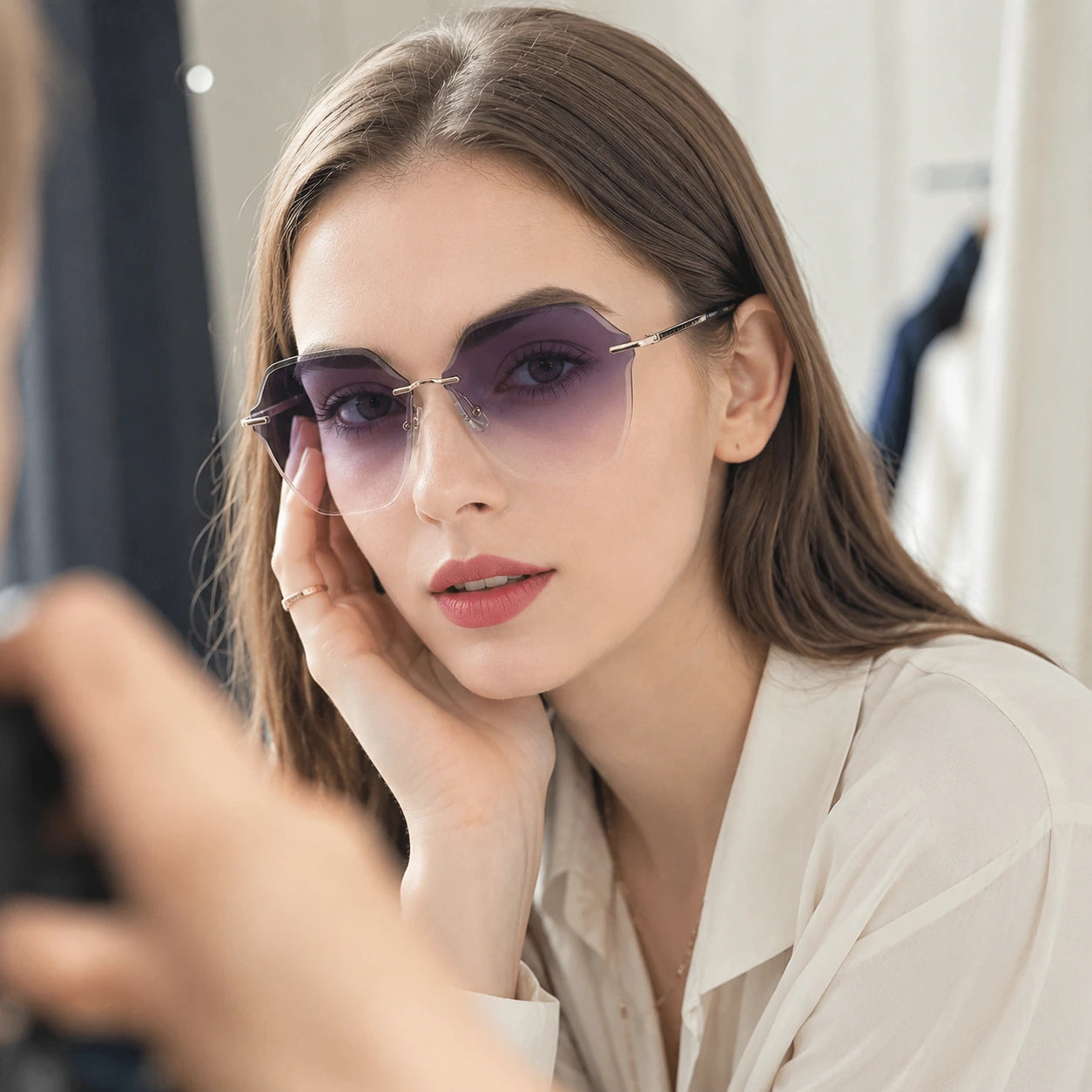

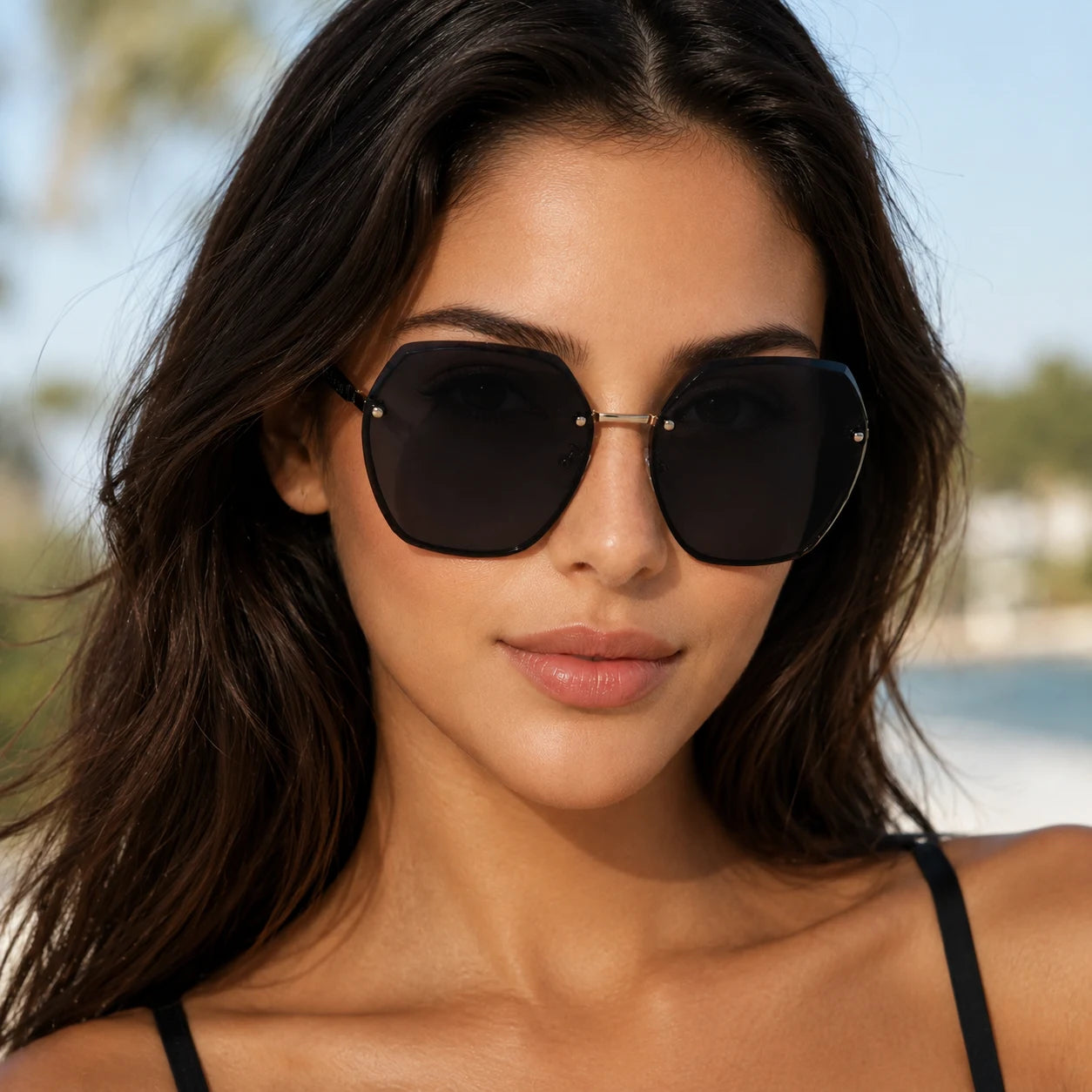
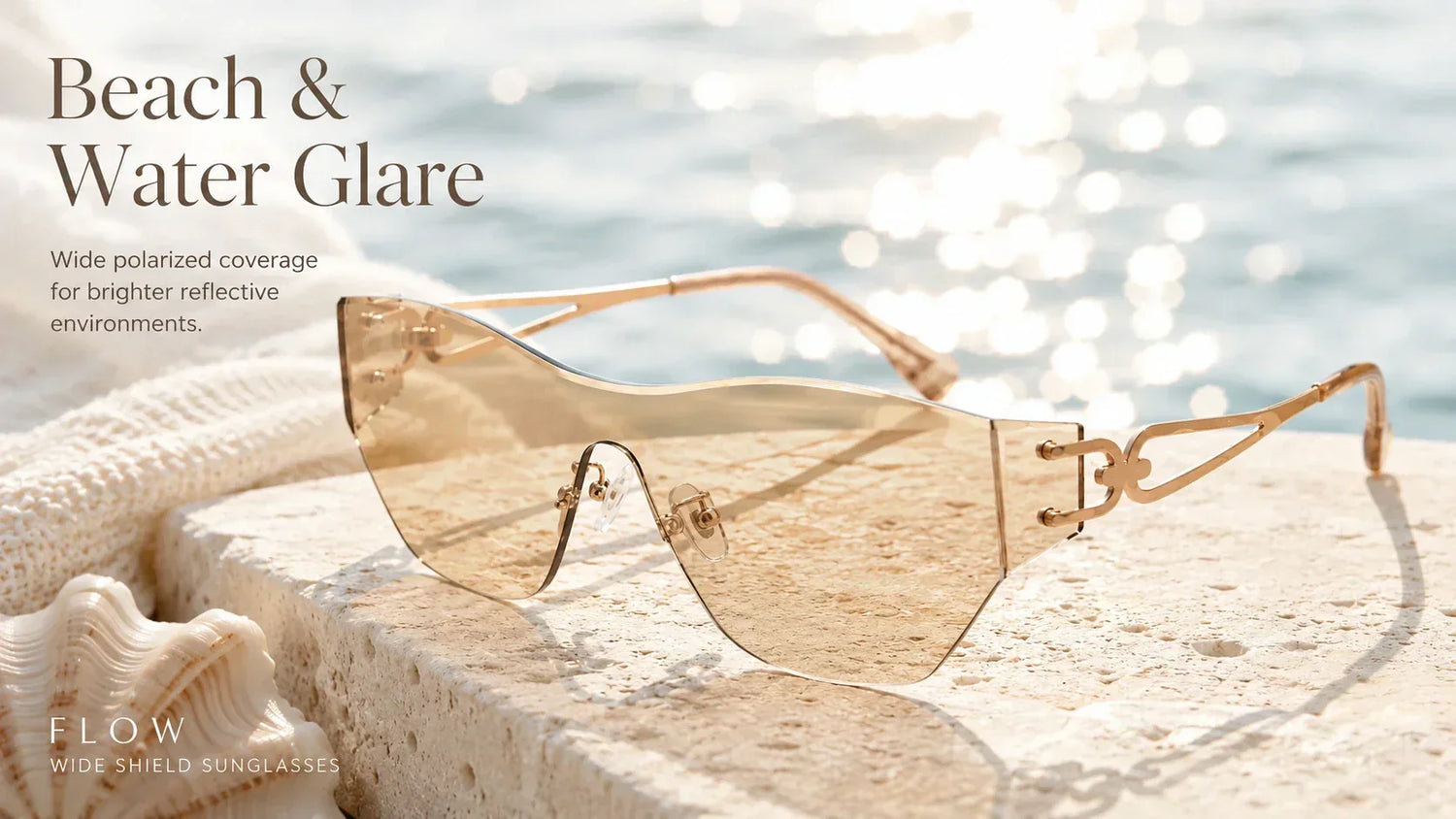
Quick answer: polarized rimless sunglasses are best when you want glare control without the heavy outline of a full-frame sunglass. A polarized lens helps reduce reflected light from roads, water, car hoods and bright outdoor surfaces, while a rimless or semi-rimless structure keeps the face cleaner and lighter.
This page is for shoppers comparing polarized rimless sunglasses, rimless polarized sunglasses, polarized frameless sunglasses, and lightweight glare-control sunglasses. For the full rimless category, start with the Rimless Sunglasses hub. For soft tint rather than glare control, use the Rimless Gradient Sunglasses guide.
What Are Polarized Rimless Sunglasses?
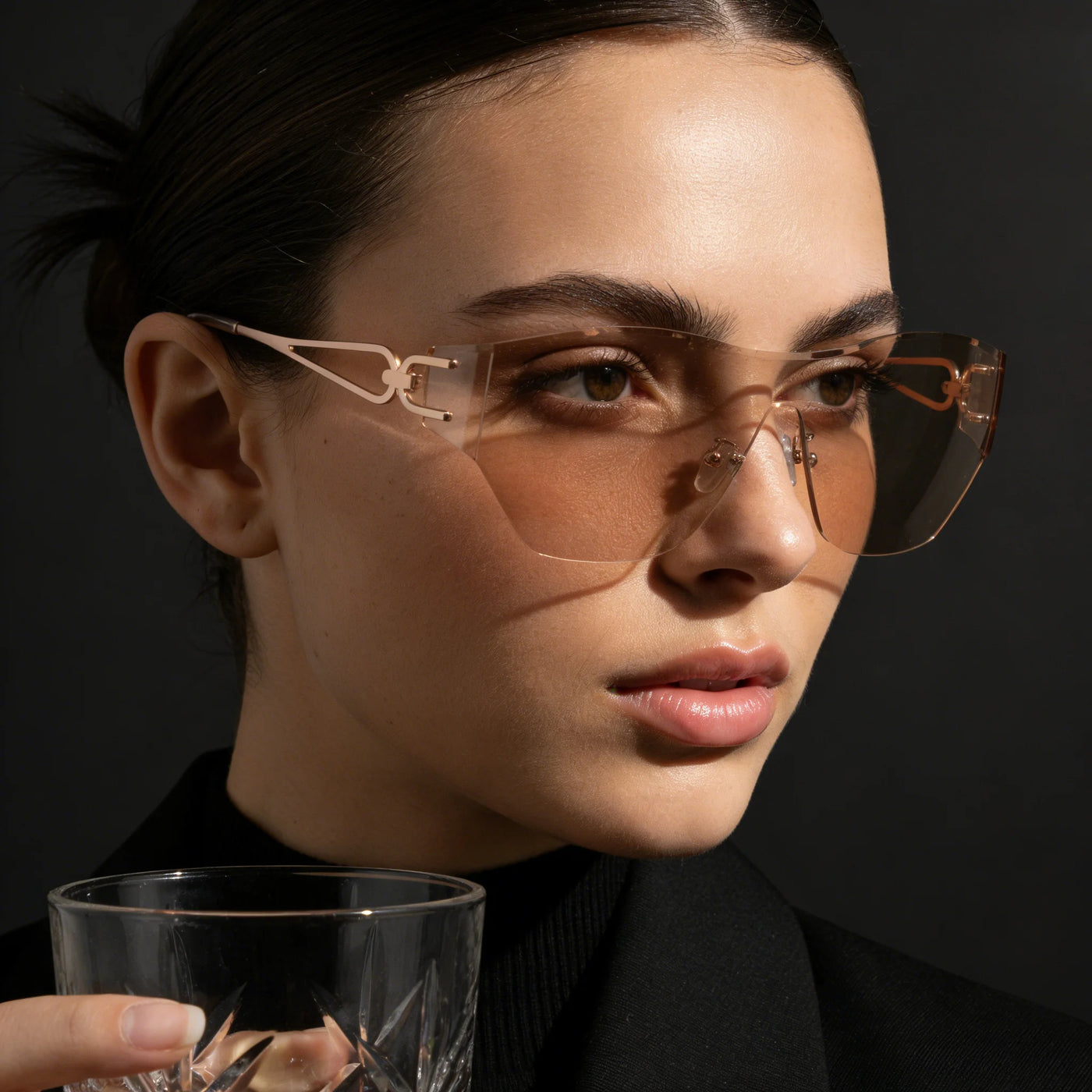
Polarized rimless sunglasses combine a glare-reducing lens with a lighter visual frame structure. The polarized filter is the functional part: it helps reduce harsh reflected light. The rimless design is the face-result part: it keeps the frame line minimal so the sunglasses do not visually block the face.

This matters because many glare-control sunglasses look bulky. A rimless or shield-style polarized route can give outdoor clarity while keeping a cleaner, more modern look.
When Polarized Rimless Sunglasses Help Most
| Use case | Why polarization helps | BAPORSSA route |
|---|---|---|
| Driving glare | Helps reduce reflected light from road surfaces and car hoods. | Shift |
| Water or outdoor reflection | Useful around lakes, beaches, sidewalks and bright open spaces. | Flow |
| Shield coverage | More lens area can help when light hits from more angles. | Vanguard |
| Clean-face daily wear | For shoppers who want rimless styling with practical glare support. | Backbone |
| Sportier outdoor use | For stronger coverage and active outdoor styling. | Sprint |


Polarized vs Gradient Rimless Sunglasses
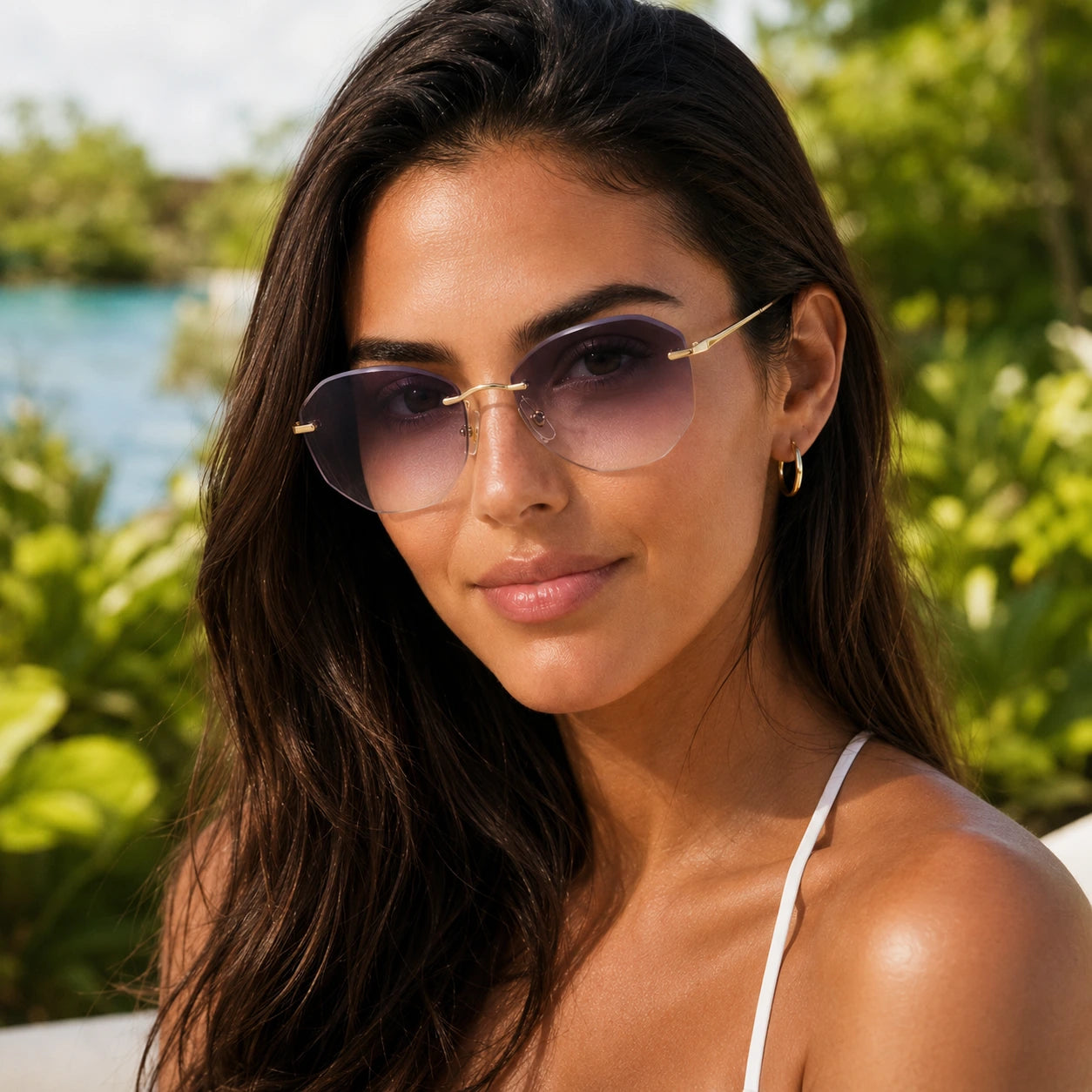
Gradient lenses and polarized lenses solve different problems. A gradient lens is mostly about light softness and face result. A polarized lens is about reducing reflected glare. Some sunglasses can combine both, but the shopping logic should stay clear: choose gradient when you care most about a softer visual style, and choose polarized when glare is the main issue.

If your priority is makeup visibility, soft tint, and a lighter lower lens, compare rimless gradient sunglasses. If your priority is road glare, water glare or outdoor reflection, stay with polarized rimless sunglasses.
Are Polarized Rimless Sunglasses Good for Driving?
They can be useful for driving because polarization helps reduce reflected glare. The best driving route still depends on lens darkness, fit, coverage and comfort. A frame that slides or feels heavy can become distracting even if the lens itself is strong.
For driving-focused advice, read Best Sunglasses for Driving Into the Sun. For BAPORSSA, Shift, Flow and Vanguard are the stronger comparison routes for glare and coverage.
Best BAPORSSA Routes for Polarized Rimless Sunglasses
| Best for | Product | Why it fits |
|---|---|---|
| Water and outdoor glare | Flow | A strong outdoor route when reflected light matters. |
| Driving-light route | Shift | A practical comparison route for glare and daily driving. |
| Rimless shield coverage | Vanguard | More coverage while keeping the frame line lighter than a heavy full-frame shield. |
| Clean-face polarized look | Backbone | A cleaner route when face visibility matters as much as function. |

What to Check Before Buying
- Polarization: confirm the lens is polarized if glare control is the reason you are buying.
- UV protection: look for UV400 or comparable UV filtering information.
- Lens category: choose a tint level that fits the light conditions you face most often.
- Coverage: shield and oversized rimless shapes help when light comes from the sides.
- Fit: a polarized lens will not help if the sunglasses slide, pinch or sit unevenly.

Related Guides
| If you care about... | Read this |
|---|---|
| The full rimless category | Rimless Sunglasses |
| More coverage | Rimless Shield Sunglasses |
| Soft tint instead of glare control | Rimless Gradient Sunglasses |
| Lens color | Sunglasses Lens Color Guide |
| Shopping rimless styles | Shop rimless gradient sunglasses |
FAQ
Are polarized rimless sunglasses better than regular rimless sunglasses?
They are better if glare is the problem. If the goal is only a softer face result, a gradient rimless lens may be enough.
Are polarized rimless sunglasses good for water?
They can help around water and other reflective surfaces because polarization reduces reflected light. Flow is the stronger BAPORSSA route for outdoor glare comparison.
Which BAPORSSA pair should I start with?
Start with Flow for outdoor glare, Shift for driving-light comparison, Vanguard for shield coverage, and Backbone for a cleaner rimless face result.
Final Recommendation
Choose polarized rimless sunglasses when glare control matters, but you do not want a heavy frame covering the face. Start with Flow for outdoor glare, Vanguard for shield coverage, or Shift for driving-light comparison.