

Polarized sunglasses are more than a style choice—they are precision tools for your eyes. A good pair combines thin polarized films, UV filters, and protective coatings to cut glare and keep your vision clear. But those same layers are also easy to damage with the wrong cleaning habits.
This guide shows you how to clean polarized sunglasses at home in three simple steps, plus what not to do, how to store them, and when it’s time to repair or replace them. The routine in this article is aligned with the care recommendations of leading eyewear brands and eye-health organizations, which generally advise lukewarm water, mild lotion-free dish soap, and a microfiber cloth—not paper towels or harsh chemicals.

Introduction: Why Proper Cleaning Matters for Polarized Sunglasses
1) Why polarized lenses are more delicate than regular tints
Most polarized sunglasses are not just a single piece of colored plastic. They are a multi-layer stack that can include:
- A polarizing film (often a stretched PVA layer) that filters horizontal glare
- UV-blocking layers or UV-absorbing materials
- Front and back surface coatings, such as anti-scratch, anti-reflective or hydrophobic layers
These layers are bonded together. Strong heat, aggressive chemicals, and abrasive fabrics can break down the adhesives and coatings over time, causing:
- Rainbow patches or haze
- Tiny cracks or bubbles in the film
- Delamination around the edges
This is why the best way to clean polarized sunglasses is gentler than how you’d treat a regular plastic item. Premium brands like Baporssa and Ray-Ban also emphasize mild soap + lukewarm water + soft cloth as the safest approach.
If you’re not sure what makes polarized different from regular tint, see our What Are Polarized Sunglasses? Guide
2) What happens when coatings and polarized films are damaged
When coatings or the polarizing layer break down, you may notice:
- Persistent smudges that never fully clean off
- Iridescent “oil slick” patterns that stay on the lens
- Foggy or cloudy patches
- Areas that no longer cut glare properly
Once this happens, there’s no safe home method to fully restore optical quality—many “hacks” (like toothpaste or baking soda) simply grind the coating even more, which eye-care professionals strongly discourage.
The most cost-effective strategy is prevention: a safe cleaning routine plus good storage habits.
Before You Start: Safe Tools and Products for Cleaning Polarized Lenses
1) The essential cleaning kit (water, mild soap, microfiber cloth)
For daily and weekly cleaning, you do not need a complicated kit. Most premium sunglasses brands and eye institutes recommend the same basic setup:
- Lukewarm running water
- Removes dust, salt and grit before you touch the lens
- A drop of mild, lotion-free dish soap (or eyewear-specific lens cleaner)
- Breaks down skin oils, sunscreen, makeup and pollution
- A clean microfiber cloth
- Designed to lift moisture and oils without scratching
- (Optional) A soft cotton towel to dry the frame before you use microfiber on the lenses
2) Cleaners and materials you should never use on polarized sunglasses
To keep polarized lenses clear and the coatings intact, avoid the following:
-
Glass cleaner, window spray, household surface cleaners
- Often contain ammonia or solvents that can erode coatings and the polarizing layer
-
Alcohol or alcohol-based wipes (unless specifically labeled safe for coated lenses)
- Can slowly dry out and crack coatings, especially on composite polarized lenses
-
Paper towels, tissues, napkins, your T-shirt
- Paper and rough fabrics contain fibers that behave like very fine sandpaper, leaving micro-scratches that build up over time
-
Hot water from the tap
- Excess heat can soften adhesives and damage the polarizing film, particularly at the lens edge
-
Toothpaste, baking soda, kitchen scrubbers
- These “DIY hacks” are abrasive; they may dull scratches temporarily but permanently damage optical clarity
Step 1: Rinse – Remove Dust, Salt and Sand Without Scratching

1) Why you should always rinse before wiping the lens
The golden rule for cleaning polarized sunglasses without scratching them is simple:
Stop wiping dry. Always rinse first.
Before your cloth touches the lens, assume there are tiny particles of dust, sand or dried salt sitting on the surface. If you wipe these around, even with microfiber, they can leave permanent marks.
Recommended routine (aligned with eye-care and premium eyewear guidance):
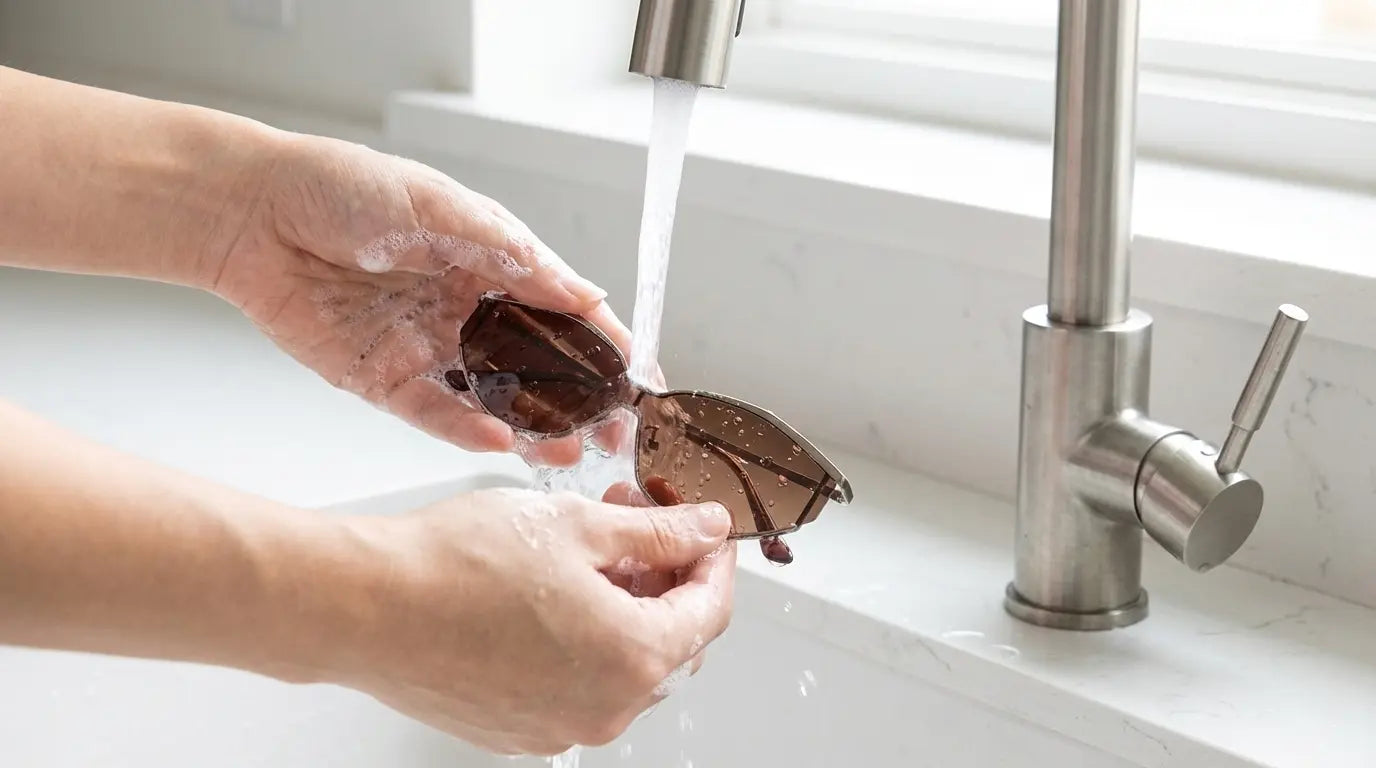
- Hold your sunglasses under a gentle stream of lukewarm (not hot) water.
- Let the water run over both sides of each lens and along the frame.
- Do not rub yet—just allow the water to float away loose particles.
This simple step dramatically reduces the risk of micro-scratches.
2) Special cases: saltwater, sunscreen, sweat and city pollution
There are a few situations where Step 1 is non-negotiable:
-
After the beach or saltwater
- Salt crystals can be very abrasive. Rinse your polarized sunglasses thoroughly as soon as you can after leaving the water.
-
After heavy sunscreen or makeup use
- Oils and pigments can cling to lenses and frame edges. A rinse plus mild soap (Step 2) helps prevent buildup.
-
After intense workouts, cycling or running
- Sweat can leave mineral deposits and interact with frame coatings over time.
-
After dusty or polluted environments (construction sites, city traffic, off-road driving)
- Dust and fine particles need to be rinsed away, not ground into the lens.
You can also learn from From Sand to Sea: The Only 3 Types of Sunglasses You Need for a Beach Vacation (and Why)
Step 2: Clean – Gently Wash the Lenses and Frame
1) How to wash polarized lenses with mild soap
Once loose debris is rinsed off, you can safely do a more thorough clean. Leading eye-care centers and premium brands recommend mild, lotion-free dish soap or a dedicated eyewear cleaning solution.

Follow this method:
- Add a tiny drop of mild dish soap to your clean fingertips.
-
Gently rub the soap over both sides of each lens.
- Use small circular motions, light pressure.
- Clean the entire frame—bridge, nose pads, and temples—because oils from your skin accumulate there.
-
Rinse thoroughly under lukewarm water until every trace of soap is gone.
- Any leftover soap can dry into streaks or a cloudy film.
This is the safest at-home method to clean polarized sunglasses without damaging coatings.
2) Cleaning the frame, nose pads and hinges safely
Oil, sweat and sunscreen often concentrate in:
- Nose pads
- The inside of the bridge
- The temple tips near your ears
- Hinges and small crevices
Use your soapy fingers to carefully clean these areas. If dirt is stubborn, you can use:
- A very soft brush (like a clean, soft-bristle toothbrush) for nose pads and hinges
- A cotton swab dipped in soapy water for tight spaces
Avoid metal tools or anything sharp. After cleaning, rinse thoroughly to prevent soap residue from irritating your skin.
3) Extra care tips for titanium and rimless sunglasses
Premium frames like β-titanium and rimless designs are strong yet very light—and they deserve careful handling:
- Avoid bending or twisting the bridge when cleaning; hold the frame by the thicker parts of the temples.
- For rimless polarized sunglasses, never press hard on the lens edges; let water and gentle soap do most of the work.
- If your BAPORSSA frame uses ultra-thin titanium, treat it like jewelry: no harsh chemicals, no prolonged soaking in very hot or very cold water.
Read This: Why We Chose Titanium
Step 3: Dry & Polish – Streak-Free, Smudge-Free Finish
1) How to use a microfiber cloth the right way
Drying is where many people accidentally scratch their lenses. To avoid this:
- Shake off excess water after rinsing.
- Gently blot lenses and frame with a clean, soft cloth or towel to remove most water drops (avoid rough towels).
- Use your microfiber lens cloth to finish:
-
- Make sure the cloth itself is clean and free of dust.
- Use light, circular motions—no aggressive scrubbing.
Most premium brands explicitly advise microfiber only, avoiding tissues or clothing.
If your microfiber cloth becomes dirty or oily:
- Hand-wash it with mild soap, rinse thoroughly, let it air-dry.
- Avoid fabric softeners—they can leave residues that smear lenses.
Read This: Stop Using Your T-Shirt! The 5 Laws of Sunglass Maintenance

2) What to do if smudges or rainbow patches remain
After drying, hold your polarized sunglasses up to a bright light and check:
-
Smudges
- Often just leftover skin oils. Breathe lightly on the lens and use your microfiber cloth to buff them away.
-
Persistent streaks or rainbow patterns
- May signal residue from soap, hard water, or previous chemical cleaners. Repeat Step 1 and Step 2 with extra attention to rinsing.
-
Fixed rainbow blotches or cloudy areas that never change
- These may be early signs of coating damage or polarizing film stress, common when lenses have been exposed to high heat or harsh chemicals repeatedly. In this case, cleaning cannot fully restore them—you are looking at permanent wear.
The 5 Biggest Cleaning Mistakes That Destroy Polarized Sunglasses
1) Leaving polarized sunglasses in a hot car or direct sun
Inside a parked car, temperatures can exceed 60–70°C on a sunny day. Several eyewear brands explicitly warn that extreme heat can warp frames and damage lens coatings.
For polarized lenses, high heat can:
- Soften the adhesive that bonds the polarizing layer
- Cause bubbles or waves in the film
- Lead to delamination around the edges
Best practice:
- Never leave polarized sunglasses on the dash or near the windshield.
- Keep them in a case, in the glove box, or out of direct sun when you’re not wearing them.
2) Using alcohol, glass cleaner or ammonia-based sprays
Household glass cleaners are designed for uncoated glass, not multi-layer optical lenses. They often contain:
- Ammonia and strong solvents
- Surfactants that can leave films or interact with coatings
Over time, these can cause:
- Peeling or clouding of anti-reflective coatings
- Irregular patches in the polarizing layer
- A dull or “burned” appearance on the lens surface
If you prefer a spray, choose a dedicated lens cleaner labeled safe for coated and polarized lenses.
3) Wiping lenses with T-shirts, tissues or rough fabrics
T-shirts, hoodies and paper products may feel soft, but under a microscope they are full of coarse fibers and tiny particles. When rubbed across a lens:
- They create micro-scratches that slowly build up into haze.
- They can drag grains of sand or dust across the surface, causing deeper marks.
- Instead, always:
- Rinse first
- Then use a clean microfiber cloth only
4) Rubbing sand or dust directly into the lens surface
At the beach or in dusty environments, it can be tempting to “quick-wipe” your polarized sunglasses. That is exactly how deep scratches appear.
If you see visible dust, sand, or dried salt:
- Do not try to brush it off with your hand or cloth
- Go straight to Step 1: Rinse under running water
- Let water dislodge particles before any wiping
5) Storing sunglasses loose in bags, pockets or on your head
Common daily habits that slowly wreck lenses and frames:
- Tossing sunglasses into a backpack or handbag without a case
- Storing them in a pocket with keys or coins
- Wearing them on top of your head where hair products and sweat collect
These habits expose lenses to friction, grit and accidental bending.
Better habits:
- Always use a hard case or padded pouch
- Place sunglasses lens-up on a clean surface if you must set them down
- When not wearing them, store in the same place consistently to avoid crush damage
Read More: “The $10 Mistake: Why Cheap Sunglasses Are Worse Than Wearing None at All
On-the-Go Cleaning and Daily Storage Habits
1) How to safely use lens sprays and wipes when you’re outside
You won’t always have a sink and dish soap nearby. For on-the-go cleaning of polarized sunglasses:
- Use a lens spray specifically designed for coated lenses.
- Or use single-use lens wipes that are:
- Alcohol-free or low-alcohol and explicitly safe for coated lenses
- Free from added lotions or strong fragrances
When using wipes:
- Blow off or gently tap away visible dust first.
- Use the wipe with light pressure, not scrubbing.
- Finish with a clean microfiber cloth if needed.
2) The best way to store polarized sunglasses at home, in your car and on trips
At home
- Keep your sunglasses in a case whenever they’re not on your face.
- Store them away from heaters, radiators and direct windowsill sunlight.
In your car
- Use the glove box, a dedicated sunglass holder, or a case.
- Avoid leaving them on the dashboard or near vents that blow hot air.
On trips
- Pack sunglasses in a hard case in your carry-on, not in checked luggage where they may be crushed.
- Bring a travel-size lens spray and microfiber cloth in a small pouch.
Read More: The “One-Pair” Rule: How to Pack the Only Sunglasses You’ll Need for Your Next Trip
3) A simple daily routine for long-lasting lens clarity
For most people, a daily or every-few-days routine is enough:
- Quick rinse with lukewarm water
- Gentle soap wash if you see visible smudges
- Microfiber dry and polish
- Back into the case when not in use
This routine matches what many eye-health organizations and high-end brands recommend to keep coated lenses clear for years.
When to Repair, Replace or Upgrade Your Polarized Sunglasses
1) Signs your polarized coating is already damaged
You may need to think about repair or replacement if you notice:
- Permanent smudges or haze that do not change after proper cleaning
- Large rainbow or cloudy patches that do not move
- Peeling or rough edges around the lens
- A noticeable drop in glare reduction compared to when the sunglasses were new
These are typical signs of coating breakdown or damage to the polarizing film.
2) Why deep scratches can’t be polished away
Deep scratches and coating damage are not like dirt—there is no safe way to “clean” them off.
- Abrasive methods (toothpaste, baking soda, polishing compounds) remove more material, which may slightly blur the scratch but at the cost of optical quality.
- On polarized lenses, this also risks destroying the polarizing layer in that area, creating bright spots and uneven glare.
If scratches are in your direct line of sight or if glare reduction is patchy, it is safer for your eyes to replace the lenses or the sunglasses.
3) When it’s time to upgrade to titanium or premium polarized sunglasses
If your current pair is:
- Heavily scratched
- Uncomfortable for long wear
- Not clearly labeled with UV400 or 100% UVA/UVB protection
…this may be a good moment to upgrade to a pair that matches how often you use them.
For frequent drivers, outdoor workers or athletes, consider:
- Premium polarized lenses with high-quality coatings
- Titanium frames for strength and comfort
- Designs that fit your face securely and distribute weight evenly
Need More Help? For further details on product maintenance, check out our Sunglasses Usage Guide page!


