

サングラスが滑り落ちるのを止める方法(推測なし):眼鏡技師の基準に基づく実用的なフィットガイド
おそらく次のようにGoogle検索したでしょう:
「サングラスが鼻から滑り落ちる」
「サングラスが耳の後ろで痛い」
「笑うとサングラスが頬に当たる」
物理の講義は望んでいません。明確なチェックリストが欲しいのです:
- すでに持っているペアを修理できますか?
- それとも単に顔に合わないサイズ/形なのでしょうか?
- 新しいペアを買ったら、同じ間違いを繰り返さないにはどうすればいいですか?
このガイドはまさにそれを行い、ブランドマーケティングだけでなく、実際の眼鏡技師が実践で使用するフィッティングルールを使っています。2020mag
1. 3分でわかる「なぜサングラスが滑るのか?」クイックチェック
現在のサングラスをかけて鏡の前に立ち、この簡単なテストを行ってください。
ステップ1:「三つの接触点」を確認する
適切にフィットしたフレームは三点のみで頭に接触するはずです:
- 鼻のブリッジ、および
- 各耳の後ろ(テンプルチップ)に、優しく均等に接触。
眼鏡技術者のトレーニング資料では、安定性と快適さのために「三点フィット」—鼻+両側—と文字通り説明されています。2020mag.com

これが見られる場合:
- 笑うと頬の上にメガネが乗る
- または、耳の後ろではなくこめかみだけに圧力を感じる場合
👉 フレームの形状(サイズ/傾き/ブリッジ)が間違っている可能性が高く、「ネジの緩み」だけではありません。
ステップ2:洗浄して摩擦を加える
油分、日焼け止め、スキンケアはプラスチックと肌の間で潤滑剤のように作用します。
いくつかの眼鏡専門家のガイドは、滑り止めの最初のステップとして鼻のブリッジとノーズパッドの洗浄を明確に推奨しています。GlassesDirect
これを行ってください:
- 鼻のブリッジをマイルドでオイルフリーのクレンザーで洗ってください
- ノーズパッドと内側のブリッジをぬるま湯と少量の食器用洗剤またはメガネクリーナーで洗浄してください
- マイクロファイバークロスで優しく乾かしてください

それでも滑りやすい場合は、次のことを検討してください:
- グリップを高め、圧力を分散させるための貼り付け式シリコンノーズパッド
- ブリッジに塗布して摩擦を増やす滑り止めワックス(Nerdwaxのような)GlassesDirect
これは、少し緩いか滑らか/油っぽい肌に座るフレームのための安価で逆効果のない「救済オプション」です。
ステップ3:フレームは単に大きすぎるか小さすぎるか?
次に全体の幅を確認します。
- 眼鏡を正面に向けて、ミリメートル定規でヒンジ間の内側距離を測ります。
- あなたの顔の幅(おおよそこめかみの骨からこめかみの骨まで)と比較してください。
眼鏡小売店は通常、成人用フレーム幅を大まかに次のように分類します:visionexpress
| 内側フレーム幅(ヒンジ間) | 大まかなサイズカテゴリ |
|---|---|
| 約125〜129 mm未満 | 小さい/狭い顔 |
| 約130〜139 mm | 中くらいの顔 |
| 140 mm以上 | 広い/大きい顔 |
フレームがあなたの顔よりもかなり狭い場合、側面が締め付けられ、「前に歩く」ように動きたがります。

もしそれがかなり広い場合、サングラスは重力に頼り、滑り落ち続けます。
どんなに掃除やパッド、調整をしても問題が解決しない場合、フレームサイズとあなたの頭のサイズが単純に合っていない可能性が高いです。
2. まずは、すでに持っているサングラスを直してみてください
新しいものを買う前に、すでに鼻にあるものの価値を最大限に活用しましょう。
2.1 清潔 = 摩擦増加、滑り減少
複数のアイウェアガイドが指摘しているように、皮膚とフレームの油分と汗は、メガネが滑る最も一般的な原因の一つです。GlassesDirect
クイックルーティン(1〜2分かかります):
- 鼻の周りの顔をオイルフリークレンザーで洗います。
- ぬるま湯でサングラスをすすぎます。
- パッドとブリッジにマイルドな食器用洗剤またはメガネクリーナーを少量垂らします。
- マイクロファイバークロスで洗い流し、乾かします。
特に暑く湿度の高い気候に住んでいる場合や、リッチなスキンケアを使用している場合にこれを行ってください。
2.2 鼻パッドを調整または追加する(特にロー・ブリッジ/「アジアンフィット」顔向け)
フレームにメタルパッドアーム(小さな金属の「脚」に付いた小さなパッド)がある場合、大きな利点があります:調整可能です。
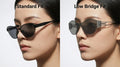
現代の「ロー・ブリッジフィット」または「アジアンフィット」メガネは、以下のような人々のために明確に設計されています:BonLook Felix Gray
- 低い鼻のブリッジ
- 高い頬骨
- 平坦な顔の特徴
通常、以下の特徴があります:
- 大きめ/深めのノーズパッド
- 低いブリッジによりしっかりとフィットするブリッジ形状
- バランスを良くするために、時々少し長めのテンプル
セルフチェック(30秒):
- 横から見て、鼻のブリッジは瞳より低く、ほぼ鼻の中央あたりから始まりますか?
- ほとんどの標準的なプラスチック製サングラスは、フレームの上部が瞳を横切るまで滑り落ちますか?
- 笑うときにレンズが頬に乗りますか?

これらに「はい」と答えた場合、低いブリッジ/アジアンフィットデザインの良い候補者である可能性が高いです。
現在のペアについて:
- すでにパッドアームがある場合 → 眼鏡技師がパッドをさらに広げたり、近づけたりして高さとグリップを調整できます。Eclectic Eyewear
- もしフルプラスチックの「サドルブリッジ」なら → 低いブリッジデザインを模倣し摩擦を増やすための貼り付け式シリコンパッドを検討してください。GlassesDirect.com
2.3 テンプル(つる)を調整して、実際にその役割を果たすようにする
テンプル(つる)は次のようにすべきです:Augussto
- 頭の側面にぴったり沿うように座らせる
- 耳のすぐ後ろで優しくカーブさせる
- 軽く均一な圧力をかけてください — 食い込ませず、浮かせずに
カーブがまっすぐすぎるとフレームが前に滑ります。きつすぎると頭痛や赤い跡ができます。
ほとんどの専門家のガイドは、眼鏡技師にこれらの調整を任せることを推奨しています — 彼らは道具を持ち、フレームを安全に加熱・曲げることができます。specsavers
しかし、芯が見える金属製テンプルの場合は、しばしば次のことができます:
- 非常に優しくテンプルチップの最後の1〜2cmを下向きかつ内側に曲げて耳の後ろにフィットさせます
- ゆっくりと、両手で、決して急な力を使わずに行ってください

無理をせず、リスクを避けてください — 眼鏡店での無料調整1回の方がフレームを壊すより安いです。
2.4 家で試せる一時的な「グリップアップグレード」
サイズがほぼ合っているがまだ滑る場合は、簡単な修正が役立ちます:
- テンプルにスライドさせるシリコン製イヤーフック
- テンプルチップ用の柔らかいゴムスリーブ
- ブリッジやパッドに塗る滑り止めワックスGlassesDirect.com
これらはひどく合わないフレームを直すことはできませんが、「少し緩い」ペアを日常的に使えるものに変えることができます。
2.5 DIYをやめて専門家に相談すべき時
オンラインで購入した場合でも、次の場合は眼鏡店に行ってください:
- あなたは高度な度数のレンズや複雑な累進レンズを使用している
- 片方のレンズがいつももう一方よりも高い/低いように見える
- 滑るのと同時に目の疲れや視界の歪みを感じる
専門的なトレーニング資料では、フィット感、傾き、アライメントは快適さだけでなく光学性能にも影響を与えると強調されています。visionexpo
ほとんどの店舗では無料または少額の料金で調整を提供しています。ペアを諦める前に試す価値があります。

3. サングラスがあなたに合わないサイズや形状かどうかを見分ける方法
掃除をし、グリップを追加し、調整できるところを調整したのにサングラスがまだ合わない場合、サイズや形状が問題である可能性が高いです。
3.1 フレームの数字を解読する
テンプルアームの内側を見てください。通常、次のようなものが見えます:
54 – 18 – 140

これらの3つの数字は次の意味です:Warby Parker
- レンズ幅(目のサイズ):多くの場合40〜60 mm
- ブリッジ幅:多くの場合14〜24 mm
- テンプル長:一般的に135〜145 mm程度
次のペアを購入する際の出発点としてこれらを使えます:
- 現在の54–18フレームが広すぎると感じる場合は、50–52 mmのレンズや、やや狭いブリッジを探すと良いでしょう。
- テンプルが短く感じる場合(常に浮き上がる場合)は、テンプル長を145 mmなど長めにすることを検討してください。
3.2 全体のフレーム幅と顔幅の比較
小売店のフィットガイドは、内部フレーム幅を大まかに次のように分類することが多いです:visionexpress
- 小さい/狭い顔:約125〜129 mm未満
- 中くらい:約130〜139 mm
- 大きい/幅広:140 mm以上
専門のラボは必要ありません。以下を行うだけです:
- 現在の最も快適なフレームのヒンジ間の幅を測定してください。
- サングラスを購入する際は、その測定値から数ミリメートル以内に収めてください。
- 「スタイルのためだけに」極端に幅を広げるのは避けてください。大きすぎるフレームは快適さと安定性に影響を与えることがあります。

3.3 低い鼻梁用/「アジアンフィット」サングラスは必要ですか?
低い鼻梁用/アジアンフィットのデザインは、以下のような方のために特別に作られています:
- 鼻梁は低めに始まり、あまり目立ちません
- 頬骨は比較的高いです
- 標準的なフレームはスライドダウン、頬に触れる、またはまつげに当たることがあります
自問してください:
- ほとんどのプラスチック製ファッションサングラスは低すぎて頬に当たることが多いですか?
- 頬に跡が常に見られるが、鼻には見られませんか?
- フレームを1〜2mm高くまたは遠くに押し上げるとすぐに快適に感じますか?
もしそうなら、特に以下を探してください:
- “ロー・ブリッジ・フィット” / “アジアンフィット”のラベル
- 平らなプラスチックブリッジの代わりに大きく調整可能なノーズパッド
- 低い鼻梁に対してよりしっかりと引っかかるように設計されたわずかに異なるブリッジ形状
これらのデザイン変更はマーケティングの飾りではなく、この顔の構造に対して滑り止めと頬の接触を防ぐことを明確に目的としています。JINS
3.4 頬の接触、まつげの掃き掃除、パンタスコピックチルト
適切なサイズであっても、フレームのチルトは重要です。
パンタスコピックチルトとは、レンズの下部が上部よりも頬にわずかに近づいている角度のことです。光学的な基準では、約7〜12°のチルトが通常であり、望ましいとされています。Lens
これが役立ちます:
- レンズを自然な下向きの視線に合わせる
- 多くのレンズデザインで使用可能な視野を広げる
しかし、チルトが強すぎるか、レンズが非常に高い場合:
- まばたきするときにまつげがレンズに触れるかもしれません
- 笑うときにフレームが頬に当たるかもしれません

もし次のことに気づいたら:
- 眼鏡技師にパンタスコピックチルトをわずかに減らすようにテンプルを調整してもらいましょう。2020mag.com+1
- または、レンズの高さが低い/リムレスまたはセミリムレスのデザインを選んで、下にあまり伸びないものにしましょう。
4. 次のサングラスを買う前に:シンプルなチェックリスト
買い物(オンラインまたは店舗)をするときは、この簡単なチェックリストを使って、次のメガネが実際にフィットするようにしましょう:
4.1 すでにうまくいっているものをコピーする
- あなたの最も快適なメガネを取り出して、次の点をメモしてください:
- レンズ幅、ブリッジ、テンプルの長さ(この3つの数字)
- ヒンジ間の幅
- 変更したいことが正確にわかっていない限り、その数値に近いままでいてください。clearly
4.2 フレーム幅を顔の幅に合わせる
- サイズフィルターを使用:上記の範囲に基づく小 / 中 / 大。
- 現在の幅が快適であることがわかっている場合、「スタイルのために」幅を大幅に広げる誘惑は避けてください。
4.3 適切なブリッジデザインを選ぶ
- 標準のフレームがいつも滑って頬に当たる場合 → ローブリッジ / アジアンフィットまたは調整可能なノーズパッドを探してください。Felix Gray
- 鼻が高くて細い場合 → 伝統的なキーホールや細いブリッジの方が合うかもしれません。
4.4 テンプルデザインを確認する
- 快適なペアと似たテンプルの長さを探してください(例:140mm 対 145mm)。pro-optical
- スポーツやアクティブな使用には、柔軟または曲がったテンプルがよりしっかりと固定されることが多いです。
4.5 材質と重量
- 軽量の金属(例えばチタン)や高品質のアセテートは、特に一日中の着用で、通常ずれや圧迫点を減らします。
- 非常に重いまたは厚いファッションフレームは時間とともにずり落ちやすいです。

5. 完全にアップグレードする時はいつ?
すべてのクリーニング、パッド、ワックス、調整の後で、もし以下の場合はペアにさよならを告げる時かもしれません:
- フレームが明らかにあなたの顔に対して狭すぎるか広すぎる
- ブリッジの形状が根本的にあなたの鼻に合っていない(常にずれるか、深い跡が残る)
- レンズが傾き調整後でも頬やまつげに常に触れている
- メガネがずれていなくても、目の疲れや頭痛を感じることがあります

その場合、よく選ばれた新しいフレームは贅沢ではなく、安定して快適な視界を得る唯一の方法です。
最終的な考え:快適さこそが本当の「ラグジュアリー」(ロゴではない)
光学教科書とフィッターのトレーニングは一つのことに同意しています:良いフレームとは、最も目立つロゴが付いているものではなく、着けていることを忘れてしまうものです。なぜなら:
- レンズを三つの安定したポイントで支えます
- 頭の幅と鼻梁に合っています
- 食い込んだり深い跡が残ったりせずにしっかりと固定されます
このガイドを使って:
- すでに持っているサングラスをできるだけ救出しましょう
- 自信を持って決める フレームが顔に合わないとき
- 推測ではなく、眼鏡技術者レベルの基準で次の一組を購入しましょう
参考文献
- All About Vision.「私の眼鏡フレームは合っているかどうやってわかる?」
(フレームのフィット感、テンプルの長さ、頭を動かしたときに眼鏡がずれない方法に関する一般的なガイダンス) allaboutvision.com - 20/20 Magazine.「眼鏡のフィッティングと関係構築」
(フィッティングトライアングルと三点接触について説明:鼻梁と両耳の後ろで接触し、フィッティング時のパンタスコピックチルトについても解説。) 2020mag.com
- SmartBuyGlasses。「フレームサイズガイド」と「眼鏡技師に聞く:どのフレームサイズが私に合うか?」および「メガネの寸法:知っておくべきすべて」。
(レンズ幅、ブリッジ幅、テンプル長さ、フレーム全体の幅を分解し、内部幅を一般的なスモール/ミディアム/ラージの範囲に分類し、ヒンジ間の測定方法を示します。) smartbuyglasses.com.sg+2smartbuyglasses.com.sg+2 - All About Vision.「メガネの洗い方8ステップ — やってはいけない5つのこと」と「自家製メガネクリーナーの作り方」。
(ぬるま湯で洗い流し、少量のローションフリー食器用洗剤を使用することを推奨します。マイルドな石鹸やアルコールベースのクリーナーの使用、鼻パッドを清潔に保つことも支持しています。) allaboutvision.com+1 - Felix Gray.「ローブリッジフィットメガネとは?利点とよくある質問」
(ローブリッジ/アジアンフィットのメガネを定義し、従来のフィットが合わない低い鼻梁、高い頬骨、広い顔に理想的であることを指摘します。) Felix Gray - JINS.「アジアンフィット vs. ローブリッジフィット:代替フィットに何が起こったのか?」
(低い鼻梁や高い頬骨を持つ人のために作られたローブリッジフィット/アジアンフィットのデザインについて説明し、安定性と快適さを向上させます。) JINS - VisionDirect & SmartBuyGlasses. 「アジアンフィットとは何か?」(VisionDirect)および「アジアンフィットとは何か?」(SmartBuyGlasses)。
(アジアンフィット/ロー ブリッジ フィット眼鏡について説明し、滑りや頬の接触問題にどのように対処しているか、そして修正されたブリッジ形状やノーズパッドなどの典型的なデザイン変更について説明します。) visiondirect.com.au+1 - Lens.com; ABDO; IOT. 「パンタスコピックチルトとは?」(Lens.com)、「眼鏡レンズのフィッティング」(ABDO)、および「頂点距離、パンタスコピックチルト、ラップ角度が処方に与える影響」(IOT)。
(適切なフィッティングでは、一般的に約8〜12°の小さなパンタスコピックチルトが正常であることを述べ、その光学的効果と実際にチルトがどのように調整されるかを説明します。) lens.com+2ABDO+2 - Eyefiy. 「純チタン vs. ベータチタン」; mivision. 「許容し忘れる柔軟なフレームを手に入れよう」; Stanford Advanced Materials. 「眼鏡におけるチタンの利点」。
(純チタンとベータチタンを比較し、ベータチタンの弾性と靭性の向上、低い弾性率および「メモリー」特性に注目し、柔軟で快適なテンプルに適していることを説明します。) eyefiy.com+2mivision+2 - Varai; Minus Eyes; Sprzelook. 「眼鏡フレームの素材:種類、用途、最新トレンド」(Varai); 「眼鏡フレームとレンズの重さはどれくらい?」(Minus Eyes); 「最も軽い眼鏡フレームを探していますか?知っておくべきすべて」(Sprzelook)。
(チタンフレームとアセテートフレームの典型的な重量範囲を提供し、素材、デザイン、およびリムレス構造が全体のフレーム重量と快適さにどのように影響するかを説明します。) VARAi Inc.+2Minus Eyewear+2