
Quick answer: if your sunglasses are peeling, the lens coating or lens layers have probably started to fail. You may see cloudy flakes near the edge, tiny bubbles, a film that seems to lift when you wipe it, or fine cracks that look like a spiderweb under bright light.
That damage has a few names. Peeling is often called coating failure or delamination. Fine heat cracks are usually called crazing. Scratches are different. Scratches sit on the surface. Peeling and crazing usually mean the lens coating, film, or finish has changed.
The useful answer is blunt: most peeling sunglasses cannot be polished back to new at home. But you can identify what caused it, avoid making it worse, and decide whether the pair is still worth wearing.
- If it is only oil or sunscreen residue: gentle cleaning may fix the look.
- If the coating is lifting or bubbling: the lens is damaged.
- If you see spiderweb cracks: heat stress or crazing is likely.
- If the damage sits in your field of view: replacement is usually smarter than repair.

Peeling, crazing, scratches, or delamination?
Before you try to fix the lens, look at the damage in daylight. The wrong diagnosis leads to the wrong fix.
| What you see | Most likely issue | What it means |
|---|---|---|
| Cloudy flakes near the edge | Coating peeling | The finish is lifting from the lens surface |
| Bubbles or cloudy patches inside the lens | Lens delamination | One layer may be separating from another |
| Fine spiderweb cracks | Crazing | Heat or stress may have changed the lens coating |
| Straight visible lines | Surface scratches | Usually caused by grit, paper towels, clothing, or rough cleaning |
| Smear that moves when wiped | Oil or sunscreen residue | Not true peeling; clean gently before judging the lens |

If the mark moves when you clean it, it may just be residue. If the mark is inside the lens surface, the film is lifting, or the cloudy patch keeps spreading, it is damage.
Why sunglasses start peeling
Sunglass lenses are not just colored plastic. Depending on the design, they may include tint, UV protection, mirror finish, anti-reflective coating, scratch-resistant coating, polarization film, or other lens layers.
When one of those layers loses its bond, the lens can peel, bubble, flake, craze, or turn cloudy. The cause is usually not one dramatic accident. It is daily heat, chemicals, salt, friction, and storage habits adding up.
The four habits that usually cause peeling
1. Leaving sunglasses in a hot car
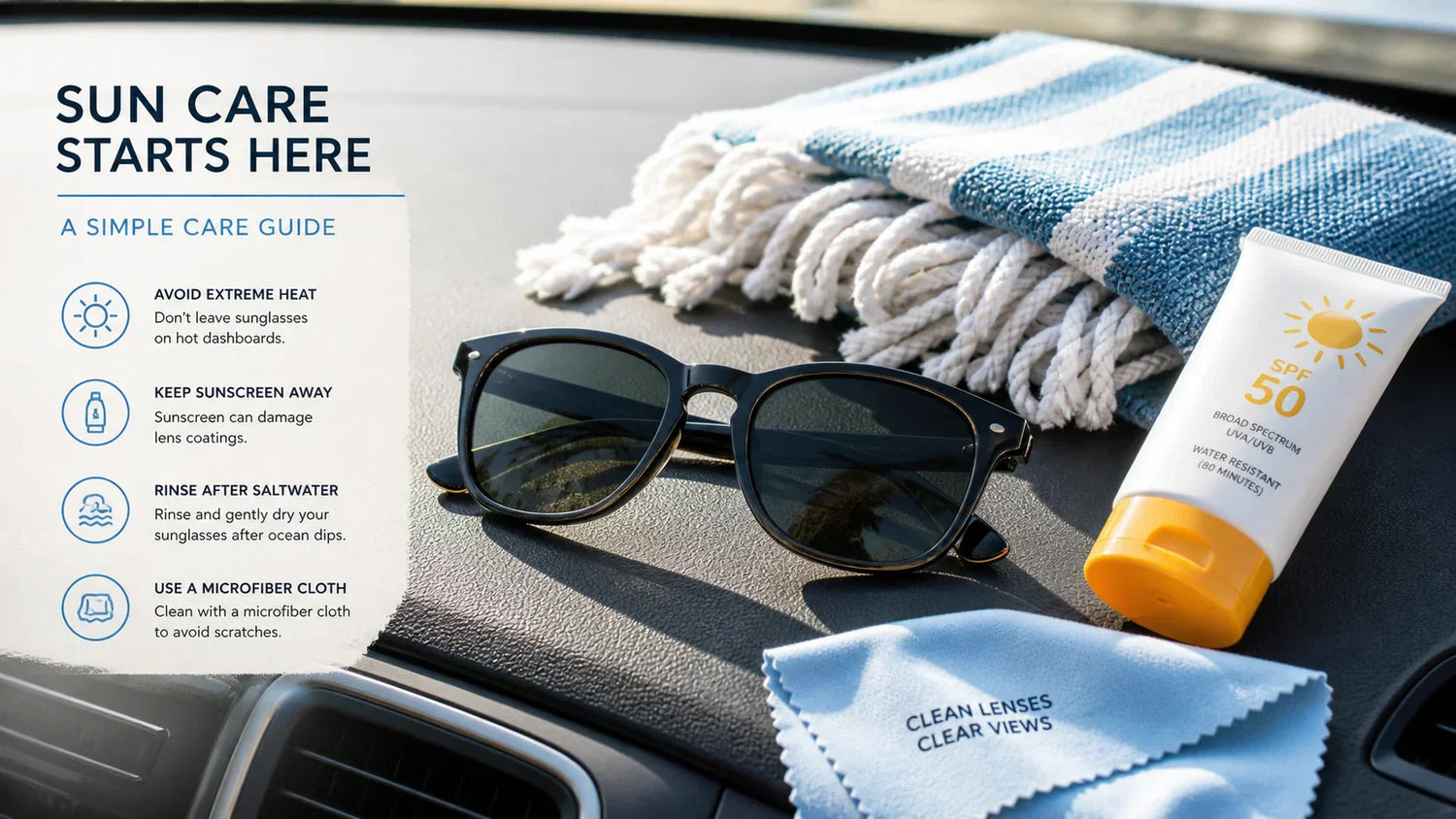
A car dashboard can get far hotter than the air outside. Heat can make lens materials and coatings expand at different speeds. Once the bond between layers weakens, the lens may show tiny cracks, bubbles, or cloudy patches.
This is one of the fastest ways to make a decent pair age badly.
2. Letting sunscreen, makeup, and skin oil sit on the lens
Sunscreen is good for your skin. It is not always kind to lens coatings. Makeup, facial oil, hair products, and sunscreen often collect along the lower lens edge, near the nose bridge, and around the frame line.
If you put the sunglasses straight into a case after a beach day, that residue stays pressed against the lens. Over time, the finish can look cloudy, sticky, or uneven.
3. Letting saltwater or pool water dry on the surface
Salt and chlorine should not dry on sunglasses. They leave deposits behind, and those deposits can scratch or stress coatings when you wipe them off later.
Rinse first. Wipe second.
4. Cleaning with the wrong cloth
Paper towels, T-shirts, napkins, and dry beach towels are rougher than they feel. They can drag grit across the lens. If the coating is already weak, that friction can make the peeling look worse.
A microfiber cloth is boring advice because it works.
Can peeling sunglasses be fixed?
Usually, no. Once a lens coating has peeled or delaminated, home polishing will not restore the original UV protection, tint, mirror finish, polarization layer, or optical clarity. Rubbing harder often makes the lens worse.
You have three realistic options:
| Situation | Best option | Why |
|---|---|---|
| Only oil, sunscreen, or surface film | Clean gently | The lens may not be damaged yet |
| Coating is lifting at the edge | Stop harsh cleaning and monitor | Polishing may spread the damaged area |
| Lens is bubbling, cloudy, or delaminated | Replace lenses if possible | The layer bond is already failing |
| Damage is in your field of view | Replace the pair | Visual comfort matters, especially outdoors or driving |
| Frame is also old, loose, or uncomfortable | Replace the pair | New lenses may not be worth putting into a tired frame |
For driving, bright sun, or long outdoor wear, do not keep using a damaged lens just because the frame still looks nice. Sunglasses are style, yes. They are also something you look through.
What not to do to peeling sunglass lenses
The mistake is trying to scrub the damage away. Peeling is not dirt. Delamination is not a smudge.
| Avoid | Why |
|---|---|
| Toothpaste | Often abrasive and can make lens coatings worse |
| Baking soda scrub | Can scratch the lens surface |
| Acetone or nail polish remover | Too aggressive for most lens finishes |
| Alcohol wipes unless approved | May affect coatings or frame finishes |
| Paper towels or T-shirts | Can drag grit and worsen scratches |
| Trying to peel the coating off by hand | Can create uneven optics and more damage |
How to stop new sunglasses from peeling
The best care routine is short enough that you will actually do it.
- Rinse the lenses with clean water after sunscreen, sweat, saltwater, or pool water.
- Use a tiny amount of mild soap if the lens feels oily.
- Pat dry or wipe with a clean microfiber cloth.
- Let the sunglasses dry before closing them in a case.
- Keep them out of hot cars, windowsills, and direct dashboard heat.
Quick prevention checklist
- Do not leave sunglasses on the dashboard.
- Do not wipe dry salt or sand across the lens.
- Do not store oily sunscreen residue in a closed case.
- Do not clean with household sprays unless the brand says it is safe.
- Do not keep using a cloudy or cracked lens for driving.

When peeling is a sign to replace, not repair
Replace the sunglasses if the lens looks cloudy in your field of view, if the coating keeps lifting after gentle cleaning, if you see spiderweb cracks, or if glare feels worse than before.
A damaged lens can make you squint more. It can also make an otherwise good outfit look tired up close. That is the small detail people notice without knowing exactly why.

What to look for in your next pair
Peeling is partly about care, but it is also about how the sunglasses are built and how you use them. A better replacement should feel cleaner at the lens edges, clearer through the lens, and easier to maintain after normal wear.
- UV400 protection so the lens is doing its real job.
- Clean lens edges with no rough finish, cloudy glue line, or loose coating feel.
- Lightweight frame feel so you are more likely to store and wear the pair properly.
- Lens type that matches your use, especially if you drive, travel, or spend time near water.
- A shape you will actually protect instead of throwing into a tote or car console.
For a deeper lens-material breakdown, read the sunglass lens materials guide. For frame materials, read the BAPORSSA sunglasses material guide. If your issue is constant smudging rather than peeling, read why your glasses are always smudged.
BAPORSSA route: if your old lenses are peeling
No pair should be marketed as magically immune to coating damage. Heat, sunscreen, saltwater, and rough cleaning can age any sunglasses. The smarter move is to choose a pair you will care for properly, with a lens and frame style that fits how you actually wear sunglasses.
| If your old pair failed because... | Start with | Why it fits |
|---|---|---|
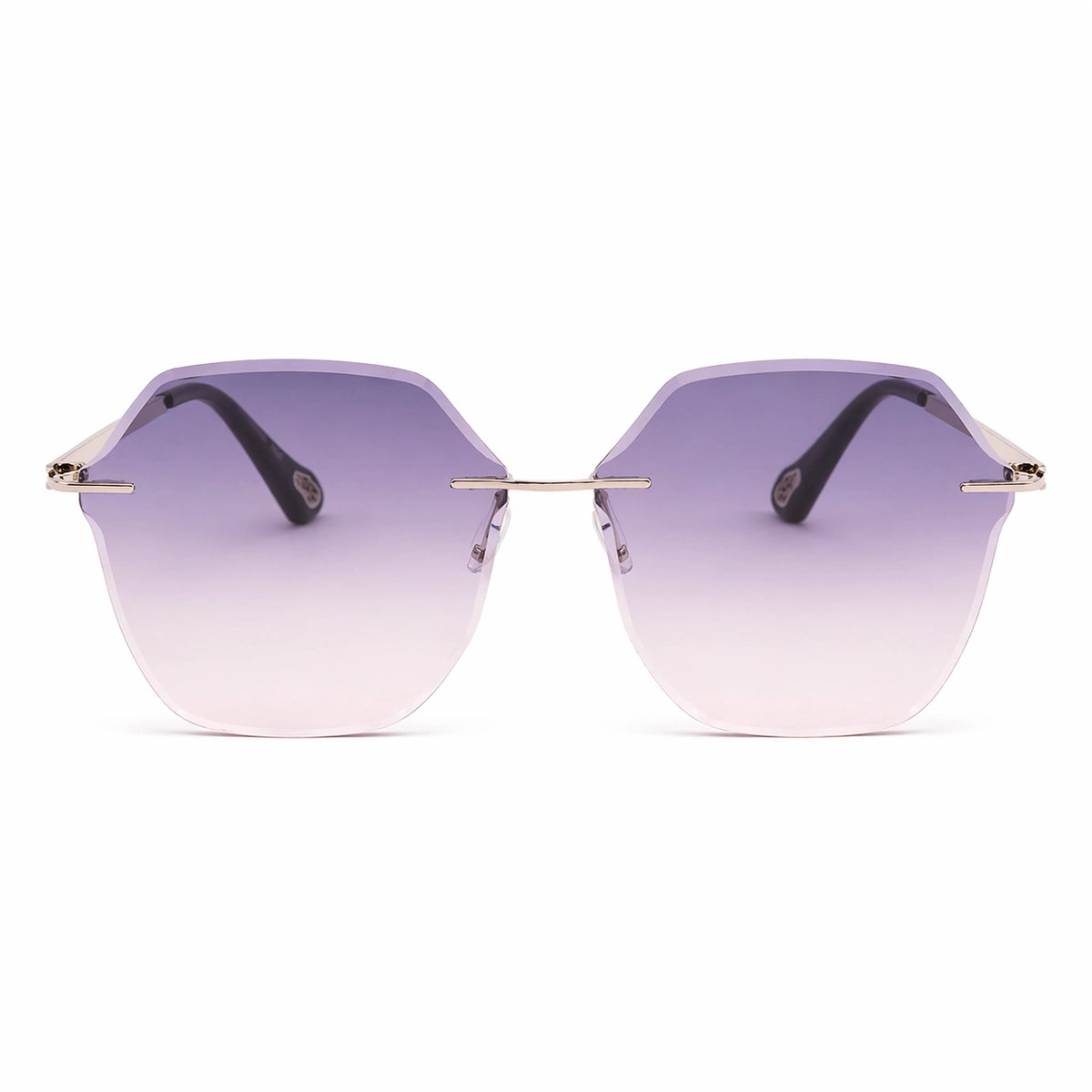
| The lens edge started looking rough or tired | Contour | Rimless gradient route with a cleaner lens-edge look and stronger visual definition |
| You want a lighter everyday replacement | Air | Light daily pair that feels easier to wear and store properly |
| You want adjustable nose pads and a metal route | Luma | Lightweight metal frame with adjustable silicone nose pads and lens options |
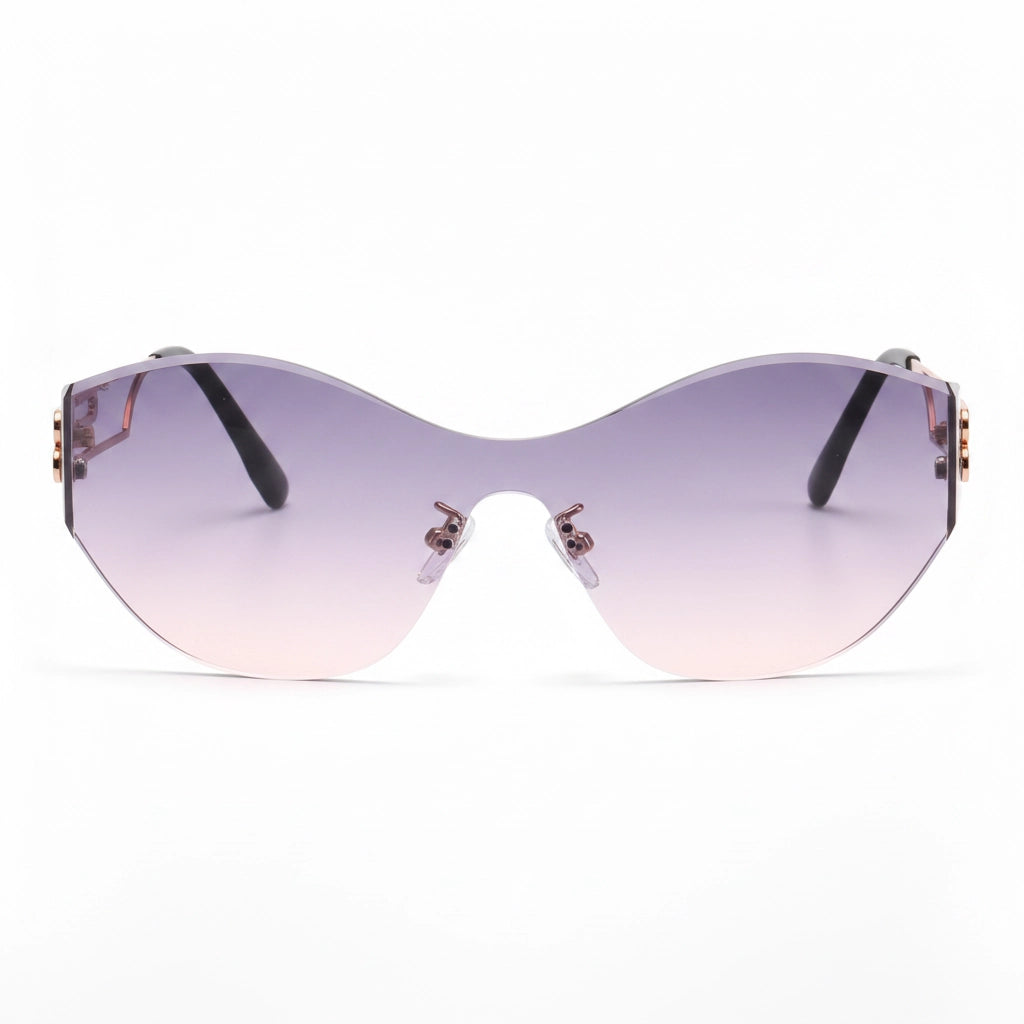
| You want more coverage without a heavy full frame | Vanguard | Rimless shield route with a cleaner face-forward lens presence |
| You move between indoor and outdoor light | Glow | Photochromic daily route for changing light conditions |
| You need glare control near road, water, or bright surfaces | Flow | Wide rimless option with a polarized variant for reflected glare needs |
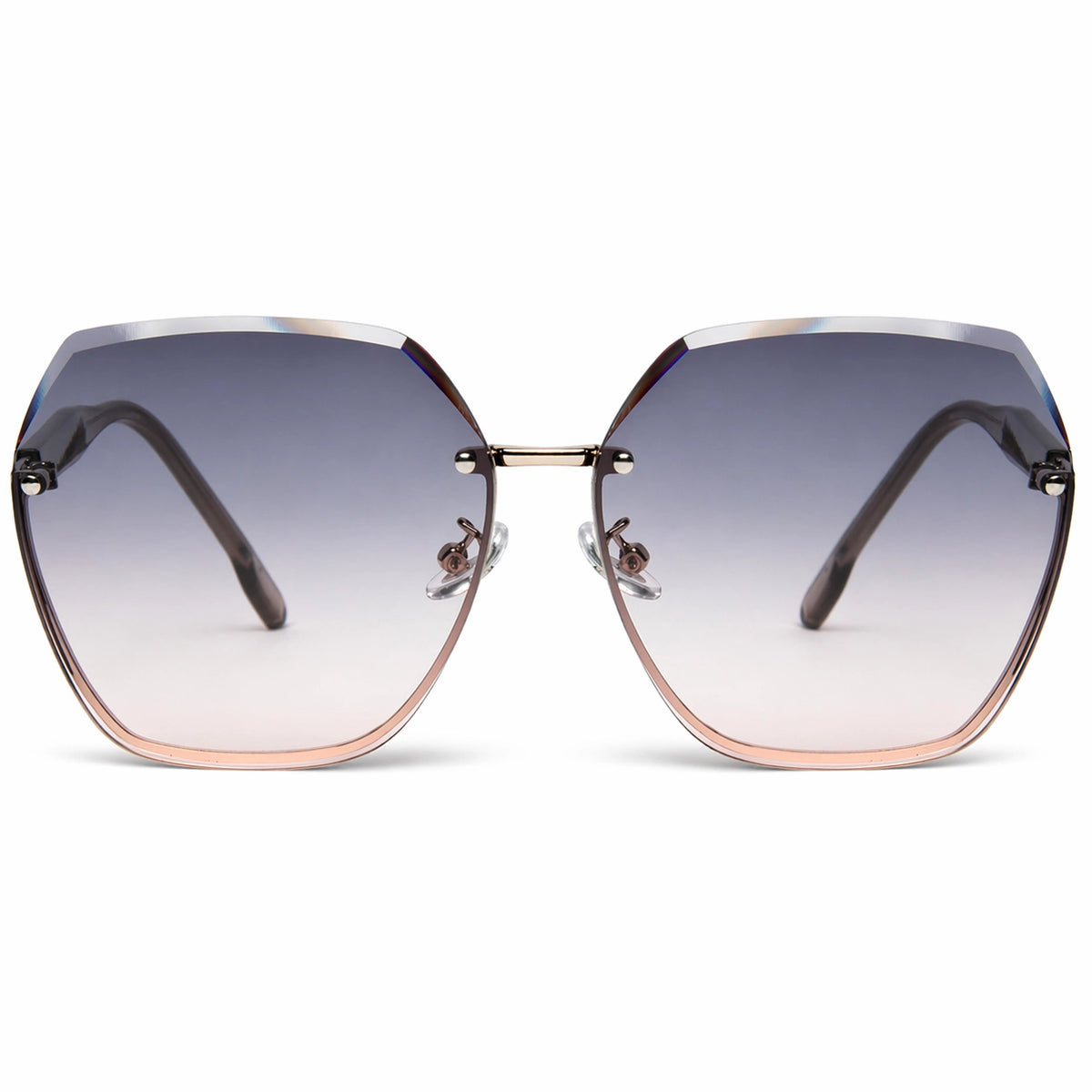
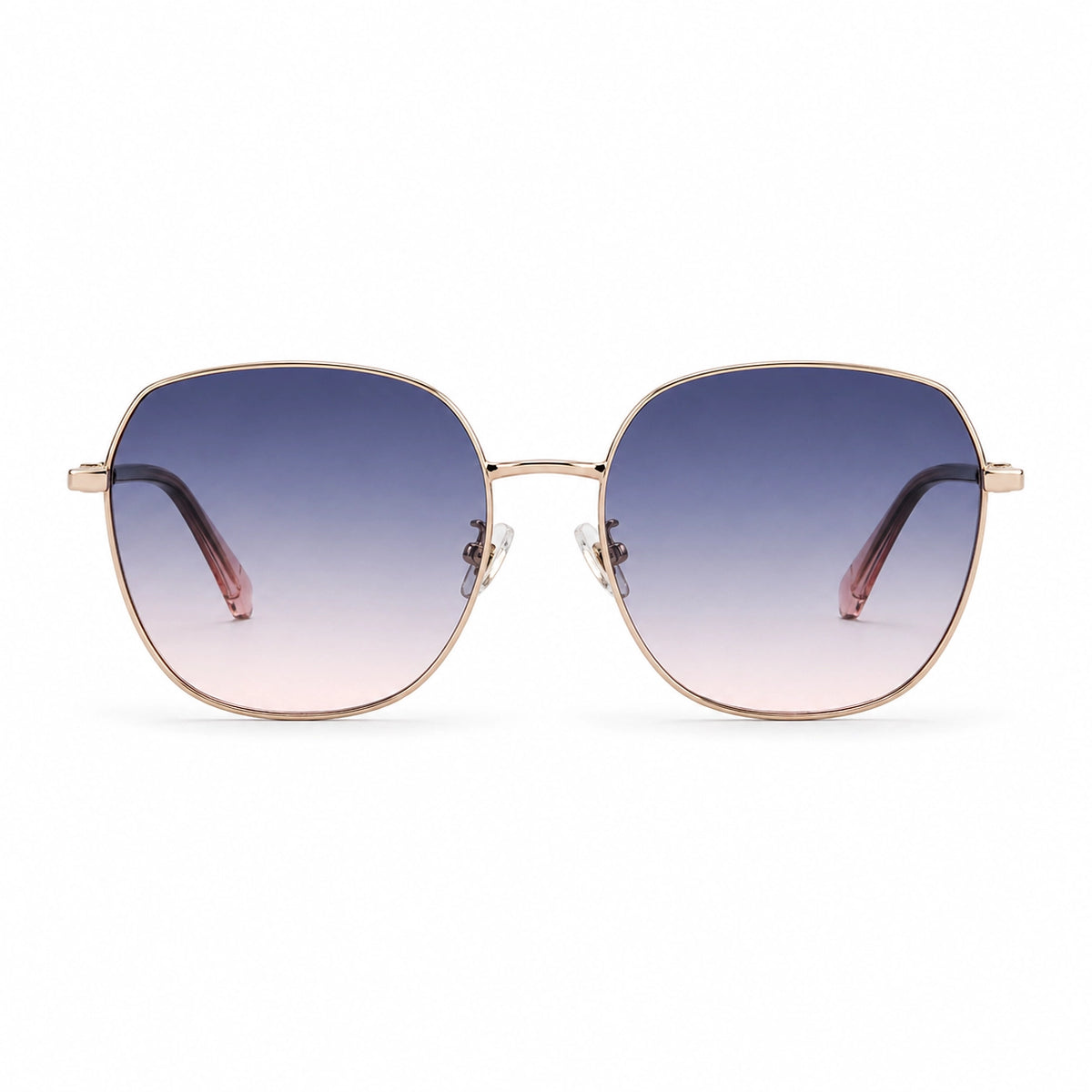
If your lenses are peeling, choose your next pair by how the old one failed. Start with Contour for a cleaner lens-edge look, Air for a lighter daily replacement, or Luma for a metal frame with adjustable nose pads.
What to read next
| If you care about | Read this |
|---|---|
| Lens materials | Glass vs polycarbonate vs nylon lenses |
| Frame materials and quality | Sunglasses material guide |
| Smudges and coating clues | Why are my glasses always smudged? |
| Green nose pad residue | Why do glasses turn green? |
| Choosing one better pair | BAPORSSA sunglasses buying guide |
FAQ
Why are my sunglasses peeling?
Your sunglasses are usually peeling because a lens coating, film, or layer has started to fail. Heat, sunscreen, saltwater, pool water, and rough cleaning can all weaken the finish over time.
What is lens delamination?
Lens delamination means one layer of the lens is separating from another. It can look like cloudy patches, bubbles, lifting film, or uneven areas that do not clean away.
Is crazing the same as scratching?
No. Scratches usually sit on the lens surface. Crazing looks more like fine spiderweb cracks and is often linked to heat or stress in the coating or lens material.
Can peeling sunglasses be fixed?
Usually not at home. If the coating is lifting, bubbling, cloudy, or delaminated, polishing will not restore the original lens clarity, tint, UV protection, mirror finish, or polarization layer.
How do I fix peeling glasses lenses?
First make sure the issue is not oil, sunscreen, or residue. If gentle cleaning does not remove it and the coating is actually lifting, the realistic options are lens replacement or replacing the sunglasses.
Are peeling sunglass lenses still safe to wear?
If the damage is outside your field of view and the lens still feels clear, you may be able to use them casually. Replace them if the lens looks cloudy, distorted, cracked, or uncomfortable, especially for driving or strong sun.
Why is the coating coming off my glasses?
The coating may be coming off because of heat, chemical residue, saltwater, pool water, age, or rough cleaning. Repeated exposure weakens the finish and can make the lens look cloudy or flaky.
Can I remove the peeling coating completely?
Do not try to strip the coating unless the brand or an optician specifically recommends it. Removing coatings unevenly can damage the lens and create poor optical clarity.
When should I replace peeling sunglasses?
Replace them when the coating keeps lifting, the lens is cloudy in your field of view, glare feels worse, spiderweb cracks appear, or you cannot clean the lens without the damage spreading.
How do I prevent new sunglasses from peeling?
Keep them out of hot cars, rinse after sunscreen or saltwater, use mild soap when needed, dry with microfiber, and store them only after they are clean and dry.
Final recommendation
Peeling sunglasses are not just a cosmetic annoyance. They are a sign that the lens surface or layers are no longer aging cleanly.
Clean gently once. If the marks move, you may have residue. If the coating lifts, bubbles, clouds, or cracks, the lens is damaged. At that point, the question is no longer “How hard should I scrub?” It is “Is this pair still worth wearing?”
Start with Contour for a cleaner lens-edge look, choose Air for a lighter daily replacement, or choose Luma for a metal frame with adjustable nose pads.