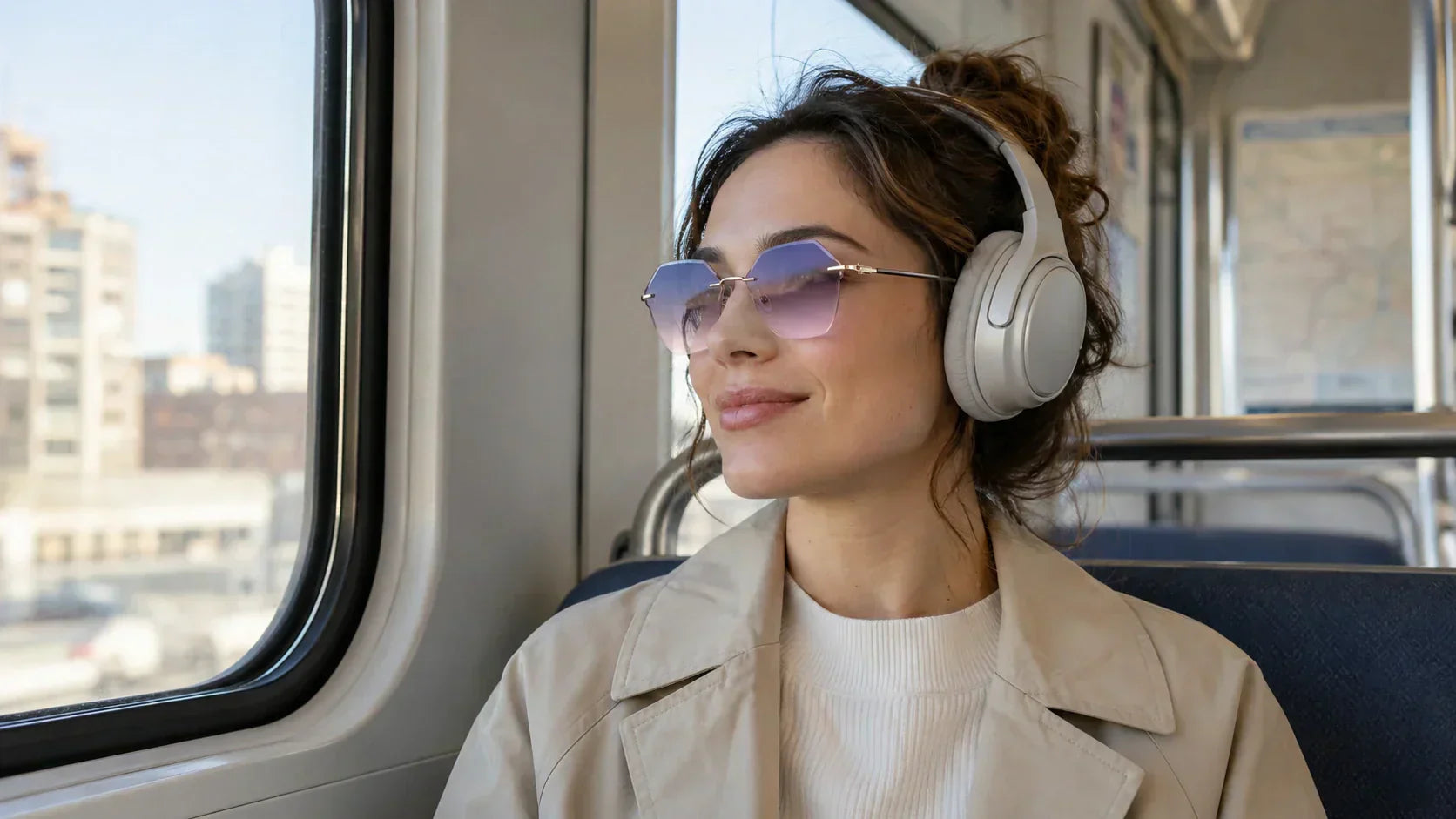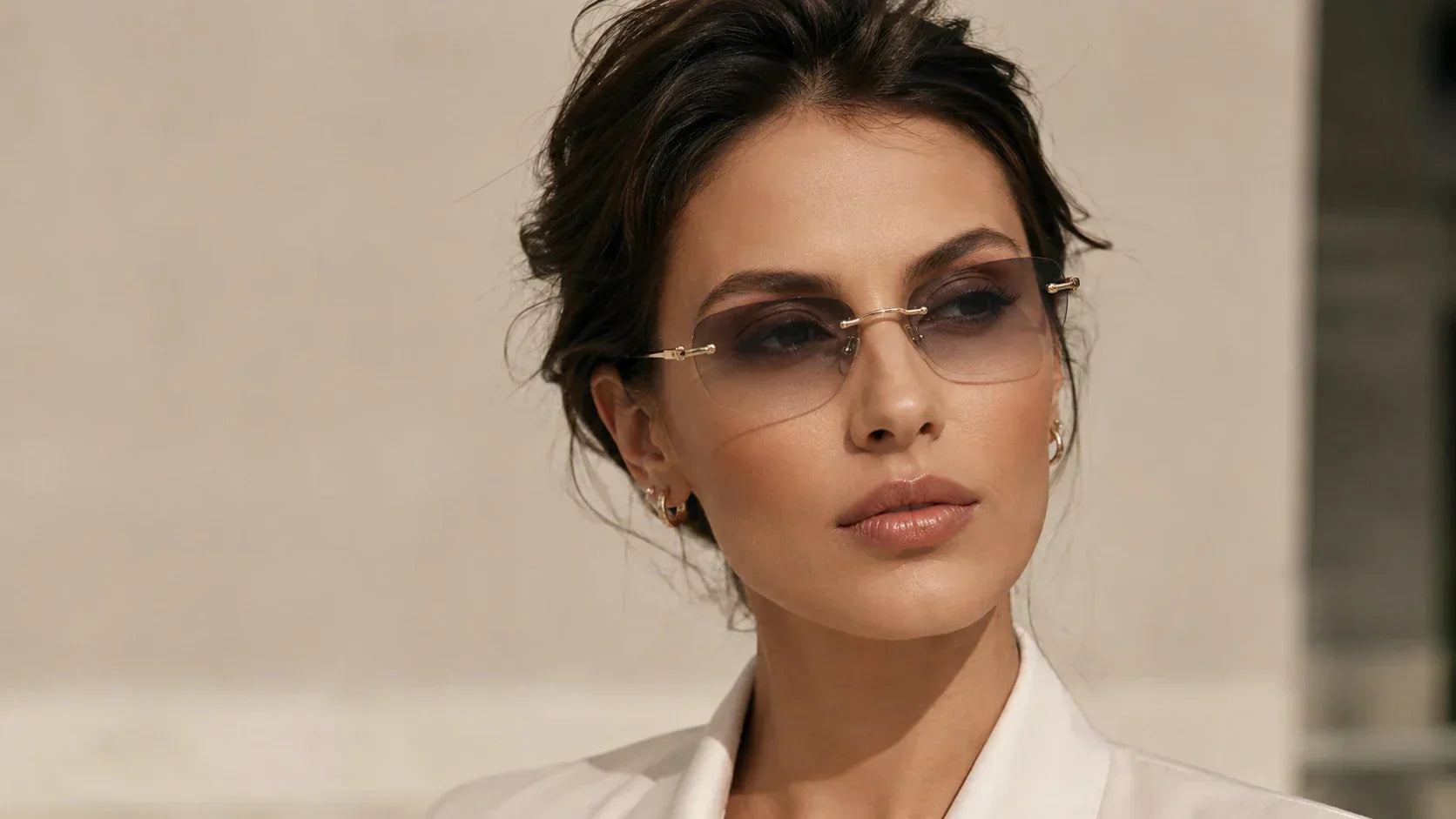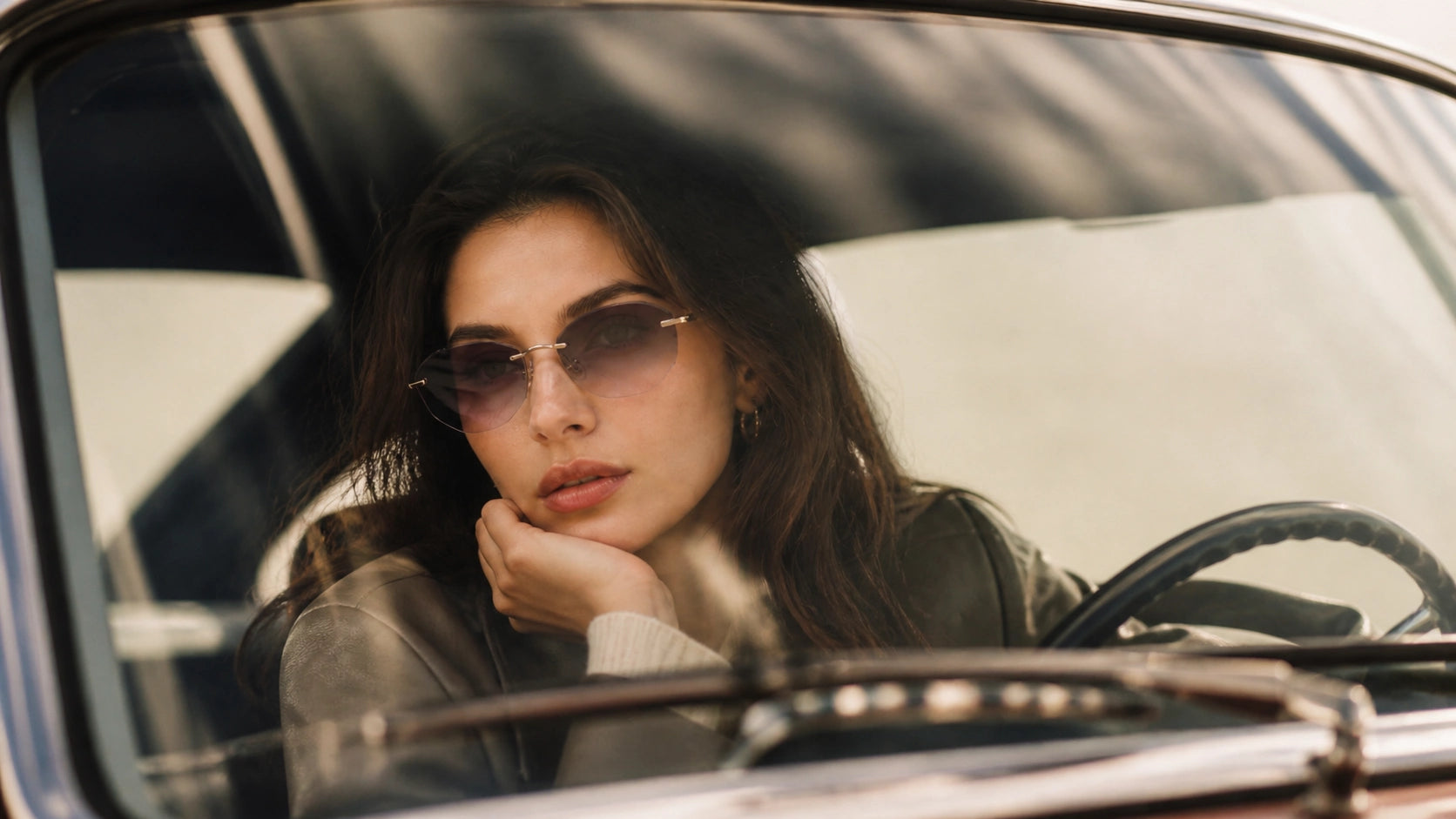
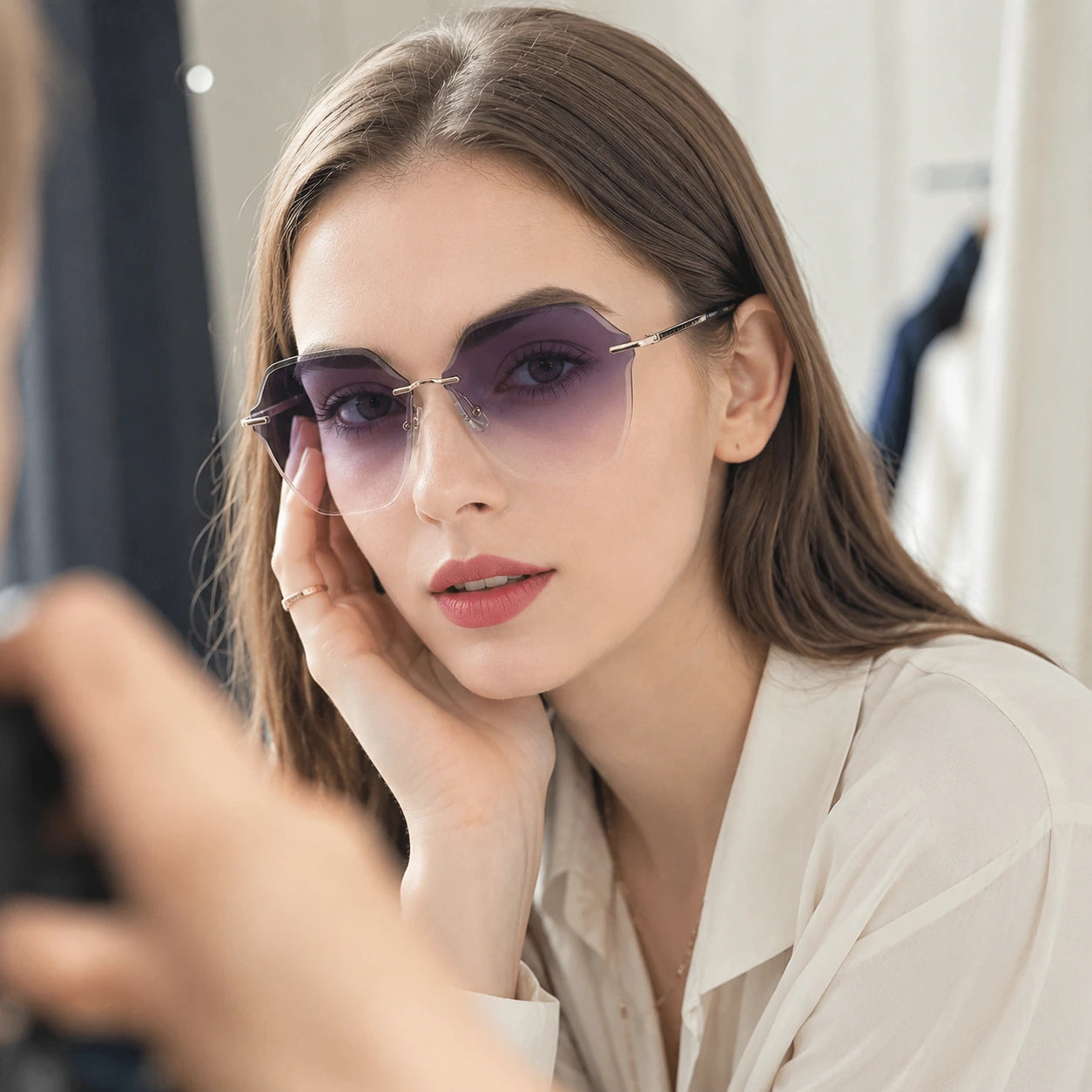
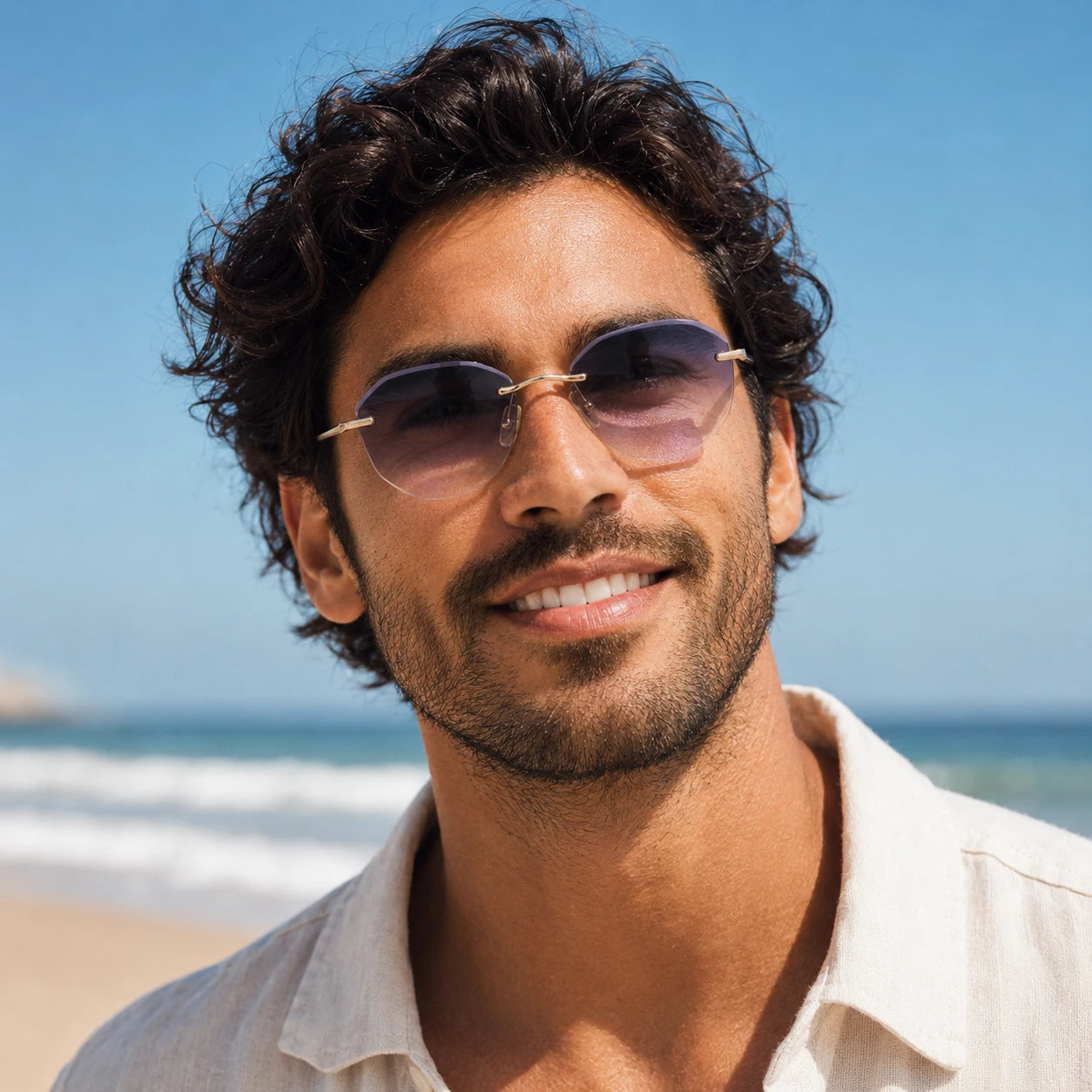
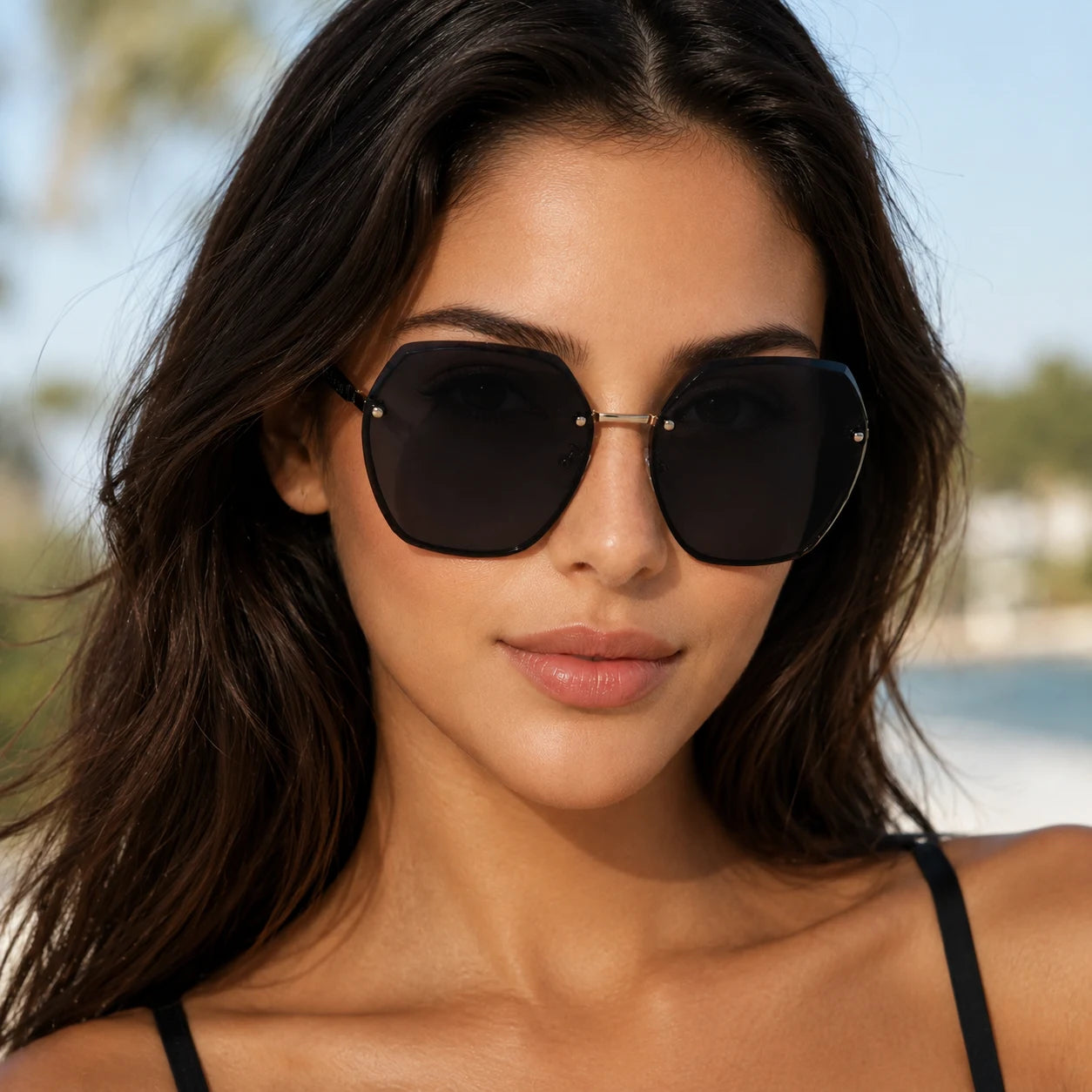
Quick answer: The best sunglasses for women should protect your eyes, fit without pressure, match your real light environment, and make your face look cleaner when you put them on. Start with face shape and fit first, then check UV400 protection, lens color, glare needs, lifestyle, and the final face result.
BAPORSSA starts from a clear point of view: less frame, cleaner face, lighter wear. A good pair should not only photograph well. It should work through driving, travel, daily movement, bright light, makeup, and long wear.

Choose Your Route First
This is the fastest way to use the guide. Start with the problem you are actually trying to solve.
| Start with... | Use this route | Read next |
|---|---|---|
| Your face shape | Find the shape or proportion that balances your face. | Face shape sunglasses guide |
| Small or petite face | Look for controlled width, lower visual bulk and no bug-eye effect. | Small face sunglasses guide |
| Wide face or big head | Look for no-pinch width, lower temple pressure and stable bridge support. | Wide fit / anti-pinch guide |
| Eye protection | Check UV400 before lens color, darkness or trend. | UV400 vs polarized guide |
| Lens color | Choose gray, brown, rose or gradient by light and face result. | Lens color guide |
| Gold or silver frame color | Choose by skin undertone, jewelry, lens tint and face result. | Gold or silver sunglasses guide |
| Driving or glare | Check glare control, dashboard visibility and fit behind the wheel. | Driving sunglasses guide |
Quick Picks: Which BAPORSSA Sunglasses Should You Start With?
| Your priority | Look for | BAPORSSA route |
|---|---|---|
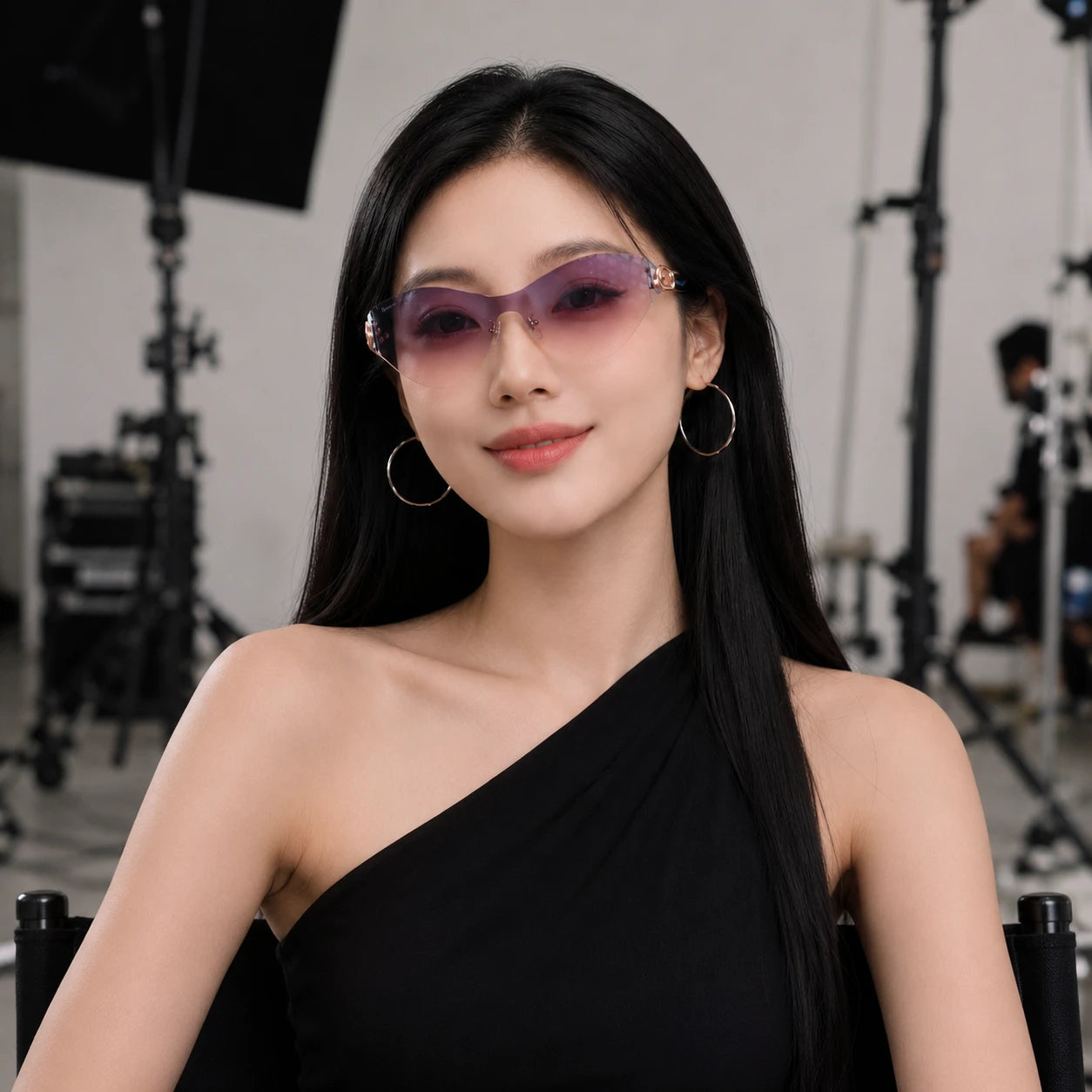
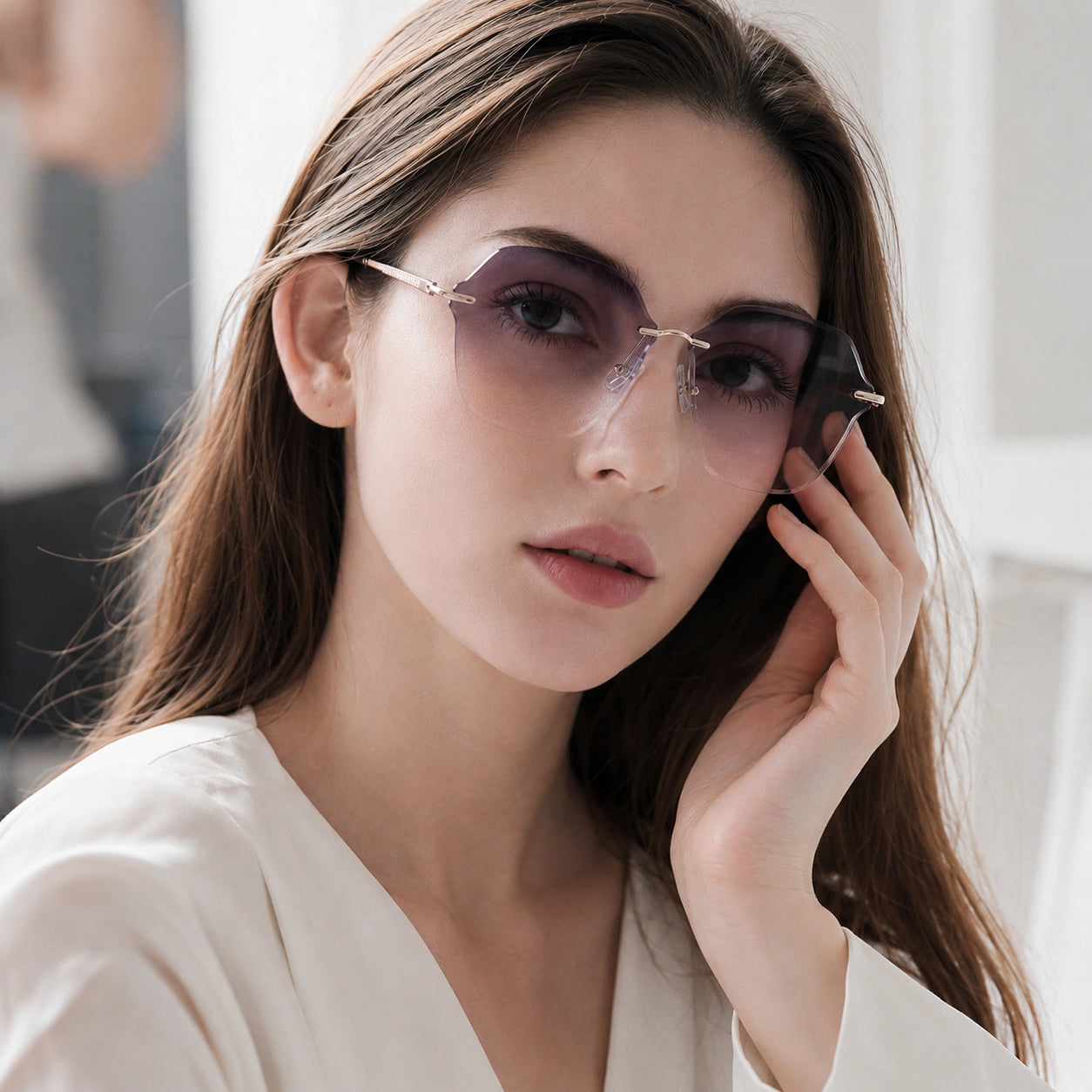
| A clean everyday pair | Lightweight rimless design, soft tint, open face | Backbone |
| More coverage | Rimless shield shape, wider lens, open field of view | Vanguard |
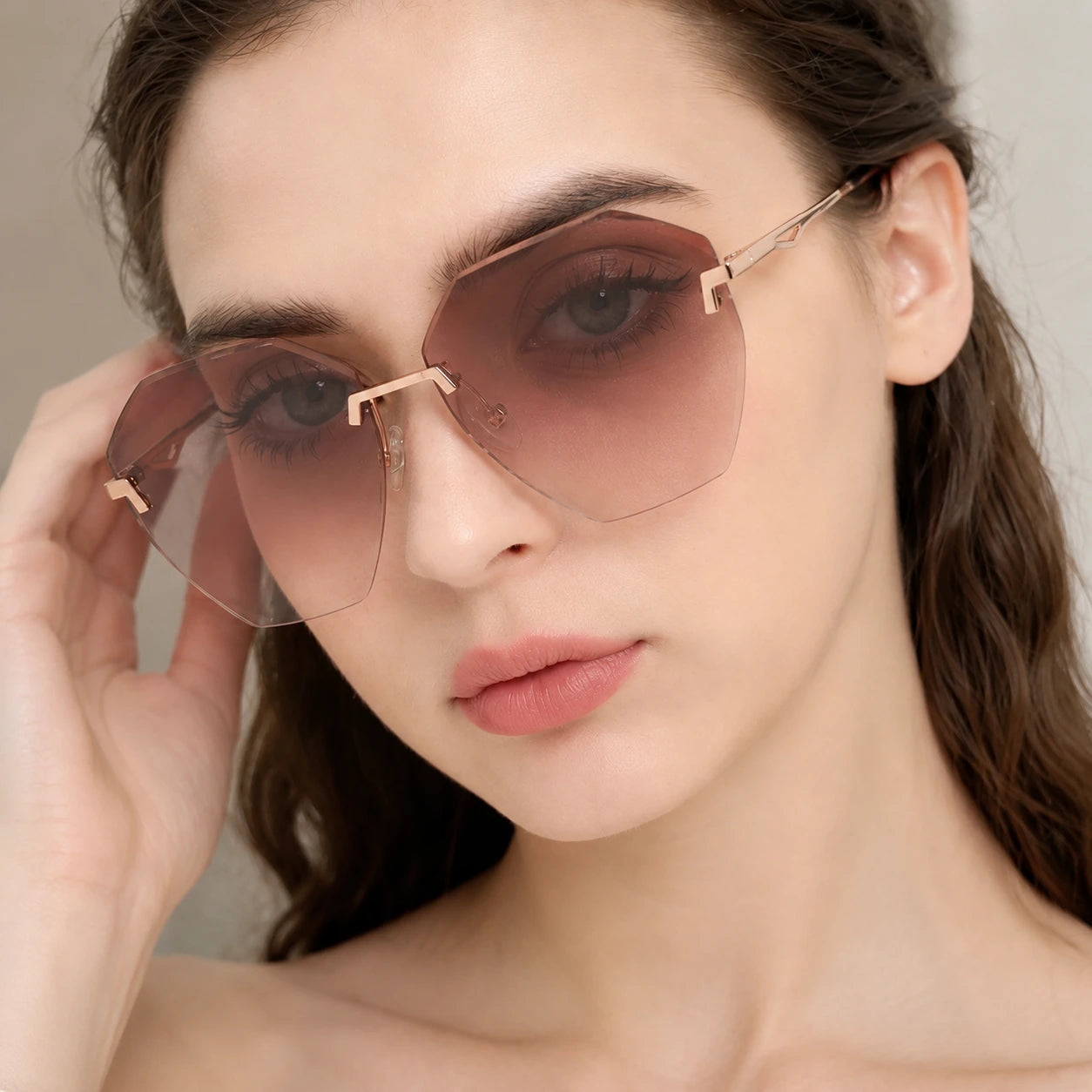
| A softer face effect | Gradient lens, lighter eye area, complexion-friendly tint | Glow |
| An easy first rimless pair | Light daily wear, simple styling, lower pressure | Air |
| Glare control | Polarized lens, stronger coverage, reflective-light comfort | Flow |
Most first-time buyers should start with the pair that feels easiest on the face. Not the loudest pair. Not the darkest pair. The one that makes the face look more open from the first mirror check.
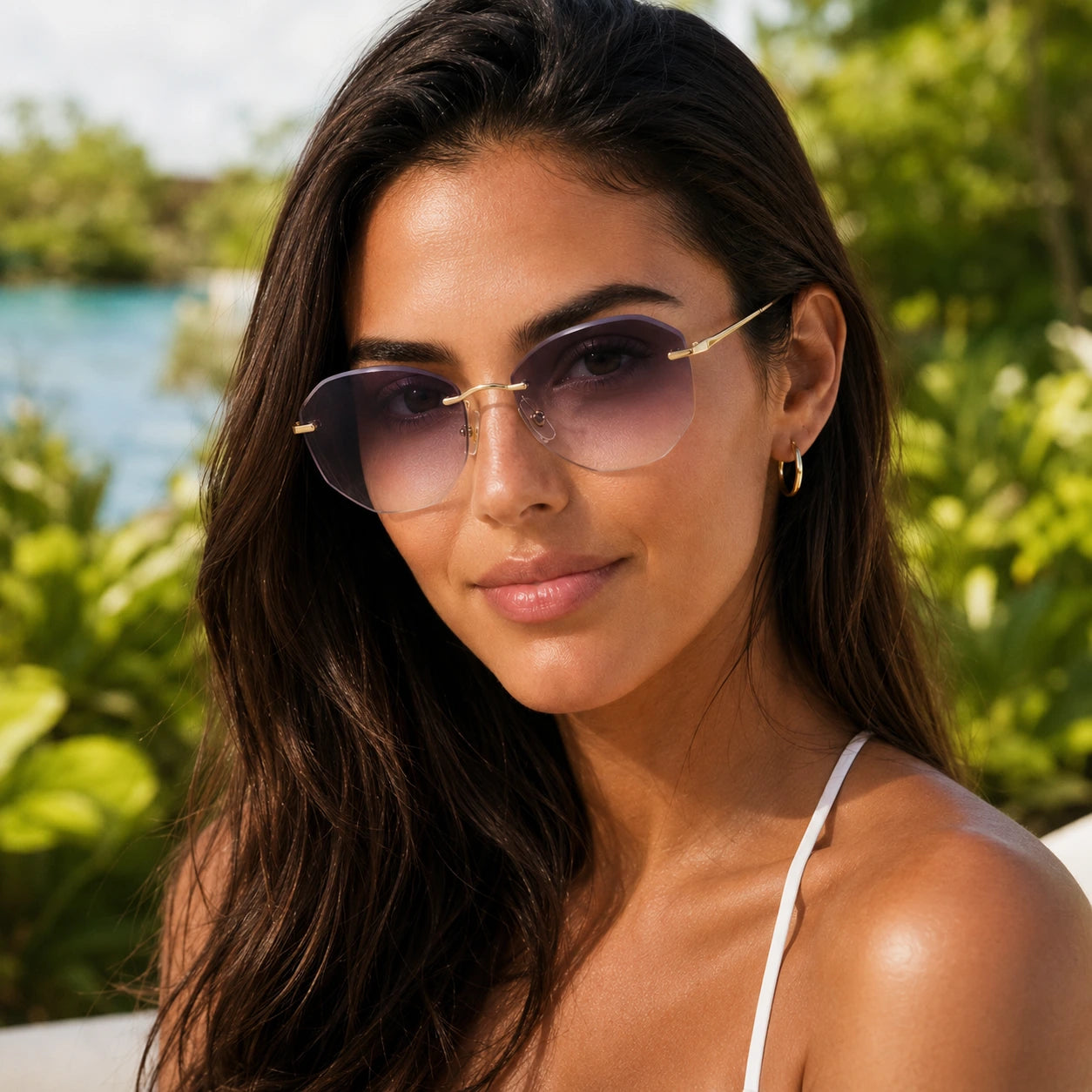
The BAPORSSA Buying Filter
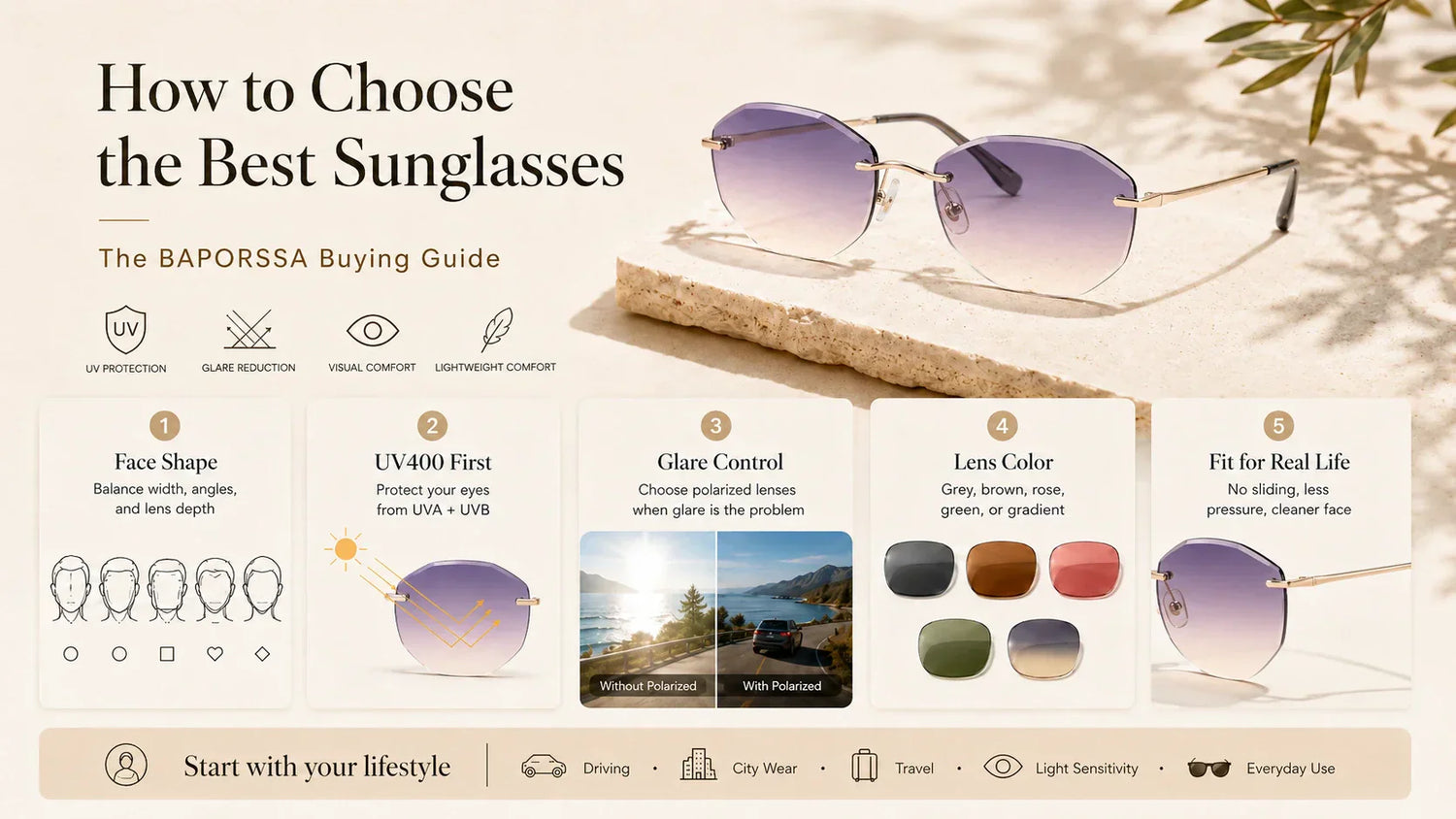
Before buying sunglasses, run the pair through five filters.

| Filter | Ask this | Why it matters |
|---|---|---|
| Face | Does the pair clean up my face or crowd it? | This decides whether the sunglasses improve the look or take over. |
| Fit | Does it slide, pinch, hit my cheeks, or leave pressure marks? | Comfort decides whether the pair becomes part of real life. |
| Light | Do I need UV protection, glare control, soft brightness, or stronger shade? | Different light needs different lenses. |
| Lifestyle | Will I wear it for driving, travel, city walks, beach days, or daily outfits? | A beautiful pair still fails when it does not match the day. |
| Finish | Do the lens edge, temples, nose pads, and construction feel considered? | Small details decide whether the refined look lasts beyond the first photo. |
This is the whole buying system. Face first. Fit second. Light third. Then lifestyle and finish.
Best Sunglasses for Women: Choose by Face Result, Not Just Trend
The best sunglasses for women are not one fixed shape. They depend on what the pair does to the face. Some sunglasses make the eye area look softer. Some make the face feel sharper. Some add polish without hiding makeup. Others make the face look smaller, heavier, or more tired.
| What to check | What it changes | Better direction |
|---|---|---|
| Frame outline | A heavy rim can make the eye area feel boxed in. | Try rimless or lighter frame structures. |
| Lens darkness | Very dark lenses can look severe for daily wear. | Try soft grey, tea, rose, or gradient lenses. |
| Lens width | Too narrow can make the face look wider. | Choose width that balances cheekbones and temples. |
| Lens height | Too small can feel trendy but less protective. | Use enough height for real daylight coverage. |
| Nose support | Poor support creates sliding, pressure, or makeup marks. | Look for stable fit and adjustable nose pads when available. |
Glow is the softer route. Backbone is the clean everyday route. Air is the easiest entry point into the BAPORSSA look.
Quick Face Shape Check Before You Buy
Face shape rules are useful, but they should stay practical. The goal is not to label your face perfectly. The goal is to understand what a frame does to your proportions.
For the full breakdown, read the BAPORSSA face shape sunglasses guide.

| Face shape or fit concern | Better direction | Be careful with |
|---|---|---|
| Round face | Lifted edges, angular lens lines, clean width | Tiny round lenses that repeat the face shape |
| Oval face | Most shapes work; choose by mood and coverage | Frames that are too narrow for your cheekbone width |
| Square face | Softer lens edges, gradient tint, lighter structure | Heavy blocky frames that sharpen the face too much |
| Heart-shaped face | Balanced lens width, lighter lower edge, soft gradient | Top-heavy frames that over-emphasize the forehead |
| Long or oblong face | Enough lens height and horizontal balance | Tiny lenses that make the face look longer |
| Small or narrow face | Lower visual bulk, controlled width, light structure | Oversized frames that create a bug-eye effect |
| Wide face or big head | Wider fit, lighter temples, less side pressure | Narrow frames that squeeze at the temples |
Check UV400 Before Lens Color or Style
Lens darkness is not the same as eye protection. A dark lens can make daylight feel softer, but UV protection comes from the lens standard. For daytime sunglasses, look for UV400 or clear UVA/UVB protection language before choosing color, shape, or trend.

| Feature | What it does | Buying note |
|---|---|---|
| UV400 | Helps block ultraviolet light up to 400nm | Use this as the protection baseline. |
| Dark tint | Reduces visible brightness | Useful, but not proof of UV protection by itself. |
| Polarized lens | Reduces reflected glare | Helpful for roads, water, and reflective surfaces. |
| Gradient lens | Softens light while keeping the face more visible | Strong for daily wear and a cleaner face result. |
For the deeper difference between protection and glare control, read the UV400 vs polarized sunglasses guide.
Polarized vs Non-Polarized Sunglasses
Polarized sunglasses are useful when glare is the problem: roads, water, wet pavement, bright car hoods, and outdoor reflections. Still, polarized lenses are not the automatic answer for every person. Screens and certain displays can look darker or harder to read through polarized lenses.
| Choose polarized when... | Pause before choosing polarized when... |
|---|---|
| You drive often in bright daylight. | You rely heavily on screen visibility. |
| You spend time around water or reflective surfaces. | You prefer a lighter fashion tint. |
| Your eyes feel tired from glare. | Your car display or HUD is difficult to read through polarization. |
For driving, use the BAPORSSA driving sunglasses guide.
Choose Lens Color by Light and Face Mood
Lens color changes how the world looks. It also changes how your face looks. A grey lens is not just neutral. It can make the look feel cleaner and cooler. A tea or brown lens adds warmth. A rose tint can soften the eye area. A gradient lens keeps the face more open.

| Lens color | Best for | Face result |
|---|---|---|
| Grey | Bright sun, daily wear, neutral color perception | Clean, modern, less warm |
| Brown or tea | Warm daylight, city wear, travel, softer contrast | Natural, warmer, easy to style |
| Rose or pink | Soft styling, no-makeup days, lighter eye area | Softens around the eyes and brightens the complexion |
| Gradient | Daily wear, movement between spaces, makeup-friendly styling | Keeps the face open and less hidden |
For a full color breakdown, read the sunglasses lens color guide.
Frame Weight, Nose Pads and Comfort
A pair can look good in a photo and still become annoying after twenty minutes. The usual reasons are simple: too much weight, poor nose support, narrow temples, or a lens shape that hits the cheeks when you smile.

| Comfort point | Check this | Why it matters |
|---|---|---|
| Frame weight | Does it still feel easy after more than a few minutes? | Weight becomes pressure during long wear. |
| Nose support | Does it sit without sliding or leaving strong marks? | Bridge fit controls stability. |
| Temple pressure | Does it squeeze behind the ears or sides of the head? | Side pressure creates fatigue. |
| Cheek contact | Does the lens touch your cheeks when you smile? | Cheek contact can lift the frame and cause slipping. |
Which BAPORSSA Sunglasses Should You Choose?
Start with the problem you want the pair to solve.

| Product | Best for | Skip as your first choice when |
|---|---|---|
| Backbone | A clean daily rimless look, lighter face, and easy first BAPORSSA pair | You want the boldest shield coverage |
| Vanguard | More coverage, open field of view, driving, travel, and bright-day presence | You want the quietest barely-there pair |
| Glow | A soft-focus gradient effect, brighter complexion, and makeup-friendly wear | You need the strongest glare control all day |
| Air | An easy lightweight entry pair with a clean rimless feel | You want stronger lens coverage or polarized glare control |
| Flow | Polarized glare control, wider coverage, water glare, and outdoor reflection comfort | You depend on screens or displays that may be affected by polarization |
What Not to Buy
The wrong sunglasses are not always badly made. They are often wrong for the person wearing them.

| Avoid | Why it fails | Choose instead |
|---|---|---|
| Dark lenses with unclear UV protection | Darkness does not prove protection. | Look for UV400 or clear UVA/UVB protection. |
| Oversized frames on a small face | The frame can overwhelm the features. | Try lighter rimless shapes with controlled width. |
| Polarized lenses for every situation | They help glare, but some screens can be harder to read. | Choose polarized for glare-heavy days and gradient for softer daily wear. |
| Heavy frames when nose marks bother you | Weight turns into bridge pressure. | Try lighter structures, slim metal temples, and adjustable nose pads. |
The Sunglasses Scorecard
Use this before buying any pair. It keeps the decision honest.
| Category | 0 points | 1 point | 2 points |
|---|---|---|---|
| UV protection | Unclear | Says UV protection | Clearly states UV400 or UVA/UVB protection |
| Fit | Slides or pinches | Acceptable fit | Stable without pressure |
| Face result | Hides or crowds the face | Neutral | Cleaner face, less visual bulk |
| Lens comfort | Too dark, harsh, or unclear | Works in some light | Matches your real light environment |
| Weight | Feels heavy quickly | Acceptable | Light enough for repeated wear |
| Lifestyle match | No clear use | Works for one situation | Works for daily life plus one key use case |
Final Recommendation
Start with the pair that gives you the cleanest first impression. For most BAPORSSA customers, that means Backbone. It keeps the face open, reduces visual bulk, and gives you the brand idea in one pair.
Choose Vanguard for more coverage and a stronger shield look. Choose Glow for a softer gradient effect and a brighter eye area. Choose Air for an easy lightweight entry point. Choose Flow when glare control matters most.
FAQ
What are the best sunglasses to buy?
The best sunglasses have clear UV protection, comfortable fit, suitable lens color, enough coverage, and a shape that works with your face.
How do I choose the right sunglasses?
Choose sunglasses by checking face shape, fit, UV protection, lens color, and lifestyle. A good pair should protect your eyes, feel comfortable, and make your face look cleaner.
What sunglasses are best for women?
The best sunglasses for women depend on the face result you want. For a clean everyday look, choose lightweight rimless sunglasses. For a softer eye area, choose gradient lenses. For more coverage, choose a rimless shield.
Should I choose polarized sunglasses?
Choose polarized sunglasses when glare is a major issue, especially around roads, water, wet pavement, and reflective outdoor surfaces. For heavy screen use, check whether polarization affects visibility.
What lens color is best for sunglasses?
Grey is clean and neutral for bright sun. Brown or tea lenses add warmth. Rose lenses soften the eye area. Gradient lenses work well for daily wear because they reduce brightness while keeping the face open.
What does UV400 mean?
UV400 means the lens is designed to block ultraviolet light up to 400nm. It is an important baseline for daylight sunglasses.
What is the best first pair of BAPORSSA sunglasses?
Backbone is the safest first BAPORSSA pair for a clean everyday rimless look. Vanguard is better for more coverage and presence. Glow is better for a softer gradient effect around the eyes.