

How Dark Should Your Sunglasses Be? The Science of VLT and Lens Categories
You just bought a new pair of high-end sunglasses. You look at the tiny text printed on the inner temple arm, expecting to see the model name. Instead, you see a cryptic code: "Cat.3".
Is that a size? A style? A safety warning?
Most people assume that "darker is better." They buy the blackest lenses they can find, thinking they offer the best protection. This is a dangerous misconception.
In optical science, darkness is measured by VLT (Visible Light Transmission). Choosing the wrong category can leave you squinting in the sun—or worse, visually impaired while driving into a tunnel.
Here is the definitive guide to decoding your lens darkness.
The Myth: "Darker Lenses Block More UV"
Before we talk about darkness, we must kill a dangerous myth: Tint is NOT UV Protection.

Visible Light vs. Invisible Radiation
- Tint (Darkness): Blocks Visible Light (Glare). It creates comfort.
- UV Coating: Blocks Ultraviolet Radiation (Health). It creates safety.
You can have a completely clear lens that blocks 100% of UV rays (like clear prescription glasses). Conversely, you can have a pitch-black lens with zero UV protection.
The "Pupil Trap"

Wearing dark cheap sunglasses without UV protection is worse than wearing nothing.
Why? The dark tint tricks your pupil into opening wide (dilating) to let more light in. Because the lens lacks UV filters, you are effectively funneling massive amounts of harmful radiation directly into your dilated eye.
The BAPORSSA Standard: Whether you choose our light Pink Y2K Tints or our darkest Midnight Black, every lens is rated UV400, independent of its color.
What is VLT? (Visible Light Transmission)
VLT is the percentage of light that passes through the lens to reach your eye.

- 100% VLT: An open window (All light passes).
- 0% VLT: A brick wall (No light passes).
The lower the number, the darker the lens. To make this easy to understand, the international eyewear standard (ISO 12312-1) groups these percentages into 5 Categories.
The Official Classification: Categories 0 to 4

Check your current sunglasses. You will likely fall into Category 2 or 3.
Category 0: The "Night Owl" (80% – 100% VLT)

- Appearance: Clear or very faintly tinted.
- Use Case: Safety glasses, night driving, or protection from wind and dust without dimming vision.
- When to wear: At night or indoors.
Category 1: The "Fashion Statement" (43% – 80% VLT)
- Appearance: Pale yellow, soft pink, or light blue.
- Use Case: Overcast days or "Low Light" conditions. They provide depth perception in flat light but offer little glare reduction.
- When to wear: Cloudy city days or social events where eye contact is important.
- BAPORSSA Pick: Our Gradient & Fashion Tints often sit in this range at the bottom of the lens.
Category 2: The "Variable Weather" (18% – 43% VLT)
- Appearance: Medium tint. You can usually see the wearer's eyes through them.
- Use Case: Partly cloudy days, walking in the shade, or winter days where the sun is low but not blinding.
- When to wear: Ideally suited for changing weather patterns (sun to cloud).
Category 3: The "Global Standard" (8% – 18% VLT)

- Appearance: Dark. It is difficult to see the wearer's eyes.
- Use Case: Bright sunlight, open ocean, beach days, and general driving. This is the sweet spot for maximum glare protection without compromising visual clarity.
- When to wear: 90% of outdoor activities.
- BAPORSSA Pick: The Vanguard Series and Spectra X are calibrated to Cat 3 for optimal performance.
Category 4: The "Extreme Hazard" (3% – 8% VLT)
- Appearance: Pitch black.
- Use Case: High-altitude mountaineering, glacier hiking, or desert trekking.
- The Catch: These are specialized tools, not daily accessories.

The Driving Safety Critical Zone
You might think, "I hate the sun, I'll get Category 4."
Don't do it.

Why Category 4 is Illegal Behind the Wheel
Category 4 lenses are legally prohibited for driving in the US, UK, Australia, and the EU.
The danger is "Tunnel Blindness."
If you are driving on a bright day (pupils constricted) and enter a tunnel, a Cat 4 lens blocks so much light that you become effectively blind for the first few seconds until your eyes adjust. At 60mph, those few seconds are fatal.
Rule of Thumb: If a lens lets in less than 8% of light, keep it off the driver's seat. (All BAPORSSA driving sunglasses are engineered as Category 3 to remain legal and safe).
Matching BAPORSSA Styles to VLT Categories
A complete wardrobe isn't just about matching colors; it's about matching light conditions.
-
For the Socialite (Cat 1-2):
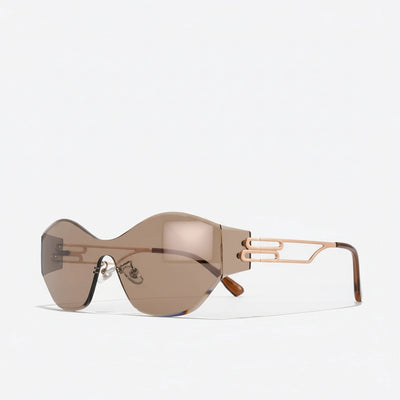
The Y2K Gradient Red & Coffee. Perfect for brunch or overcast afternoons where you want style without blackout darkness. -
For the Daily Driver (Cat 3):
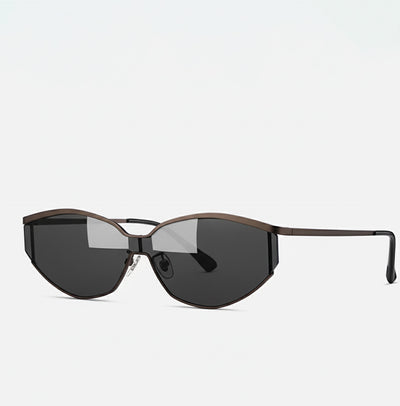
The Midnight Muse or Vanguard Bronze. These block ~85% of light, creating a calm, cool visual field for commuting and beach trips. -
For the "Multitasker" (Gradient):
Gradient lenses are unique. They are often Cat 3 at the top (blocking the sun) fading to Cat 1 at the bottom (allowing you to read your dashboard). This makes them the ultimate functional lens.
Conclusion: Build a "Light Management" Quiver
You wouldn't wear a winter coat to the beach. Similarly, you shouldn't rely on one VLT for every lighting condition.
Understanding "Cat 3" isn't just about reading a label—it's about choosing the right tool for your eyes.
- Overcast? Grab the Gradient.
- Blazing Sun? Grab the Vanguard.
Control the light, don't just block it.
Sources & References
- ISO Standards: ISO 12312-1:2013 (Eye and face protection) — The international standard defining Lens Categories 0-4.
- American Academy of Ophthalmology: Sun Smart: UV Safety — Reference for UV vs. Visible Light distinction.
- The UK Govt: Driving Eyesight Rules (Tinted Glasses) — Legal reference for Category 4 driving bans.
- Specsavers: Lens Categories Explained — Consumer guide to VLT.