
Buying Guide

UV400 vs Polarized: Eye Protection & Glare Reduction What’s the Difference?

Table of Contents

    Section 1

    A quick infographic explaining the difference between UV400 and polarized light.

    To learn more, please scroll down.

    UV400 vs. Polarized What’s the Difference?

    • What is UV400?: UV400 is for Health (blocking invisible radiation). Polarized is for Vision (blocking visible glare). They are not the same.National Eye Institute (NEI)
    • The "Darkness" Myth: A pitch-black lens can have zero UV protection. This is dangerous because it dilates your pupils, letting in more radiation. Even clear lenses can be UV400.
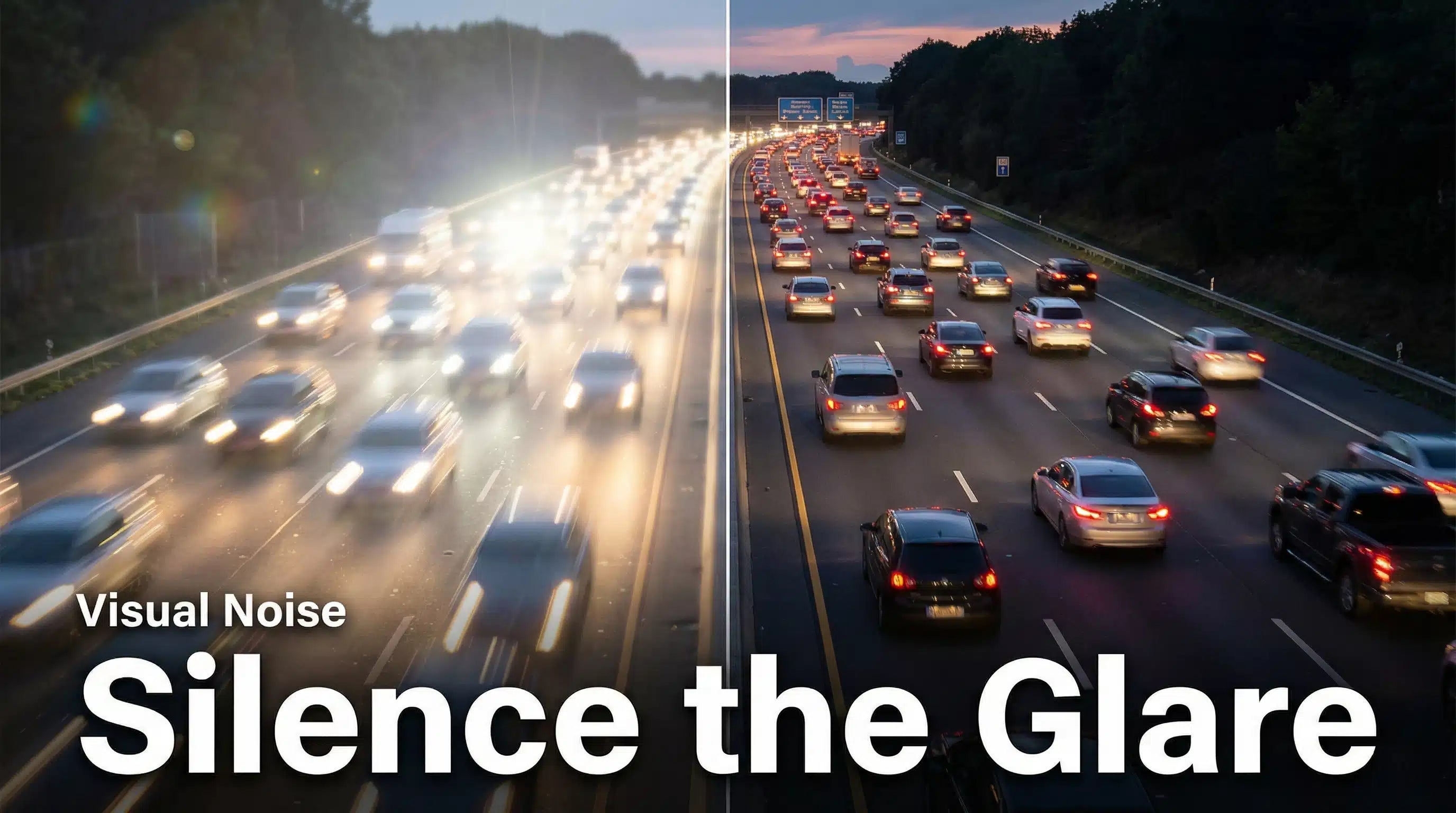
    • The "Glare" Factor: Only polarized lenses can block "blinding glare" from wet roads, water, and snow. Standard UV400 lenses just make the glare darker, not disappear.
    • Recommendation: Always buy sunglasses labeled "UV400 + Polarized" for the ultimate combination of safety and clarity.

    You are standing at the sunglass rack. One sticker says "100% UV Protection." Another says "Polarized." A third says "UV400."
    Are they the same thing? Is "Polarized" just a fancy word for "Better Protection"?

    No. Confusing these two features is the most common mistake buyers make.
    You can have a polarized lens that lets in harmful radiation. You can have a safe UV400 lens that still blinds you with glare.

    In this definitive guide, we break down the science of Light Management, debunk the dangerous myths about dark lenses, and help you decide which technology your eyes actually need.


    1. What Does "UV400" Actually Mean? (The Health Shield)

    Think of UV400 as Sunscreen for your eyes. It is a health specification, not a visual style.

    The Invisible Enemy: UVA vs. UVB

    The sun emits invisible energy called Ultraviolet (UV) radiation. It comes in two damaging forms:

    • UVA (Aging Rays): These penetrate deep into the eye, contributing to Macular Degeneration and premature aging of the skin around the eyes.
    • UVB (Burning Rays): These attack the surface, causing Cataracts and Photokeratitis (sunburn of the cornea).

    The "400" Standard

    "UV400" means the lens blocks light wavelengths up to 400 nanometers. This covers 99% to 100% of all UVA and UVB rays.

    • Note: If a label says "100% UV Protection," it is functionally the same as UV400.

    ⚠️ Critical Myth Buster: "Darker Lenses Block More UV"

    FALSE. This is a dangerous misconception.
    Tint (Darkness) only blocks Visible Light. It has zero correlation with UV protection.

    • You can have a Clear Lens with a UV400 coating (like prescription glasses).
    • You can have a Pitch Black Lens with zero UV protection (cheap toy glasses).

    Why Cheap Dark Glasses Are Dangerous:
    If you wear dark glasses without UV400, your pupils dilate (open wide) because it's dark. This allows more harmful UV radiation to flood into your unprotected eye than if you were wearing no glasses at all.
    Read more: The $10 Mistake: Why Cheap Sunglasses Are Worse Than Wearing None.


    2. What Does "Polarized" Mean? (The Vision Filter)

    If UV400 protects the eye, Polarization cleans the view. It is about visual performance and comfort.

    The Physics of Glare (Horizontal Light)

    Light from the sun scatters in all directions (vertical and horizontal).
    However, when light hits a flat, reflective surface—like a wet road, a lake, or a car hood—it bounces off horizontally. This concentrated horizontal light creates an intense, blinding flash known as Glare.

    How Polarization Works (The Venetian Blind Effect)

    Polarized lenses contain a special chemical film with molecules aligned vertically.
    Think of it like a set of Venetian Blinds:

    • Vertical Light (Useful Information): Passes through the slats to your eye.
    • Horizontal Glare (Visual Noise): Is blocked by the slats.

    The Visual Result


    3. Comparison Table: UV400 vs. Polarized

    Here is the cheat sheet to understand the difference at a glance.

    Feature UV400 Protection Polarized Filter
    Primary Function Health & Safety (Prevents Disease) Comfort & Clarity (Reduces Glare)
    Blocks UV Radiation?  Yes (100% UVA/UVB)  No (Not inherently)
    Reduces Glare? ❌ No (Only dims brightness)  Yes (Eliminates reflections)
    Changes How You See? No (Invisible coating) Yes (Increases contrast/saturation)
    Essential For: Everyday Life (Sun/Cloud) Driving, Fishing, Snow, Beach
    Can Be Clear? Yes No (Requires some tint)

    4. Do You Need Both? (The Ultimate Verdict)

    Yes.
    The "Gold Standard" for eyewear is a lens that protects you from the invisible (UV) and manages the visible (Glare).

    • UV400 without Polarization: Your eyes are safe from radiation, but you will still squint from the blinding glare off the road or snow.
    • Polarized without UV400: You see clearly, but you are risking long-term eye damage (Cataracts). Note: Most reputable polarized lenses, like BAPORSSA's, are also UV400.

    BAPORSSA Solution:
    We don't make you choose. All our key collections, from the Vanguard Series to the Spectra X, come standard with UV400 Protection, with Polarization included in our specific driving and outdoor models.

    Section 2

    When to Use Polarized Lenses (And When to Avoid Them)

    In section 1, we established that UV400 is for Health and Polarization is for Clarity.
    But does that mean you should always choose polarized lenses? Not necessarily.

    While they are a superpower for fishermen and drivers, they can be a hindrance for pilots or people trying to read a GPS screen. Here is the scenario-based breakdown to help you decide.


    5. Real-World Scenarios: Who Needs Polarized Lenses?

    🚗 For Driving: The "Safety" Factor

    Verdict: Highly Recommended (With a Caveat).
    When driving, the sun reflects off the asphalt road and the windshields of oncoming cars. This creates Horizontal Glare that can blind you for seconds at a time.

    • The Benefit: Polarized lenses eliminate this "road mirage," allowing you to see lane markers clearly and react faster to hazards.
    • The Caveat: Some modern cars have Head-Up Displays (HUDs) or digital dashboards that may disappear behind polarized lenses.

    🎣 For Fishing & Water Sports: The "X-Ray" Vision

    Verdict: Mandatory.
    Water acts as a giant mirror. Without polarization, you only see the sky reflected on the surface.

    • The Benefit: Polarized lenses cut through the surface glare, allowing you to see into the water. You can spot fish, rocks, and depth changes. This is why professional anglers refuse to wear anything else.

    ❄️ For Snow & Skiing: Stopping "Snow Blindness"

    Verdict: Essential.
    Snow reflects up to 80% of UV rays (compared to 10% for ground soil). This "double exposure" can burn your cornea (Photokeratitis).

    ✈️ For Pilots: The "No-Go" Zone

    Verdict: Avoid.
    The FAA (Federal Aviation Administration) advises pilots against using polarized sunglasses.

    • The Reason: Cockpit instruments often use polarized screens. Wearing polarized glasses can cause these instruments to turn black ("Cross-Polarization"). Additionally, polarization can mask the "glint" of sunshine reflecting off other aircraft, making it harder to spot traffic in the air.

    6. The "Digital Blackout": Why Phone Screens Turn Dark

    Why can't I see my phone with sunglasses?

    Have you ever looked at your iPhone or car GPS while wearing sunglasses, and the screen looked pitch black or had rainbow swirls?
    This is not a defect; it is Physics.

    The Science of "Cross-Polarization"

    LCD screens (phones, ATMs, GPS) emit light that is already polarized.

    • If the screen sends light Horizontally,
    • And your glasses block light Horizontally,
    • Result: 100% of the light is blocked. You see black.

    The Fix: Simply rotate your head (or the phone) 90 degrees. The screen will become visible again. If this annoys you, opt for a non-polarized Gradient Lens for daily tech use.


    7. DIY Test: How to Check Polarization at Home

    How to test polarized sunglasses at home

    You bought a pair online. How do you know if they are truly polarized or just tinted? Use these 3 methods.

    Method A: The "Phone Twist" (Easiest)

    1. Turn your phone brightness to max (open a white background).
    2. Hold the glasses in front of the screen.
    3. Rotate them 90 degrees.
    4. Result: If the lens turns significantly darker or black, it is Polarized. If it stays the same color, it is not.

    Method B: The "Test Card"

    Quality polarized sunglasses (like BAPORSSA's) often come with a small card featuring a hidden image (like a fisherman or a car).

    • Naked Eye: The image is invisible.
    • Through Lens: The image appears magically. This proves the lens is filtering specific light angles.

    Method C: The "Glare" Test

    Find a shiny surface (like a car dashboard reflecting onto the windshield).

    1. Put the glasses on.
    2. Tilt your head left and right.
    3. Result: You should see the reflection disappear and reappear as you tilt your head.

    Conclusion: Which One Should You Buy?

    So, UV400 vs. Polarized? The answer is Both.

    • For Everyday Safety: Ensure UV400 is non-negotiable.
    • For Performance: Upgrade to Polarized to remove the visual noise of the world.

    At BAPORSSA, we combine both. Our lenses act as a shield against radiation and a filter for clarity, giving you the best of both worlds.

    Find your view:


    Quick Q&A

    Q: What is the main difference between UV400 and Polarized?

    A: UV400 is an invisible coating that blocks harmful ultraviolet radiation (protecting eye health and preventing cataracts). Polarization is a visible filter that blocks blinding glare from reflective surfaces like roads and water (improving visual clarity). You need UV400 for safety, and Polarization for performance.

    Q: Do polarized sunglasses block UV rays?

    A: Not automatically. Polarization cuts glare, not UV rays. A lens can be polarized but offer zero UV protection, which is dangerous because the dark tint dilates your pupils. Always check the label for "UV400" or "100% UV Protection" to ensure safety.

    Q: Is UV400 or Polarized better for driving?

    A: For driving, you ideally want both. UV400 protects your eyes from sun damage through side windows (which often lack UV filters). Polarized lenses eliminate the blinding glare bouncing off wet roads and other cars' windshields, improving reaction time.

    Q: Why does my phone screen turn black with sunglasses?

    A: This is called Cross-Polarization. LCD screens (phones, GPS, car dashboards) emit polarized light. If your sunglasses are polarized at a 90-degree angle to the screen, they block 100% of the light. Rotating your phone or head usually fixes this.

    Q: Can clear lenses be UV400?

    A: Yes. UV protection is clear and independent of tint. Many prescription eyeglasses are clear but have a UV400 coating. However, clear lenses cannot be polarized, as polarization requires a specific film structure that adds some tint.

    Q: Are polarized sunglasses banned for pilots?

    A: Yes, the FAA recommends against them for pilots. Polarized lenses can make digital instrument panels (LCDs) appear black and can hide the "glint" of sunlight reflecting off other aircraft, which is a crucial visual cue for avoiding collisions.

    Q: Does UV400 block Blue Light?

    A: Only partially. UV400 blocks rays up to 400nm. High-Energy Visible (HEV) Blue Light exists between 400nm and 450nm. To block blue light effectively, you need lenses with specific tints like Bronze, Copper, or Brown.

    Q: How do I know if my sunglasses are actually UV400?

    A: You cannot test this with your naked eye. Ignore "home test kits." The only reliable method is to visit an optician or eyewear store and ask them to check your lenses on a UV Photometer (spectrometer). It takes seconds and is usually free.

    Authority Sources

    • American Academy of Ophthalmology (AAO)  Sun Smart: UV Safety — Supports the claim that UV damage is cumulative and dark lenses without protection are dangerous.
    • National Eye Institute (NEI)  Protecting Your Eyes from the Sun — Supports the definition of UVA/UVB damage.
    • Federal Aviation Administration (FAA)  Sunglasses for Pilots: Medical Facts — Supports the recommendation that pilots should avoid polarized lenses.
    • The Vision Council  UV Eye Protection — Supports the industry standard for UV400.

    Claim-to-Source Evidence Table

    Claim in Article Authoritative Source
    UV400 blocks rays up to 400nm (100% UV). The Vision Council
    Dark lenses without UV protection cause pupil dilation and more damage. American Academy of Ophthalmology (AAO)
    UV radiation causes Cataracts and Macular Degeneration. National Eye Institute (NEI)
    Pilots should avoid polarized lenses due to cockpit visibility issues. Federal Aviation Administration (FAA)
    Snow reflects up to 80% of UV rays. World Health Organization (WHO)
    Table of Contents
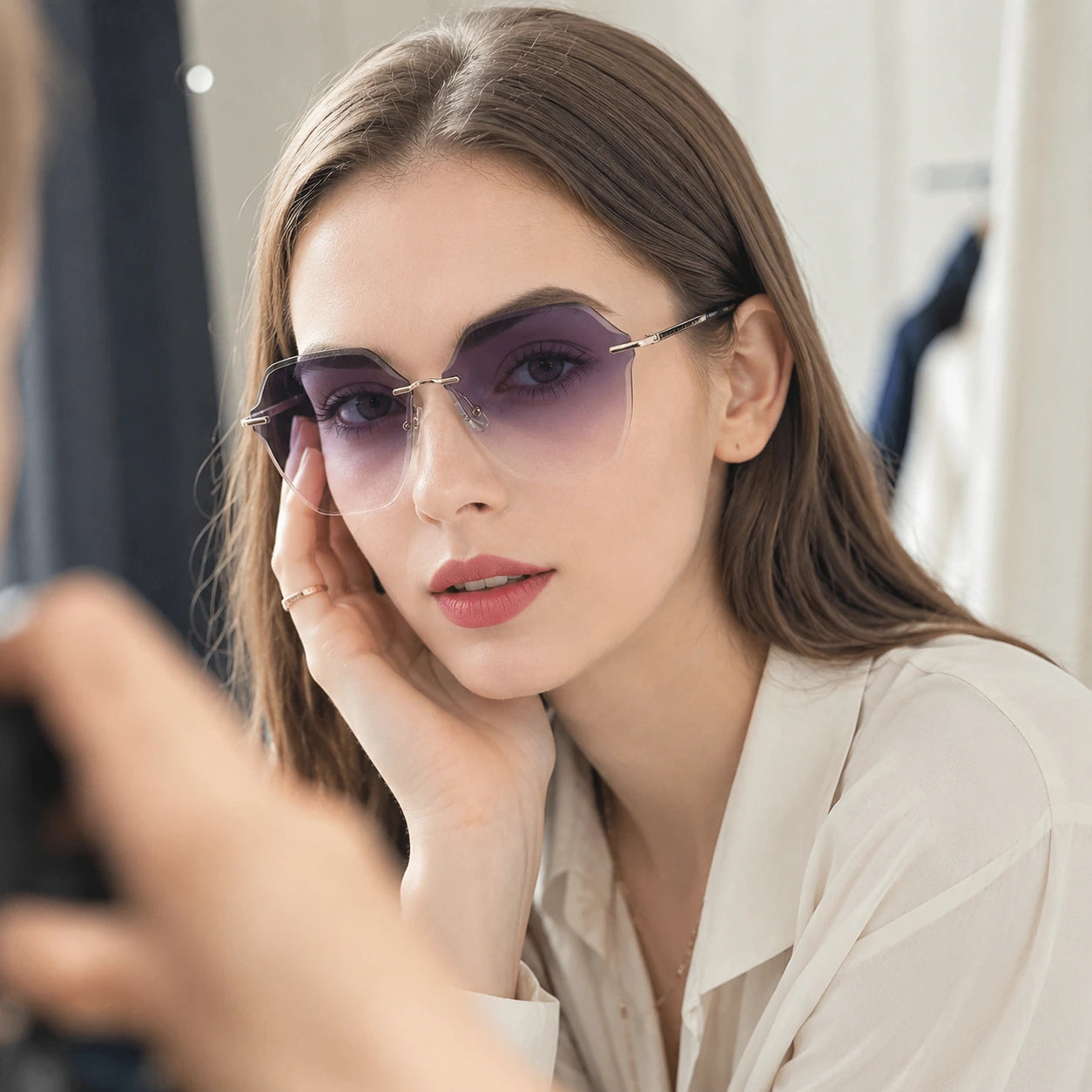
      Woman wearing pink sunglasses indoors with a blurred background

      FAQ

      The following are common questions

      Our customer support is available Monday to Friday: 8am-8:30pm.Average answer time: 24h