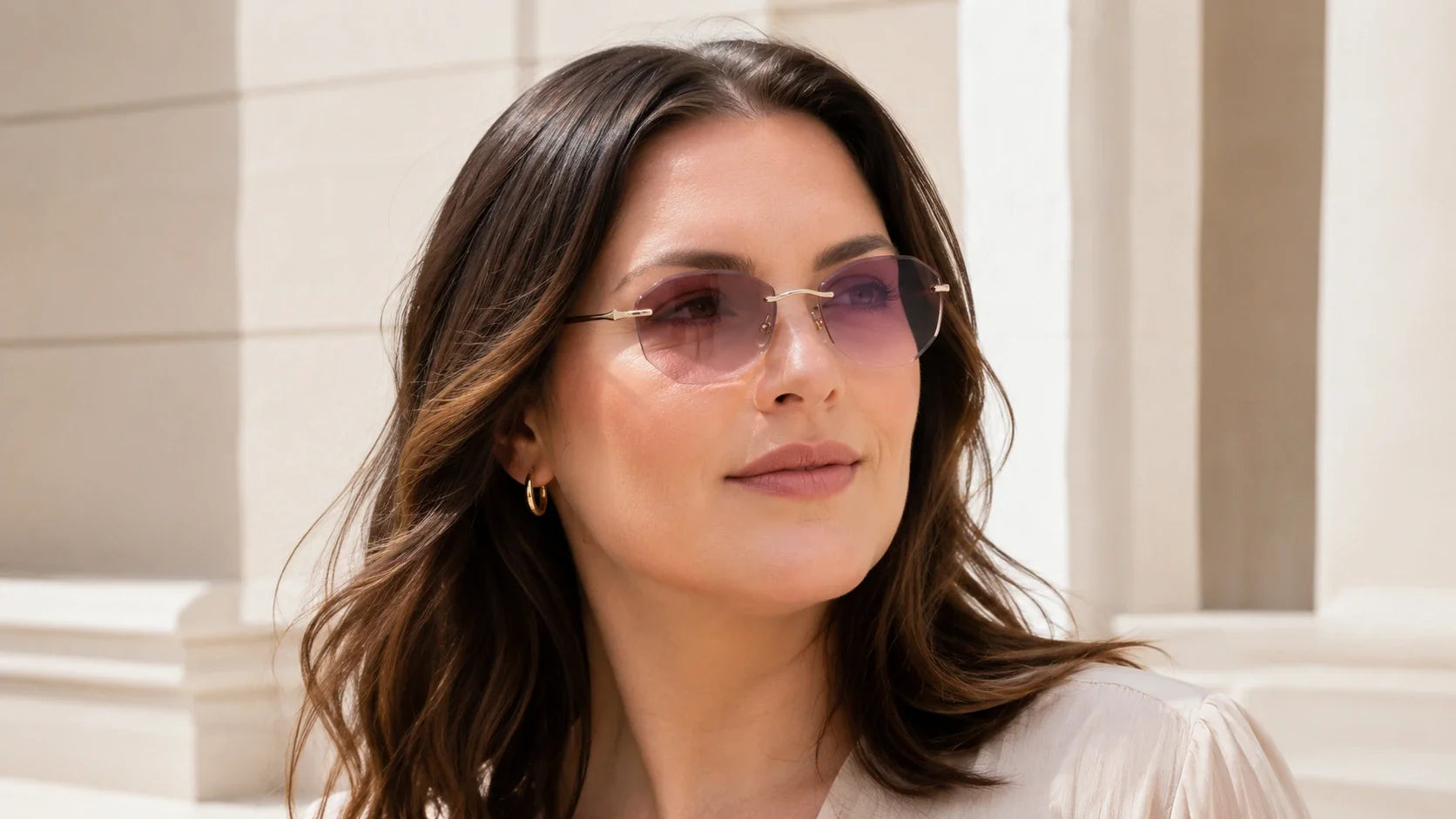


Most people choose sunglasses by face shape: round, oval, square, or heart. That helps, but it does not solve the real problem for many shoppers.
If sunglasses make your nose look larger, your forehead look longer, or your eyes look closer together, the issue is usually not your face shape. It is frame geometry.
Bridge height, lens width, rim thickness, brow-line placement, and lens color all change where attention lands on your face. The right frame can visually shorten a long nose, balance a high forehead, create more space around close-set eyes, or soften a strong jawline.
This guide shows you how to choose sunglasses by facial feature, not just by face shape. For the full fit map across round, square, oval, heart, diamond, long, wide, small, and low bridge faces, start with the BAPORSSA face shape guide.

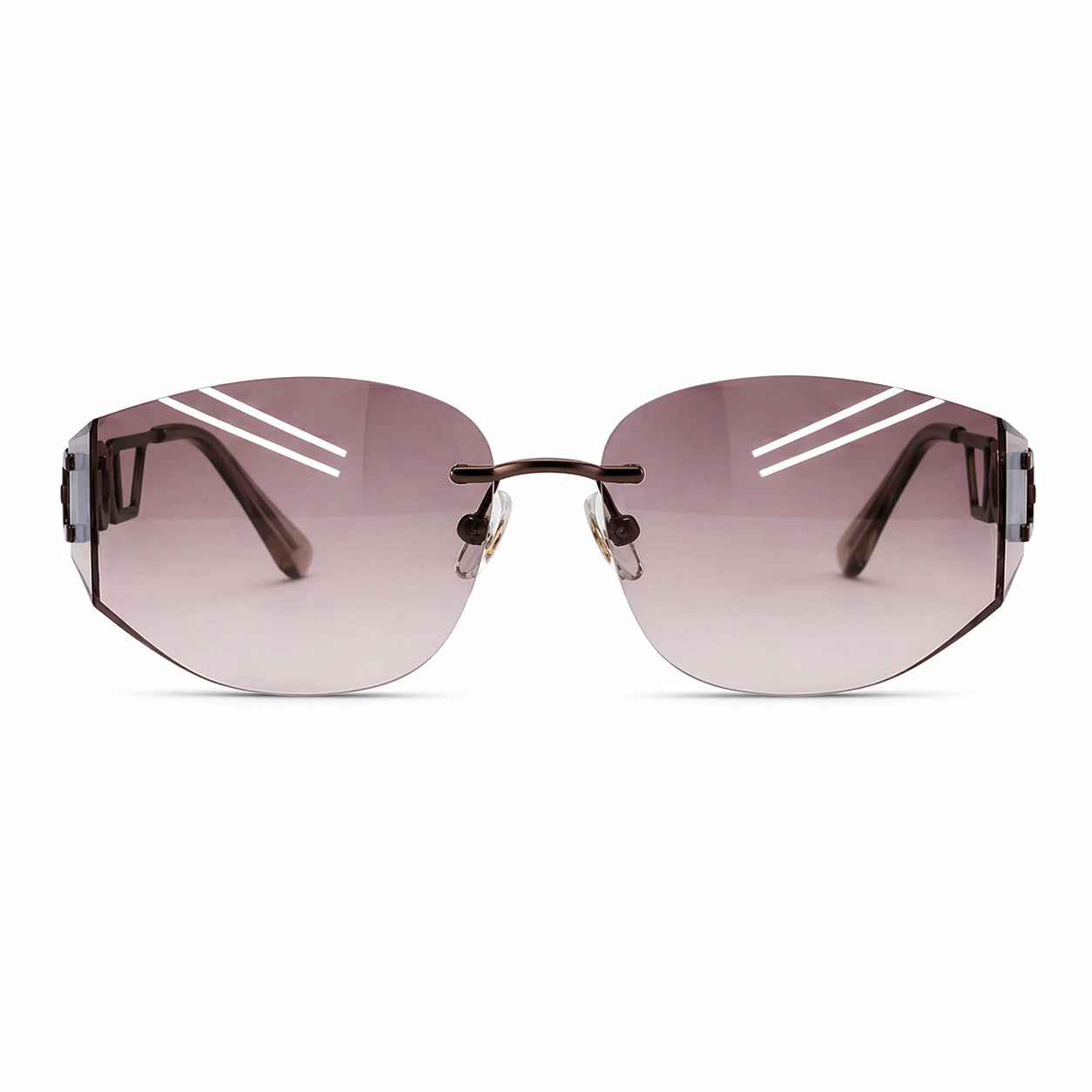
The Feature Fix Matrix
Use this table as a quick starting point before choosing a frame.
| Feature | Avoid | Choose | BAPORSSA Route |
|---|---|---|---|
| Prominent or long nose | Very thin high bridges, tiny lenses, narrow frames | Lower bridge placement, wider lenses, visible horizontal structure | Edge or Dune |
| Wide nose bridge | Tight fixed plastic bridges, heavy frames | More bridge room, adjustable nose pads, lighter construction | Muse or Lyra |
| Low nose bridge | Flat heavy bridges, oversized lenses that rest on the cheeks | Adjustable nose pads, lighter weight, better lift | Muse |
| Big forehead or high hairline | Tiny shallow frames, low lens height, disappearing upper line | Taller lenses, visible brow line, soft shield or aviator-inspired shape | Volt or Onyx |
| Close-set eyes | Heavy dark center bridges, narrow inner lens spacing | Light center, gradient lenses, outward corners | Lyra or Noir |
| High cheekbones | Frames that sit too low or press into the cheeks | Adjustable nose pads, lifted bridge support, curved lower lens edge | Muse or Lyra |
| Strong jaw or sharp chin | Small square frames, heavy lower rims | Rimless shapes, curved lower edges, softer lens lines | Muse |
For a Prominent or Long Nose: Break the Vertical Line
When people search for the best sunglasses for a big nose, they are usually not asking for a frame that hides the nose completely. They are asking for balance.

A long or prominent nose becomes more noticeable when the sunglasses create one continuous vertical line from the brow area down the bridge of the nose. This often happens with very thin high bridges, tiny lenses, and narrow frames that sit too close to the center of the face.
What to avoid
- Very small lenses that leave too much nose exposed
- Thin high bridges that visually lengthen the nose
- Frames that are too narrow for your face width
- Ultra-light invisible bridges with no horizontal balance
What to choose instead
Choose sunglasses with enough lens width and a bridge that creates a clear horizontal break across the center of the face. A slightly bolder frame can help shift attention outward, especially if the corners lift gently toward the temples.
Cat-eye and softly geometric frames are useful here because they pull attention up and out instead of straight down the nose. For this reason, Edge works well when you want a lifted, structured effect without a bulky frame. Dune is another strong option if you prefer a more visible acetate frame with face-balancing presence.
The goal is not to cover your face. The goal is to stop the nose from becoming the only vertical line people notice.
For a Wide Nose Bridge: Fit Comes Before Style
Sunglasses for a wide nose bridge need to solve two problems at the same time: comfort and proportion.
If the bridge is too narrow, the frame can pinch, sit too high, or push pressure into one small area. If the frame is too heavy, it may slide or leave marks. That makes the sunglasses feel wrong even if the shape looks good in photos.
What to avoid
- Fixed plastic bridges that feel tight across the nose
- Heavy acetate frames with no adjustability
- Frames that sit unevenly because the bridge has no room
- Nose pads that are too close together
What to choose instead
Look for lighter construction, enough bridge space, and adjustable nose pads where possible. Adjustable pads help the frame sit higher or lower depending on your nose bridge, instead of forcing your face to fit the frame.
Muse is useful for this type of fit because it has a rimless, wider-feeling silhouette that gives the face more breathing room. Lyra is another strong route if you want a lifted cat-eye effect with a lighter metal build.
If your sunglasses slide, pinch, or leave pressure marks, compare this guide with our nose pad comfort and bridge fit guide.
For a Low Nose Bridge: Choose Lift, Not Friction
A low nose bridge is different from a wide nose bridge. The problem is not always width. The problem is that many sunglasses do not have enough support to stay lifted.
When the bridge is low, standard frames may slide down, touch the cheeks, or sit too close to the eyelashes. This can make the sunglasses feel unstable and visually heavy.
What to avoid
- Heavy full-rim frames that rely only on bridge friction
- Flat plastic bridges with no adjustable support
- Oversized lenses that rest on the cheeks
- Frames that slide every time you move
What to choose instead
Choose lightweight sunglasses with adjustable nose pads or a frame shape that does not place too much weight on the center of the face. Rimless and semi-rimless styles can be especially useful because they reduce visual and physical weight.
For BAPORSSA, Muse is the cleanest recommendation here. It gives coverage without the heavy border effect, making it easier to create balance without adding bulk.
For a High Forehead or Big Forehead: Add Height and a Brow Line
If you have a high forehead, big forehead, or high hairline, tiny sunglasses can make the upper face look even longer. Small rectangular frames leave too much open space above the brows, which can exaggerate vertical length.

The fix is to add structure to the upper face. Taller lenses, a stronger brow line, or a double-bridge effect can visually divide the space between the eyebrows and hairline.
What to avoid
- Tiny narrow rectangles
- Very low lens height
- Frames with no upper-face structure
- Ultra-thin styles that disappear completely
What to choose instead
Choose frames with more vertical lens height or a clear top line. A shield shape, aviator-inspired shape, or geometric brow line can help bring the face into better proportion.
Volt is a good route because its stronger upper line gives the forehead area more structure. Onyx can also work when you want a sharper, more defined upper-face effect.
For a high forehead, the best sunglasses are not always the biggest. They are the ones that place visual weight in the right part of the face.
For Close-Set Eyes: Pull Attention Outward
Close-set eyes need a different strategy. The goal is to avoid making the center of the face look heavier.

Dark, thick center bridges can pull attention inward and make the eyes appear closer together. Narrow frames can do the same thing because they keep all visual weight concentrated near the nose.
What to avoid
- Heavy dark center bridges
- Very narrow lenses
- Frames with most of the visual weight in the middle
- Small black frames that make the eye area look compressed
What to choose instead
Choose frames that pull attention outward. A lighter center, gradient lens, transparent bridge, or lifted outer corner can help the eye travel toward the temples instead of staying locked in the middle.
This is where cat-eye and gradient designs become useful. Lyra gives a lifted outer-corner effect, while Noir offers a structured cat-eye shape that can help widen the visual field around the eyes.
For close-set eyes, do not overbuild the center. Let the outer corners do the work.
For High Cheekbones: Create Lift Without Cheek Pressure
High cheekbones can make sunglasses look sharp and sculpted, but they can also cause fit problems when frames sit too low. If the lower lens edge touches your cheeks when you smile, the frame may move, fog, or feel unstable.
What to avoid
- Frames that sit directly on the cheeks
- Low bridges with no nose-pad adjustability
- Very deep lenses with heavy lower edges
- Flat frames that do not create enough lift from the face
What to choose instead
Choose sunglasses with adjustable nose pads, a lifted bridge position, or a lighter lower edge. Rimless and softly curved lens shapes can help create coverage without adding pressure at the cheekbone.
Muse is the simplest BAPORSSA route for this because its rimless structure keeps the lower edge visually clean. Lyra adds a more lifted, feminine angle if you want the frame to pull upward at the outer corners.
For a Strong Jaw or Sharp Chin: Soften the Lower Edge
A strong jawline can look striking, but the wrong sunglasses can make the face feel too blocky. Small square frames are the most common mistake because they repeat the same hard geometry already present in the jaw.
The better move is to soften the lower half of the frame.
What to avoid
- Small square sunglasses
- Heavy lower rims
- Frames that stop abruptly at the cheekbone
- Boxy shapes with no curve or lift
What to choose instead
Rimless sunglasses are useful because they do not draw a hard line across the lower face. Curved lower edges, shield shapes, and lifted corners can soften the jaw without hiding your bone structure.
Muse is the strongest BAPORSSA option for this feature. Its rimless structure gives coverage and lift while keeping the lower edge visually light.
The goal is not to erase a strong jaw. It is to avoid making the whole face feel boxed in.
Do These Rules Also Work for Eyeglasses?
Yes. The same geometry applies to eyeglasses, but sunglasses add one extra layer: lens coverage. Eyeglasses use frame line and bridge placement to balance facial features. Sunglasses also use lens tint, lens size, visual weight, and coverage to change where attention lands.
If you are comparing glasses for a big forehead, close-set eyes, or a prominent nose, use the same rule: avoid putting too much visual weight on the feature you want to soften. With sunglasses, gradient lenses and rimless construction can make that balance feel lighter and less obvious.
How to Choose Sunglasses by Feature
Instead of asking only, “What is my face shape?”, ask what you want your sunglasses to balance.
- If your nose looks too long: choose more horizontal structure and enough lens width.
- If your nose bridge is wide: choose comfort, room, and adjustability first.
- If your nose bridge is low: choose lift, lighter weight, and better nose-pad support.
- If your forehead looks high: choose taller lenses or a stronger brow line.
- If your eyes are close-set: choose lighter centers and outward visual pull.
- If your cheekbones press into the frame: choose lift, adjustable pads, and a lighter lower edge.
- If your jaw is strong: choose rimless or softly curved lower edges.
Good sunglasses do not fight your features. They redirect attention, add balance, and make the whole face feel more intentional.

BAPORSSA Picks by Feature
| Need | Best Direction | Recommended Style |
|---|---|---|
| Balance a prominent nose | Lifted corners and stronger frame geometry | Edge |
| Reduce heavy center focus | Rimless width and softer visual weight | Muse |
| Add structure to a high forehead | Brow-line strength and taller lens presence | Volt |
| Open up close-set eyes | Lifted outer corners and lighter frame feel | Lyra |
| Soften a strong jawline | Rimless or curved lower edges | Muse |
Final Takeaway
The best sunglasses for a big nose, high forehead, wide nose bridge, close-set eyes, or strong jawline are not chosen by one rule. They are chosen by geometry.
Look at where the bridge sits. Look at how wide the lenses are. Look at whether the frame pulls attention inward or outward. Look at whether the lower edge adds hardness or softness.
Once you understand that, sunglasses become more than an accessory. They become a tool for facial balance.
Start with the feature-first edit: choose Muse for lighter rimless balance, Edge for a prominent nose, Lyra for close-set eyes, or Volt for a high forehead.
FAQ
What sunglasses are best for a big nose?
The best sunglasses for a big nose usually have enough lens width, a bridge that does not sit too high, and some horizontal structure across the face. Very small lenses and thin high bridges can make the nose look longer.
What shape sunglasses make a nose look smaller?
Frames with wider lenses, lifted outer corners, and a visible horizontal bridge can help balance a prominent nose. Cat-eye, soft geometric, and structured shield shapes often work better than very narrow frames.
What shape sunglasses are best for a big nose?
Soft geometric, cat-eye, shield, and wider lens shapes usually work well for a big nose because they create more horizontal balance. Very small or narrow lenses can leave the nose looking more prominent.
Are aviator sunglasses good for big noses?
Aviator sunglasses can work, but it depends on the bridge placement. A double bridge can balance a high forehead, but a very high bridge may make a long nose appear longer. Choose the proportion carefully.
What sunglasses are best for a wide nose bridge?
For a wide nose bridge, choose sunglasses with enough bridge space, lighter construction, and adjustable nose pads if possible. Avoid tight fixed plastic bridges that pinch or sit unevenly.
What sunglasses work for a low nose bridge?
Lightweight sunglasses with adjustable nose pads are usually better for a low nose bridge. They help lift the frame away from the cheeks and keep the lenses from sliding down.
What sunglasses are best for a big forehead?
Sunglasses with more lens height, a visible brow line, or an aviator-inspired shape usually work better for a big forehead. Very tiny frames can make the upper face look longer.
Should eyebrows show above sunglasses?
A little eyebrow can show, but the frame should not sit so low that it leaves too much empty forehead space above the lenses. If your forehead looks longer in sunglasses, try taller lenses or a stronger brow line.
What sunglasses are best for close-set eyes?
Close-set eyes usually look more balanced with frames that pull attention outward. Look for lighter center bridges, gradient lenses, transparent details, or cat-eye corners that visually widen the eye area.
Are rimless sunglasses good for strong jawlines?
Yes. Rimless sunglasses can soften a strong jawline because they do not add a heavy lower border. Curved lower edges and shield shapes can also reduce a boxy effect.
Do these tips also apply to eyeglasses?
Yes. Eyeglasses and sunglasses both use bridge height, frame width, lens shape, and visual weight to balance facial features. Sunglasses add lens tint and coverage, which can make the effect stronger.