

Magic or Chemistry? The Truth About Photochromic (Light-Adaptive) Lenses
You buy a pair of "Day & Night" sunglasses. The promise is intoxicating: one pair of glasses that is clear indoors, dark outdoors, and perfect for everything in between.
Then you get in your car on a sunny day. You wait for them to turn dark. And you wait. And... nothing happens. You are squinting in the sun, wondering if you bought a defective pair.
You didn't. You just ran into the laws of physics.
Photochromic technology (often called by the brand name "Transitions") is not magic; it is Photochemistry. Understanding how these molecules behave will help you decide if they are the ultimate convenience or a frustration waiting to happen.
How It Works: The "Molecule Flip" Mechanism
To understand why they fail in cars, you first need to understand how they work.

UV Activation: The Invisible Trigger
Standard photochromic lenses are infused with trillions of carbon-based molecules (usually Naphthopyrans).
- Indoors (No UV): These molecules are "closed" and transparent. Visible light passes right through them.
- Outdoors (UV Present): When invisible Ultraviolet (UV) radiation hits the molecules, they physically change shape—snapping "open" like a flower. This new shape absorbs visible light, turning the lens dark.
Key Takeaway: The trigger is UV Radiation, not "Brightness." You can stand in a brightly lit room, and the lenses will stay clear because lightbulbs don't emit UV.
The "Temperature Paradox": A Physics Quirk
Here is the secret most manufacturers won't tell you: Photochromic lenses work better in winter than in summer.

This seems backward. Shouldn't they be darker when the sun is hotter?
No. It’s a battle between UV Energy (which darkens the lens) and Thermal Energy (which clears the lens).
Why They Get Darkest in Winter
- The Physics: Cold temperatures "freeze" the molecules in their open (dark) state. They capture UV light but lack the thermal energy to snap back to clear.
- The Result: On a bright, snowy day at 20°F (-6°C), your photochromic lenses will turn pitch black—sometimes even darker than standard sunglasses.
The "Summer Problem"
- The Physics: Heat gives the molecules energy to close (clear) faster. On a scorching 100°F (38°C) beach day, the UV is trying to darken the lens, but the heat is actively trying to clear it.
- The Result: In extreme heat, photochromic lenses might only reach a "medium grey" (Category 2) rather than a "pitch black" (Category 3).
The #1 Complaint: "They Don't Work in My Car"
This is the deal-breaker for many drivers.

The Windshield Barrier
Modern car windshields are marvels of safety engineering. They contain a layer of plastic (PVB) laminated between glass sheets to prevent shattering. This layer creates a near-perfect UV Block.
- The Problem: Your windshield blocks 99% of UV rays before they reach your face.
- The Consequence: Since the photochromic molecules are UV-activated, they "think" you are indoors. They remain clear, even if the visible sunlight is blinding.
When to Use Them (and When Not To)
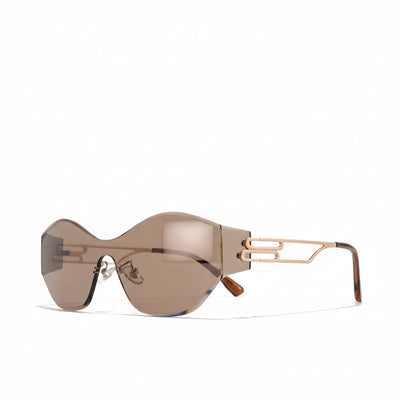
- Do NOT use for: Long highway road trips in bright sun. You need a dedicated pair of polarized sunglasses (like our Vanguard Bronze).
- DO use for: Commuting, cycling, or city driving where you frequently enter and exit tunnels. The ability to have some protection without taking glasses on/off is a huge safety plus in variable conditions.
Photochromic vs. Polarized: Can You Have Both?

Many users confuse these two technologies.
- Photochromic: Adjusts Darkness based on light level.
- Polarized: Cuts Glare (reflection) from wet roads and water.
The "Day & Night" Solution
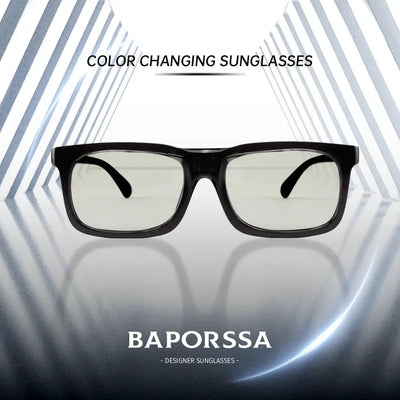
BAPORSSA’s Light-Sensitive Color Change Collection is designed for the minimalist.
These lenses often start as a light tint (yellow or clear) to enhance contrast at night or in fog, and darken to a grey/brown in sunlight.
Who Should Buy This? (The "One-Pair" Minimalist)

If you are a bike commuter who rides to work in the morning sun and rides home in the evening twilight, this is your holy grail. You never need to swap lenses.
BAPORSSA Collection Guide
We believe in using the right tool for the job.
-
For the Urban Commuter / Cyclist:
- Recommendation: Day & Night Photochromic Series.
- Why: Adapts to shadows between skyscrapers, tunnels, and changing weather instantly.
-
For the Beach Goer / Highway Driver:
- Recommendation: Polarized Standard Sunglasses.
- Why: You need consistent, maximum darkness (Category 3) and heat stability that photochromics cannot provide on a hot beach.

Conclusion: Convenience Over Perfection
Photochromic lenses are not "better" than standard sunglasses; they are more convenient.
They eliminate the need to carry two pairs of glasses. They protect your eyes from surprise glare. But they obey the laws of physics. If you accept that they won't turn black in your car and might be lighter on hot days, they are the most versatile eyewear you will ever own.
Ready to adapt? Explore our Day & Night Collection.
Sources & References
- Transitions Optical: How Photochromic Lenses Work — The industry standard explanation of naphthopyrans.
- Scientific American: How do light-sensitive (photochromic) sunglasses work? — Photochemistry breakdown.
- American Academy of Ophthalmology: Glass vs. Plastic Lenses — Reference for UV protection standards.