





The Hidden Science of Comfort: A Guide to Sunglasses Frame Materials
You just bought a stylish pair of sunglasses. They look great in the mirror. But two hours into your drive, you feel it: a dull ache on the bridge of your nose and a red mark forming behind your ears.
Why? Material Science.
Most people shop for shape, but the material dictates the comfort, durability, and lifespan of the frame. Whether you are considering the bold look of Acetate or the engineering marvel of Titanium, understanding what your glasses are made of is the first step to better vision.
Why Material Matters: It’s Not Just About Looks
Eyewear comfort is a battle against physics. Specifically, Gravity and Friction.
The "30-Gram Rule": Understanding Facial Fatigue
Your nose is sensitive. It is cartilage, not bone. When you place a heavy object on it, gravity pulls it down. To stop the slide, the nose pads must dig in, creating friction.
We call this the "30-Gram Threshold."
Once eyewear exceeds roughly 30 grams, you become hyper-aware of its presence. Below 20 grams, like our Titanium & Air-Light Collection, the brain stops noticing the weight. It feels like wearing nothing at all.
Skin Sensitivity and the "Nickel Itch"
Have you ever developed a rash or itchy spot where your glasses touch your skin?
This is likely Contact Dermatitis, often caused by Nickel. Nickel is a cheap, strong metal used in most budget alloy frames. Unfortunately, about 10-15% of the population is allergic to it.
The Contender 1: Standard Metal Alloys (Nickel/Copper)
Walk into a gas station or a fast-fashion outlet, and you will find "Metal Alloy" frames.
Pros: Affordable and Rigid
These are cheap to manufacture. They hold their shape well (until they bend) and can be painted easily.
Cons: Corrosion, Weight, and Allergies
The problem is chemistry.
Most alloys are a mix of Copper and Nickel.
What Happens When Sweat Meets Cheap Metal?
Your sweat is acidic (containing lactic acid and salt).
When acidic sweat meets copper/nickel alloys + oxygen, oxidation occurs.
This is why cheap frames turn green. That green gunk is copper salts forming on the metal. It looks bad, smells metallic, and irritates your skin.
The Contender 2: Acetate and Plastic
Acetate is the standard for high-fashion, bold frames. It is a plant-based plastic (cellulose).
Pros: Bold Colors and Thickness (The "Statement" Look)
Acetate allows for deep, rich colors and transparency effects that metal cannot mimic. If you want that thick, retro "Old Hollywood" look, you need acetate.
Cons: Heaviness and Lack of Adjustability
The trade-off is density. Acetate is heavy.
Thick frames require more material, pushing the weight well over the 30-gram comfort zone. Furthermore, acetate is rigid; if you sit on it, it snaps.
BAPORSSA's Hybrid Approach
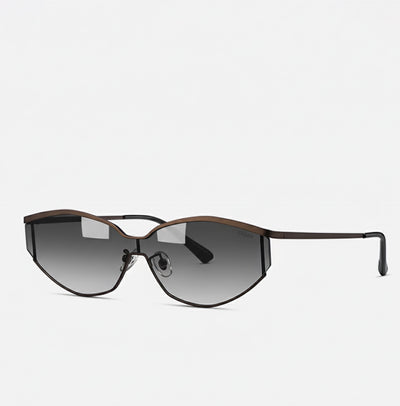
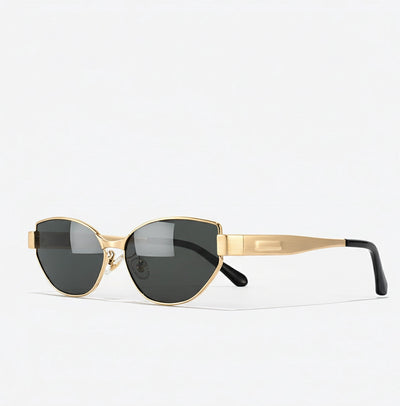
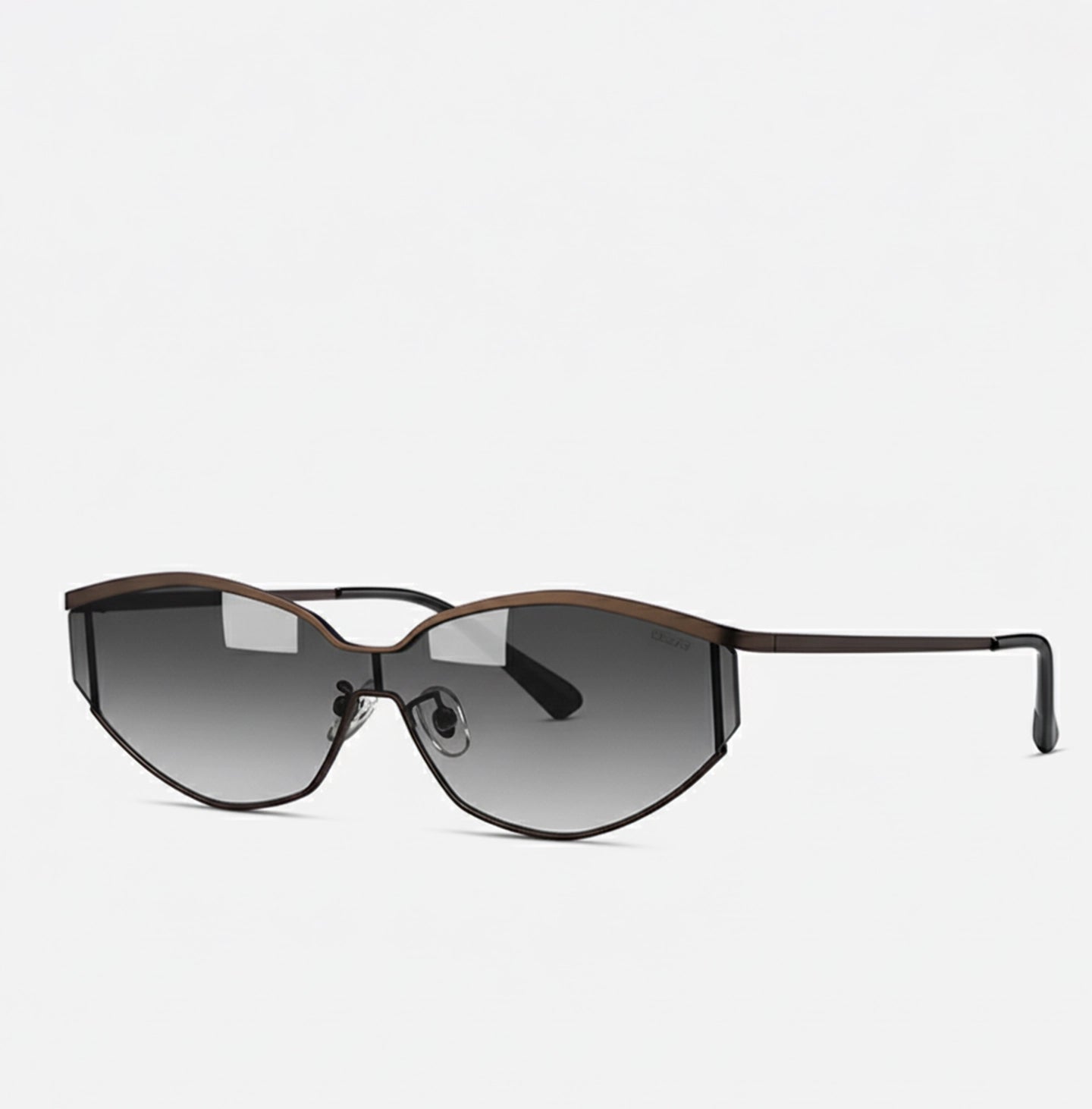
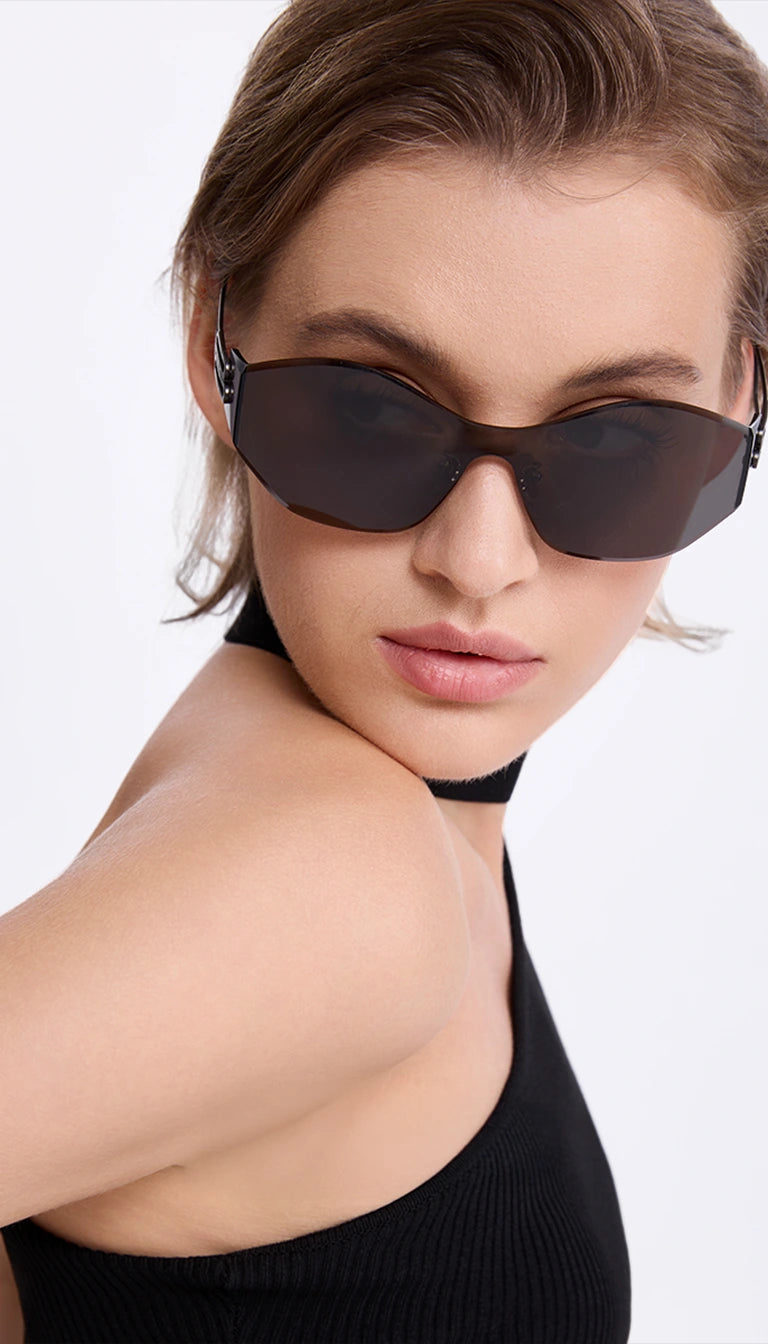
For our bold styles like the Midnight Muse or GM Style Cat-Eye, we use advanced Nylon and Sheet materials that mimic the look of acetate but cut the weight significantly.
The Champion: Titanium and Beta-Titanium
This is the gold standard. Element 22 on the periodic table.
The Aerospace Advantage: Strength-to-Weight Ratio
Titanium is used in fighter jets and spacecraft for a reason: It has the highest strength-to-density ratio of any metallic element.
A titanium frame is 40% lighter than a steel frame of the same size, yet twice as strong.
Pure Titanium vs. Beta-Titanium: What’s the Difference?
Not all titanium is the same.
-
Pure Titanium: incredibly strong but stiff.
-
Beta-Titanium (β-Ti): An alloy mixed with Vanadium and Aluminum.
The "Memory Metal" Effect Explained
BAPORSSA uses Beta-Titanium for our Spectra X Series because of its Elasticity.
In physics, "Plasticity" means a material bends and stays bent (like a paperclip). "Elasticity" means it bends and returns to its original shape (like a spring).
Beta-Titanium acts like a spring. You can twist the temples, and they snap back to perfection.
Hypoallergenic Properties: Safe for Sensitive Skin
Titanium is Biocompatible. It is the same material used in hip replacements and dental implants because the human body does not reject it. It is 100% Nickel-free, making it the only safe choice for sensitive skin.
Real-World Stress Test: Durability Comparison
How do these materials handle actual life?
The "Sit Test": What Happens If You Sit on Them?
-
Alloy Frame: Bends permanently. You try to bend it back, and it snaps.
-
Acetate Frame: Cracks at the bridge or hinge. Game over.
-
Beta-Titanium Frame: Flattens out under your weight, then springs back when you stand up. (Please don't try this on purpose, but know that it can survive accidents).
Corrosion Resistance: Ocean Water and Sweat
Titanium is effectively immune to corrosion from saltwater. You can wear our Vanguard Series in the ocean, rinse them off, and they will look brand new ten years from now. No green gunk. No rust.
BAPORSSA’s Choice: Why We Commit to Titanium
We chose to build our brand around Titanium not because it is the cheapest way, but because it is the only way to solve the comfort problem.
Spotlight on the "Spectra X" and "Vanguard" Series
Our Spectra X (16g Titanium) represents the pinnacle of this philosophy. At just 16 grams, it disappears on your face.
Manufacturing Precision: The Cost of Quality
Working with titanium is difficult. It eats through tools and requires specialized vacuum welding environments (because molten titanium reacts with oxygen). This is why titanium eyewear costs more—you are paying for difficult, precise engineering that lasts a lifetime.
Conclusion: Investing in Longevity Over Fast Fashion
You can buy a cheap alloy pair every summer when the old one rusts or bends. Or, you can invest once in a Titanium Frame that survives the beach, the car seat, and the test of time.
If you are tired of heavy glasses and skin irritation, it’s time to upgrade your materials.
Experience the difference. Check out our New Drops and feel the lightness for yourself.