
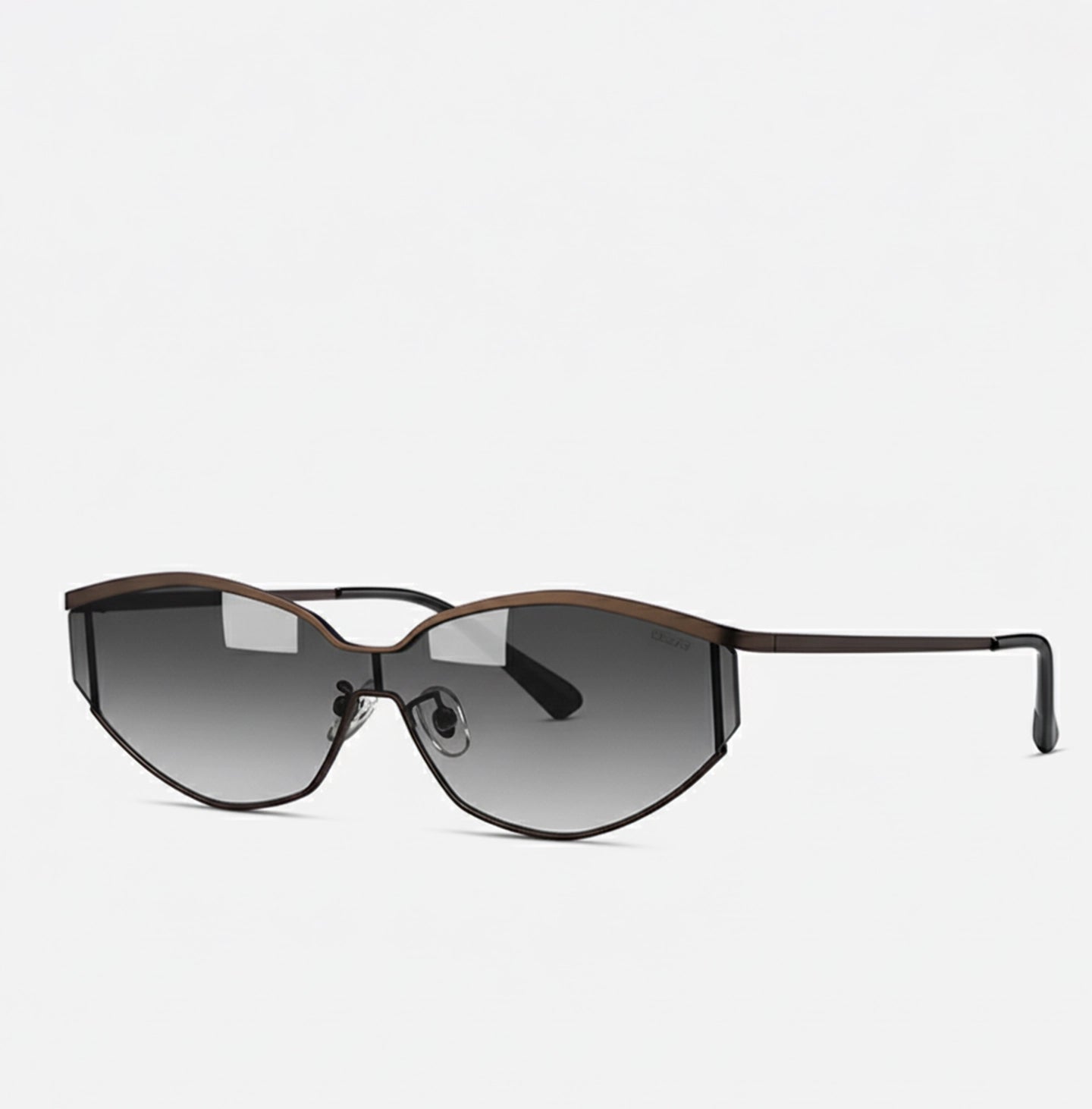


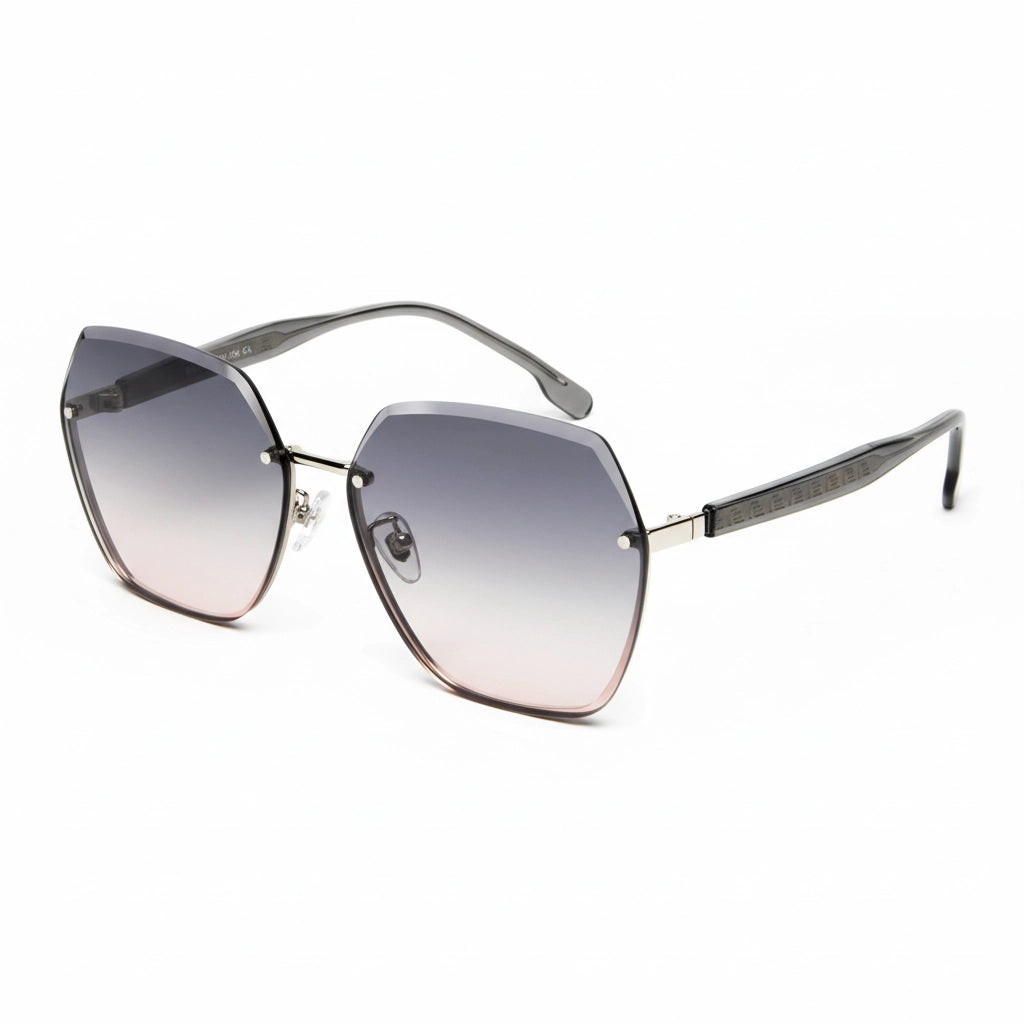






The Achilles Heel of Eyewear: Understanding Hinge Mechanics & Durability
You reach for your sunglasses. You pull them off your face with one hand, just like you’ve done a thousand times.
Snap.
The arm comes off in your hand, leaving the frame dangling.
Was it a "cheap" frame? Maybe.
Eyewear is a mechanical structure subject to stress, torque, and fatigue. The hinge is the "Achilles Heel"—the smallest point taking the highest load. Whether you wear $10 gas station shades or $500 luxury frames, if you fight the laws of mechanics, the mechanics will win.
Here is the engineer's guide to why hinges fail and how to make your frames last a lifetime.
The Real of Failure: What Kills a Frame?
The number one cause of broken eyewear isn't "dropping them." It is Asymmetrical Torque.
The "One-Hand" Mistake

We all do it. We grab one temple arm and rip the glasses off our face.
- The Reason: When you pull the right temple, the left hinge acts as a fulcrum. You are applying a twisting force (Torque) across the nose bridge.
- The Result: This force pulls the opposite hinge outward, stretching the screw threads and bending the metal barrel. Over time, this leads to "splayed" temples (glasses that look too wide) and eventual metal fatigue failure.
Metal Fatigue
Bend a paperclip back and forth. Eventually, it gets hot and snaps. This is Fatigue Failure.
Standard alloy frames (Nickel-Silver or Monel) have low fatigue resistance. Every time you take them off one-handed, you micro-fracture the metal. Do it 500 times, and the hinge snaps.
Hinge Types Explained: The Good, The Bad, and The Flexible
Not all hinges are created equal. Manufacturers use three main systems to deal with head width and removal stress.

1. The Classic: Standard Barrel Hinges
These look like interlocking teeth (3-barrel, 5-barrel, or 7-barrel) held together by a screw.
- Pros: Simple, strong, and easy to repair.
- Cons: Zero Flexibility. If your head is wider than the frame, or if you pull them off one-handed, the barrel takes 100% of the stress.
2. The Comfort Option: Spring Hinges
These have a small internal spring mechanism that allows the temple to bend outward past 90 degrees.
- Pros: Extremely comfortable. They "hug" the head and absorb some of the "one-hand" torque.
- Cons: Mechanical Failure. The internal spring is a tiny, moving part. Like any machine, it wears out. Once the spring breaks or loses tension, the temples become "floppy," and they are nearly impossible to repair.
3. The Modern Solution: Material Flex (The BAPORSSA Standard)
Why use a mechanical spring that can break, when the material itself can be the spring?
This is the philosophy behind our Titanium Collection.
- The Physics: We use Beta-Titanium, an alloy with a low Young's Modulus (high elasticity).
- The Benefit: The entire temple arm flexes to accommodate your head width and removal stress, then snaps back to its original shape. No tiny springs to break, no barrels to snap.

Diagnosing the "Wobble": Why Temples Get Loose
Even the best hinges can get "floppy" over time. This is usually due to the screw backing out.
The "Backed-Out Screw" Phenomenon
Every time you open and close the temples, friction turns the screw slightly counter-clockwise. It’s inevitable.
- The Fix: Don't wait for the screw to fall out. If you feel a wobble, tighten it immediately.

Nylon-Coated Screws
Premium eyewear uses screws coated with a microscopic layer of nylon or thread-locker (similar to Loctite). This increases friction inside the barrel, preventing the screw from backing out due to vibration.
DIY Maintenance
Invest in a Micro-Screwdriver (optical screwdriver).
- Open the hinge to a 45-degree angle (this exposes the tension).
- Place the glasses on a flat surface.
- Gently tighten the screw until it stops. Do not over-tighten, or you will strip the threads.
BAPORSSA's Engineering Approach
We design for longevity by reducing the number of moving parts.
The Beta-Titanium Advantage
In our Spectra X Series, the hinge is often a simple pivot point. The "work" of flexing is done by the temple arm itself.
By distributing the stress along the entire length of the titanium arm (rather than focusing it on a 2mm hinge barrel), we virtually eliminate fatigue failure.
The Vanguard Structure
For our Vanguard Rimless frames, the stress points are reinforced with flexible nylon compression mounts rather than rigid solder points, allowing the lens to "float" and survive impacts that would crack standard drill-mounts.

Best Practices: How to Make Frames Last 5 Years
You can own the strongest titanium frames in the world, but you still need to treat them right.
1. The "Two-Hand" Rule
Always take your sunglasses off with two hands. This applies symmetrical force, sliding the frames straight off your ears without twisting the bridge or hinges.
2. The "Case Closed" Rule
- Never wear them on top of your head. This stretches the hinges permanently and distorts the nose pads.
- Never put them in a pocket without a case. This creates crushing pressure (shear force) that snaps lenses and hinges.
Conclusion: Respect the Mechanics
Eyewear is a precision instrument. It is a marriage of optical clarity and mechanical engineering.
While BAPORSSA frames are built with Aerospace-Grade Titanium to withstand daily abuse, a little understanding of torque and physics goes a long way.
Treat them well, and they will protect your vision for years.
Sources & References
- Britannica: Torque and Rotational Motion — The physics behind twisting force.
- Wikipedia: Fatigue (Material) — How cyclic loading breaks metal.
- The Vision Council: Eyewear Impact Resistance — Standards for frame durability.